How to Fish for Beginners: What Federal and State Agencies Tell First-Timers
Get a licence, a spincast rod, 4 to 12 pound line, size 6 to 10 hooks, split shot, a bobber and worms — the U.S. Fish and Wildlife Service's first-timer checklist. Tie on the hook, clip weights 6 to 12 inches above it, set the bobber, cast toward weeds or rocks in a few feet of water, and lift the rod when the bobber goes under.
Key takeaways
- The U.S. Fish and Wildlife Service publishes a checklist for first-time freshwater anglers: licence, rod and reel, 4–12 lb monofilament, weights, size 6–10 hooks, a bobber, bait, a rubber net and glove.
- Minnesota's DNR calls the closed-face (push-button) reel the simplest type to learn, because the line is less likely to tangle.
- The Fish and Wildlife Service's rig: sinkers 6 to 12 inches above the hook, bobber clipped above that, set to the depth you want to fish.
- Its spot advice is concrete: a weedy or rocky area where the water is several feet deep, or where the bottom changes from sand to gravel or mud.
- When the bobber goes under, raise the rod tip quickly to set the hook — that is the whole technique on day one.
Start with the list an agency wrote
The United States Fish and Wildlife Service publishes a checklist for people fishing for the first time, and it is short enough to memorise. For freshwater fishing:
- a state fishing licence (depending on your age)
- a fishing rod and reel
- 4 to 12 pound test monofilament line
- a package of fishing weights
- fishhooks, size 6 to 10
- a plastic or cork bobber
- live bait or lures — with a note to check local regulations, because some areas prohibit certain baits
- a rubber fishing net and rubber glove
Two things on that list surprise people. The net and glove are rubber because they protect the fish’s mucus layer if you release it. And the licence comes first for a reason: the agency points out that a portion of tackle sales is funnelled back into conservation through a federal excise tax, and licence fees fund the state agency that manages the water you are about to fish.
Before you buy anything, the same page suggests a phone call. Some libraries, state agencies, national fish hatcheries and national wildlife refuges run tackle loaner programmes for families and beginning anglers. Texas Parks and Wildlife lists loaner tackle and free fishing spots among its getting-started resources for the same reason.
The rod: pick the one that does not tangle
Every agency guide points beginners at the same rig, and for the same reason. The Fish and Wildlife Service describes the closed spin-casting reel — a pistol-grip rod with the reel mounted on top and a push button to release line — as the easiest rod and reel for beginners. Minnesota’s DNR explains why: the line is less likely to tangle than with an open-face reel. Texas Parks and Wildlife calls spincast tackle the most popular type and perfect for junior anglers.
The alternative, an open-bail spinning reel, hangs under a straight handle and releases line with your index finger. It casts further and suits light lures, but Minnesota’s DNR describes it as somewhat more complicated to learn and more prone to tangling. Start with the button. Our guide to choosing a fishing rod covers the differences if you want more than the beginner’s answer.
The rig: hook, sinker, bobber
The Fish and Wildlife Service sets it up in three moves:
- Tie on a hook with an improved clinch knot — pass the line through the eye, make five turns around the standing line, pass the tag end through the small loop by the eye and then through the large loop, wet it, and tighten slowly. Our improved clinch knot page walks it through with pictures.
- Clip one or two sinkers 6 to 12 inches above the hook. The weight keeps the bait down and, in the agency’s words, helps swing it away from shore. Texas Parks and Wildlife uses 4 to 8 inches so live bait looks natural — either spacing works.
- Attach a bobber above that. Most clip on with a spring and slide up or down the line to set how deep the bait hangs.
That is the whole setup, and the split shot rig page shows it assembled. Hook size follows the bait and the fish; the agency’s 6 to 10 range covers worms and panfish, and our hook sizes guide explains the numbering.
The cast, in the agency’s own steps
Texas Parks and Wildlife’s beginner guide gives the overhead cast for a spincast reel in four steps, and the Fish and Wildlife Service reproduces them:
- Grasp the pistol grip, push the thumb button down and hold it.
- Face the target a quarter turn off, rod tip aimed at it about eye level.
- Swiftly and smoothly bend your arm at the elbow, raising the rod until it almost reaches eye level; as the rod bends back under the weight, move your forearm forward with a slight wrist movement.
- When the rod reaches eye level, release the button.
Both agencies give the same diagnosis for a bad cast: landed close in front of you, you released too late; went more or less straight up, you released too soon. Practise with a hookless casting plug in an open area first — the full breakdown, including the spinning-reel version, is in our how to cast guide.
Before every cast: look around. The Fish and Wildlife Service lists “don’t cast near other people, and always look around before making a cast” among its four safety rules. Minnesota’s DNR is more specific — look overhead and behind for power lines, branches, bushes and pets, and stay a rod’s length from your neighbour on a shoreline.
Where to put it
The Fish and Wildlife Service’s spot advice is unusually concrete for a beginner’s page: look for a weedy or rocky area where the water is several feet deep, or for places where the bottom changes — sand to gravel, sand to mud. Cast the bait as far from shore as you can, and watch the bobber.
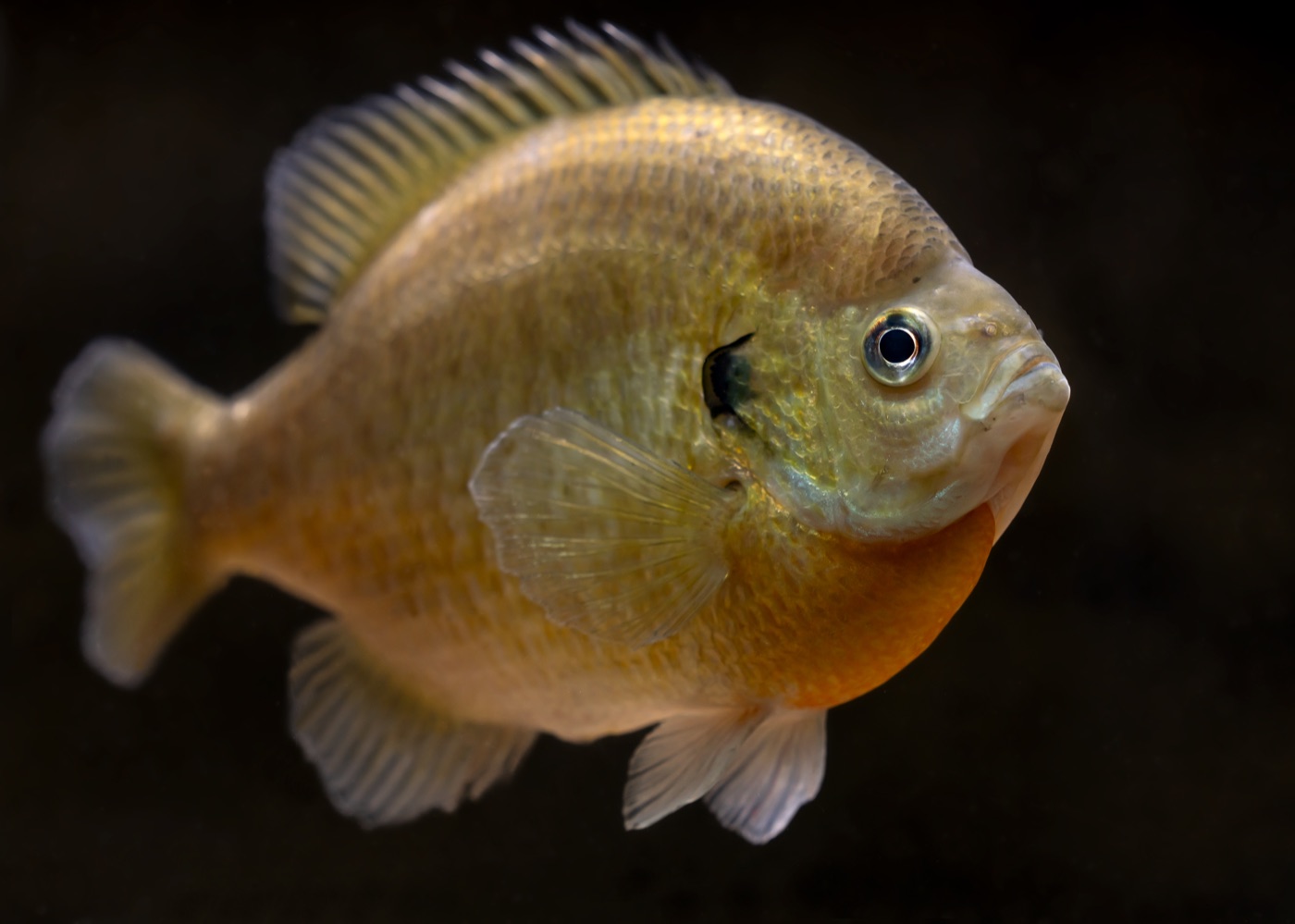
Minnesota’s DNR frames it as habitat. Its casting lesson tells students that sunfish live close to shore under docks and near plants and fallen logs, and its take-along guide lists where panfish sit in summer: under docks and piers, around submerged trees and brush piles, among aquatic plants, under the shade of overhanging trees. Our reading water guide covers how to spot those places, and shore fishing basics covers working them from the bank.
Then be quiet. The same agency notes that fish have a vibration-sensing lateral line, and that loud talking and loud footsteps can easily frighten them away from your bait.
The bite and the hookset
The Fish and Wildlife Service describes it plainly. A bobber lets you know when fish are biting because it moves up and down as fish nibble at the bait. When a fish has the bait, it will probably try to swim away, pulling the bobber under the water. When that happens, raise the tip of the rod quickly to set the hook and reel your catch in.
The agency’s brochure adds a troubleshooting line worth keeping: if the bobber keeps dipping without a fish, try a smaller worm or switch to a smaller hook. Small panfish nibble, and a big bait on a big hook lets them steal it.
What to do with the fish
If it is under the legal size, or you do not want to keep it, release it quickly. The Fish and Wildlife Service gives three rules: keep the fish as wet as possible — wet hands or rubber gloves and a rubber net protect the fish’s natural mucus layer; minimise airtime; and if the hook is swallowed, do not tear it out, cut the line as close to the mouth as possible. To revive a tired fish, move it gently back and forth in the water until it swims off. Our catch and release guide goes deeper.
If you are keeping it, the size and bag limits come from the regulations booklet the agency told you to pick up in the shop — and our how to fillet a fish guide covers what happens next.
When to go
Minnesota’s DNR offers four rules of thumb for beginners to test rather than trust: morning and evening better than midday, changing weather better than steady, calm better than windy, overcast better than bright sun. Our best time to fish page explains the evidence behind each. The one that is not a rule of thumb is lightning — the same agency’s guidance is never to fish when it is near.
Before you go
Licence rules are the part that changes most by state. Texas Parks and Wildlife exempts anglers under 17 and anyone fishing inside a state park; Iowa requires a licence from 16; Minnesota’s programme materials note the same age. Your state’s rule, the size and bag limits, and any bait restrictions are on your agency’s site — our licences and regulations guide shows where to look. Then go, with someone, and watch the bobber.
Frequently asked questions
What do I need to start fishing?
The U.S. Fish and Wildlife Service publishes the list. For fresh water: a state fishing licence (depending on your age), a fishing rod and reel, 4 to 12 pound test monofilament line, a package of fishing weights, fishhooks in sizes 6 to 10, a plastic or cork bobber, a selection of live bait or lures, and a rubber net and rubber glove. The agency adds that everything is available at a tackle or sporting goods store, and that some libraries, state agencies, national fish hatcheries and national wildlife refuges run tackle loaner programmes for families and beginners.
Which rod and reel should a beginner buy?
A closed-face spincast combo, according to both agencies. The Fish and Wildlife Service describes it as a rod with a pistol-like grip and a reel mounted on top, with line released by a push button, and calls it the easiest rod and reel for beginners. Minnesota's DNR gives the reason: the closed-face reel is the simplest type to learn to use because the line is less likely to tangle than with an open-face reel. Texas Parks and Wildlife adds that spincast tackle is the most popular type and is perfect for junior anglers. Choose one you can hold comfortably in one hand.
How do I set up the line?
Hook, sinker, bobber, in that order. The Fish and Wildlife Service's instructions are to tie on a fishhook with an improved clinch knot, attach one or two sinkers 6 to 12 inches above the hook so the bait stays down and swings away from shore, then clip on a bobber, which moves up and down the line depending on how deep you want to fish the bait. Texas Parks and Wildlife gives a slightly tighter spacing, 4 to 8 inches, so live bait looks natural. Either is fine; what matters is that the weight is above the hook, not on it.
Where should I cast?
Toward cover, in a few feet of water. The Fish and Wildlife Service says to look for a weedy or rocky area where the water is several feet deep, or for places where the bottom changes — from sand to gravel, or sand to mud — and to cast the bait as far from shore as you can. Minnesota's DNR frames its practice targets the same way: sunfish live close to shore under docks and near plants and fallen logs. Its take-along guide adds the two things that ruin the spot once you have found it: loud talking and loud footsteps, which fish detect through the lateral line.
How do I know when a fish bites, and what do I do?
Watch the bobber. The Fish and Wildlife Service explains that a bobber moves up and down as fish nibble, and that when a fish has the bait it will usually try to swim away and pull the bobber under. When that happens, raise the tip of the rod quickly to set the hook and reel the fish in. Small panfish nibble first, so an early dip is not yet a fish on. If the bobber keeps disappearing without a hook-up, the agency's brochure suggests a smaller worm or a smaller hook.
What should I know about safety on the first trip?
Four things, per the Fish and Wildlife Service: fish with a companion who can help in an emergency, be careful handling sharp hooks, do not cast near other people and always look around before a cast, and wear a Coast Guard-approved life jacket when wading or in a boat. Minnesota's DNR adds the one most people forget: never fish when lightning is near. Its casting lesson also tells beginners to look overhead and behind for power lines and branches before every cast, and to stay a rod's length from the next angler on a shoreline.
Sources
- A Guide to Fishing for the First Time — Responsible Fishing Tips for New Anglers — U.S. Fish and Wildlife Service. Accessed September 25, 2026.
- Fish Texas: A Basic Guide for the Beginning Angler — Casting Tips — Texas Parks and Wildlife Department. Accessed September 25, 2026.
- Fishing: Get in the Habitat! Lesson 5:1 — Freshwater Rods and Reels — Minnesota Department of Natural Resources (MinnAqua) / USFWS Sport Fish Restoration. Accessed September 25, 2026.
- Pier Notes: Casting, Finding, Landing, and Fish Senses — Minnesota Department of Natural Resources (MinnAqua). Accessed September 25, 2026.
- Fishing for Beginners — Texas Parks and Wildlife Department. Accessed September 25, 2026.
How we choose sources: sources policy.
More in this series
Know when it's worth going.
Fishing Club AI turns live weather, pressure and moon data into a simple bite forecast for your spot — so the skills you practise get used on the right day.
Get the App