How to Choose a Fishing Rod: Length, Power and Action
Choosing a fishing rod is three decisions: length (longer casts farther, shorter fights harder), power (the rod's resistance to bending — match it to your line and target species), and action (how far down the blank it bends — fast is sensitive, slow is forgiving). For a first rod, the agency consensus is a fiberglass spinning combo in medium power: tough, affordable and general-purpose.
Key takeaways
- Length trades reach for muscle: longer rods cast farther (surf and fly rods run up to 14 feet); shorter rods give more fighting power.
- Power = resistance to bending. Heavy power drives quick hooksets and pulls fish from cover; light power suits light lures and thin line.
- Action = where the rod bends, fast to slow. Fast is stiff and telegraphs light bites; slow bends deep and forgives a fish's escape attempts.
- Material splits by temperament: fiberglass is tougher, more flexible and cheaper; graphite is lighter and more sensitive but easier to damage.
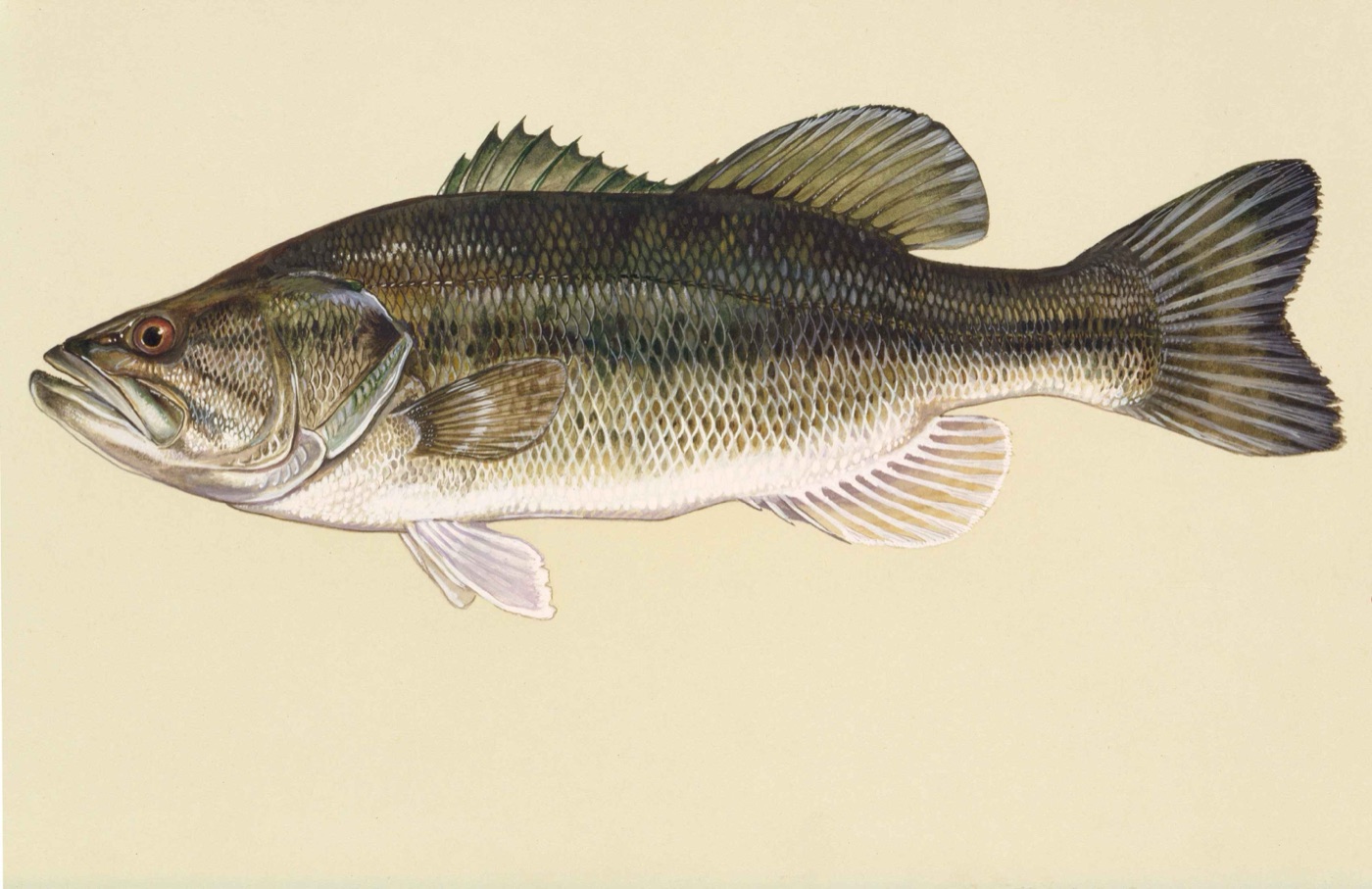
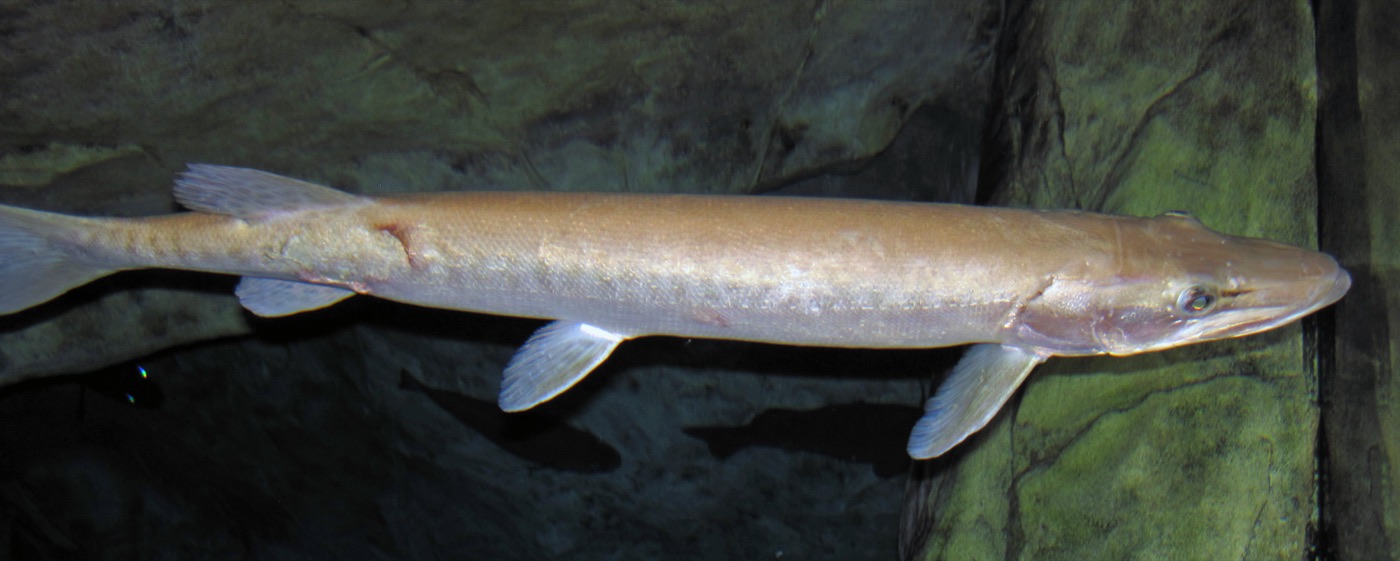
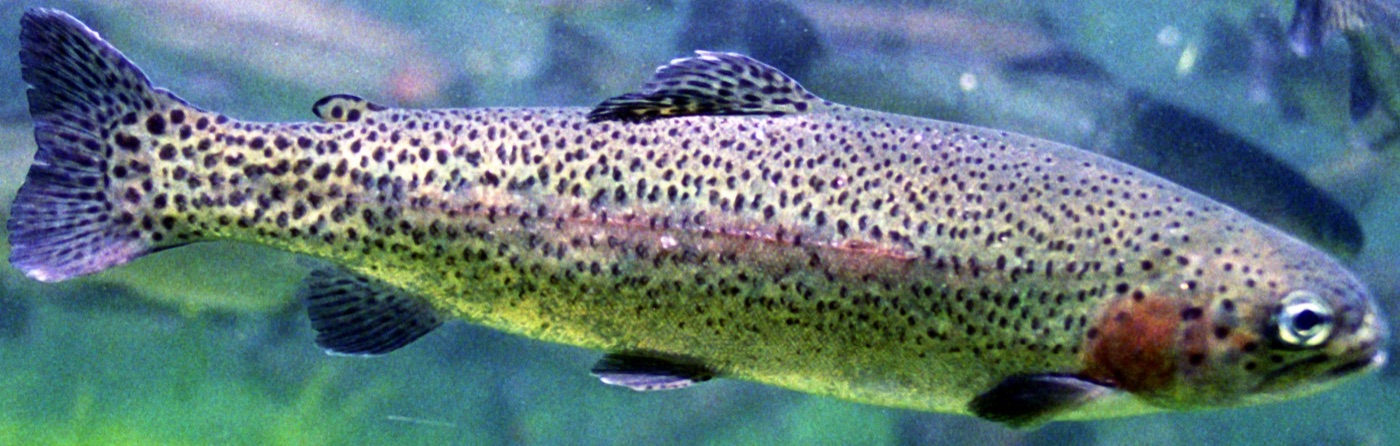
- Utah's wildlife agency species-matches it: ultralight for panfish, medium for trout, medium power for bass and walleye, heavy for muskie.
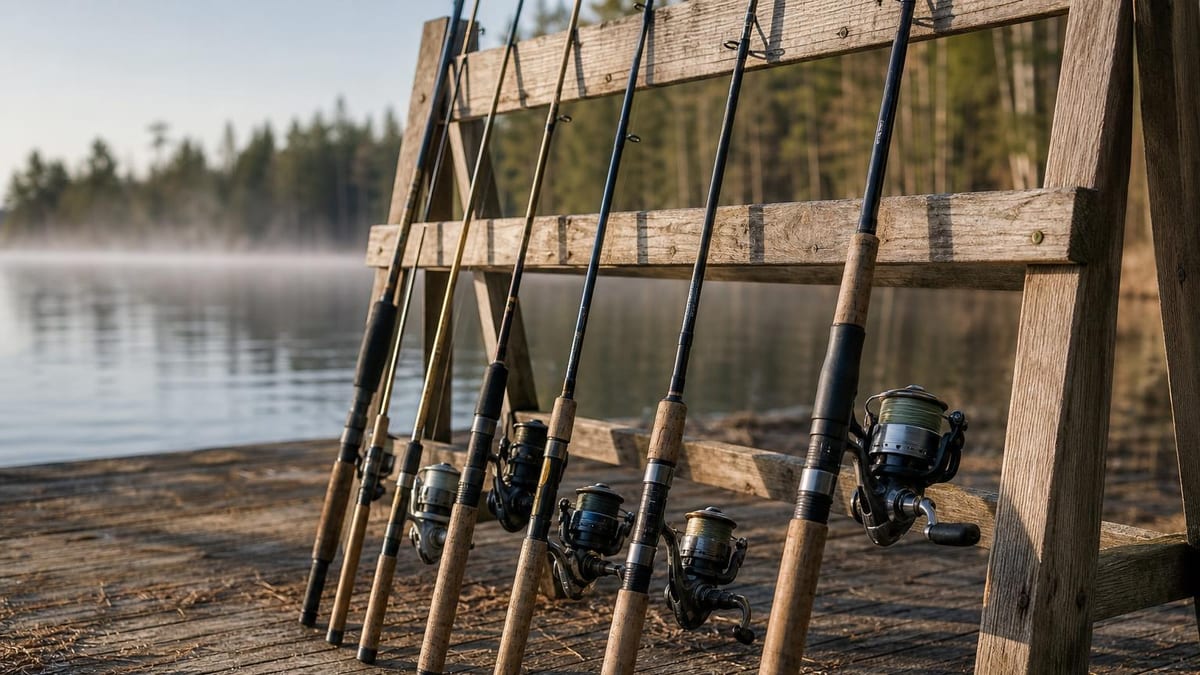
- The specs are printed on the blank — length, power and line rating are written just above the handle.
Three specs decide everything
A rod wall looks like a hundred decisions; it’s actually three. Every rod is a point in a small space defined by length (how far you reach), power (how much bend it resists), and action (where along the blank the bend lives). Learn what each one trades away, and the wall reorganizes itself into tools for jobs — because in rods, as in most tackle, every advantage is paid for somewhere else.
Even better: the answers are printed on the product. As Take Me Fishing’s buying guide notes, most rods carry their length, power and line rating right on the shaft above the handle. This guide is about reading that line of text fluently.
Length: reach versus muscle
Length sets the simplest trade. Longer rods cast farther — surf rods and fly rods stretch as long as 14 feet for exactly that reason — while shorter rods, per Take Me Fishing, “provide more power for fighting a fish,” which is why trolling and big-game sticks are stubby. A long lever throws; a short lever lifts.
Everyday fishing lives in the middle. Utah’s Division of Wildlife Resources pegs common spinning combos at 5 to 8 feet — long enough to cast a lure past the weed edge, short enough to steer a fish away from the dock pilings. Pick the extremes only when your fishing does: surf work earns the long rod, vertical boat fishing the short one.
Power and action: the two kinds of bend
These two get conflated constantly, and separating them is the day the wall starts making sense.
Power is resistance to bending — the rod’s backbone, running light to heavy. Take Me Fishing’s framing: heavy power delivers quick hooksets and pulls fish out from under cover; light power loads properly with small lures and suits the thin lines that fool fish in clear, open water. The cost runs both directions — their rod guide notes stronger rods lose sensitivity to gentle strikes and may not flex enough for light line, while lighter rods can be exquisitely sensitive but underpowered against big fish.
Action is where the bend happens, on a spectrum from fast to slow. A fast-action rod is stiff, bending only near the tip — it telegraphs “slight vibrations on the line,” helping you tell an actual bite from a bump. A slow-action rod bends deep into the blank and is more forgiving when, as Take Me Fishing puts it, “your fish may try to wiggle out of the hook” — the deep flex keeps constant pressure on, the same principle that makes barbless-hook fishing work.
The pairing logic: fast action + single hooks + techniques that need feel (jigs, soft plastics); slower action + treble-hooked moving baits, where the forgiveness keeps fish pinned.
Material and rod type: temperament choices
Fiberglass versus graphite is toughness versus feel. Take Me Fishing’s comparison is compact — fiberglass is tougher, more flexible, cheaper; graphite is lighter, stiffer, more sensitive, and “easier to damage.” Utah’s agency reads the same split for newcomers: start fiberglass, upgrade to graphite when sensitivity starts earning its price. (Utah also calls graphite “stronger” in the pulling sense — the fragility is about impacts and high-sticking, not fish-fighting.)
Spinning versus casting is the other fork. Spinning rods hang their guides underneath and pair with the open-faced reels that, per Texas Parks and Wildlife, “cast quickly and long distances” across fresh and salt water — the general-purpose default. Casting rods carry guides on top for spincast or baitcast reels; TPWD is blunt that the baitcaster’s complexity suits “an experienced angler.” The full comparison lives in our reel guide.
Matching rod to fish, the agency way
The cleanest species ladder in the approved literature is Utah’s: ultralight (4-8 lb line) for panfish; medium-weight for trout; medium power with some flex for bass and walleye; heavy for muskie. Behind it sits TPWD’s system rule — line matched to rod and reel capability and to the species — because a rod is one link in a balanced chain that includes line choice and the knots holding it together.
And for the first rod, take the agencies at their word rather than the marketing: a fiberglass spinning combo, medium power — Utah’s explicit recommendation, and the setup Take Me Fishing calls properly balanced from the factory and easy to learn on. It will not be your last rod. Its job is to be the rod on which you find out which rod you actually need — cheap tuition, honestly spent.
Frequently asked questions
What rod should a beginner buy?
The agencies agree to a boring, correct answer: a fiberglass spinning combo. Utah's Division of Wildlife Resources recommends exactly that for newcomers — tougher than graphite and less expensive 'until you figure out what kind of fishing you like best' — and Take Me Fishing notes most beginners start on fiberglass, with spinning rods serving as good general-purpose first rods. A combo solves the matching problem too: rod, reel and line balanced at the factory instead of by guesswork.
What do rod power and action actually mean?
Two different questions about bending. Power is the rod's resistance to bending — Take Me Fishing's buying guide puts it as heavy versus light, with heavy power suited to quick hooksets and pulling fish out from under cover, and lighter power to small lures and thin line. Action is where along the blank the bend happens, on a spectrum from fast to slow: a fast rod is stiff and lets you feel slight vibrations — useful for telling a bite from a bump — while a slow rod bends deep and forgives a fish trying to wiggle off the hook.
Does rod length matter?
It sets the trade between reach and muscle. Take Me Fishing's guide draws both ends: longer rods cast farther — surf and fly rods run up to 14 feet — while shorter rods provide more power for fighting fish, which is why trolling and big-game rods are short. Everyday spinning combos live between the extremes: Utah's agency notes most run 5 to 8 feet, plenty for shore and boat fishing alike.
Fiberglass or graphite?
Temperament versus refinement. Take Me Fishing's comparison: fiberglass is tougher, generally more flexible and cheaper; graphite is lighter, stiffer and more sensitive — but easier to damage. Utah's agency frames graphite as the more expensive, more sensitive upgrade. The practical reading: fiberglass forgives car doors, rock ledges and beginners; graphite rewards anglers who feel for subtle bites and treat their gear kindly. Many anglers end up owning both, each with a job.
How do I match a rod to the fish I'm after?
Start from the species and work backwards — Utah's agency lays out the ladder: ultralight rods with 4-8 lb line for panfish, medium-weight rods for trout, a medium-power rod with some flex for bass and walleye, and heavy rods for muskie. Texas Parks and Wildlife adds the system rule: match your line to your rod and reel capability and to the species you're targeting. The specs printed on the blank — length, power, line rating — exist exactly for this check.
Sources
- How to Choose a Fishing Rod — Take Me Fishing (Recreational Boating & Fishing Foundation). Accessed August 13, 2026.
- Tips for Buying a Fishing Rod — Take Me Fishing (Recreational Boating & Fishing Foundation). Accessed August 13, 2026.
- Learn to fish: basic equipment — Utah Division of Wildlife Resources. Accessed August 13, 2026.
- Fish Texas: tackle chapter — Texas Parks & Wildlife Department. Accessed August 13, 2026.
- Why a Spinning Rod & Reel Combo Is Best for Beginners — Take Me Fishing (Recreational Boating & Fishing Foundation). Accessed August 13, 2026.
How we choose sources: sources policy.
More in this series
Know when it's worth going.
Fishing Club AI turns live weather, pressure and moon data into a simple bite forecast for your spot — so the skills you practise get used on the right day.
Get the App