Rainbow Trout
Oncorhynchus mykiss
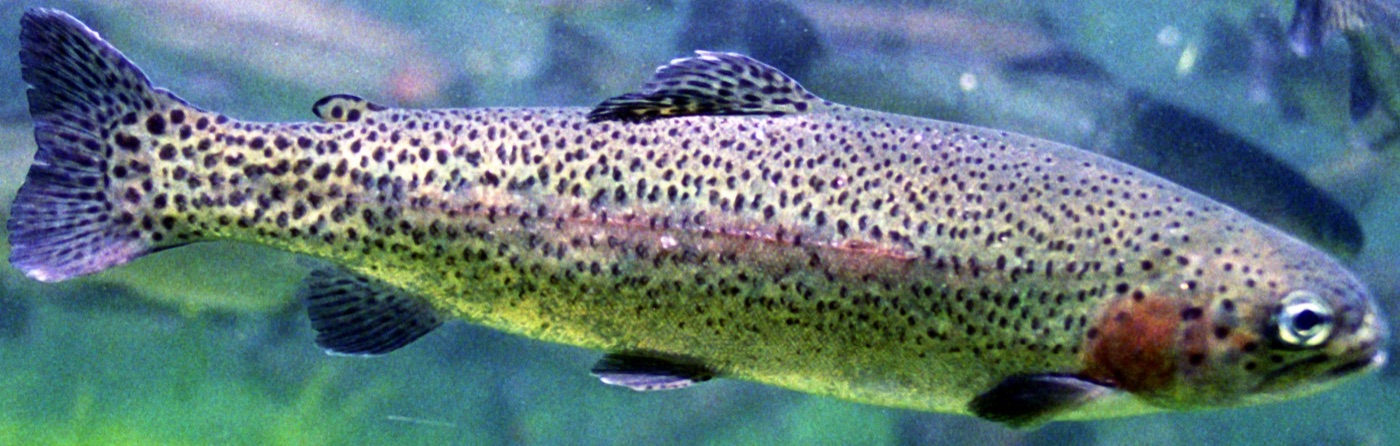
Rainbow trout is a cold-water fish of the salmon family, recognized by the broad pink-to-red stripe running along each silvery flank.
MoreFull Species Details
- Species Name
- Oncorhynchus mykiss
- Family
- Salmonidae
- Order
- Salmoniformes
- Also Known As
- Redband trout, Steelhead, Rainbow, Bow
Rainbow Trout (Oncorhynchus mykiss) Fish Description
Rainbow trout is a cold-water fish of the salmon family, recognized by the broad pink-to-red stripe running along each silvery flank.
The body is streamlined and silvery, with an iridescent pink or red band from the gill to the tail and dense black spotting across the back, dorsal fin, and tail. Coloration varies widely with habitat: stream fish show vivid color and heavy spots, while lake and sea-run fish appear brighter and more silvery. The head is small and the mouth moderate, not reaching far past the eye. Sea-run rainbow trout, called steelhead, lose much of their color at sea and regain it on returning to fresh water. Spawning males develop a hooked lower jaw and intensified color.
Rainbow trout is native to the cold rivers and lakes of western North America and eastern Asia draining to the Pacific. It is now among the most widely stocked fish in the world, established on every continent except Antarctica for sport and food. The species requires clean, cool, oxygen-rich water. Anglers prize rainbow trout for their spirited, leaping fight, their eager response to flies and lures, and their fine table quality, making them a cornerstone of freshwater sport fishing worldwide.
Interesting Facts About Rainbow Trout
- The world record rainbow trout weighed 48 pounds, caught in Saskatchewan in 2009.
- Sea-run rainbow trout are called steelhead and can migrate hundreds of miles.
- Rainbow trout require cold, oxygen-rich water, ideally below 70 degrees Fahrenheit.
- The species spawns in spring over clean gravel in flowing water.
- Rainbow trout have been introduced to every continent except Antarctica.
Show more facts
- A female can deposit up to 2,000 eggs per pound of body weight.
- Rainbow trout can live 8 to 11 years in the wild.
- The species belongs to the same genus as Pacific salmon, Oncorhynchus.
- Steelhead can spawn more than once, unlike Pacific salmon that die after spawning.
- Rainbow trout feed heavily on aquatic insects, making them a fly-fishing favorite.
- The species was first described scientifically from Kamchatka in the Russian Far East.
- Hatcheries raise millions of rainbow trout each year to stock rivers and lakes.
Average Speed & Size
Rainbow trout is a fast, agile swimmer that typically reaches 12 to 24 inches and 1 to 5 pounds. Lake-dwelling and sea-run fish grow far larger, exceeding 36 inches and 20 pounds, with the largest approaching 48 pounds. The species holds in current with quick, darting movements and accelerates sharply to intercept drifting insects or flee danger. Hooked rainbows are known for long runs and repeated leaps, using both speed and stamina to resist the angler.
Where to Find Them
Rainbow trout is found in cold, clean rivers, streams, and lakes across North America and in stocked waters worldwide. The species holds in oxygen-rich riffles, runs, and pools where current delivers food, and along the cool depths and inlets of lakes. Rainbow trout favor water between 50 and 65 degrees Fahrenheit and seek shade, undercut banks, and current seams. Sea-run steelhead range far up coastal rivers to spawn. Rainbow trout are absent from warm, slow, low-oxygen waters, which exceed the temperature the species can tolerate.
Rainbow Trout Fishing Tips
Rainbow trout fishing ranges from simple stocked-pond angling to demanding technical fly fishing. Success depends on presenting a natural drift in cold, flowing water and matching the insects or bait the fish are feeding on.
Equipment
Use a light spinning rod of 6 to 7 feet with 4- to 8-pound line, or a 5-weight fly rod for river work. The light setup suits the trout's wariness and the small baits and flies it takes. Fly anglers match rod weight to water size, stepping up for large rivers and steelhead and down for small streams.
Chumming
Chumming is generally prohibited in trout streams, so anglers rely on natural presentation instead. A drag-free drift that carries bait or fly at the speed of the current is the key attractor. In lakes, a slow retrieve or a suspended bait near feeding depth draws cruising trout.
Bait
Live worms, salmon eggs, and small insects are effective natural baits where legal. Productive lures and flies include small spinners, spoons, and imitations of mayflies, caddis, and midges.
Patience
Rainbow trout in clear water spook at heavy line and clumsy casts, so a stealthy approach and fine tackle matter. A natural, unhurried drift consistently outfishes aggressive presentation.
Conditions that change the bite
- What Barometric Pressure Is Best for Fishing? No research supports a single best barometric pressure for fishing. What pressure really does, how big a weather swing is, and what to watch instead.
- Best Time of Day to Fish: What Evidence Shows Dawn and dusk are measurably better — and the edge is smaller than the folklore says. The 13-year dataset, the light mechanism, and what matters more.
- Dissolved Oxygen: The Condition Anglers Can't See Fish live or die by oxygen you can't see. How temperature, depth, dawn and turnover move it, which species need more, and how to fish around the invisible map.
Guides for fishing this species
- Trout Fishing for Beginners: Water Temperature First A thermometer teaches more than a tackle box. Where trout can survive, when to stop fishing for them, and the light rigs that work on stocked water.
- Trout vs Salmon: Same Family, Very Different Lives Trout, salmon and char all share one family — the real split is life history. Why Pacific salmon die after spawning, steelhead don't, and where char fit in.
- Dry Fly vs Nymph: Which One, and When Dry flies copy adult insects on top; nymphs copy the stage that lives underwater for months. The biology behind the choice, and the rule agencies give.
- Fishing Licenses: How the System Works and Where the Money Goes License sales plus excise taxes fund fisheries through a user-pays system dating to 1950. How the Sport Fish Restoration program works and why licenses matter.
- Fly Fishing Basics: What It Is and How to Start Fly fishing explained by state agencies: why you cast the line instead of the lure, the outfit you actually need, what flies imitate, and where to begin.
- Fly Line, Leader and Tippet: The Setup Explained Backing, fly line, leader, tippet — what each section does, how line weights match your rod, and the knots that join them. The fly setup, front to back.
Related Species
Know when they'll bite.
BiteScore forecasts when rainbow trout will feed at your spot — from live weather, pressure, and moon data.
Get the App