Best Fishing Spots in North Carolina: Five Waters and the Exact Place to Fish on Each
Five North Carolina waters, each pinned to a place the N.C. Wildlife Resources Commission names: the Roanoke River at Weldon for the spring striped bass and hickory shad runs, the Tar River at Battle Park for shad, Jordan Lake's Ebenezer Church Access and Harris Lake's Holleman's Crossing for largemouth bass and crappie, and the Davidson River by the Pisgah Center for mountain trout. Striped bass on the Roanoke are catch-and-release in 2026.
Key takeaways
- NCWRC calls the Roanoke River the state's major striped bass spawning river; its spring run from March through May is the most popular native striped bass fishery in North Carolina.
- In March 2026 NCWRC suspended striped bass harvest by hook-and-line in the Roanoke River Management Area until March 1, 2027, after its spawning-grounds survey showed a continued decline. You can still fish, but every striper must be released.
- At Jordan Lake, largemouth bass over 5 pounds are 'very common' by NCWRC's measure — 130 of 2,595 bass sampled from 2006 to 2016 weighed more than 5 pounds.
- NCWRC has built more than 65 fish habitat sites with over 780 fish attractors in Harris Lake, including three shallow-water fishing coves near its boat ramps.
- The Davidson River above Avery Creek is catch-and-release with artificial flies and lures on a single hook; below it, the river is Hatchery Supported water.
How these five were chosen
North Carolina runs from the mountains to the sounds, and these five pins cover three of its fisheries: the spring runs of striped bass and shad up the coastal-plain rivers, the bass lakes of the Triangle, and the trout water of the southern mountains. Each comes from the N.C. Wildlife Resources Commission — species pages, fact sheets, survey reports, press releases — with access details from N.C. State Parks where they manage the land.
A water made the list only if NCWRC describes a strong fishery there and names a specific public place we could put a pin on. Falls Lake’s tailrace, which NCWRC mentions for sea-run American shad, missed only because we could not confirm its access details from an agency page.
| # | Pinpoint | Water | Best bets (NCWRC) | Access |
|---|---|---|---|---|
| 1 | Weldon | Roanoke River | Striped bass (release), hickory shad | Ramp, bank |
| 2 | Battle Park | Tar River | Hickory and American shad | Bank |
| 3 | Ebenezer Church Access | Jordan Lake | Largemouth bass, crappie | Ramp, bank |
| 4 | Holleman’s Crossing | Harris Lake | Largemouth bass, crappie | Ramp |
| 5 | By the Pisgah Center | Davidson River | Trout (catch-and-release) | Wade |
North Carolina requires a fishing licence from age 16 — an inland licence for all five of these waters.
Roanoke River — Weldon
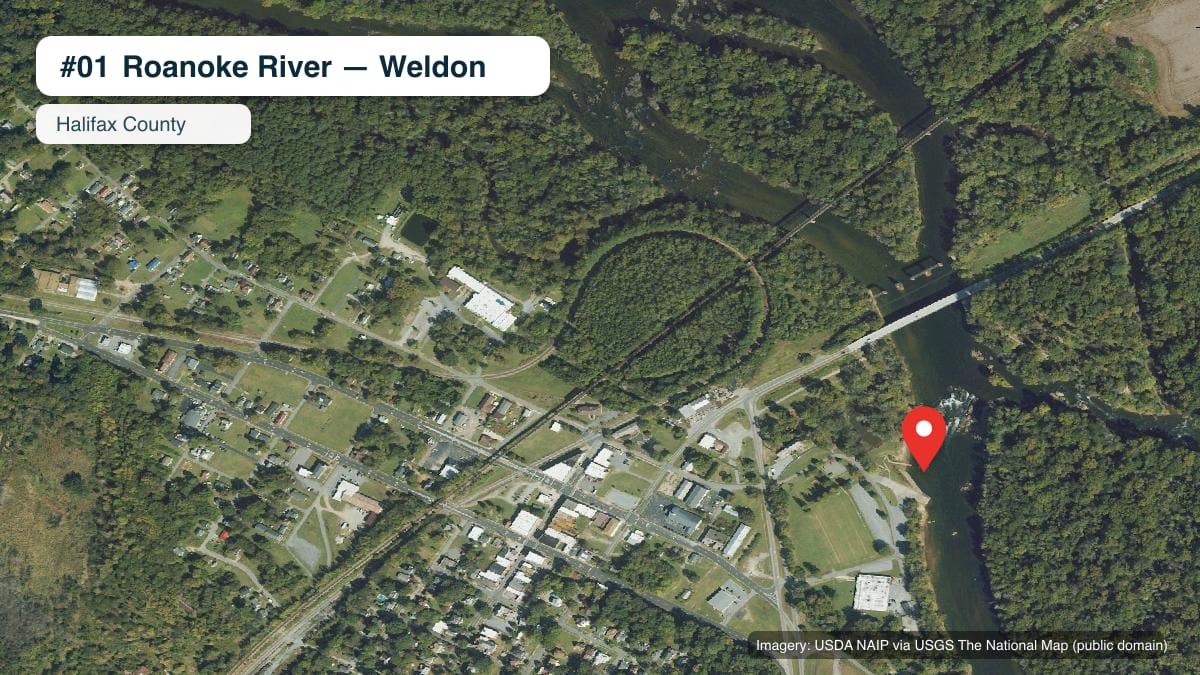
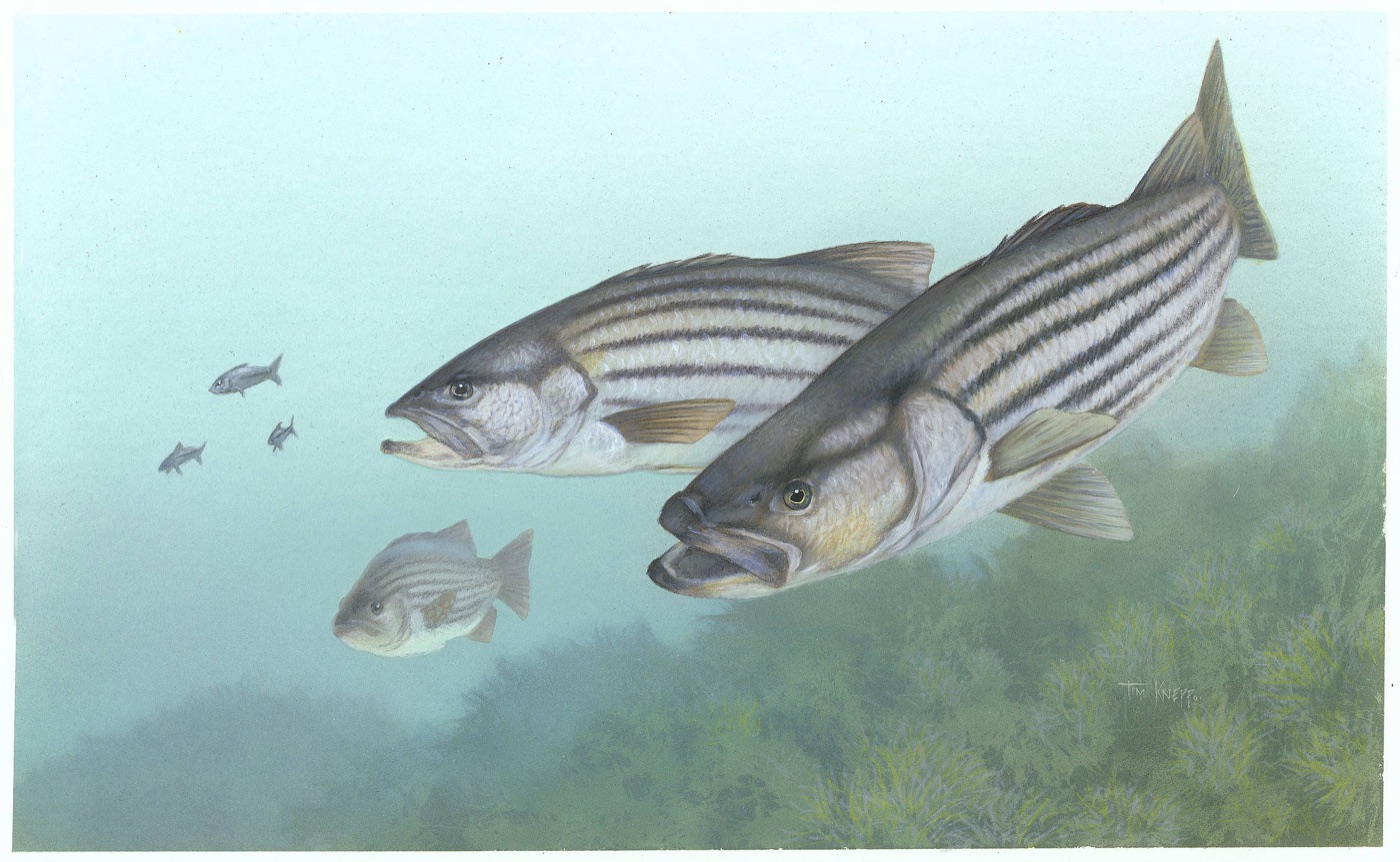
Why it is on the list. NCWRC calls the Roanoke “the major striped bass spawning river in North Carolina.” Every spring, adults swim from the Atlantic and Albemarle Sound about 130 miles upriver to spawn on rocky rapids near the fall line, and the run, from March through May, is the most popular native striped bass fishery in the state. Most spawning begins at about 62 °F, sometimes with the surface commotion anglers call “rock fights.”
Why this exact spot. NCWRC’s surveys describe the stripers’ “historic spawning grounds near Weldon,” and NCWRC runs a boating access area there — one its creel survey describes as the long-time base for guided striper trips in the upper river. The pin is on the river at the access.
Target fish (NCWRC). Striped bass (catch-and-release in 2026) · hickory shad · American shad.
The 2026 situation. NCWRC suspended striped bass harvest by hook-and-line from March 9, 2026, and its proclamation keeps harvest closed until March 1, 2027, after the 2025 spawning-grounds survey showed abundance still falling and eight years of poor spawning. Fishing is allowed, but every striper must be released immediately. From April 1 to June 30, upstream of the U.S. 258 bridge, live or natural bait must be fished on a single barbless circle hook, and other tackle on a single barbless hook.
Techniques.
- Stripers: NCWRC lists live and cut shad, white or yellow bucktail jigs, spoons and rattling crankbaits, and notes large flies are popular on the Roanoke in spring.
- Releasing them well: NCWRC says release mortality rises sharply once the water passes 70 °F, so fish the early, cooler part of the run. Use barbless hooks and lures rather than live bait to avoid deep hooking, keep the fish in the water, and cut the line if the hook will not come out quickly.
- Hickory shad: NCWRC calls the Roanoke many anglers’ premier hickory shad destination. Fish arrive near Weldon in mid-March and peak from mid-March to early April at 52–58 °F. Shad darts or small spoons on 4- to 8-pound line, cast upstream and drifted down; fly anglers use small baitfish patterns. Bank anglers do well along the shoreline next to the Weldon access.
Our catch and release guide covers handling, and our striped bass page covers the fish.
Tar River — Battle Park
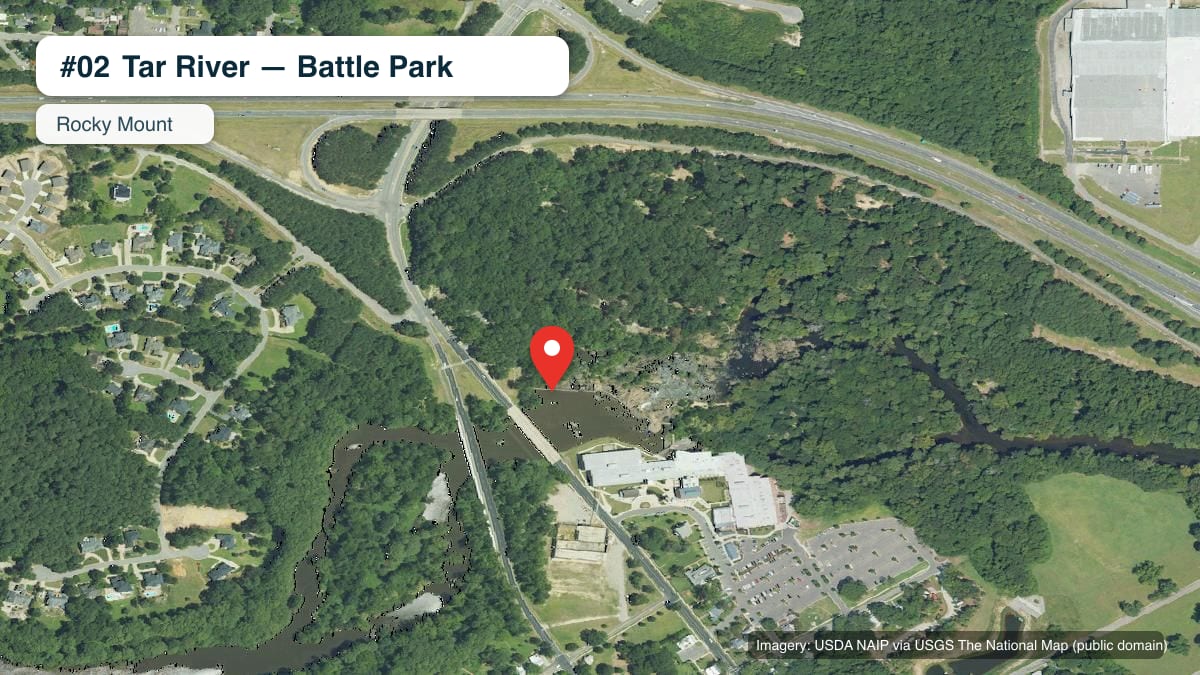
Why it is on the list. Hickory and American shad run up North Carolina’s coastal rivers from the ocean every spring to spawn, and NCWRC’s species pages name the specific places to meet them. On the Tar River, both pages name the same spot.
Why this exact spot. NCWRC’s hickory shad page lists “Battle Park in Rocky Mount” on the Tar, and its American shad page names Battle Park too, along with Bell’s Bridge north of Tarboro. The park sits at the falls of the Tar in Rocky Mount; the pin is on the river there.
Target fish (NCWRC). Hickory shad · American shad.
Techniques (NCWRC).
- Tackle: light spinning gear with shad darts or small spoons on 4- to 8-pound line. Fly anglers use a small baitfish pattern with a flashy tail.
- The drift: cast upstream into the current and let the lure sink and swing down with the flow, as you would at Weldon.
- Why they bite: NCWRC notes American shad generally do not feed during their spawning migration, so the strike is a reaction — keep the lure moving through the fish, close to their level.
- When: spring. Hickory shad run first; on the Roanoke NCWRC puts peak fishing at water temperatures of 52–58 °F.
Shad rules differ from river to river; NCWRC’s regulations digest has them. Our river levels explainer covers why spring flows decide a shad trip.
Jordan Lake — Ebenezer Church Access
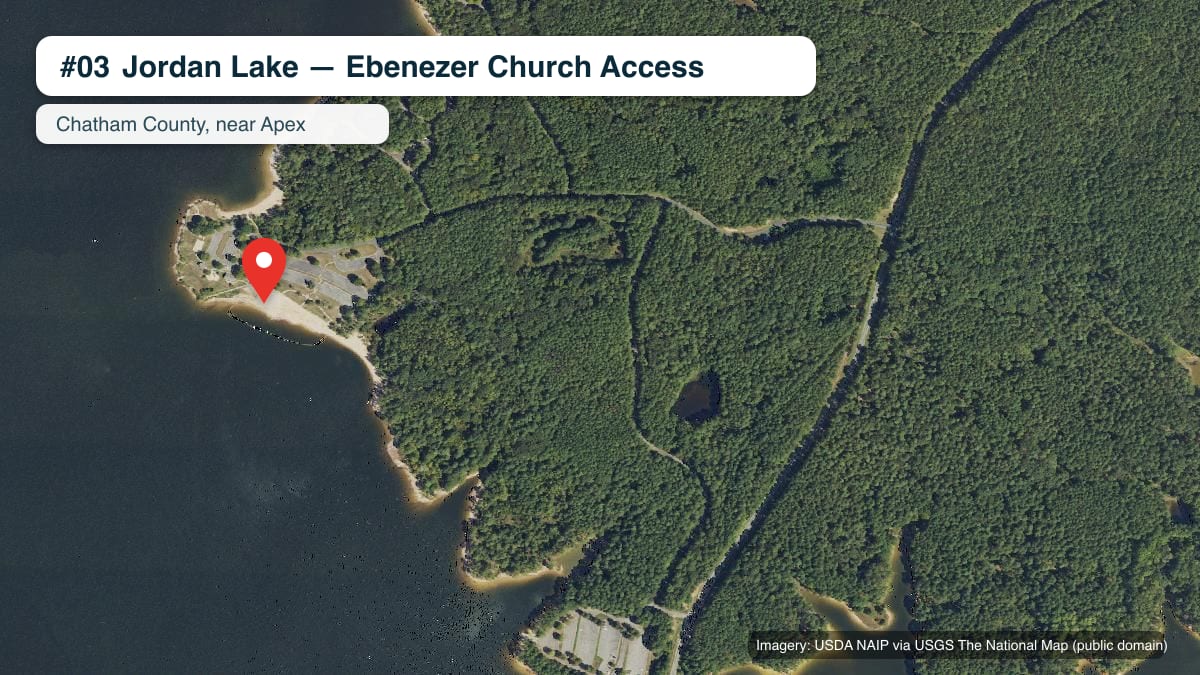
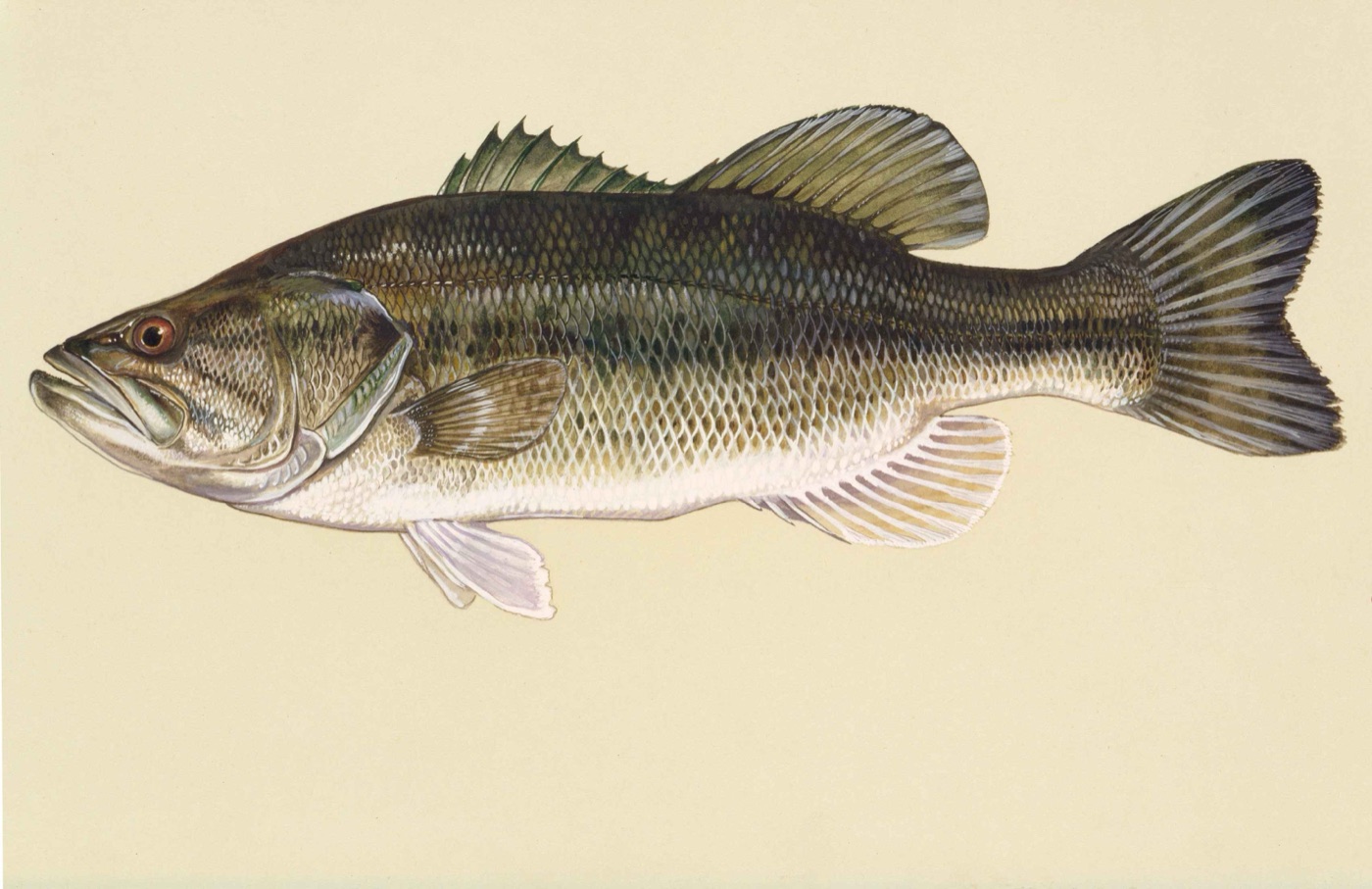
Why it is on the list. Jordan Lake, about 14,000 acres at the confluence of the Haw River and New Hope Creek, was impounded by the Corps of Engineers in 1982 and sits about 30 miles west of Raleigh. NCWRC’s fact sheet says it “supports an exceptional Largemouth Bass fishery as fish larger than 5 pounds are very common” — 130 of 2,595 bass in its 2006–2016 samples topped 5 pounds and 20 inches — and its electrofishing surveys consistently exceed 40 bass an hour.
Why this exact spot. Ebenezer Church is one of the Jordan Lake State Recreation Area’s seven accesses, and N.C. State Parks lists a 24-hour boat ramp there, along with a swim beach, trails and picnic shelters. It is the round-the-clock launch for a dawn bass trip. The pin is on the point at the access.
Target fish (NCWRC). Largemouth bass · black crappie · white catfish.
Techniques by season.
- Bass, spring and fall: NCWRC says five-fish tournament weights over 25 pounds are common in spring and fall, when bass are active and feeding often. In spring, NCWRC surveys bass along the shoreline as the water warms and fish move shallow to spawn — the same shallows anglers fish.
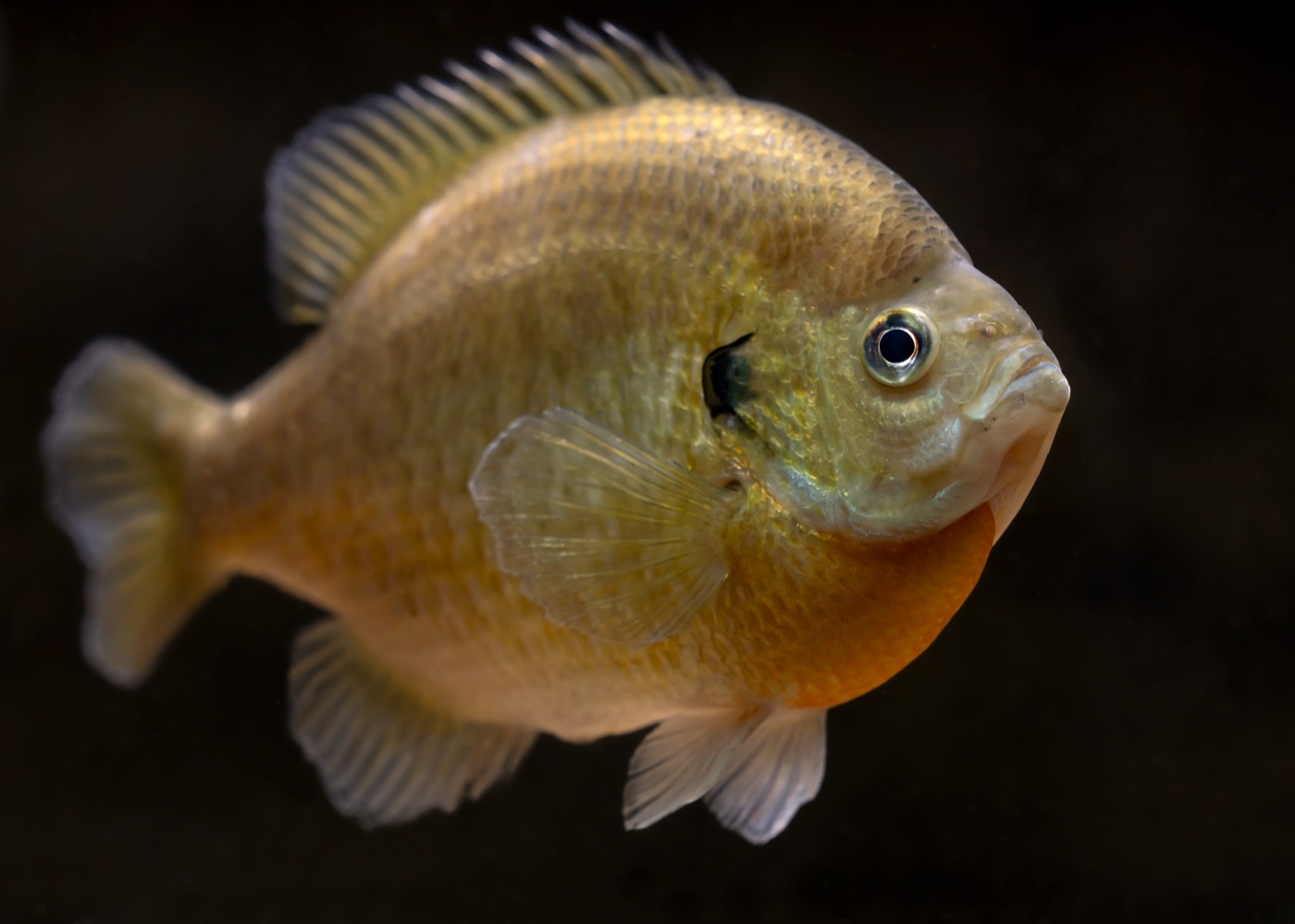
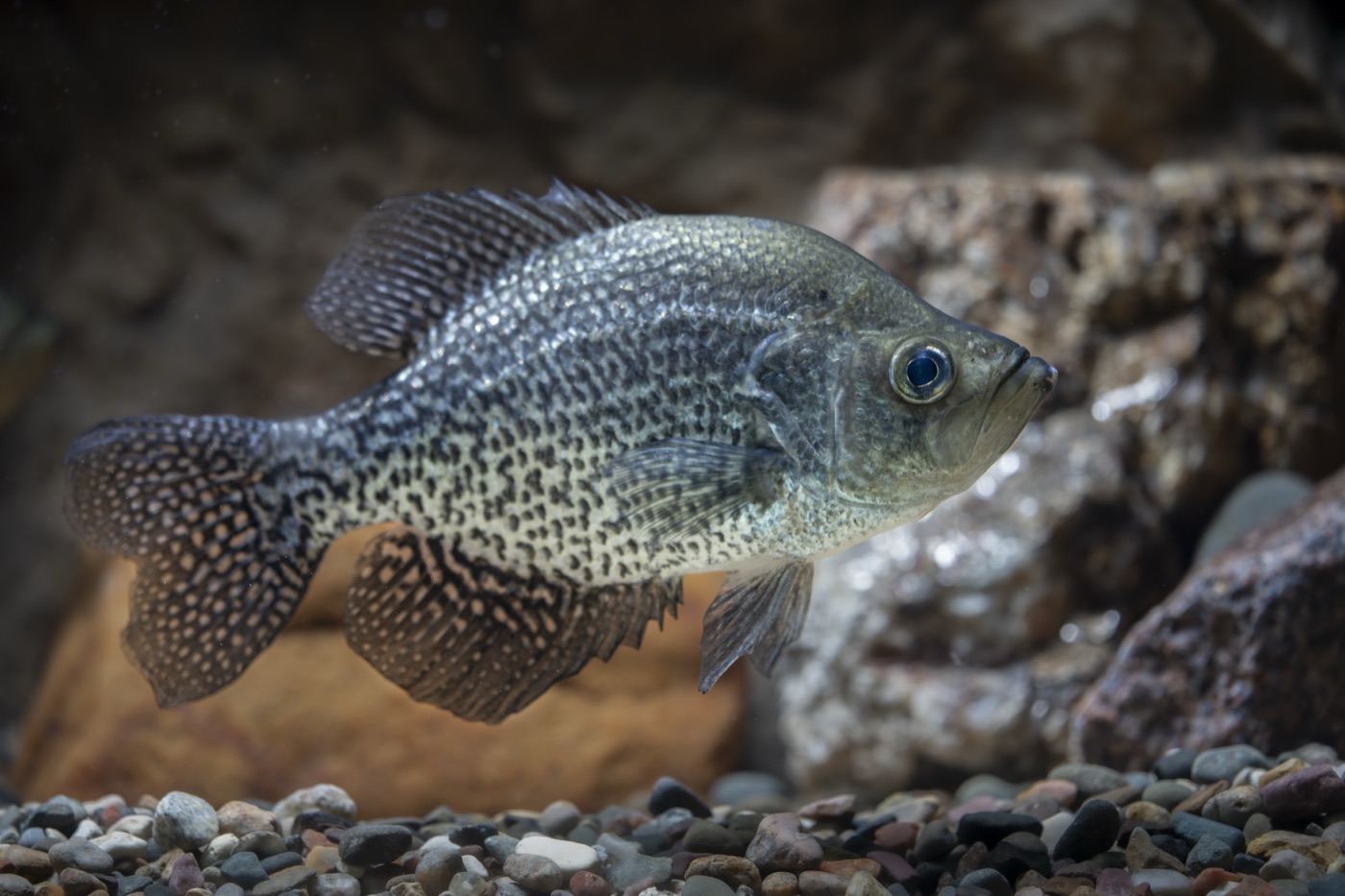
- Crappie: NCWRC calls Jordan’s crappie fishery one of the most popular in the state because of its closeness to the Triangle, and says crappie explore shallow banks at dawn and dusk looking for shad and aquatic insects.
- Crappie size: in NCWRC’s 2015 sample, 35% of crappie were over 10 inches, and two-year-old fish averaged about 10.4 inches.
The lake supplies drinking water to eight municipalities, per NCWRC, and N.C. State Parks calls it “one of the largest summertime homes of the bald eagle.” Our bass fishing for beginners and crappie fishing guides cover the tactics.
Shearon Harris Reservoir — Holleman’s Crossing
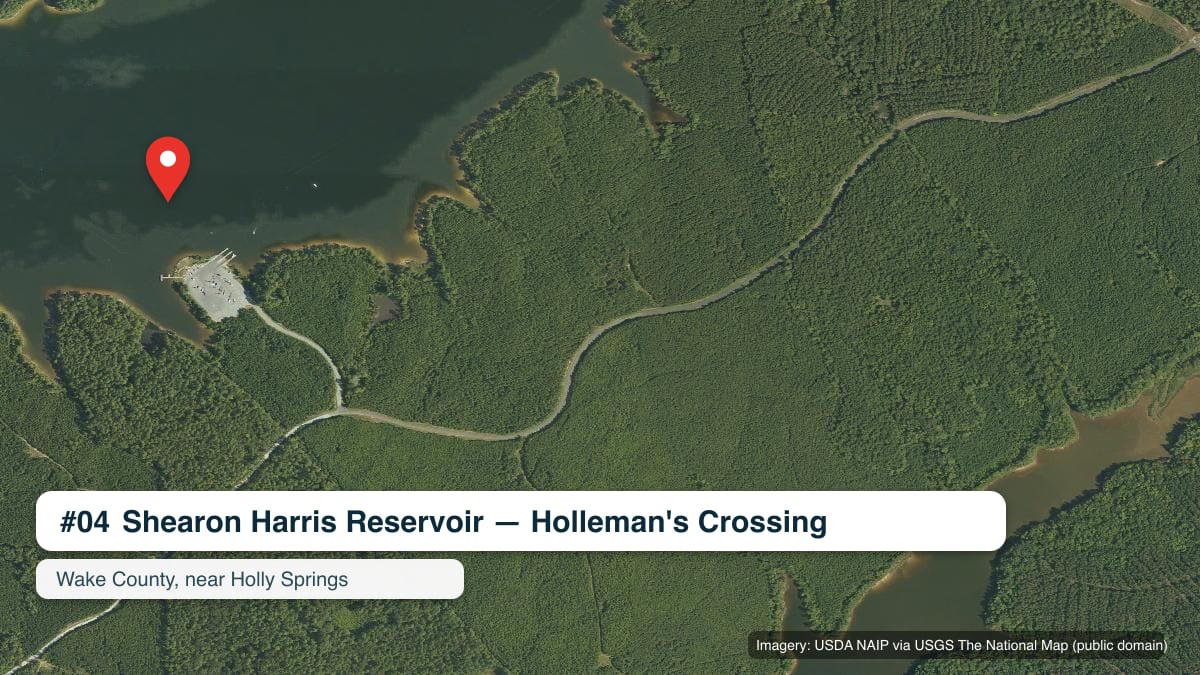
Why it is on the list. Harris Lake is a 4,151-acre reservoir about 20 miles southwest of Raleigh, built to cool a nuclear power plant. NCWRC’s Wake County guide calls its largemouth bass fishing “nationally renowned,” and NCWRC sampling has found largemouth bass and black crappie catch rates “consistently above average for a Piedmont reservoir.”
Why this exact spot. Anglers reach the lake from two NCWRC boat ramps, and Holleman’s Crossing is one of them. Since 2018 NCWRC has grown the lake’s fish habitat from five reef sites to more than 65, with over 780 individual fish attractors — including three shallow-water fishing coves near the boat ramps. The pin is on the water off the Holleman’s Crossing ramp.
Target fish (NCWRC). Largemouth bass · black crappie.
Techniques.
- Fish the habitat: NCWRC publishes GPS coordinates for every site on its fish attractor map, and marks attractors in water shallower than 12 feet with buoys. In summer, NCWRC says fish use habitat down to about 20 feet.
- Wood: NCWRC felled 21 trees into about 10 feet of water and cabled them to their stumps — classic cover for bass and crappie.
- Natural structure: rock outcrops, flats, old roadbeds and aquatic vegetation, which NCWRC lists as the lake’s native habitat.
NCWRC’s creel surveys show largemouth bass are the most-targeted fish here, followed by crappie. Cross Point Landing is the other NCWRC ramp. Our texas and carolina rigs guide covers two classic ways to fish brush and wood.
Davidson River — by the Pisgah Center
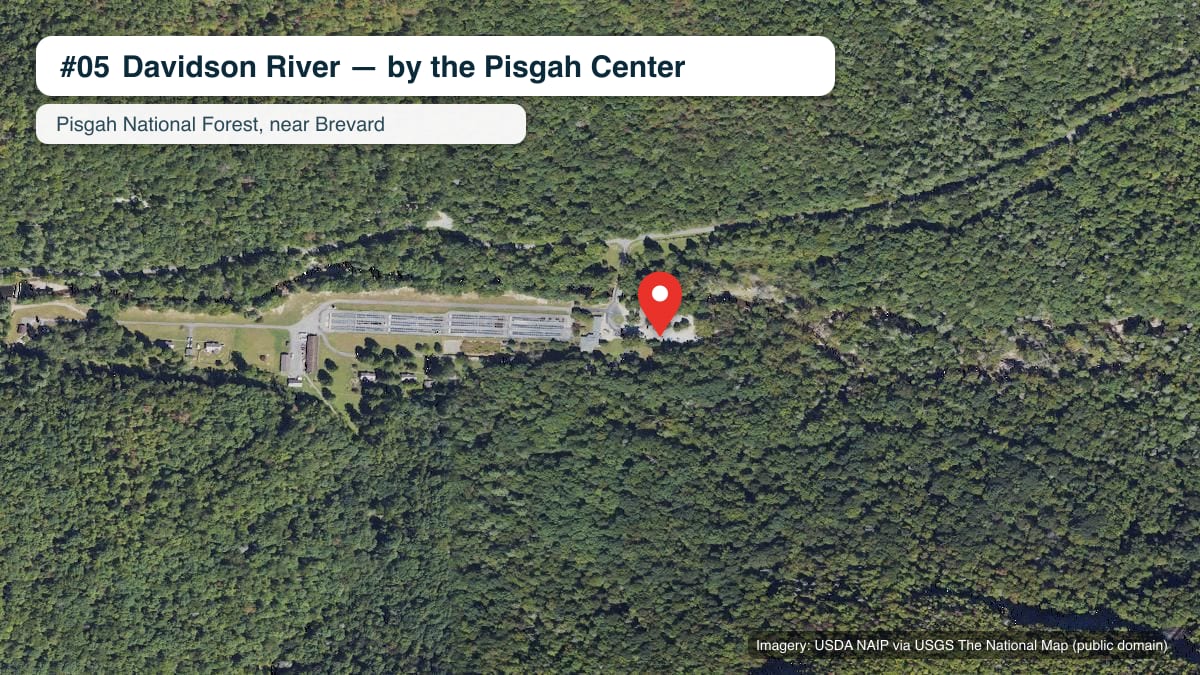
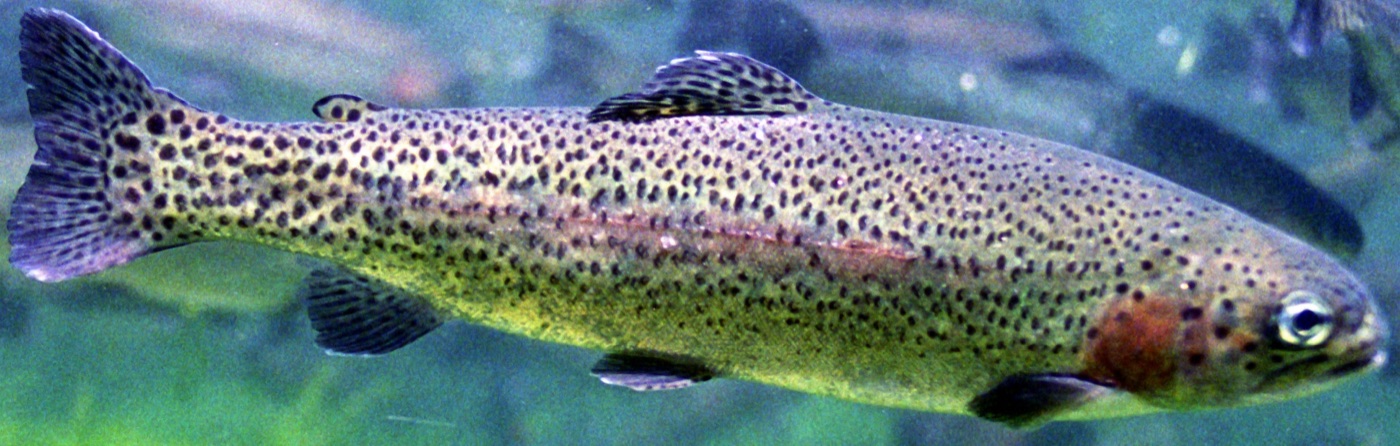
Why it is on the list. The Davidson flows out of Pisgah National Forest near Brevard, and it is managed around a hatchery. The Bobby N. Setzer State Fish Hatchery, the state’s largest trout hatchery, sits beside it, drawing its water from the Davidson and Grogan Creek, next to NCWRC’s Pisgah Center for Wildlife Education.
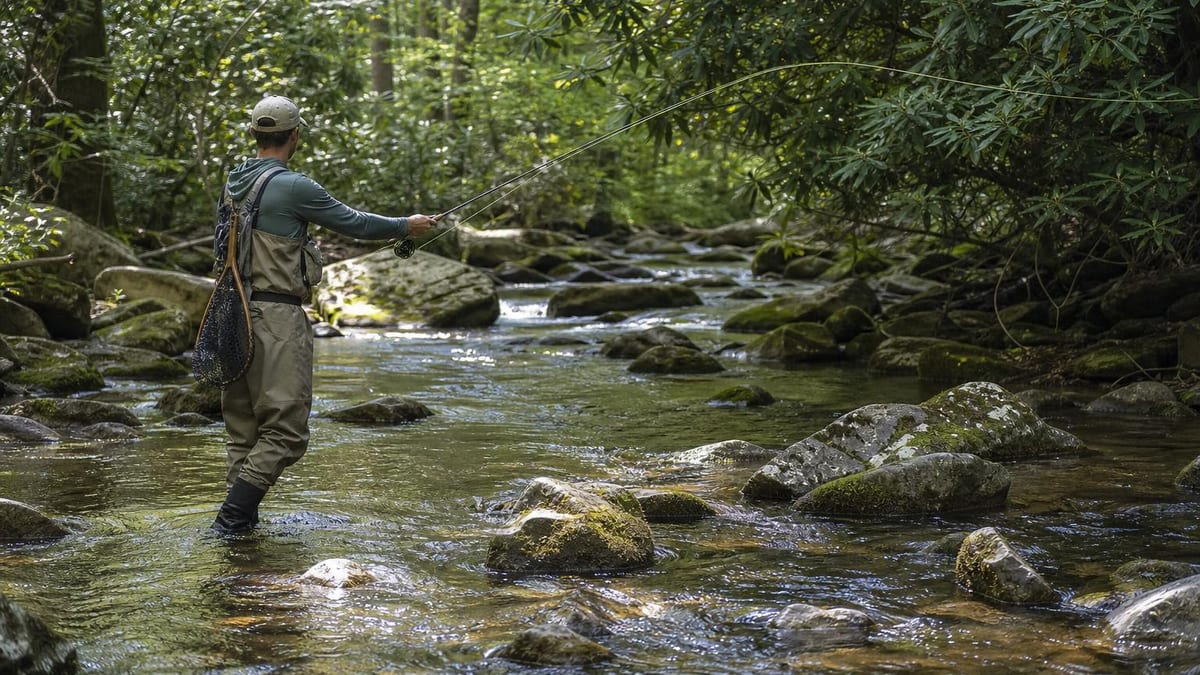
Why this exact spot. NCWRC’s trout rules split the river at Avery Creek. From the headwaters down to Avery Creek — the stretch past the hatchery — it is Catch and Release / Artificial Flies and Lures Only water. From Avery Creek to the lower Forest Service boundary, it is Hatchery Supported. The pin is on the river by the hatchery, in the catch-and-release section.
Target fish. Trout — stocked fish below Avery Creek, catch-and-release water above it.
Techniques and rules that decide them.
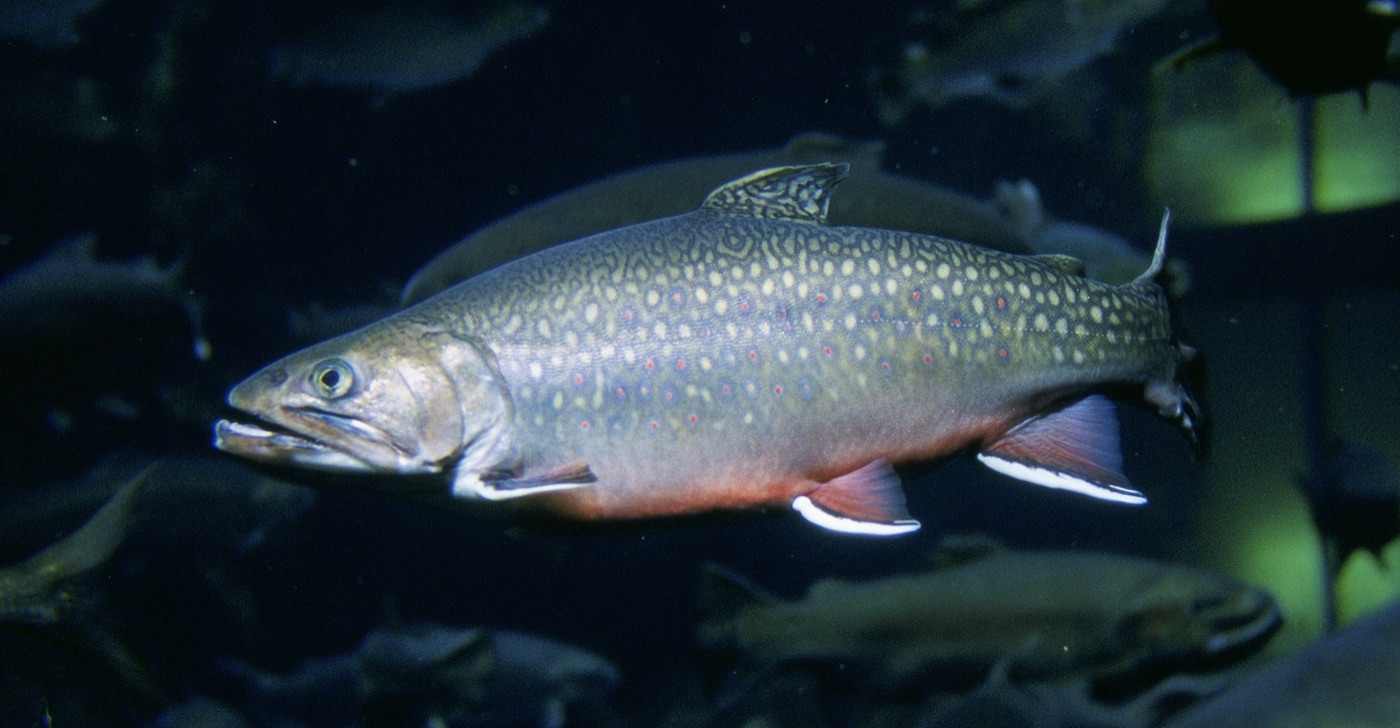
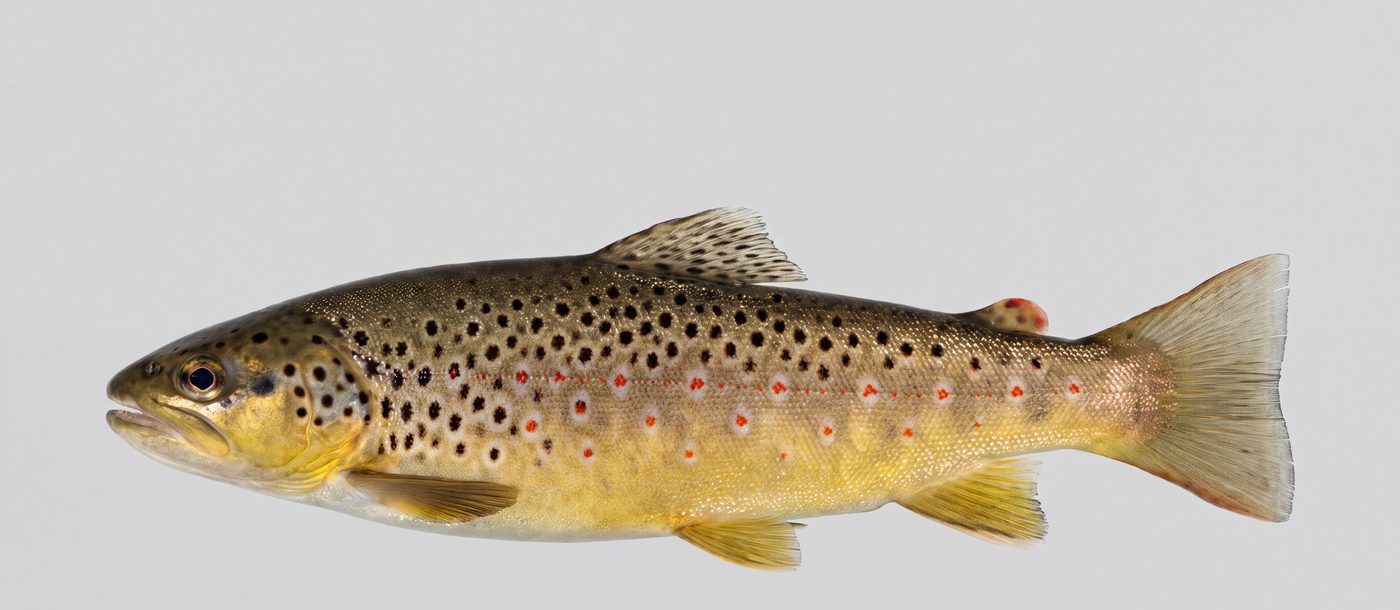
- Above Avery Creek: artificial flies and lures with one single hook only; no trout may be kept, and natural bait may not even be possessed. Light tippet, careful wading and a quick release.
- Below Avery Creek: Hatchery Supported water is closed from March 1 until the first Saturday in April for stocking, then open the rest of the year, and trout may be kept.
- Tactics: our dry fly vs nymph and fly fishing basics guides cover what works on pressured catch-and-release water.
2026 and the hatcheries. The Setzer hatchery is empty during a renovation that began in 2026 and is expected to finish in late 2027 or early 2028; NCWRC says the new covered raceways will improve water quality in the facility and in the Davidson. Meanwhile, an unusually hot summer, drought and lingering Hurricane Helene damage killed about 70% of the fish at the Armstrong hatchery since June, and NCWRC has delayed stocking of Delayed Harvest waters to November. Stocking statewide will stay reduced for several years.
Before you go
Licences. NCWRC exempts anglers under 16. From 16, an inland fishing licence covers all five of these waters, including Public Mountain Trout Waters; coastal and joint waters need a Coastal Recreational Fishing License. Our licences and regulations guide explains where to look.
Proclamations. River striper and shad rules can change mid-season by proclamation. Check NCWRC’s press releases before a spring river trip.
Pick the day. Shad and stripers follow water temperature and flow; lake bass and crappie follow light and fronts. Our water temperature and best time to fish pages explain both.
What it cannot do
- North Carolina's trout stocking is reduced in 2026 and beyond: the Setzer hatchery is being renovated, and NCWRC reported in September 2026 that the Armstrong hatchery lost about 70% of its fish since June. Expect fewer stocked trout than in past years.
- Some fish numbers here come from NCWRC fact sheets dated 2019 to 2022. They describe populations NCWRC has tracked for years, not this season's catch.
- Rules on these waters change, sometimes by proclamation mid-season — the 2026 Roanoke striper closure is one. They are summarised only where they decide whether or how you fish; NCWRC's regulations digest and proclamations are the source.
- The coast, the Outer Banks piers, Lake Norman, Falls Lake and Fontana are not here. That reflects our test — an agency-named public pinpoint we could map precisely and source fully — not a ranking.
Frequently asked questions
Can you fish for striped bass on the Roanoke River in 2026?
You can fish, but you cannot keep them. NCWRC suspended the striped bass harvest by hook-and-line in the Roanoke River Management Area from March 9, 2026, and the proclamation keeps harvest closed until March 1, 2027. Every striped bass must be released immediately. From April 1 to June 30, above the U.S. 258 bridge, only a single barbless circle hook is allowed with live or natural bait, and a single barbless hook with other tackle.
When is the hickory shad run at Weldon?
NCWRC says hickory shad appear near Weldon in mid-March, and peak fishing there is usually from mid-March to early April, when the water is between 52 and 58 °F. Fish shad darts or small spoons on 4- to 8-pound line, cast upstream and let the lure sink and drift with the current. Bank anglers catch fish along the shorelines next to NCWRC's boating access area at Weldon.
Is Jordan Lake good for bass fishing?
By NCWRC's numbers, yes. Its fact sheet calls the largemouth fishery exceptional: fish over 5 pounds are very common, electrofishing surveys consistently top 40 bass an hour, and NCWRC says five-fish tournament weights over 25 pounds are common in spring and fall. The lake is about 14,000 acres, 30 miles west of Raleigh, with seven state recreation area accesses.
Where is the best trout fishing near Brevard?
The Davidson River in Pisgah National Forest. From its headwaters down to Avery Creek it is catch-and-release water, artificial flies and lures with a single hook only, and it flows past the Pisgah Center for Wildlife Education and the Bobby N. Setzer hatchery, the state's largest trout hatchery. From Avery Creek to the lower Forest Service boundary it is Hatchery Supported water, where fish may be kept.
Do I need a fishing licence in North Carolina?
From age 16. NCWRC says youth under 16 are exempt from fishing licences. Anglers 16 and over need an inland fishing licence for inland waters, including Public Mountain Trout Waters like the Davidson, and a Coastal Recreational Fishing License for coastal and joint waters.
Sources
- Wildlife Agency Suspends Striped Bass Season by Hook-and-Line in Roanoke River (March 6, 2026) — N.C. Wildlife Resources Commission. Accessed October 5, 2026.
- Striped Bass Fishing Information — N.C. Wildlife Resources Commission. Accessed October 5, 2026.
- Striped Bass — N.C. Wildlife Resources Commission. Accessed October 5, 2026.
- Roanoke River Striped Bass Creel Survey, 2016–2024 — N.C. Wildlife Resources Commission. Accessed October 5, 2026.
- Hickory Shad — N.C. Wildlife Resources Commission. Accessed October 5, 2026.
- American Shad — N.C. Wildlife Resources Commission. Accessed October 5, 2026.
- An Overview of the Jordan Lake Largemouth Bass Fishery 2006–2016 — N.C. Wildlife Resources Commission. Accessed October 5, 2026.
- Black Crappie in B. Everett Jordan Lake: 15 Years of Population Monitoring — N.C. Wildlife Resources Commission. Accessed October 5, 2026.
- Jordan Lake State Recreation Area — Ebenezer Church Access — N.C. Division of Parks and Recreation. Accessed October 5, 2026.
- An Overview of the Shearon Harris Reservoir Habitat Project — N.C. Wildlife Resources Commission. Accessed October 5, 2026.
- Fishing in Wake County — N.C. Wildlife Resources Commission. Accessed October 5, 2026.
- Trout Fishing in North Carolina — N.C. Wildlife Resources Commission. Accessed October 5, 2026.
- Trout water designations, 15A NCAC 10C .0205 (Transylvania County) — N.C. Wildlife Resources Commission. Accessed October 5, 2026.
- Bobby N. Setzer State Fish Hatchery — N.C. Wildlife Resources Commission. Accessed October 5, 2026.
- Environmental Impacts Cause Wildlife Agency to Adjust Fall 2026 Mountain Trout Stockings (September 23, 2026) — N.C. Wildlife Resources Commission. Accessed October 5, 2026.
- License Types and Fees — N.C. Wildlife Resources Commission. Accessed October 5, 2026.
How we choose sources: sources policy.
More in this series
- Best Fishing Spots in Oklahoma: Five Waters, the Exact Spot on Each and the Game Warden's Latest Report
- Best Fishing Spots in Pennsylvania: Five Waters and the Exact Place to Fish on Each
- Best Fishing Spots in Tennessee: Five Lakes and the Exact Place to Fish on Each
- Best Fishing Spots in Texas: Five Famous Lakes and the Exact Place to Fish on Each
Open the spot, then pick the day.
Fishing Club AI maps public fishing spots and turns live weather, pressure and moon data into a bite forecast for each one — so you know which of these to drive to this morning.
Get the App