Black Crappie
Pomoxis nigromaculatus
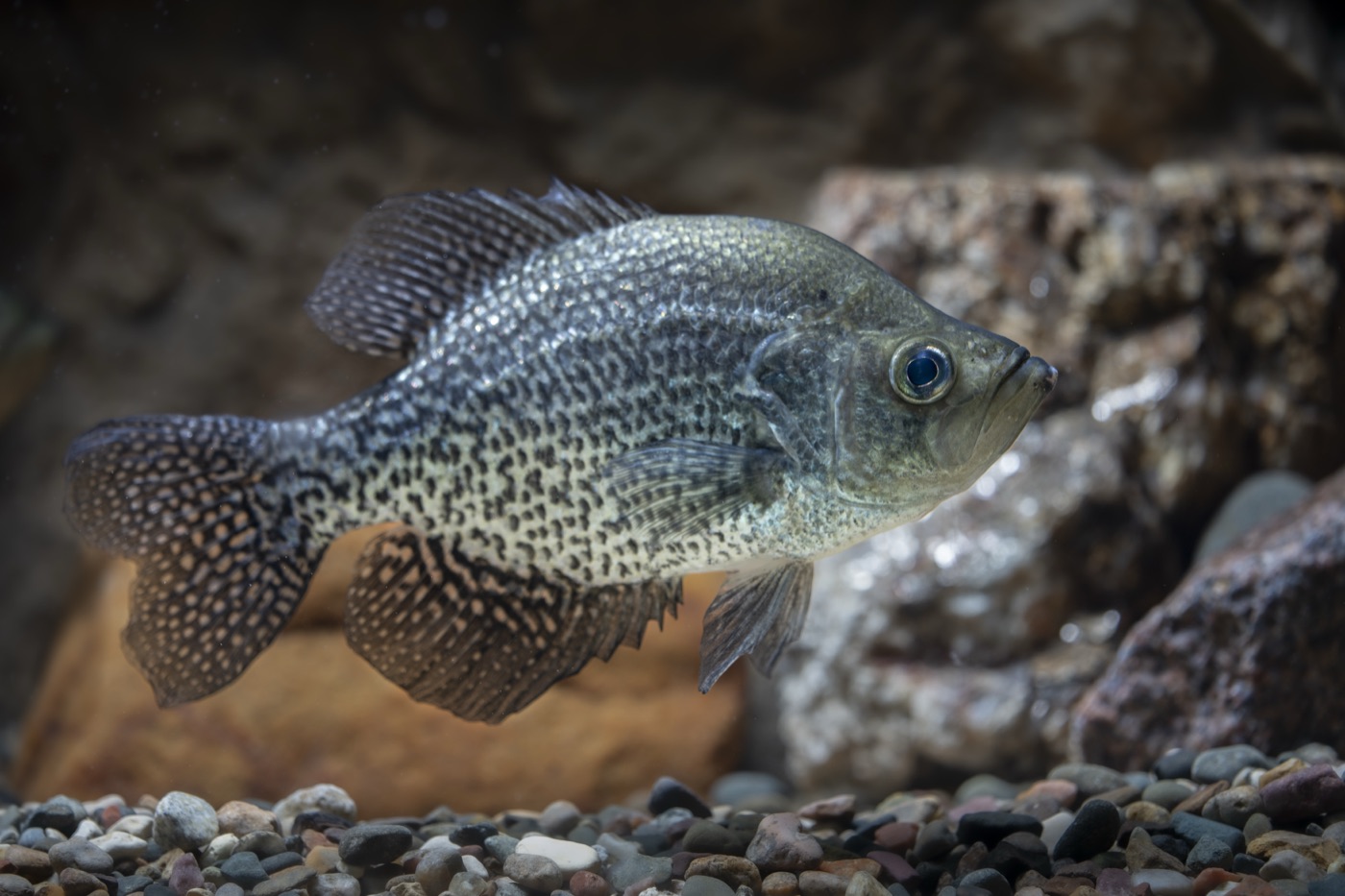
Black crappie is a deep-bodied panfish of the sunfish family, marked by irregular black speckles scattered across a silvery-green body.
MoreFull Species Details
- Species Name
- Pomoxis nigromaculatus
- Family
- Centrarchidae
- Order
- Centrarchiformes
- Also Known As
- Crappie, Calico bass, Speckled perch, Papermouth
Black Crappie (Pomoxis nigromaculatus) Fish Description
Black crappie is a deep-bodied panfish of the sunfish family, marked by irregular black speckles scattered across a silvery-green body.
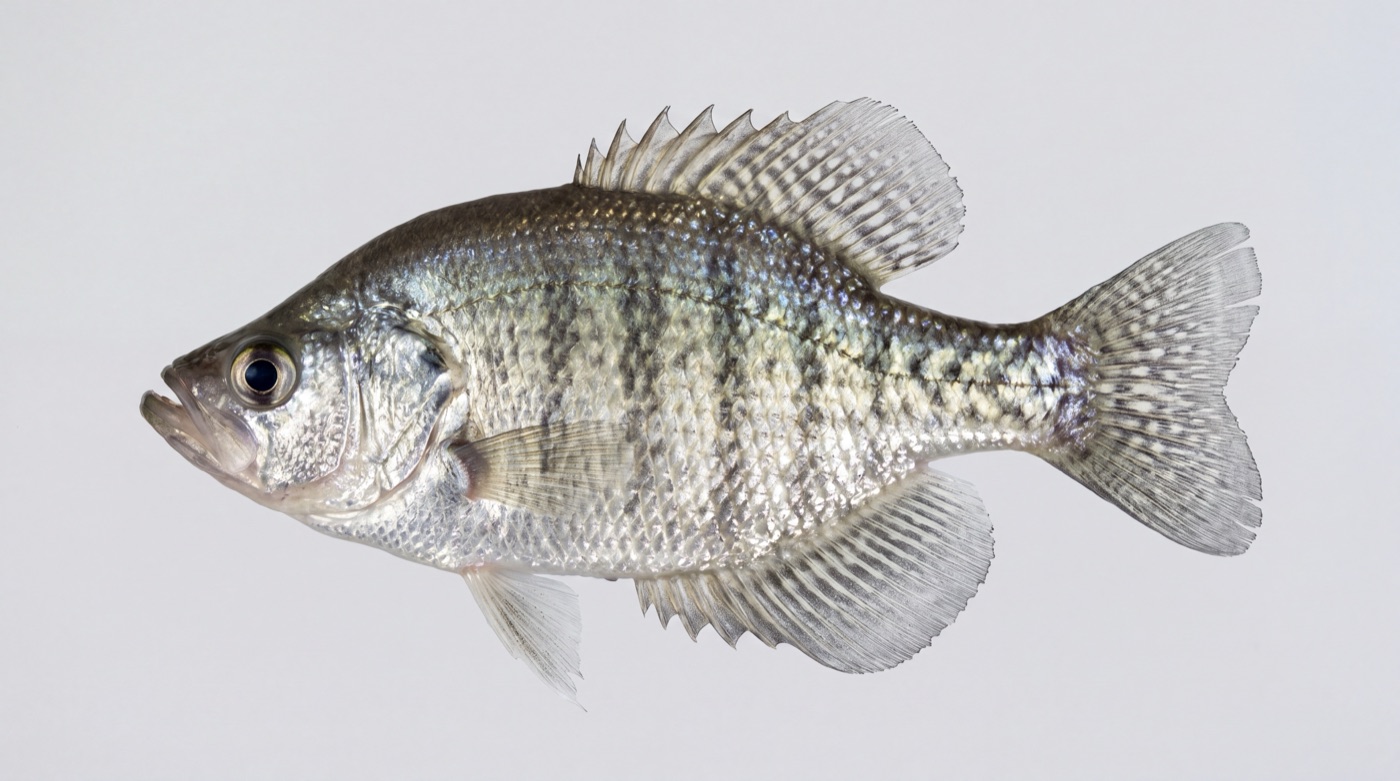
The body is deep, round, and strongly compressed, silvery-green to olive with dark, irregular speckles that spread randomly across the flanks rather than forming bars. The dorsal and anal fins are large and nearly symmetrical, and the mouth is wide with thin, papery lips that tear easily and give the fish the name papermouth. Black crappie carry seven or eight dorsal spines, more than the closely related white crappie, whose spots form vertical bars. The scattered, calico-like speckling is the black crappie's clearest field mark and the source of its calico bass nickname.
Black crappie is native to the eastern and central United States and southern Canada. Widespread stocking has since spread the species across nearly all of North America, where it thrives in clear, weedy lakes, ponds, and slow rivers. Black crappie gather in loose schools around submerged cover and suspend over open water. Anglers pursue crappie for their abundance, their tendency to school so that finding one means finding many, and their sweet white fillets, which make them one of the most popular and widely eaten freshwater panfish in the country.
Interesting Facts About Black Crappie
- The world record black crappie weighed 5 pounds 7 ounces, caught in Tennessee in 2018.
- Black crappie carry scattered speckles rather than the vertical bars of white crappie.
- The species has thin, papery lips, giving rise to the name papermouth.
- Black crappie usually live 7 to 8 years, and some reach 10 or more.
- The species spawns in spring when water reaches about 60 degrees Fahrenheit.
Show more facts
- Black crappie gather in loose schools around submerged brush and timber.
- The species often suspends over open water, especially in warm months.
- Crappie feed heavily on small baitfish, insects, and larvae.
- Black crappie have seven or eight dorsal spines, more than white crappie.
- The species bites best in low light, at dawn, dusk, and after dark.
- Crappie are among the most popular and widely eaten panfish in America.
- The species prefers clearer, weedier water than the white crappie.
Average Speed & Size
Black crappie is a slow, deliberate swimmer that typically reaches 7 to 12 inches and half a pound to a pound. Slab crappie exceed 14 inches and 2 pounds, with the record near 5 pounds. The species drifts and hovers around cover rather than sprinting, moving in short, unhurried glides to pick off small prey. When hooked, a crappie turns its deep, flat body against the pull, fighting harder than its size suggests, though its papery mouth demands a gentle, steady hand to avoid tearing free.
Where to Find Them
Black crappie is found in clear, weedy lakes, ponds, and slow rivers across most of North America. The species holds around submerged cover: brush piles, standing timber, docks, and weed edges, and suspends over open water in warmer months. Black crappie favor cooler, clearer water than white crappie and move shallow to spawn in spring around cover. In summer and winter they suspend at specific depths. Black crappie are largely absent from cold, fast trout streams and turbid, muddy waters, preferring clear lakes and slow rivers with abundant cover.
Black Crappie Fishing Tips
Black crappie fishing is easy, productive, and ideal for families, since finding one school often means steady action. Success comes from locating submerged cover and presenting a small bait or jig at the depth the fish are holding.
Equipment
Use a long, light spinning rod of 7 feet or more, or a specialized crappie pole, paired with a reel spooled with 4- to 8-pound line. The light setup suits the crappie's small size and tender mouth, while a long rod helps place baits precisely into brush and along cover. A sensitive tip signals the crappie's soft, subtle bite.
Chumming
Chumming with ground bait or by sinking brush piles to create cover concentrates crappie in a known spot where legal. Baiting or building structure draws and holds schools over time. Many anglers instead use a slip float to suspend bait at the exact depth fish are holding, letting them work a school without moving cover.
Bait
Live minnows are the top crappie bait, fished under a float or on a jig head. Effective lures include small marabou and soft-plastic jigs in bright colors worked slowly through cover.
Patience
Black crappie bite lightly and their papery mouths tear easily, so a gentle hook set and steady pressure keep them hooked. Once a school is found, patient, repeated presentations at the right depth produce a steady catch.
Conditions that change the bite
- What Barometric Pressure Is Best for Fishing? No research supports a single best barometric pressure for fishing. What pressure really does, how big a weather swing is, and what to watch instead.
- Best Time of Day to Fish: What Evidence Shows Dawn and dusk are measurably better — and the edge is smaller than the folklore says. The 13-year dataset, the light mechanism, and what matters more.
- Dissolved Oxygen: The Condition Anglers Can't See Fish live or die by oxygen you can't see. How temperature, depth, dawn and turnover move it, which species need more, and how to fish around the invisible map.
Guides for fishing this species
- Crappie Fishing: How to Find Them and How Not to Lose Them Crappie hold on structure and take a bait softly, so the two things that decide your day are where you look and how gently you set the hook.
- Panfish: What Counts, and Why They Matter More Than You Think Panfish is an angler's word, not a biologist's — Wisconsin's legal list has 8 species, New Jersey counts three groups. Who qualifies and why they matter.
- Fishing Tackle for Beginners: What You Actually Need, per the Agencies That Teach It Three agency beginner tackle lists overlap almost exactly. Here is the overlap — ten items — and the agencies' own reason for each one.
- Fishing with Kids: How a State Education Programme Sets Up a First Trip Minnesota's MinnAqua programme has taught kids to fish for decades and publishes how: the rig, adult ratio, hooks, and why the first cast has no hook.
- How to Cast a Fishing Rod: The Overhead Cast, Step by Step Two state agencies teach the same overhead cast and the same three mistakes. The steps for spincast and spinning reels, and how to diagnose a bad cast.
- How to Fillet a Fish: The Cuts, and Why Two of Them Matter Twice Iowa and Missouri agencies publish the same five filleting cuts. EPA's contaminant list explains why the skin and the dark lateral-line flesh come off.
Related Species
Know when they'll bite.
BiteScore forecasts when black crappie will feed at your spot — from live weather, pressure, and moon data.
Get the App