How Old Is My Fish? Age-to-Length Charts from State Fisheries Data
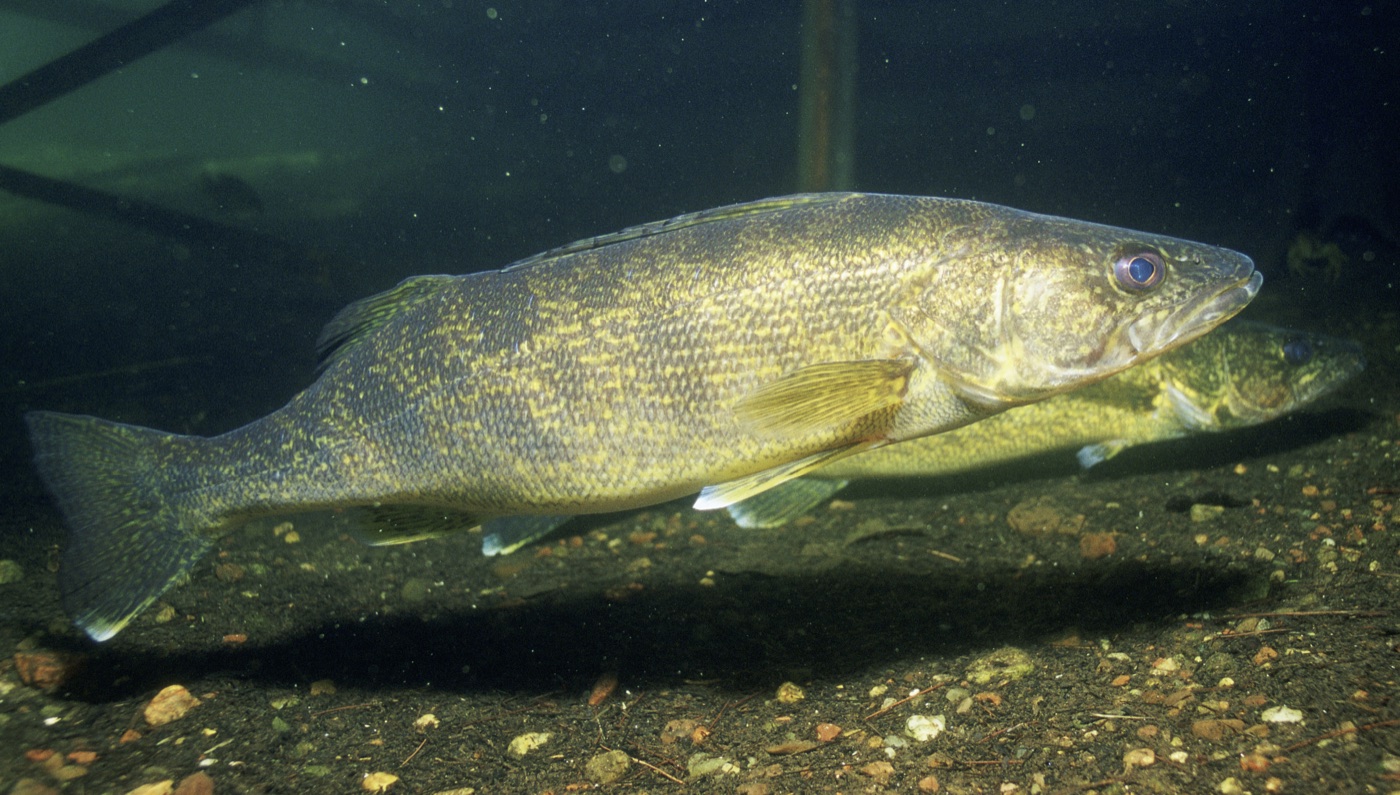
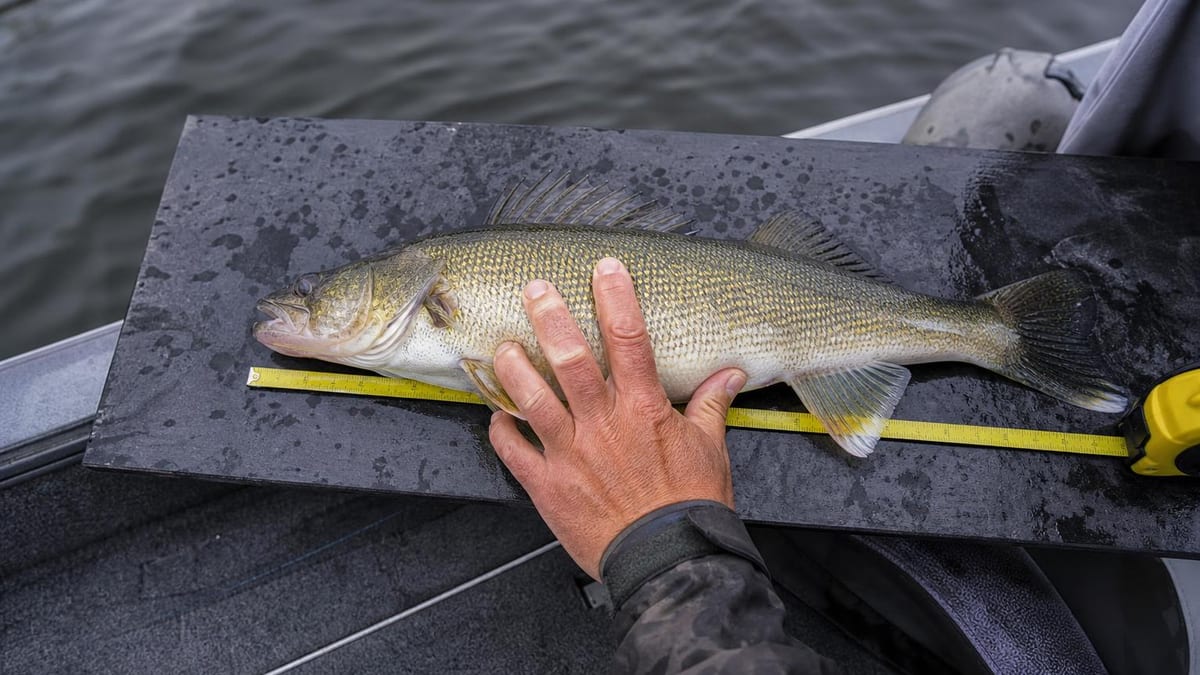
Length gives a rough age, and state agencies publish the tables. Wisconsin's DNR: a 14-inch walleye is about 3 years old, 21 inches about 5; a 7-inch crappie about 3, 10 inches about 5; a 14.5-inch channel catfish about 5. Biologists get the real number by counting annual growth rings in the otolith, an ear bone, the way you would count tree rings.
Key takeaways
- Wisconsin's DNR walleye table: 5 in at age 1, 10 at 2, 14 at 3, 19 at 4, 21 at 5, 23 at 6, 26 at 7 — and walleye average about seven years of life.
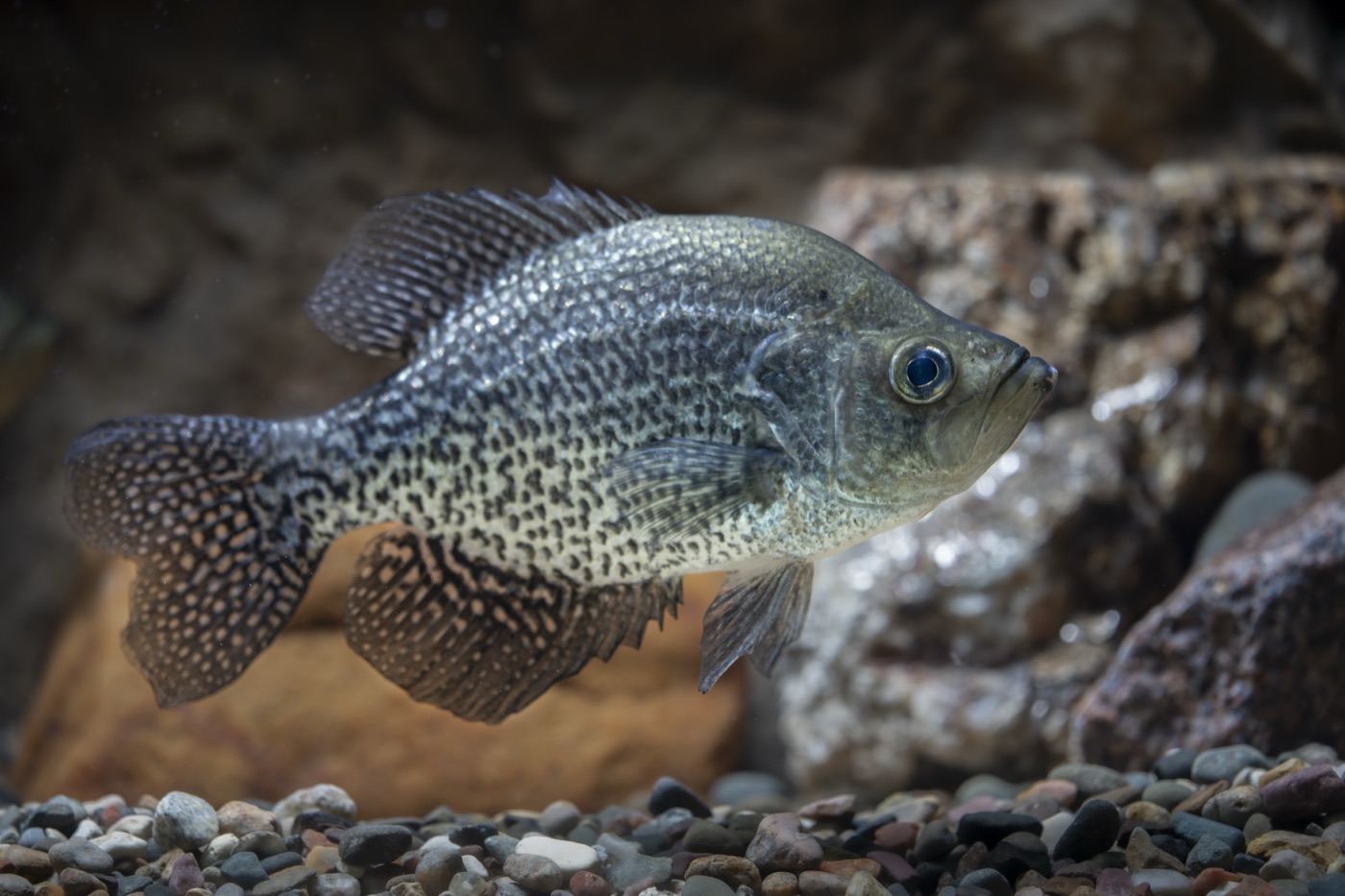
- Its crappie figures: 3.0 in at age 1, 7.2 at 3, 9.6 at 5, 13.1 at 10; most crappie do not live much past five.
- Channel catfish: 3 in at 1, 9 at 3, 14.5 at 5, 26.5 at 10. Flatheads grow slower and live longer — 24.5 in at 10, 43 in at 24.
- New York's DEC: each year a fish adds a growth ring to its otolith; biologists count the rings like a tree's to estimate age.
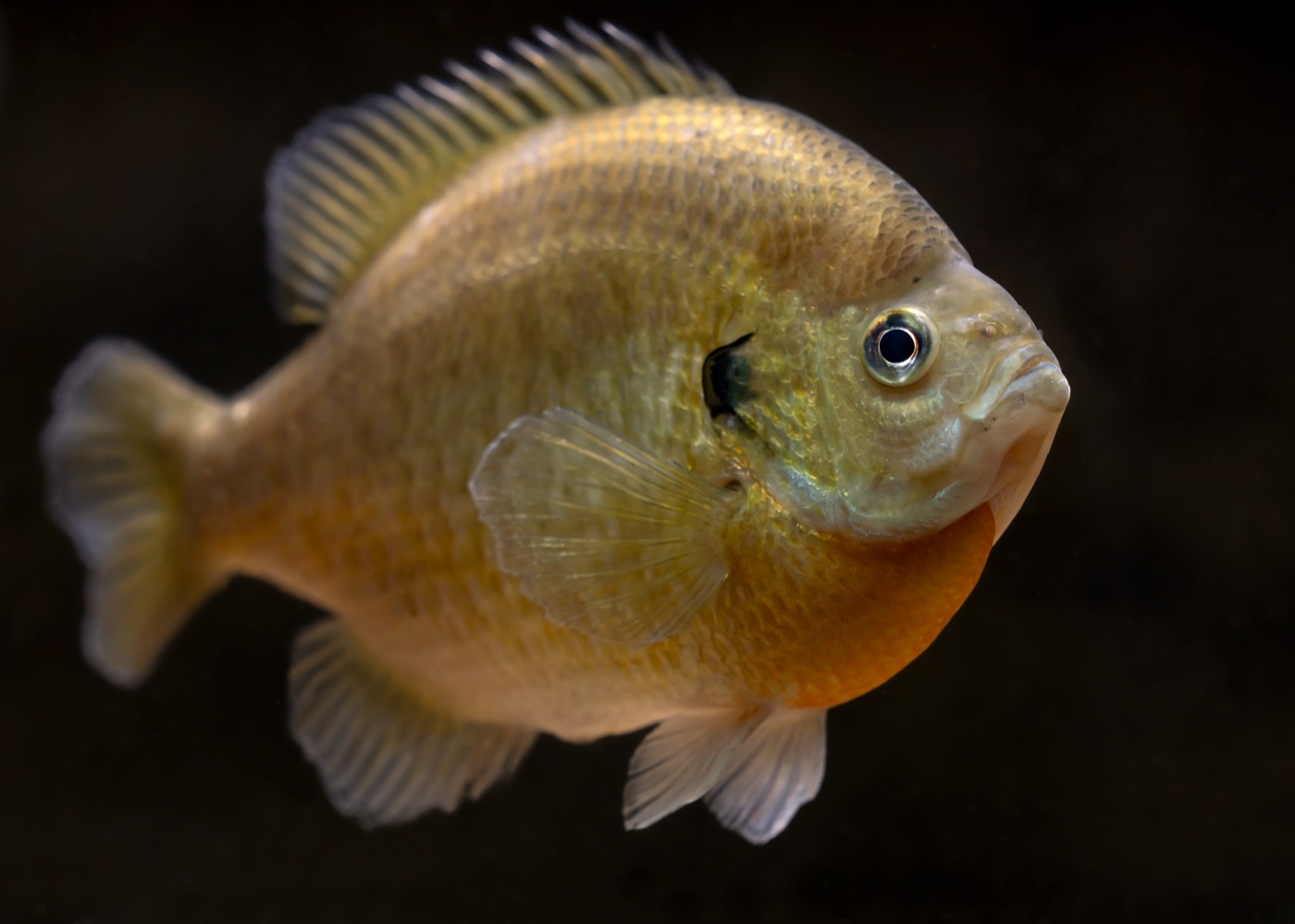
- Growth varies by water. Wisconsin's DNR says bluegill may reach 9 inches in excellent conditions or stall at 4.5 inches in a stunted population.
The tables
Wisconsin’s Department of Natural Resources publishes growth figures in its species guides, and they are the most direct answer to “how old is this fish” an angler can get without a microscope. All figures are Wisconsin averages.
Walleye
| Age (years) | Length (inches) | Weight |
|---|---|---|
| 1 | 5 | 0.7 oz |
| 2 | 10 | 5.4 oz |
| 3 | 14 | 1.45 lb |
| 4 | 19 | 2.14 lb |
| 5 | 21 | 4 lb |
| 6 | 23 | 5.2 lb |
| 7 | 26 | 6 lb |
Walleye live about seven years on average, the agency says, though older fish are caught. Males mature at two to three years and 12 to 13.5 inches; females at four to five years and 15 to 17 inches, and grow faster and larger thereafter.
Crappie
| Age (years) | Length (inches) |
|---|---|
| 1 | 3.0 |
| 3 | 7.2 |
| 5 | 9.6 |
| 10 | 13.1 |
Most crappie in Wisconsin do not live much past their fifth year, grow larger than 12 to 14 inches, or weigh more than a pound — though 18-inch fish are possible.
Channel and flathead catfish
| Age (years) | Channel catfish (in) | Flathead catfish (in) |
|---|---|---|
| 1 | 3 | 7.5 |
| 3 | 9 | 16 |
| 5 | 14.5 | 21 |
| 10 | 26.5 | 24.5 |
| 15 | — | 38 |
| 24 | — | 43 |
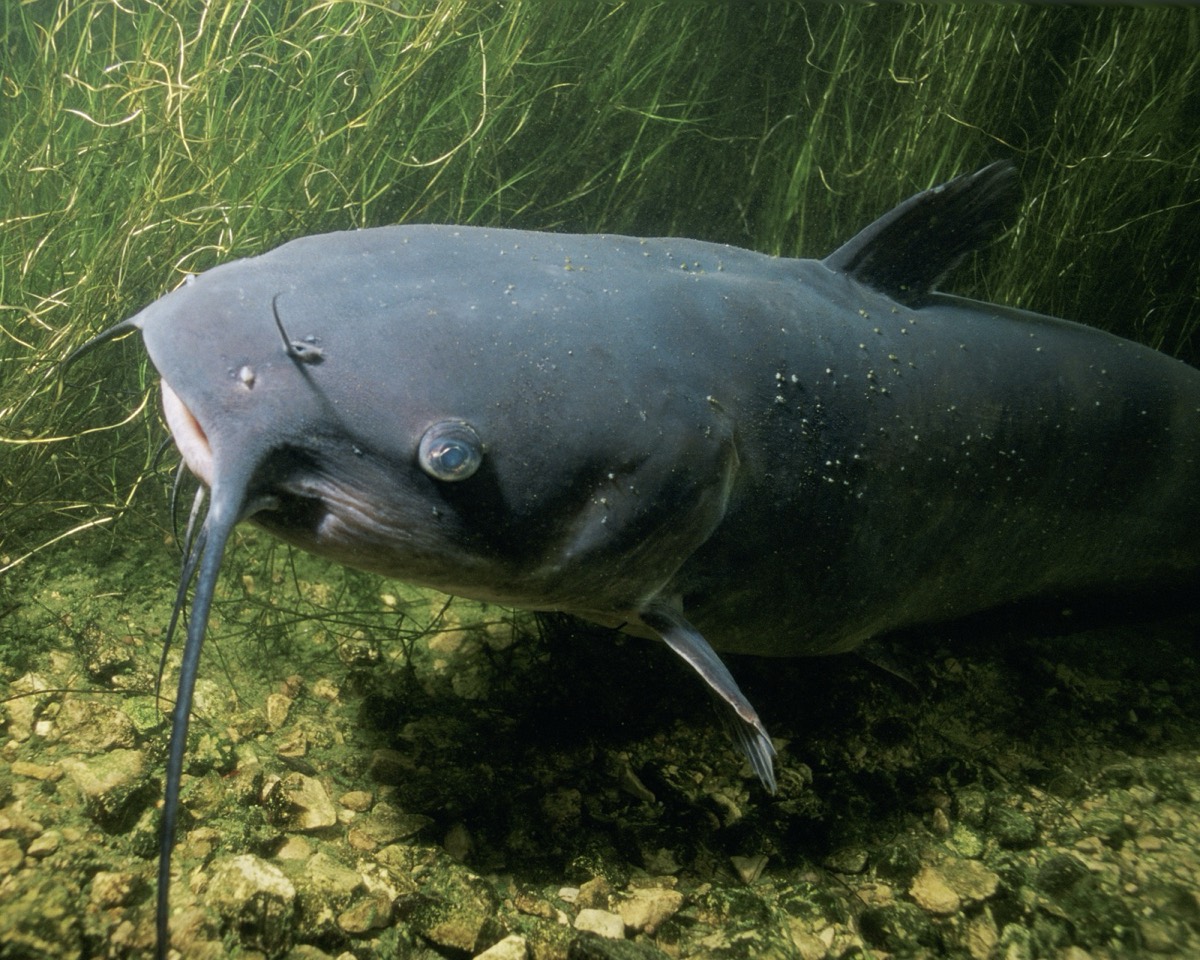
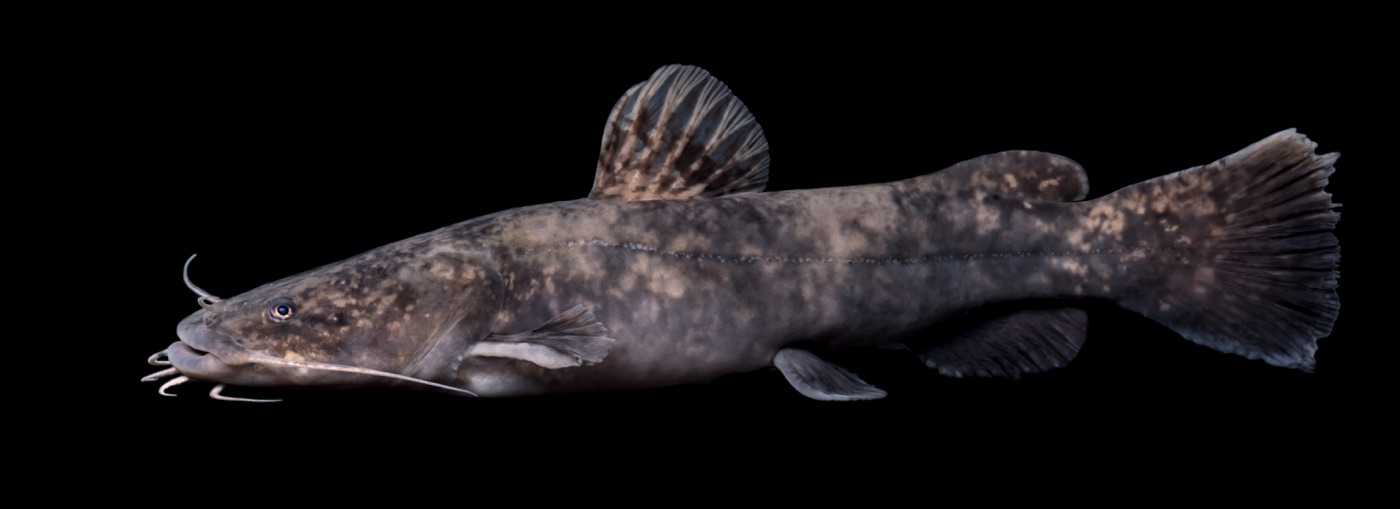
Channel catfish grow rapidly in their first few years and, in Wisconsin, most do not live past eight. Flatheads seem to grow more as they age and live 15 to 25 years. The agency notes 20- to 25-inch channels are common while 30 inches and 15 pounds is about the maximum; flatheads of 30 to 40 inches and 20 to 40 pounds are common, with a state record of 65 pounds.
How to read them
A table is an average, and the agency material makes clear how wide the spread around it can be.
Wisconsin’s DNR gives bluegill as the example. Under average conditions they reach about 6 to 8 ounces; in excellent conditions they may grow to 9 inches and up to a pound; in a stunted population they may never pass 4.5 inches and 2.5 ounces. Those fish can all be the same age. For crappie the agency says the same thing from the other side — where fish are too abundant for the food and habitat, the result is stunted fish, and harvest is encouraged to thin them.
Year classes add a second wobble. Fisheries biologists group all the fish spawned in one season as a year class, and Wisconsin’s guide notes crappie year classes are very irregular even within one lake: some years produce a weak class, and every three or four years a strong one comes through. A lake full of 8-inch crappie this year may be full of 11-inch crappie in three, from the same fish.
So the rule for using the tables: read across, take the age as a range of plus or minus a year, and expect colder or less fertile water to run older for a given length.
How biologists actually do it
The tables come from somewhere, and it is not from measuring. New York’s Department of Environmental Conservation explains the method it uses in its own ageing programme:
Otoliths are small ear bones found within the skulls of fish, located behind the brain. … Each year, a fish will develop a growth ring (annuli) on their otoliths. We count the annuli to estimate the age of the individual fish, similar to counting rings on a tree.
Otoliths keep growing throughout a fish’s life, and every species has a differently sized and shaped one. The U.S. Fish and Wildlife Service describes the same method for invasive carp — the ear stone creates a growth ring for each year the fish survives — and adds the honest caveat: determining the age of a fish is tricky, some approaches underestimate it, and different readers looking at the same otolith can disagree. The agency’s answer was a workshop so that partner agencies collect, process and interpret the rings the same way.
Scales, fin spines and vertebrae carry annual rings too, and scales can be read without killing the fish; otoliths are the standard because the rings are clearest. New York’s programme invites anglers to send in carcasses of kept fish so the agency can extract the otoliths, which is as close as most of us will get to the real number.
Why any of this matters at the water
There are two practical reasons to care. First, size and slot limits exist because of tables like these — a length threshold stands in for “old enough to have spawned” — and Wisconsin’s guide notes anglers are increasingly releasing walleye under 15 inches so they reach adulthood. Our catch and release guide covers doing that well.
Second, age is a contaminant question. Wisconsin’s DNR advises caution with large, older walleye and with large catfish, because they accumulate contaminants over years of eating smaller fish; an age table tells you that a 26-inch walleye has been doing that for about seven years. Our how to fillet a fish guide covers the trimming that reduces some of it, and your state’s consumption advisory covers the rest.
Species pages for walleye, black crappie, channel catfish, flathead catfish and bluegill carry the identification and habitat detail, and our walleye vs perch page covers the one confusion the growth tables cannot resolve for you.
Frequently asked questions
How old is a 20-inch walleye?
About four to five years, by Wisconsin's DNR's growth table, which lists 19 inches at age four and 21 inches at age five, at roughly 2.1 and 4 pounds. The same agency says walleye live about seven years on average, with older fish caught occasionally, and that females grow faster and larger than males. A 20-inch walleye from a colder or less productive lake could be older; the table is a state average, not a rule for every water.
How old is a 10-inch crappie?
Around five years. Wisconsin's DNR growth figures for crappie are 3.0 inches at age one, 7.2 at three, 9.6 at five and 13.1 at ten. The agency adds that most crappie in the state do not live much past their fifth year or grow larger than 12 to 14 inches, so a 10-inch fish is a mature one and a 13-inch fish is old. Crappie year classes are famously irregular — some years produce few fish and every three or four years a strong class comes through — so the size of fish in a lake can swing between seasons.
How old is a big catfish?
It depends which catfish, because the two common species age very differently. Wisconsin's DNR gives channel catfish at 3 inches at age one, 9 at three, 14.5 at five and 26.5 at ten, and says most channels do not live much past eight years. Flatheads grow faster early and then keep going: 7.5 inches at one, 16 at three, 21 at five, 24.5 at ten, 38 at fifteen and 43 inches at twenty-four, with the agency putting their lifespan at 15 to 25 years. A 30-pound flathead is likely a fish older than the angler's truck.
How do biologists actually age a fish?
By counting rings, mostly in the ear. New York's DEC explains that otoliths are small ear bones behind the brain that keep growing throughout a fish's life, and that each year the fish adds a growth ring, called an annulus; biologists count the annuli to estimate age, similar to counting rings on a tree. The U.S. Fish and Wildlife Service describes the same method for invasive carp and notes the catch: different methods and different readers can disagree, which is why it hosts workshops so partner agencies interpret the rings the same way. Scales, fin spines and vertebrae carry rings too and can be read without killing the fish, but otoliths are the standard.
Why do fish of the same age come in different sizes?
Food, temperature and crowding. Wisconsin's DNR illustrates it with bluegill: under average conditions they reach about 6 to 8 ounces, in excellent conditions 9 inches and up to a pound, and in a stunted, overcrowded population no more than 4.5 inches and 2.5 ounces — all potentially the same age. The agency makes the same point for crappie, noting that where they are too abundant for the available food and habitat the result is stunted fish. That is the reason a length-to-age table is an average and not a calculator.
Can I age a fish myself?
Roughly, from length and the tables here; properly, only with a structure and a microscope. New York's DEC runs a community programme in which anglers send in fish carcasses so the agency can extract and read the otoliths, and offers demonstrations on collecting them — which tells you both that it is doable and that it takes training. For a released fish, length against the agency table is the honest answer, and it is usually within a year or two.
Sources
- Walleye (PUBL-FM-708), Wisconsin fish species guide — Wisconsin Department of Natural Resources, Bureau of Fisheries Management. Accessed September 25, 2026.
- Crappie (PUBL-FM-708), Wisconsin fish species guide — Wisconsin Department of Natural Resources, Bureau of Fisheries Management. Accessed September 25, 2026.
- Catfish (PUBL-FH-713), Wisconsin fish species guide — Wisconsin Department of Natural Resources, Bureau of Fisheries Management. Accessed September 25, 2026.
- Bluegill (PUBL-FM-707), Wisconsin fish species guide — Wisconsin Department of Natural Resources, Bureau of Fisheries Management. Accessed September 25, 2026.
- Fish Ageing Network (FAN) — Otoliths and Ageing — New York State Department of Environmental Conservation. Accessed September 25, 2026.
- Getting on the same page: aging invasive carp with partners — U.S. Fish and Wildlife Service. Accessed September 25, 2026.
How we choose sources: sources policy.
More in this series
Know when it's worth going.
Fishing Club AI turns live weather, pressure and moon data into a simple bite forecast for your spot — so the skills you practise get used on the right day.
Get the App