Walleye vs Yellow Perch
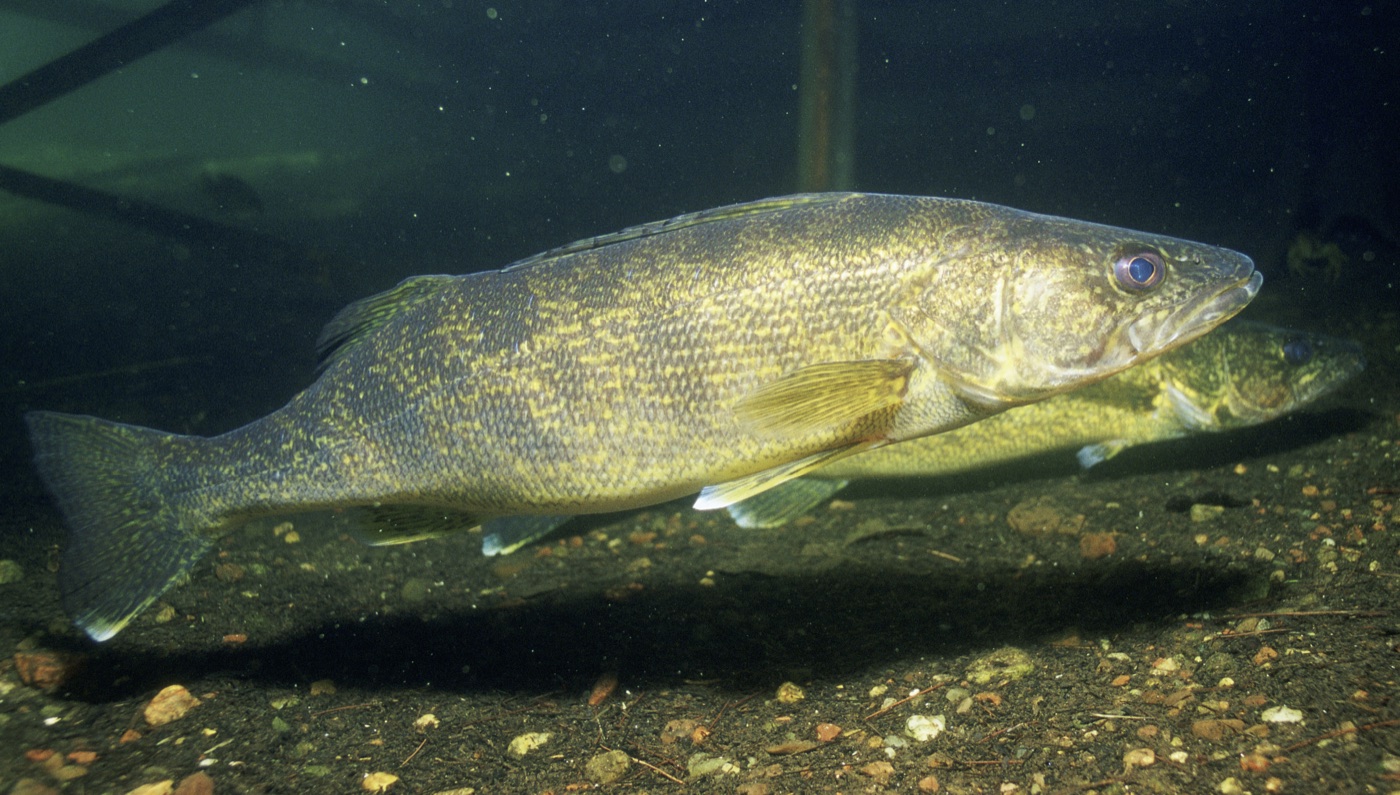
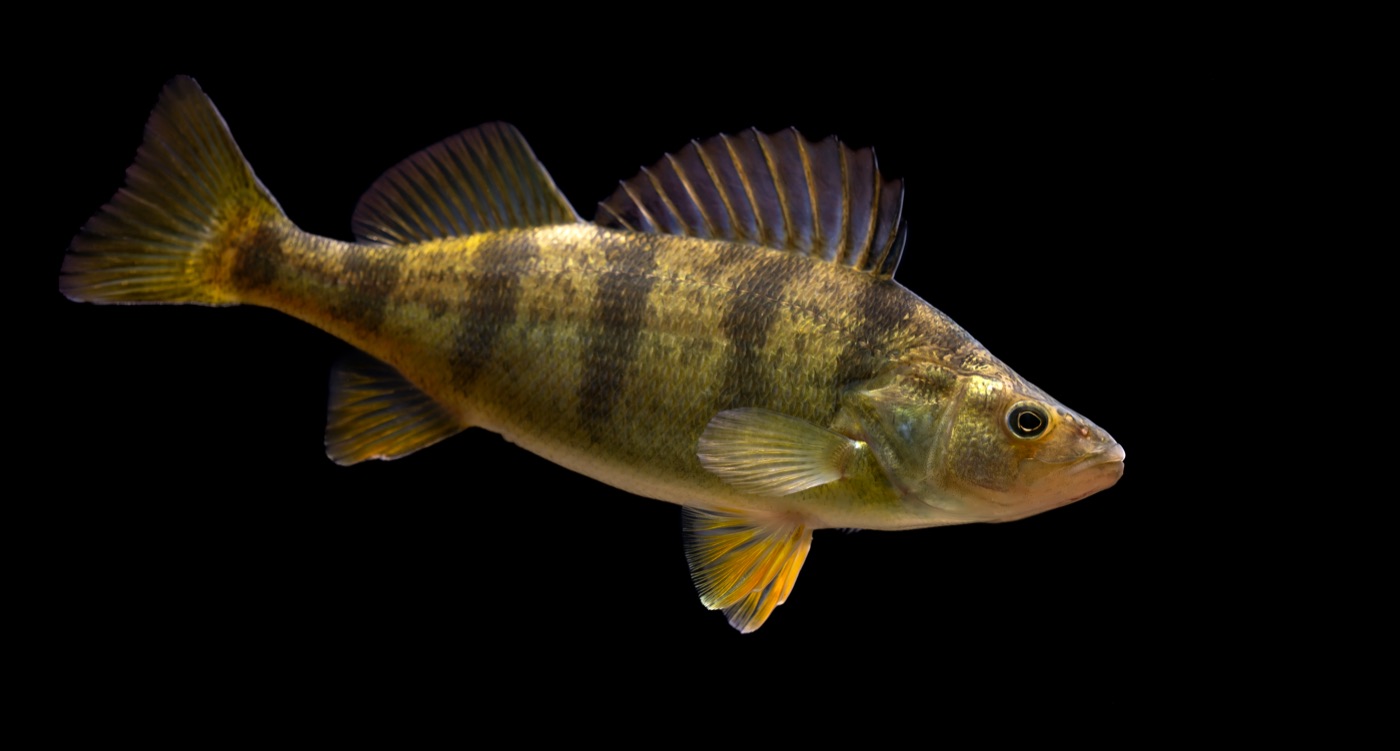
Both are members of the perch family, and the walleye is its largest member — a predator with a glassy reflective eye, sharp canine teeth and a white tip on the lower tail. The yellow perch is its small, barred cousin: bright brassy sides with dark vertical bars and no canine teeth at all. The relationship is the point: in many natural lakes, yellow perch are a major part of the walleye's diet.
Key takeaways
- Both are Percidae — walleye is Sander vitreus, yellow perch is Perca flavescens.
- Walleye marks: glassy eye, canine teeth, white tip on the lower tail lobe, no bars on the flank.
- Perch marks: bright yellow-brassy sides with dark vertical bars, and no canine teeth.
- The walleye's reflective eye layer makes it a low-light hunter; perch feed through the day in schools.
- In Iowa's natural lakes, yellow perch make up a big part of the walleye diet.
One family, two roles
The comparison starts with a fact most anglers find surprising: these are the same family. The walleye is Sander vitreus and the yellow perch Perca flavescens, both Percidae — the true perches — in different genera. Iowa’s biologists give the walleye its family title plainly: the largest member of the perch family, weighing over 20 pounds.
What makes the pairing worth an article is what the family produced. One cousin stayed forage-sized and learned to school; the other grew canine teeth and a night-vision eye and turned predator. Iowa closes the loop in one sentence: yellow perch make up a big part of the walleye diet in the natural lakes.
So this is not just an identification question. It is a working ecological relationship you can fish.
Telling them apart
Size settles most encounters — an average walleye runs 14 to 17 inches while a mature perch spans roughly 6 to 16 — but the overlap zone is exactly where anglers need the marks, and the agencies supply three.
Teeth. A walleye carries strong canine teeth — sharp, backward-curved, built for capturing fish, in the National Park Service’s description. A yellow perch has, in Iowa’s flat wording, no canine teeth on the jaws or roof of the mouth. One look in the mouth ends the debate.
The tail tip. Iowa describes the walleye’s caudal fin as carrying a silver or milk-white tip on the lower lobe, and the Park Service ranks the prominent white spot on the lower tail among the species’ definitive features, alongside a dark blotch at the base of the dorsal fin. Perch have neither.
The flanks. A perch is built of bars: bright yellow to brassy-green sides crossed by dark vertical bars — Iowa counts seven, the Park Service six to eight. A walleye’s brassy olive sides carry, per Iowa, no distinct dark bars or mottlings at all. If the fish is striped, it is not a walleye.
The eye that divides their days
The deepest difference between the cousins is not a marking but a schedule, and it is written in the walleye’s eye.
The species is named for it. New York’s conservation department explains that the walleye’s glassy eye holds a reflective layer of pigment called the tapetum lucidum, letting it see very well at night and in low light — and the Park Service draws the behavioural conclusion: walleye are more active at dawn, dusk, night, and in reduced light such as waves and cloudy skies. That is why every guide to walleye fishing, ours included, keeps repeating the low-light rule, and why New York adds that the fish hold within a foot or two of the bottom, sliding to the deepest water in summer heat.
Perch keep opposite hours. Iowa describes them feeding throughout the day in deep water, moving into the shallows toward evening after schools of minnows. They travel in schools — the Bighorn Canyon naturalists note they are sometimes caught in bunches — which is precisely what makes them findable, catchable, and eaten.
Put the two schedules together and the predation makes sense: the hunter with night vision owns the hours when the day-feeding schools see worst.
Fishing the relationship
Knowing that one species eats the other converts this comparison into tactics.
Where you find perch schools, you have found walleye forage — USGS lists yellow perch as an important food source for walleye, northern pike, muskellunge and more, which is why a graph of perch on the sonar is a reason to stay. Match the forage in your presentations: perch-length, perch-coloured offerings are a standing walleye logic on perch lakes.
Honesty requires the nuance, though. A Green Bay diet study found yellow perch generally composed under 15% of walleye diets by weight there — the relationship’s strength varies by water, strong in Iowa’s natural lakes, thinner where other forage dominates. The principle travels; the percentage does not.
And when the walleye will not cooperate, the perch are their own reward. Iowa’s verdict — fun to catch through the ice and tasty, too — is the rare agency endorsement of a backup plan. Both cousins hold full profiles here: the walleye and the yellow perch, each with where to find them and what they take.
Frequently asked questions
Are walleye and perch related?
Closely — both belong to the perch family, Percidae, in different genera: the walleye is Sander vitreus, the yellow perch Perca flavescens. Iowa's biologists call the walleye the largest member of the perch family, at over 20 pounds. So the honest answer is that a walleye is a perch, in the family sense — one that grew large enough to eat its relatives.
How do I tell a small walleye from a big perch?
Three checks, all from agency descriptions. Teeth: a walleye has strong canine teeth; a yellow perch has no canine teeth on the jaws or roof of the mouth. Tail: the walleye's lower tail lobe carries a silver or milk-white tip. Flanks: a perch wears dark vertical bars on bright yellow-brassy sides, while a walleye's sides carry no distinct dark bars at all.
Why do walleye feed at dawn and dusk while perch feed all day?
The walleye's eye. The National Park Service explains that its reflective layer — the tapetum lucidum — lets it see well in low light, making walleye more active at dawn, dusk, night, and in reduced light like waves and cloud. Perch run the opposite schedule: Iowa notes they feed throughout the day in deep water, moving shallow in the evening. The predator owns the hours its prey sees worst.
Do walleye really eat yellow perch?
Routinely, with an honest nuance about how much. Iowa's agency states that yellow perch make up a big part of the walleye diet in its natural lakes, and USGS lists perch as an important food source for walleye, pike, muskellunge and lake trout. A Green Bay diet study adds proportion: there, perch generally composed under 15% of walleye diets by weight. The relationship is real everywhere; its size varies by water.
Which is better to eat, walleye or perch?
Agencies praise both, which is rare. Iowa credits the walleye's delicious flesh as part of what makes it one of North America's most important game species — and says of perch, simply, that they are fun to catch through the ice and tasty too. The National Park Service adds that perch were introduced across nearly the whole country because they are considered good tasting. This is one comparison with no loser at the table.
Sources
- Walleye (Sander vitreus) — ITIS taxonomic record — Integrated Taxonomic Information System. Accessed August 9, 2026.
- Yellow Perch (Perca flavescens) — ITIS taxonomic record — Integrated Taxonomic Information System. Accessed August 9, 2026.
- Walleye — Fish Details — Iowa Department of Natural Resources. Accessed August 9, 2026.
- Yellow Perch — Fish Details — Iowa Department of Natural Resources. Accessed August 9, 2026.
- Walleye (Sander vitreus) — National Park Service, Mississippi National River and Recreation Area. Accessed August 9, 2026.
- Fishing for Walleye — New York State Department of Environmental Conservation. Accessed August 9, 2026.
- Yellow Perch (Perca flavescens) — US Geological Survey, Fish Health Program. Accessed August 9, 2026.
- Yellow Perch — National Park Service, Bighorn Canyon. Accessed August 9, 2026.
- Diet composition and overlap of adult walleye, lake whitefish, and yellow perch in Green Bay — Koenigs et al., Journal of Great Lakes Research (USGS record). Accessed August 9, 2026.
How we choose sources: sources policy.
More in this series
Know when it's worth going.
Fishing Club AI turns live weather, pressure and moon data into a simple bite forecast for your spot — so the skills you practise get used on the right day.
Get the App