Yellow Perch
Perca flavescens
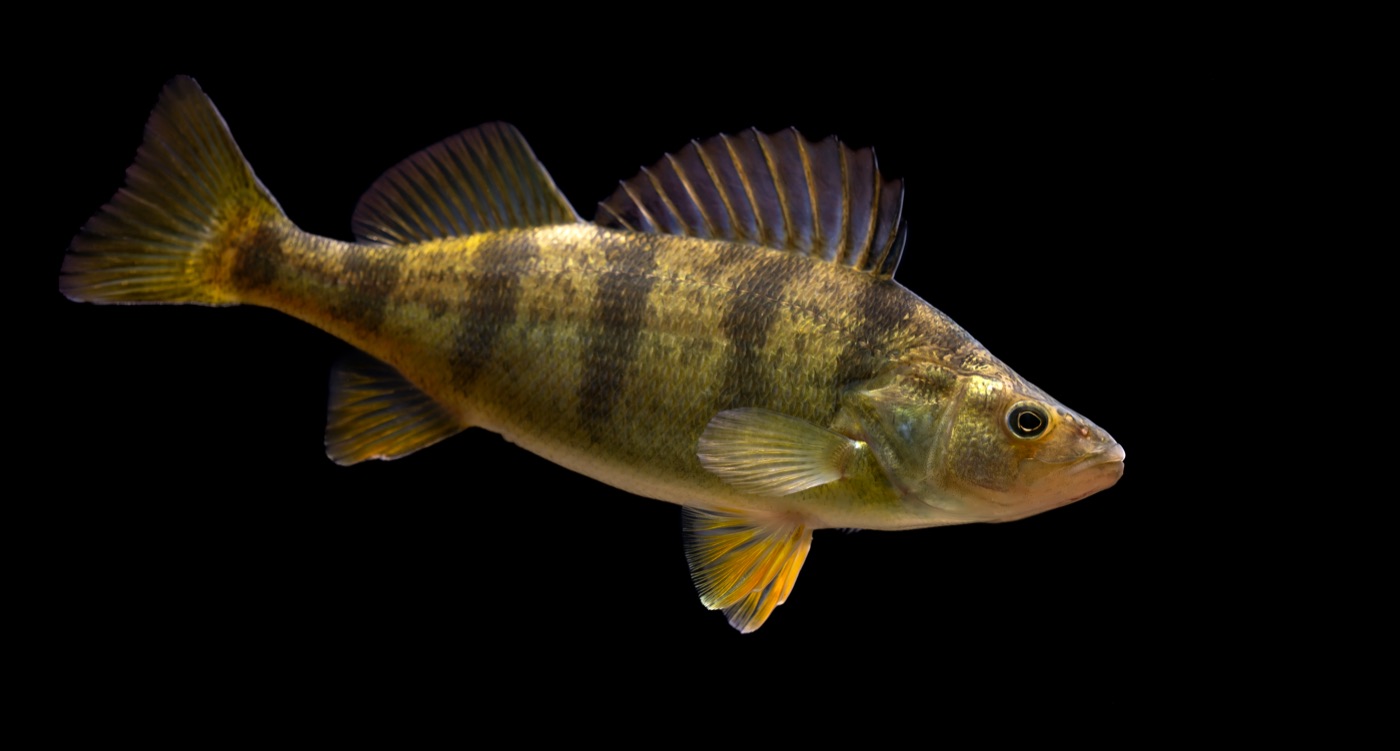
Yellow perch is a golden-bodied panfish of the perch family, easily known by six to eight dark vertical bars crossing its yellow sides.
MoreFull Species Details
- Species Name
- Perca flavescens
- Family
- Percidae
- Order
- Perciformes
- Also Known As
- Perch, Lake perch, Ringed perch, American perch
Yellow Perch (Perca flavescens) Fish Description
Yellow perch is a golden-bodied panfish of the perch family, easily known by six to eight dark vertical bars crossing its yellow sides.
The body is oblong and slightly humped, golden-yellow to brassy with six to eight bold dark bars running vertically down each side. The lower fins often flush bright orange, especially on spawning males, and two separate dorsal fins, one spiny and one soft, sit atop the back. The mouth is moderate and lined with small teeth suited to insects and small prey. Coloration is richest in clear northern lakes and paler in stained water. The vivid vertical bars over a golden body make the yellow perch one of the most easily recognized freshwater panfish.
Yellow perch is native to the northern United States and much of Canada, from the Great Lakes and northeast across the northern plains. Stocking has extended its range, and the species now thrives in cool lakes, ponds, and slow rivers across much of the continent. Yellow perch travel in large schools near the bottom and around cover. Anglers pursue perch for their abundance, their tendency to school so that catches come quickly once fish are found, and above all for their sweet, firm white fillets, widely regarded as among the finest table fare in fresh water.
Interesting Facts About Yellow Perch
- The world record yellow perch weighed 4 pounds 3 ounces, caught in New Jersey in 1865.
- The yellow perch record has stood since 1865, among the oldest in fishing.
- Yellow perch travel in large schools, often segregated by size.
- The species carries six to eight dark vertical bars over a golden body.
- Yellow perch spawn in spring, laying eggs in long gelatinous ribbons.
Show more facts
- The species feeds on insects, larvae, small fish, and fish eggs.
- Yellow perch remain active under ice and are a top winter target.
- The species prefers cool, clear water and gathers near the bottom.
- Perch are a key forage fish for walleye, pike, and bass.
- Spawning males develop bright orange lower fins.
- Yellow perch are widely regarded as one of the best-eating freshwater fish.
- The species belongs to the same family as walleye and sauger.
Average Speed & Size
Yellow perch is a slow, schooling swimmer that typically reaches 6 to 10 inches and a quarter to half a pound. Jumbo perch exceed 12 inches and a pound, with the record just over 4 pounds. The species moves in unhurried schools near the bottom, picking off insects and small prey rather than chasing over distance. When hooked, a yellow perch offers a modest but spirited tug, and because the fish travel in numbers, locating one school usually brings fast, steady action on light tackle.
Where to Find Them
Yellow perch is found in cool lakes, ponds, and slow rivers across the northern United States and Canada. The species schools near the bottom around weed edges, drop-offs, docks, and other structure that gathers prey. Yellow perch favor cool, clear water and stay near the bottom by day, moving shallow to feed in low light. They remain active through winter beneath the ice, when anglers target them in numbers. Yellow perch are largely absent from warm southern lowland waters and fast, cold trout streams, preferring the cool lakes and slow rivers of the north.
Yellow Perch Fishing Tips
Yellow perch fishing is easy, social, and productive, making it a favorite for families and ice anglers alike. Success comes from finding a school near the bottom and dropping a small bait into it for fast, repeated action.
Equipment
Use an ultralight or light spinning rod of 6 to 7 feet, or a short ice rod, paired with a reel spooled with 4- to 6-pound line. The light tackle suits the perch's small size and makes even a modest fish enjoyable. A sensitive tip signals the perch's quick, light bite and helps set the small hooks the species takes.
Chumming
Chumming with a small amount of ground bait or a few maggots can gather and hold a perch school in one spot where legal. Scattering a little bait keeps the school feeding and active beneath the boat or ice hole. Because perch school tightly, holding them in place with light chum can turn a good spot into steady, rapid action.
Bait
Live minnows, worms, and maggots are the top natural baits, fished near the bottom on a small hook. Effective lures include small jigs, spoons, and jigging lures tipped with bait, especially through the ice.
Patience
Yellow perch bite readily once located, so patience matters less than finding the school. Work near the bottom and stay on a productive spot, moving to relocate the school if the bite slows.
Conditions that change the bite
- What Barometric Pressure Is Best for Fishing? No research supports a single best barometric pressure for fishing. What pressure really does, how big a weather swing is, and what to watch instead.
- Best Time of Day to Fish: What Evidence Shows Dawn and dusk are measurably better — and the edge is smaller than the folklore says. The 13-year dataset, the light mechanism, and what matters more.
- Dissolved Oxygen: The Condition Anglers Can't See Fish live or die by oxygen you can't see. How temperature, depth, dawn and turnover move it, which species need more, and how to fish around the invisible map.
Guides for fishing this species
- Panfish: What Counts, and Why They Matter More Than You Think Panfish is an angler's word, not a biologist's — Wisconsin's legal list has 8 species, New Jersey counts three groups. Who qualifies and why they matter.
- Walleye Fishing: Light, Depth and a Slow Retrieve Walleye eyes are built for low light, which sets where they sit and when they feed. What that means for depth, timing and how slowly you fish.
- Fishing Tackle for Beginners: What You Actually Need, per the Agencies That Teach It Three agency beginner tackle lists overlap almost exactly. Here is the overlap — ten items — and the agencies' own reason for each one.
- Fishing with Kids: How a State Education Programme Sets Up a First Trip Minnesota's MinnAqua programme has taught kids to fish for decades and publishes how: the rig, adult ratio, hooks, and why the first cast has no hook.
- How to Cast a Fishing Rod: The Overhead Cast, Step by Step Two state agencies teach the same overhead cast and the same three mistakes. The steps for spincast and spinning reels, and how to diagnose a bad cast.
- How to Fish for Beginners: What Federal and State Agencies Tell First-Timers The U.S. Fish and Wildlife Service publishes a first-timer's checklist; state agencies publish the cast and the rig. Here it is in order, nothing added.
Related Species
Know when they'll bite.
BiteScore forecasts when yellow perch will feed at your spot — from live weather, pressure, and moon data.
Get the App