Fishing Tackle for Beginners: What You Actually Need, per the Agencies That Teach It
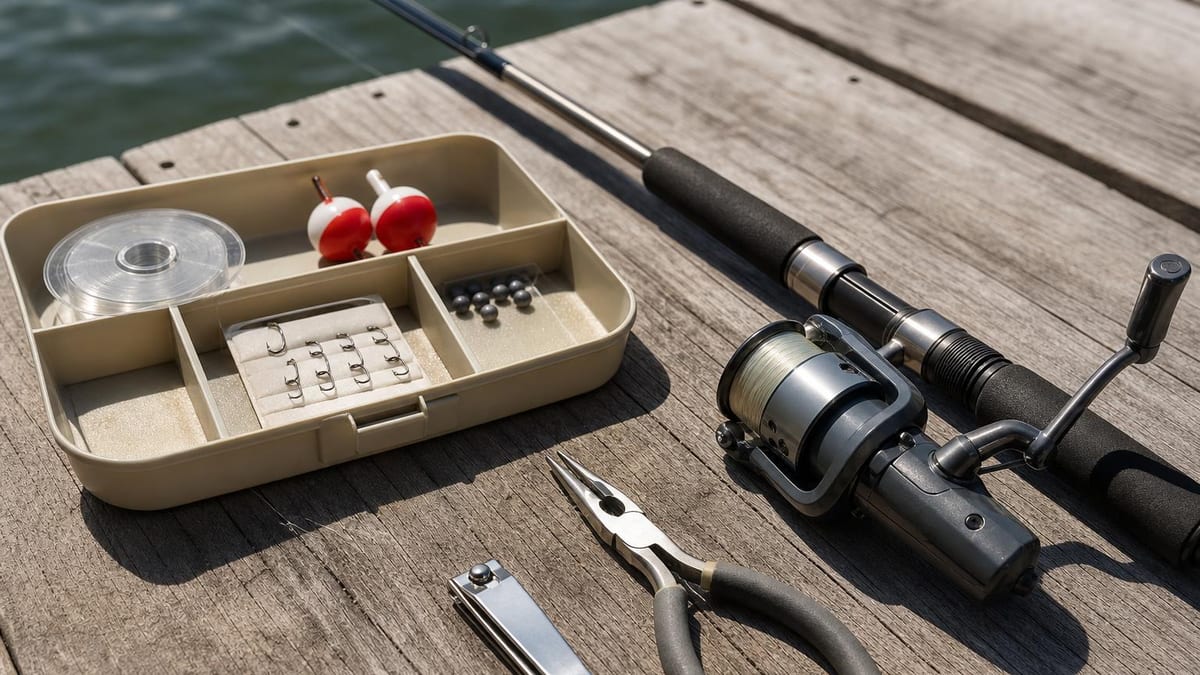
A closed-face rod and reel, 4 to 12 pound monofilament, hooks in sizes 6 to 10, split shot sinkers, a clip-on bobber, worms, nail clippers for the line, needle-nose pliers for the hook, and a rubber net — the U.S. Fish and Wildlife Service and Minnesota's DNR agree on that list. Texas Parks and Wildlife adds the one rule that saves money: heavier line than you need costs you bites.
Key takeaways
- Three agency lists — USFWS, Minnesota DNR and Texas Parks and Wildlife — converge on the same ten items for a beginner.
- Line: 4–12 lb monofilament per USFWS; Minnesota's DNR says 4–10 lb on a spinning reel because heavy line springs off the spool and tangles.
- Texas Parks and Wildlife: using heavier line than needed may reduce the number of strikes, because heavier line is more visible to fish.
- Sinker goes 4 to 8 inches above the hook (Texas) or 6 to 12 (USFWS); bobber above that, clipped on, set to depth.
- Two tools nobody lists and every agency uses: nail clippers to cut line, and needle-nosed pliers to remove hooks.
Three lists, one answer
The useful thing about beginner tackle is that the agencies which teach fishing have already argued it out, and they agree. The U.S. Fish and Wildlife Service publishes a checklist for first-timers. Minnesota’s DNR publishes the equipment matrix its instructors pack for every lesson. Texas Parks and Wildlife publishes a beginner’s tackle chapter. Laid side by side:
| Item | USFWS | Minnesota DNR | Texas PWD |
|---|---|---|---|
| Closed-face (spincast) rod and reel | easiest for beginners | simplest to learn, tangles least | most popular, ideal for beginners |
| Monofilament line | 4–12 lb | 4–10 lb on spinning reels | match to rod, reel and species |
| Hooks | sizes 6–10 | 6 and 8 for rigging; 10, 8, 6, 2, 1 stocked | by species and bait; keep sharp |
| Sinkers | a package of weights, 6–12 in above hook | split shot | split shot up; 4–8 in above hook |
| Bobber | plastic or cork, clip-on | one-inch round clip-on | round, pencil, popping or slip |
| Bait | worms, minnows, crickets | — | worms, insects, minnows, crayfish |
| Line cutter | — | fingernail clippers | — |
| Hook tool | hook disgorger | needle-nosed pliers | — |
| Net / glove | rubber net and glove | — | — |
| Paperwork | licence (by age) | licence over 16; current regulations | licence (by age) |
Everything below is the reason behind each row. Nothing on the list is there because a shop wants it there.
The rod and reel
All three agencies point beginners at the same rig. The Fish and Wildlife Service calls the closed spin-casting reel — pistol grip, reel on top, push button — the easiest for beginners. Minnesota’s DNR gives the mechanism: the line is less likely to tangle than with an open-face reel. Texas Parks and Wildlife says spincast tackle is the most popular type and perfect for junior anglers, and describes the baitcaster as better suited to an experienced angler.
The Fish and Wildlife Service’s sizing rule is the only one you need: a rod you can hold comfortably in one hand. If you want the spinning-reel version later, our spinning vs baitcasting and choosing a fishing rod guides cover the choice.
Line: lighter than you think
Pound-test is the line’s breaking strength, and Texas Parks and Wildlife explains the trade: six-pound line is more flexible but not as strong as twelve-pound. Then the sentence that saves beginners money —
Using heavier line or higher pound test than needed may reduce the number of hits or strikes you get because heavier line is more visible to fish.
The Fish and Wildlife Service’s range is 4 to 12 pound monofilament. Minnesota’s DNR narrows it for spinning reels to about 4 to 10 pound, because heavy monofilament springs off an open spool and tangles. For panfish from shore, the low end of that range is the right buy. Our fishing line types guide covers braid and fluorocarbon for when you outgrow it.
Hooks: small, sharp, and where they live
Size comes first, and the agencies agree on it. The Fish and Wildlife Service’s beginner range is 6 to 10; Minnesota’s rigging lessons use 6 and 8; Texas Parks and Wildlife matches the hook to the fish and the bait — thin wire 6 to 10 for sunfish, 1 or 2 for bass and catfish. Our hook sizes guide explains why a bigger number means a smaller hook.
Then two instructions from Texas Parks and Wildlife that outlast the first trip: hooks must be kept sharp to be effective, and if you plan to release fish, bend the barb down so the hook comes out easily. Minnesota’s lesson adds where a hook goes when you are walking — hooked to the small loop near the grip or the bottom line guide, with the line tightened, so it cannot swing.
Sinkers and bobbers: the rig
Texas Parks and Wildlife describes what a sinker is for — to cast the bait, take it to the bottom, hold it in place or keep a bobber upright — and gives the placement: in many cases 4 to 8 inches above the hook so live bait looks natural. The Fish and Wildlife Service uses 6 to 12 inches. Split shot, the BB-sized weights that pinch onto the line, are what every beginner list means by “weights”; the split shot rig page shows the finished setup.
Bobbers do three jobs, in Texas Parks and Wildlife’s wording: keep the bait where the fish are biting, keep it off the bottom, and tell you when you have a bite by bobbing up and down. Most are spring-loaded and clip to the line; some let the line slide through for slip-cork fishing, which is the slip float rig. Minnesota’s lesson uses one-inch round clip-ons and sets them about eighteen inches above the hook for children on shallow water.
On sinkers, one thing the agencies do not put in the beginner chapter but do put in their regulations: lead tackle is restricted on some waters and in some states, and non-lead alternatives exist. Check before you buy a bag.
Two tools that are not optional
Minnesota’s DNR packs the same two tools for every lesson it runs: fingernail clippers and needle-nosed pliers. The clippers cut line — the agency’s casting lesson warns that cutting line with your teeth chips teeth and can leave a loose piece to swallow. The pliers remove hooks and press barbs flat.
The Fish and Wildlife Service adds a rubber net and rubber glove, which protect a fish’s mucus layer if you release it, and its brochure lists a hook disgorger and a tape measure for checking size limits. Our catch and release guide explains why the rubber matters.
Bait before lures
The Fish and Wildlife Service is direct about it: for a beginner, live natural bait such as worms, minnows, crickets and other insects is a good option, and lures — crankbaits, spoons, jigs, spinners, flies, soft plastics — are excellent but may require special techniques, which its brochure calls “working” the lure. Texas Parks and Wildlife notes that lure instructions are usually on the package.
A worm under a bobber teaches what a bite feels like. Our live bait guide covers which bait catches what and the one rule about leftovers; soft plastics and lure colour are there for the second season.
The paperwork is tackle too
Minnesota’s equipment matrix lists “current fishing regulations” and a fishing licence alongside the hooks and bobbers, and the Fish and Wildlife Service’s checklist puts the licence first. Texas Parks and Wildlife’s beginner page adds the reason to feel fine about it: licence fees fund the agency’s conservation work, and a federal excise tax on tackle sales does the same.
Ages and exemptions vary — Texas exempts under-17s and state-park waters, Minnesota’s materials say over 16 needs one — and our licences and regulations guide shows where each state publishes its rules. With the list above and that page, the first trip is fully kitted. Everything else is a second trip.
Frequently asked questions
What tackle does a beginner need to go fishing?
The U.S. Fish and Wildlife Service publishes the shortest complete list. For freshwater: a rod and reel, 4 to 12 pound test monofilament line, a package of fishing weights, hooks in sizes 6 to 10, a plastic or cork bobber, live bait or lures, and a rubber net and rubber glove — plus a state licence depending on your age. Minnesota's DNR's equipment matrix for its fishing lessons adds fingernail clippers, needle-nosed pliers, a first aid kit and a copy of the current regulations. Texas Parks and Wildlife's beginner guide covers the same items and calls spincast tackle the most popular and ideal for beginners.
What fishing line should a beginner use?
Light monofilament. The Fish and Wildlife Service's checklist specifies 4 to 12 pound test. Minnesota's DNR narrows it for open-face spinning reels to about 4 to 10 pound, because heavy monofilament springs off the open spool and tangles easily. Texas Parks and Wildlife explains what pound-test means — the larger the number the stronger the line, six-pound being more flexible but weaker than twelve — and gives the reason not to over-buy: using heavier line or higher pound test than needed may reduce the number of hits or strikes you get, because heavier line is more visible to fish.
What size hooks should I buy?
Sizes 6 to 10 for a first trip, per the Fish and Wildlife Service; Minnesota's DNR rigging sessions use 6 and 8, and its tackle-box lesson stocks 10, 8, 6, 2 and 1. Texas Parks and Wildlife says to choose the size for the species and the bait — thin wire hooks in 6 to 10 for sunfish, 1 or 2 for bass and catfish — and to keep them sharp, since a dull hook is ineffective. If you plan to release fish, the agency recommends bending the barb down to make the hook easier to remove.
Where do the sinker and bobber go?
Sinker first, above the hook; bobber above the sinker. Texas Parks and Wildlife says you will usually place the sinker 4 to 8 inches above the hook to let live bait look natural; the Fish and Wildlife Service uses 6 to 12 inches. Either way the weight is on the line, not the hook. The bobber clips on above that and slides to set how deep the bait hangs — Texas describes the three jobs it does: keeps the bait where the fish are, keeps it off the bottom, and tells you when you have a bite. Minnesota's lesson rigs its clip-on bobbers about eighteen inches from the end of the line for children fishing shallow water.
What tools do I need?
Two, and both appear in Minnesota's DNR equipment matrix for every fishing lesson: fingernail clippers and needle-nosed pliers. The clippers are for cutting line — the agency's casting lesson notes that people who cut line with their teeth can chip a tooth or swallow a loose piece. The pliers are for removing hooks, and for pressing barbs down. The Fish and Wildlife Service's list adds a rubber net and rubber glove, which protect a fish's mucus layer if you release it, and its brochure mentions a hook disgorger and a tape measure for checking size limits.
Do I need lures too?
Not at first. The Fish and Wildlife Service describes lures — crankbaits, spoons, jigs, spinners, flies and soft plastics — as excellent artificial baits that may require special fishing techniques, which the brochure calls 'working' the lure, and recommends live natural bait for a beginner. Texas Parks and Wildlife notes that lure instructions usually come on or inside the package. A worm under a bobber teaches the bite; lures come after you know what one feels like. Our soft plastics and lure colour guides are there when you get to that point.
Sources
- A Guide to Fishing for the First Time — Responsible Fishing Tips for New Anglers — U.S. Fish and Wildlife Service. Accessed September 25, 2026.
- Fish Texas: A Basic Guide for the Beginning Angler — Basic Fishing Tackle, Rods and Reels — Texas Parks and Wildlife Department. Accessed September 25, 2026.
- Fishing: Get in the Habitat! Lesson 5:1 — Freshwater Rods and Reels — Minnesota Department of Natural Resources (MinnAqua) / USFWS Sport Fish Restoration. Accessed September 25, 2026.
- Fishing: Get in the Habitat! Lesson 5:2 — Casting a Closed-face Rod and Reel Combo — Minnesota Department of Natural Resources (MinnAqua) / USFWS Sport Fish Restoration. Accessed September 25, 2026.
- Basic Fishing Equipment Matrix (Appendix 11:3) — Minnesota Department of Natural Resources (MinnAqua) / USFWS Sport Fish Restoration. Accessed September 25, 2026.
How we choose sources: sources policy.
More in this series
Know when it's worth going.
Fishing Club AI turns live weather, pressure and moon data into a simple bite forecast for your spot — so the skills you practise get used on the right day.
Get the App