Spinning vs Baitcasting Reels: Which One and When
The split is the spool. A spinning reel's spool stays fixed — the cast pulls line off the end, so it can't backlash and it excels with light lures and lines. A baitcaster's spool revolves during the cast — more control and muscle for heavy lures and cover, at the cost of thumb-educated backlash risk. Agencies point beginners to spinning (or spincast) and file baitcasters under advanced.
Key takeaways
- Spinning: fixed spool under the rod, bail as the line's gate — the cast pulls line off, so backlash physics don't apply.
- Baitcasting: revolving spool that spins during the cast — thumb pressure is the brake, and 'bird's nests' are the tuition.
- The dividing line by the numbers: baitcasters earn their keep around 10-lb test and heavier, and with heavy lures around cover.
- Spincast (closed-face, push-button) is the third option — Texas Parks and Wildlife calls it the easiest reel to use, ideal for kids and first casts.
- Utah's agency: baitcasters cast heavy baits with high accuracy but shorter distance — and are the hardest of the three to learn.
- Whatever the reel, set the drag to roughly a third to half of line strength — friction plates, not your knots, should absorb the surges.
One spool spins, one doesn’t — that’s the whole war
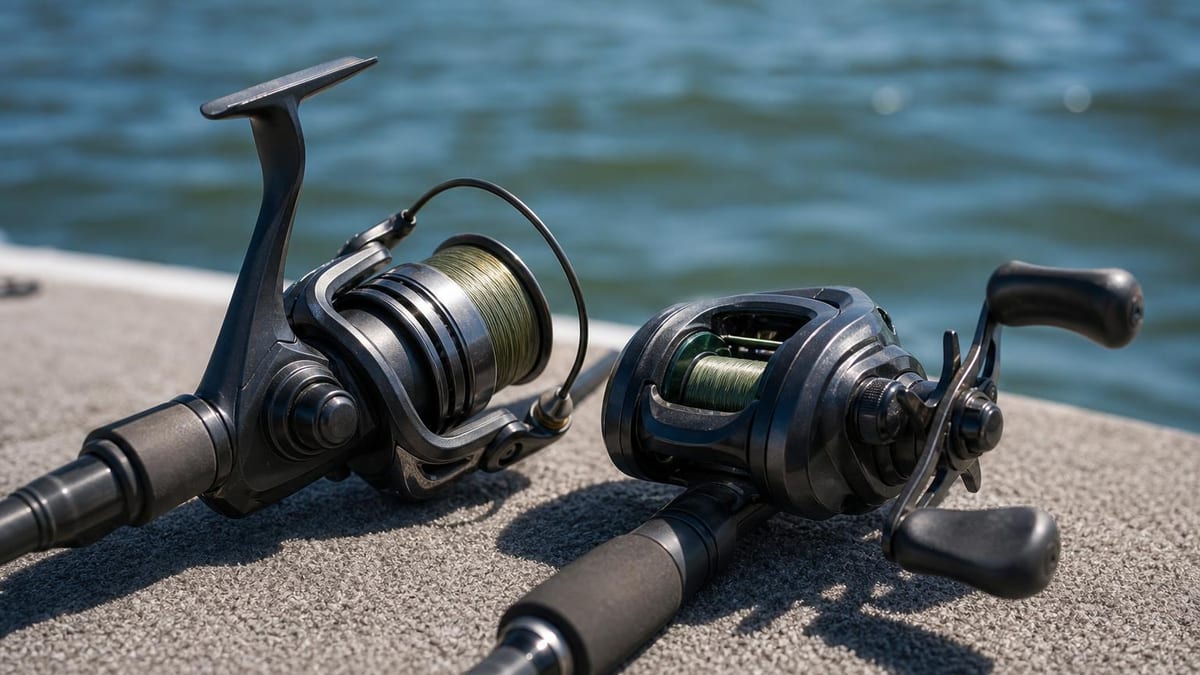
Strip away decades of tribal loyalty and the spinning-versus-baitcasting question reduces to a single mechanical fact. On a spinning reel, the spool never moves during the cast: a wire bail flips out of the way, and the lure’s own momentum pulls line off the spool’s exposed end. On a baitcaster, the spool itself revolves, paying out line as it spins. Everything each reel is loved and cursed for follows from that one difference.
The fixed spool can’t overrun, because it contributes no momentum of its own — which is why the spinning reel’s signature tangle simply doesn’t exist. The revolving spool has inertia; let it spin faster than the departing lure and the surplus line piles into the reel as the backlash — the “bird’s nest” that, as the 4-H angling curricula put it, is common to the inexperienced and still strikes the experienced from time to time.
The spinning reel: friction-free and forgiving
Texas Parks and Wildlife’s beginner guide captures the spinning reel in a sentence: an open-face reel mounted under the rod, off which “fishing line spools off quickly allowing longer casts,” able to throw lighter baits and lures than anything else. The bail is the elegant part — Take Me Fishing describes it as the line’s gate: closed, it holds line; open, it releases for the cast; on the retrieve, it guides line neatly back onto the spool.
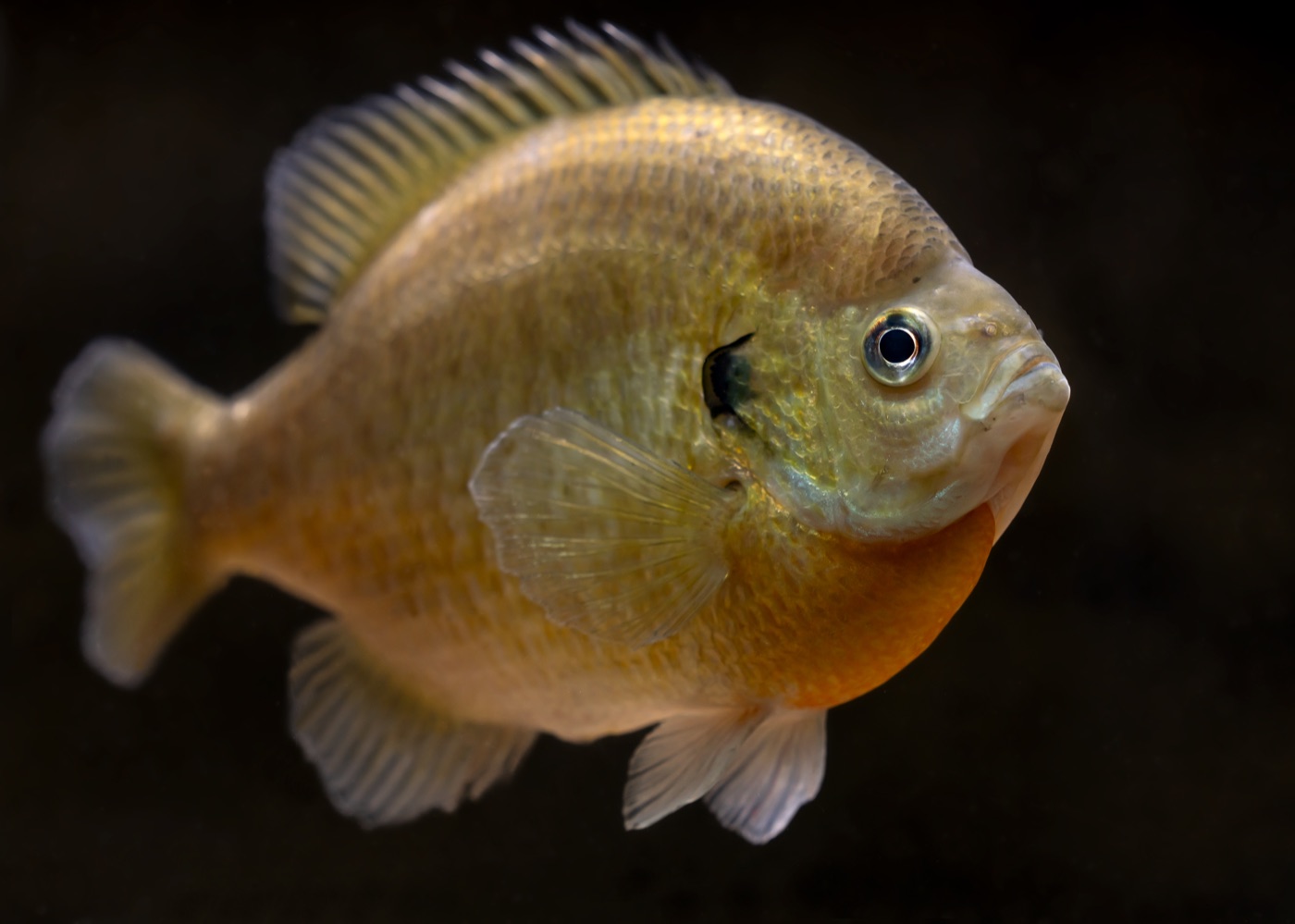
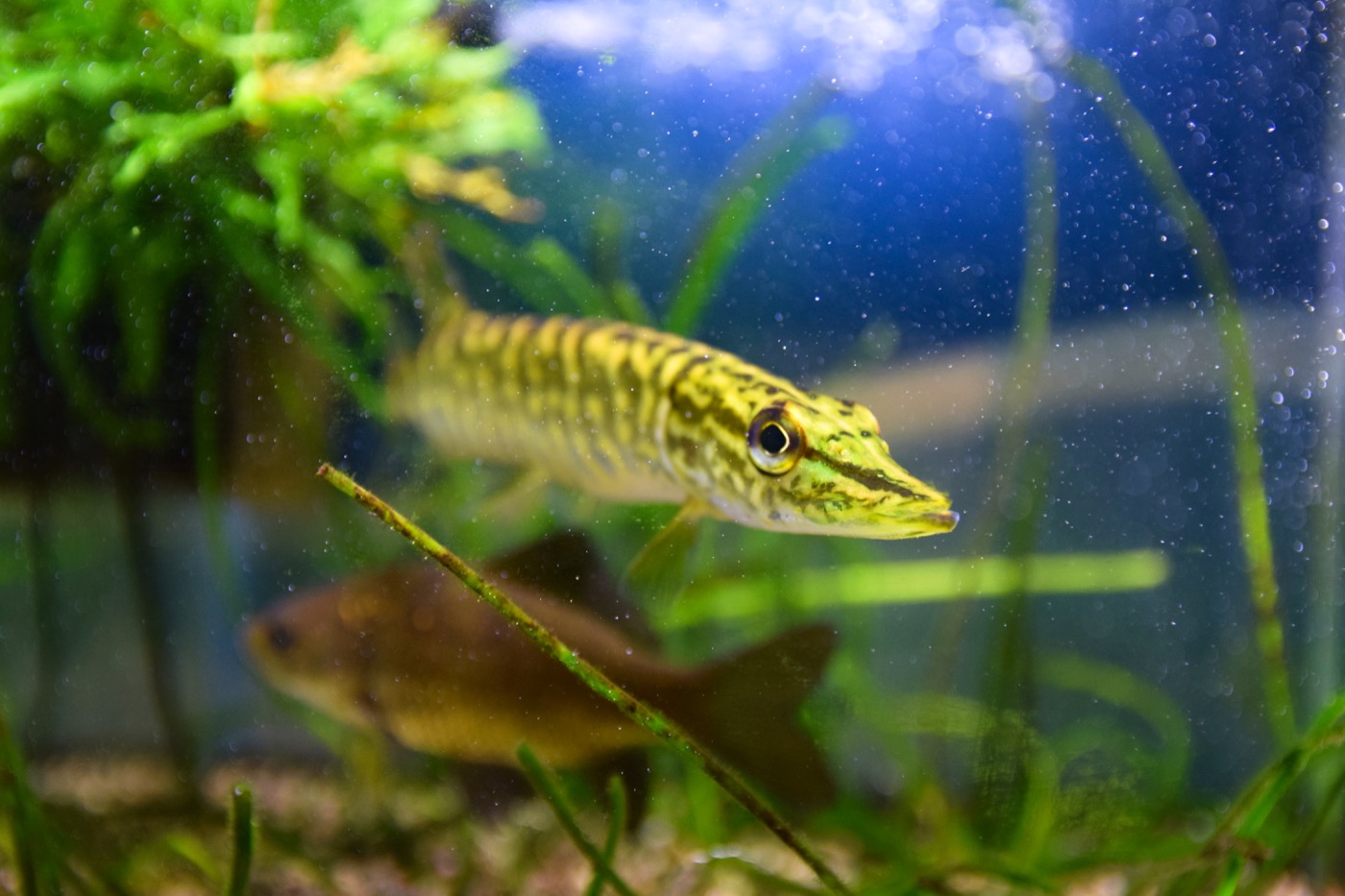
The consequences: long casts with light lures, near-zero tangle anxiety, and a learning curve measured in minutes. This is why Take Me Fishing calls spinning reels the most popular beginner type, and why a medium spinning combo — in their words — “can handle a wide range of lure sizes and weights without any reel adjustments.” From bluegill worms to bass plastics to live-lining for pike, one reel genuinely covers the middle of fishing. Its structural cost shows up at the heavy end: for big line and big lures, the geometry of a fixed spool runs out of comfort — exactly where the baitcaster begins.
The baitcaster: control, at a price
Everything about a baitcaster is built around its revolving spool. TPWD’s warning is honest — the spool “can entangle the line if not properly adjusted. You’ll need to practice with this model” — and the practice is specific: Take Me Fishing’s casting lesson teaches firm thumb pressure on the spool at the start of the cast, feathered off gradually as the lure flies. The educated thumb is the reel’s control system, which is why, as their reel guide notes, many professionals prefer baitcasters “because of ‘control’” — with the caveat that a well-practiced thumb is required.
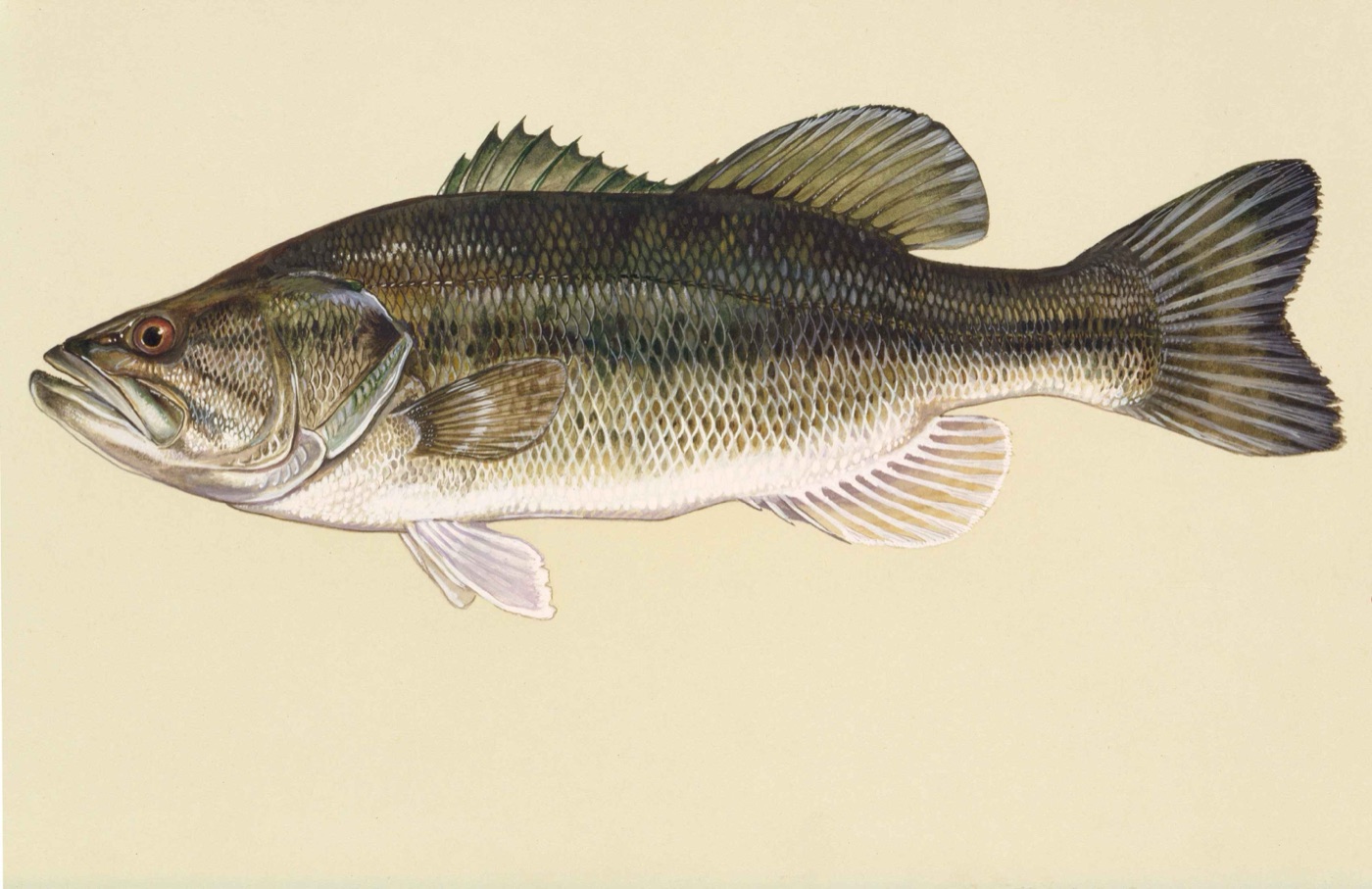
What the price buys, per the verified guidance: handling for line of 10-lb test and heavier, the muscle to throw heavy lures and “pull fish out of thick vegetation,” higher gear ratios that pick up line fast for spinnerbaits and crankbaits, and — Utah’s agency’s phrase — casting “with a high degree of accuracy,” if not the distance of spinning gear. Pitching jigs at flooded timber, winching fish from hydrilla mats, working big baits for pike: this is baitcaster country, and no spinning reel visits it comfortably.
The third option, and the ladder the agencies teach
The forgotten member of the family is the spincast — the closed-face, push-button reel. TPWD calls it ideal for beginners and “the easiest reel to use”; Utah’s agency names it the best choice for a kid’s first rod. Its enclosed fixed spool trades some casting distance and capacity for total simplicity: push, throw, done.
Put the three together and the agencies effectively teach a ladder. Start spincast (or straight to spinning) → live on spinning for most of your fishing → add a baitcaster when your techniques demand heavy line, heavy lures and surgical placement. Utah’s guidance orders them exactly that way, ranking baitcasters “the most difficult of these three rod options” and reserving them for advanced anglers. Note what the ladder is not: a status ranking. Plenty of lifelong anglers never need a baitcaster; the reel follows the fishing, not the other way around.
The part both reels share: the drag
Whichever spool you choose, one mechanism matters more than the rest: the drag — in Take Me Fishing’s definition, “simply a pair of friction plates inside of fishing reels” that slip and surrender line when a fish pulls beyond the setting. Utah’s agency notes every reel type carries one.
Set it before you fish, not during the fight. The verified guidance: the line should hold roughly a third to half of its rated strength before the drag slips — and when in doubt, err loose, because “it’s better to have your drag too loose and fight a fish a little longer than to have it too tight and break off a big one.” A properly set drag is what lets thin line land heavy fish and what protects every knot you tie from the surge that would otherwise test it to destruction. Two spools, one truth: the reel’s job is to give line exactly as grudgingly as your tackle can afford.
Frequently asked questions
What's the actual difference between spinning and baitcasting reels?
One moving part changes everything: the spool. On a spinning reel the spool is stationary — a bail flips open for the cast, the lure's momentum pulls line off the spool's end, and the bail guides line back on during retrieve. On a baitcaster the spool itself revolves during the cast, driven by the lure. That revolving spool gives control and cranking power but can overrun the lure — the tangle every angler knows as a backlash or bird's nest.
Why do baitcasters backlash and spinning reels don't?
Physics of the spool. A spinning reel's fixed spool contributes no momentum — line leaves only as fast as the lure pulls it, so classic backlash can't form. A baitcaster's spool has inertia: if it keeps spinning after the lure slows, loose line piles into the reel. Take Me Fishing's casting lesson gives the cure — firm thumb pressure on the spool at the start of the cast, feathered off gradually — and even experienced casters, as the 4-H angling curricula cheerfully admit, still get struck by the occasional bird's nest.
When is a baitcaster actually worth it?
When weight and cover enter the picture. Take Me Fishing's rule of thumb: reach for a baitcasting setup with line of 10-pound test or heavier, and when fishing heavy cover where you need the power to pull fish out of thick vegetation. Utah's agency adds the profile: baitcasters throw heavier baits with a high degree of accuracy, though not as far as spinning gear. That's the bass-in-the-slop, big-lure, big-line job description — precision artillery, not a starter tool.
What reel should a beginner start with?
The agencies are unusually unanimous. Texas Parks and Wildlife calls the spincast — the closed-face, push-button reel — ideal for beginners and the easiest to use; Utah's agency makes it the best choice for a kid's first rod, with the spinning combo as the easy next step that casts farther and suits new adult anglers. Take Me Fishing notes spinning reels are the most popular beginner type because they're easy and tangle-resistant. Baitcasters, in every source, wait until the fundamentals are automatic.
What does the drag do and how should I set it?
The drag is a pair of friction plates inside the reel — Take Me Fishing's definition — that slip and give line when a fish pulls harder than the setting. Their guidance: set it so the line holds roughly a third to half of its rated strength before slipping, and err loose — 'it's better to have your drag too loose and fight a fish a little longer than to have it too tight and break off a big one.' Utah's agency notes every reel type has one; it's the feature that turns line strength from a limit into a system.
Sources
- Fish Texas: tackle chapter — Texas Parks & Wildlife Department. Accessed August 13, 2026.
- Fish Texas: casting chapter — Texas Parks & Wildlife Department. Accessed August 13, 2026.
- Fishing Reel Parts — Take Me Fishing (Recreational Boating & Fishing Foundation). Accessed August 13, 2026.
- How to Cast a Baitcaster — Take Me Fishing (Recreational Boating & Fishing Foundation). Accessed August 13, 2026.
- How to Set the Drag — Take Me Fishing (Recreational Boating & Fishing Foundation). Accessed August 13, 2026.
- Learn to fish: basic equipment — Utah Division of Wildlife Resources. Accessed August 13, 2026.
- A Brief Guide to Fishing Reels — Take Me Fishing (Recreational Boating & Fishing Foundation). Accessed August 13, 2026.
How we choose sources: sources policy.
More in this series
Know when it's worth going.
Fishing Club AI turns live weather, pressure and moon data into a simple bite forecast for your spot — so the skills you practise get used on the right day.
Get the App