The Drop Shot Rig: Finesse Fishing Off the Bottom
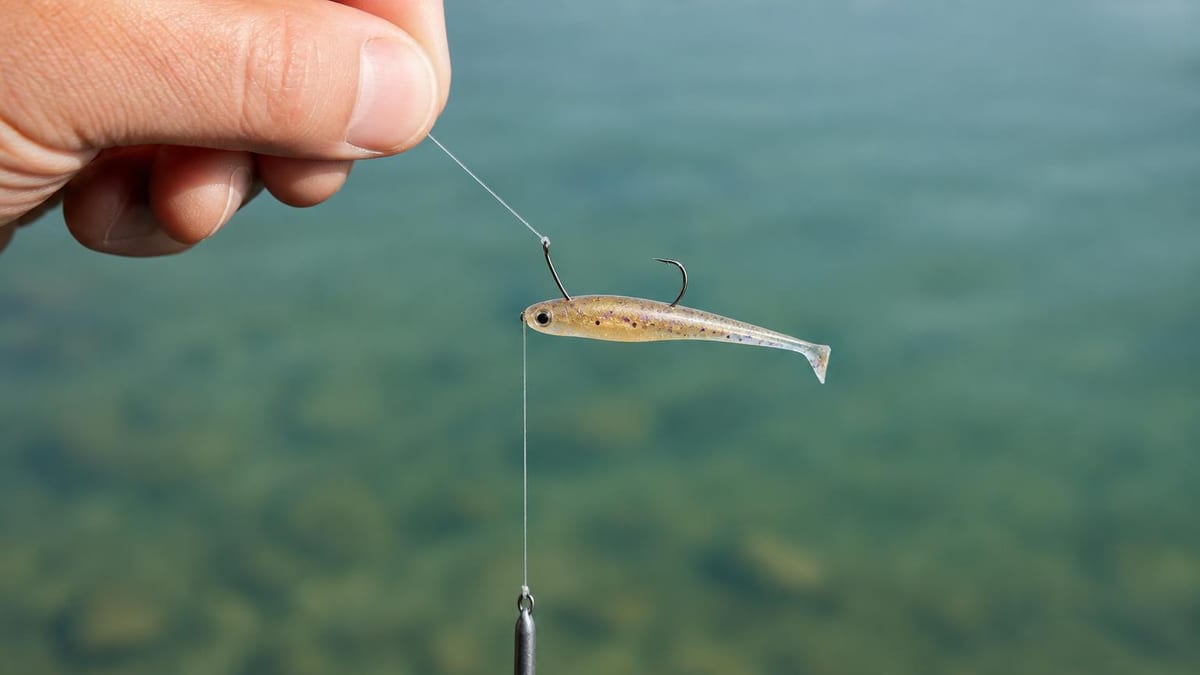
The drop shot rig inverts the usual order: the hook is tied above the weight, which sits on the end of the line. That suspends your bait off the bottom, where it hangs and quivers instead of lying in the mud. Texas Parks and Wildlife calls it an important rig for clear water, slow days and heavily pressured lakes.
Key takeaways
- Hook above, weight below — Texas Parks and Wildlife notes this is what gets the bait off the bottom, unlike rigs that put the weight up the line.
- Built on a Palomar knot with the tag end run back down through the hook eye, so the hook stands out with the point up.
- TPWD's use case: clear water, slow catching days and heavily pressured lakes.
- Fish it still — often 'just a light twitch of the rod tip or none at all works best.'
- New York's DEC describes it as a way to fish bait just off the bottom, with hook-to-weight distance from 1 to 5 feet.
- Deeper than about 10 feet, fishing it vertically under the boat is the strongest presentation.
The rig that turns the usual order upside down
Nearly every bottom rig puts the weight somewhere up the line and the hook at the end. The drop shot does the reverse: the weight goes on the very end, and the hook is tied above it. Texas Parks and Wildlife states both the difference and the reason in one line — unlike rigs where the weight sits between rod and lure, on a drop shot the hook is above the weight, and that “gets the bait off the bottom.”
That inversion changes what your bait does. Instead of lying in silt where a fish must look down to find it, a small soft plastic hangs in open water at eye level, held there by a weight that never moves. Take Me Fishing describes the effect: with the hook and bait suspended above the weight, the bait “takes on a fluid motion that can entice even stubborn or inactive fish to bite.”
Tying it: a Palomar with one more pass
The rig is built on a knot you may already know. Texas Parks and Wildlife’s sequence: tie the hook on with a Palomar knot about 18 inches from the end of the line — then, instead of trimming the tag end, run it back up and over and down through the hook eye. Attach a weight to the end of the line and you’re rigged.
That last pass is the whole trick: it forces the hook to stand out from the line with the point facing up. Take Me Fishing calls the finished tie a drop shot knot — “basically a Palomar knot with a tucked tag end” — and Take Me Fishing’s bass-rig page explains why the orientation matters: the hook should face upwards, which helps keep it from snagging, hanging with the shank parallel to the bottom.
Hook size is modest by design — TPWD suggests trying a 1/0 or similar. And in cover, adapt: the same source notes that depending on vegetation you may need to embed the hook in the bait, or you may be able to fish it with the point exposed. Our hook sizes guide covers the sizing language.
When to reach for it
The drop shot is not an everyday rig — it is the rig for days when the everyday ones stop working. Texas Parks and Wildlife names the conditions explicitly: clear water, slow catching days, and heavily pressured lakes. That is a precise description of modern bass fishing on public water in midsummer.
New York’s DEC adds the depth dimension. On Lake Erie, they report the drop shot “has become very popular among Erie bass anglers as an effective way to fish bait just off the bottom,” with anglers taking a vertical approach for summer smallmouth. Take Me Fishing agrees on the water type: it works particularly well for fish suspended in clear, deep water.
Depth guidance is where sources converge and diverge usefully. TPWD notes the rig fishes shallow or deep, but that in water deeper than 10 feet, fishing it vertically below the boat can be very effective. As for how far the hook sits above the weight, treat the published spread as your working range: about 18 inches (TPWD), 1 to 5 feet (DEC), or 10 to 36 inches of tag end (Take Me Fishing). The right answer is wherever the fish are holding above bottom that day — which is exactly the information a depth map or sonar is for.
Fishing it: do less
Most anglers ruin a drop shot by working it like a jig. Texas Parks and Wildlife’s instruction is refreshingly plain: fish slowly, and don’t move it as much as you would think — “in fact, many times just a light twitch of the rod tip or none at all works best.”
New York’s DEC gives the vertical method in three steps: cast the rig or simply drop it over the side, reel in the slack so you can directly feel the weight on the bottom and any strike on your bait, then give the bait action by slowly lifting and dropping the rod tip in a jigging motion. Note what stays still — the weight. Every twitch you make travels down slack line to the bait alone, which is why the rig can present a lure that quivers in place for a full minute without leaving the strike zone.
That stillness is also why the drop shot rewards good line. Its natural home is light, low-visibility line — the clear-water conditions TPWD describes are exactly where our line guide puts fluorocarbon leaders to work.
Where it fits in the rig toolkit
Think of the drop shot as the specialist you call when the generalists fail. The Texas rig covers heavy cover, the split shot rig covers the shallow natural fall, the slip float covers suspended fish under a bobber, and the drop shot covers the situation where fish are near bottom, spooky, and unwilling to chase.
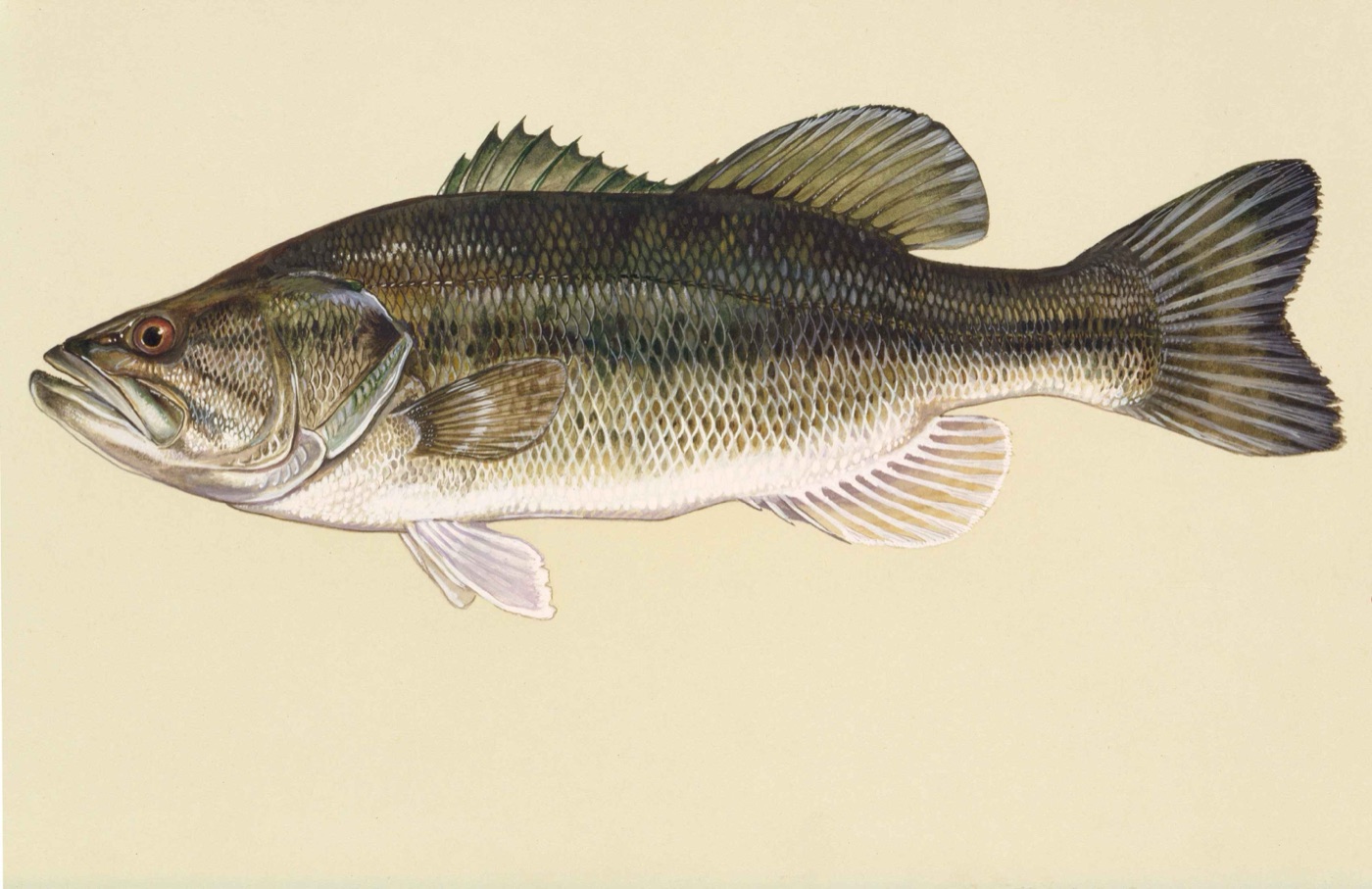
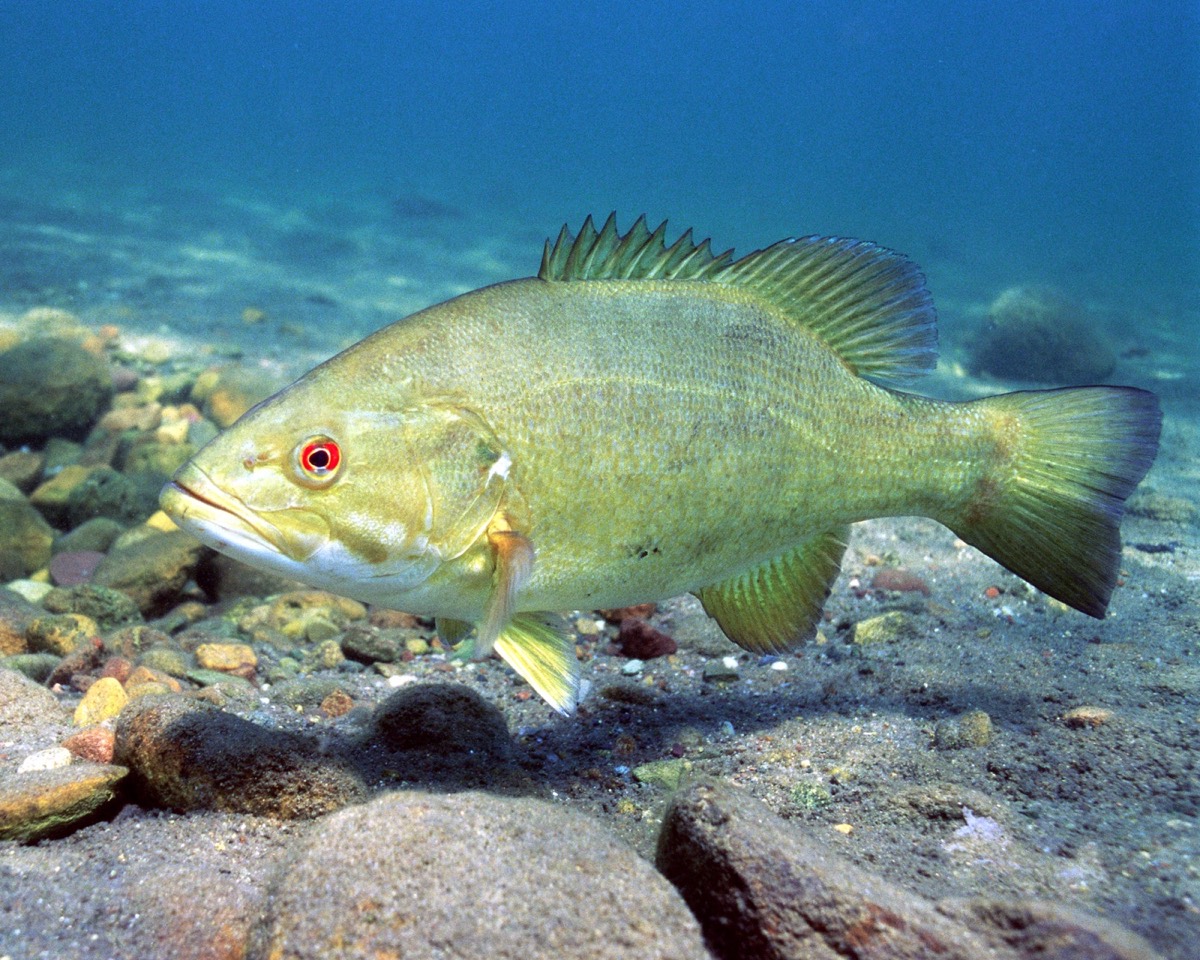
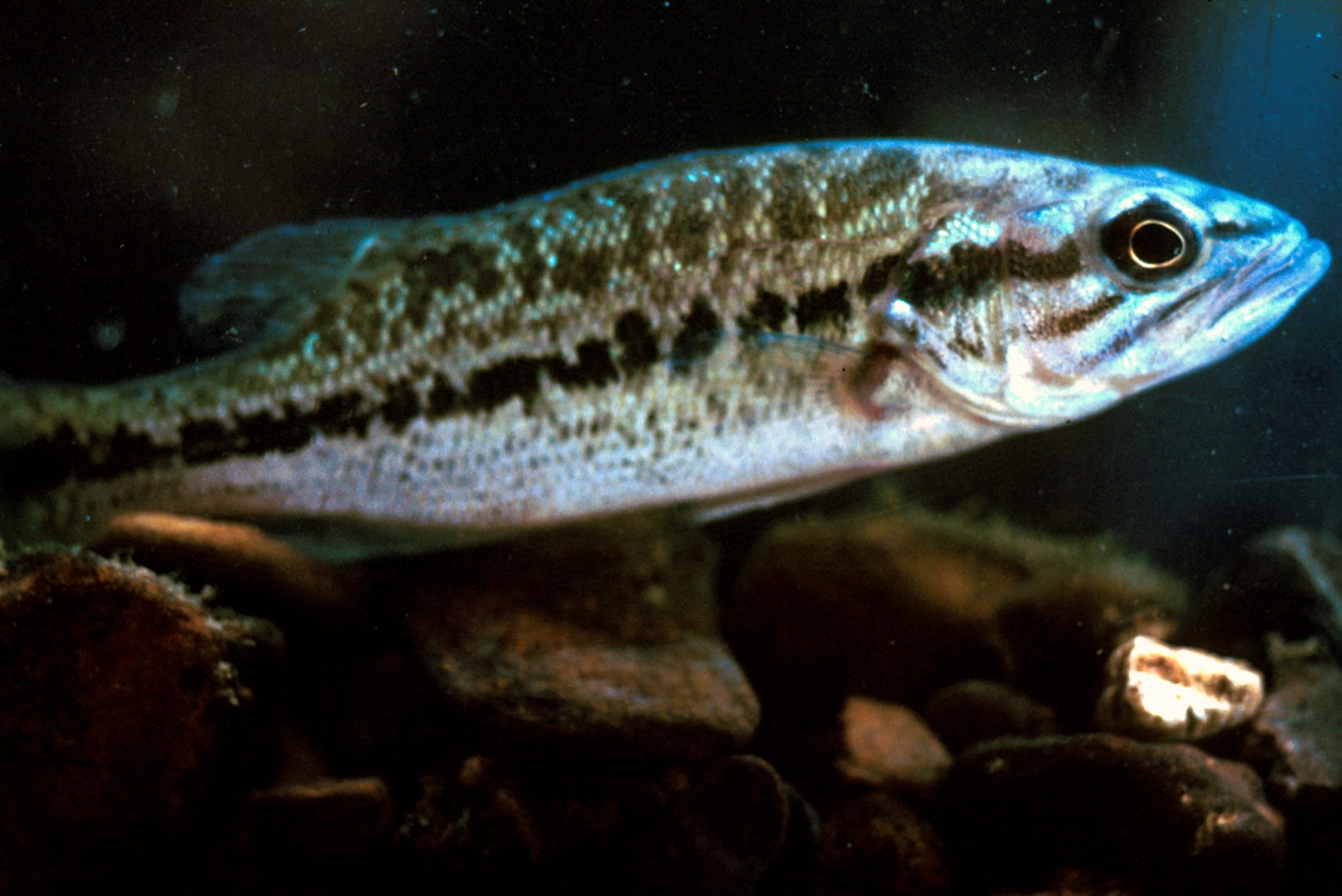
It is a bass rig first — smallmouth on deep structure, largemouth on clear reservoir points, spotted bass on offshore lines — but nothing about the geometry is species-specific: any fish holding just off bottom in clear water is a candidate. Take Me Fishing’s general framing applies at the end: the best rig is the one that suits the fish you’re seeking, and this one suits the fish everyone else has already annoyed. The whole set lives on our rigs page.
Frequently asked questions
What is a drop shot rig?
A finesse rig with the order reversed: the weight goes on the very end of the line and the hook is tied above it. Texas Parks and Wildlife explains the point — unlike rigs where the weight sits between rod and lure, the drop shot puts the hook above the weight, which gets the bait off the bottom. The result is a small bait hovering in the strike zone, moving with the water rather than lying still on it.
How do I tie a drop shot rig?
Around a Palomar knot with one extra move. Texas Parks and Wildlife's version: tie the hook on with a Palomar about 18 inches from the end of the line, then — instead of trimming — run the tag end back up and over and down through the hook eye, and attach a weight to the end of the line. That final pass is what makes the hook stand perpendicular with the point up. Take Me Fishing calls the same tie a drop shot knot: a Palomar with a tucked tag end.
How far above the weight should the hook be?
It depends on how far off bottom the fish are, and published guidance spans a wide range: Texas Parks and Wildlife suggests about 18 inches, New York's DEC says the length between hook and weight can vary from 1 to 5 feet, and Take Me Fishing describes pulling 10 to 36 inches of tag end. Read those as a range to work within, not a rule — start where you think fish are holding and adjust when they don't eat.
When should I use a drop shot rig?
When conditions are against you. Texas Parks and Wildlife names the situations directly: clear water, slow catching days, and heavily pressured lakes. New York's DEC adds the depth case, describing it as a very effective way to fish just off the bottom for Lake Erie smallmouth, where anglers take a vertical approach in summer. Take Me Fishing adds that it works particularly well for fish suspended in clear, deep water.
How do I fish it once it's down there?
Barely. Texas Parks and Wildlife's instruction is to fish slowly and not move it as much as you'd think — 'many times just a light twitch of the rod tip or none at all works best.' New York's DEC describes the vertical method: drop the rig, reel up the slack so you feel the weight on bottom, then slowly lift and drop the rod tip in a jigging motion. The weight stays put; the bait does the work.
Sources
- Rigging Up, Not Wigging Out — Texas Parks & Wildlife Department. Accessed August 16, 2026.
- Lake Erie Smallmouth Bass Fishing — New York State Department of Environmental Conservation. Accessed August 16, 2026.
- How to Tie a Drop Shot Knot — Take Me Fishing (Recreational Boating & Fishing Foundation). Accessed August 16, 2026.
- Types of Bass Fishing Rigs — Take Me Fishing (Recreational Boating & Fishing Foundation). Accessed August 16, 2026.
- Freshwater Rigs — Take Me Fishing (Recreational Boating & Fishing Foundation). Accessed August 16, 2026.
How we choose sources: sources policy.
More in this series
Know when it's worth going.
Fishing Club AI turns live weather, pressure and moon data into a simple bite forecast for your spot — so the skills you practise get used on the right day.
Get the App