How to Tie a Palomar Knot
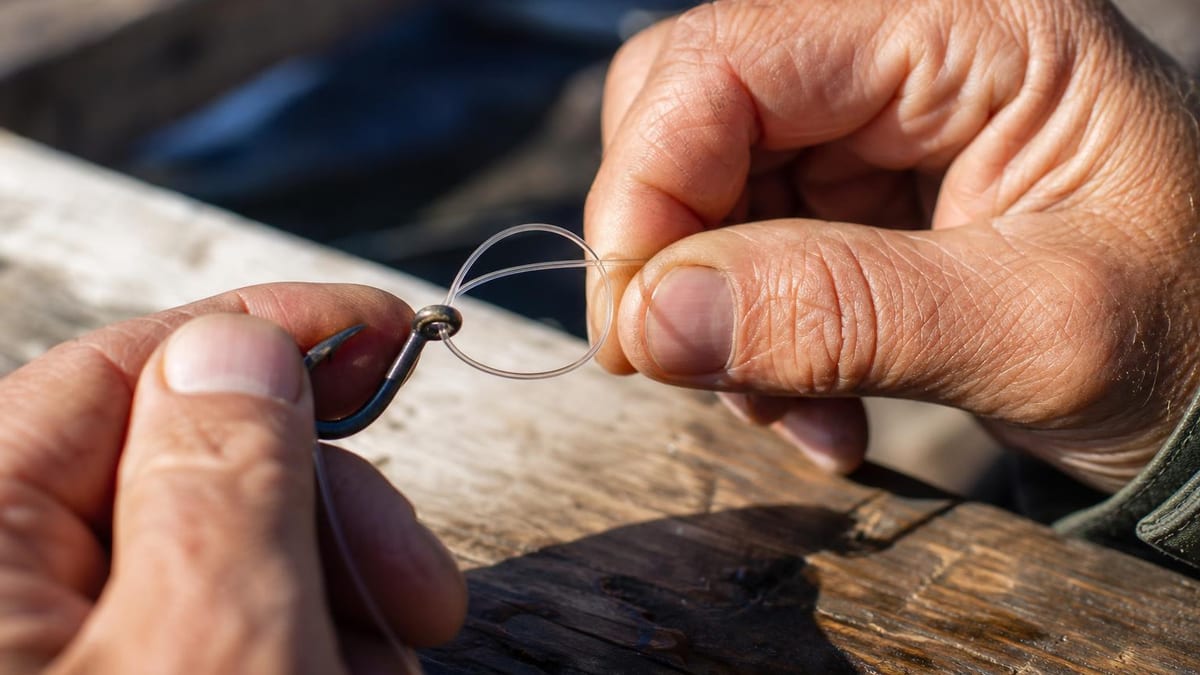
To tie a Palomar knot, double about six inches of line and pass the loop through the hook eye, tie a loose overhand knot in the doubled line, pass the loop completely over the hook, then moisten the knot and pull both the tag end and standing line to seat it. It is simple, quick and widely recommended for braided line.
Key takeaways
- Four steps: double the line through the eye, overhand knot, pass the loop over the hook, moisten and seat.
- Line manufacturers describe it as strong, simple to tie and well suited to braided line.
- Manufacturer instructions specifically say to moisten the knot before drawing it tight.
- The doubled line makes it awkward on very small hook eyes and bulky in heavy line.
- Published testing of line and knot strength is sparse, so treat any 'strongest knot' claim with caution.
How to tie it, step by step
- Type Terminal knot
- Difficulty Easy
- Best for Braid, mono and fluoro to hooks, lures and swivels
-
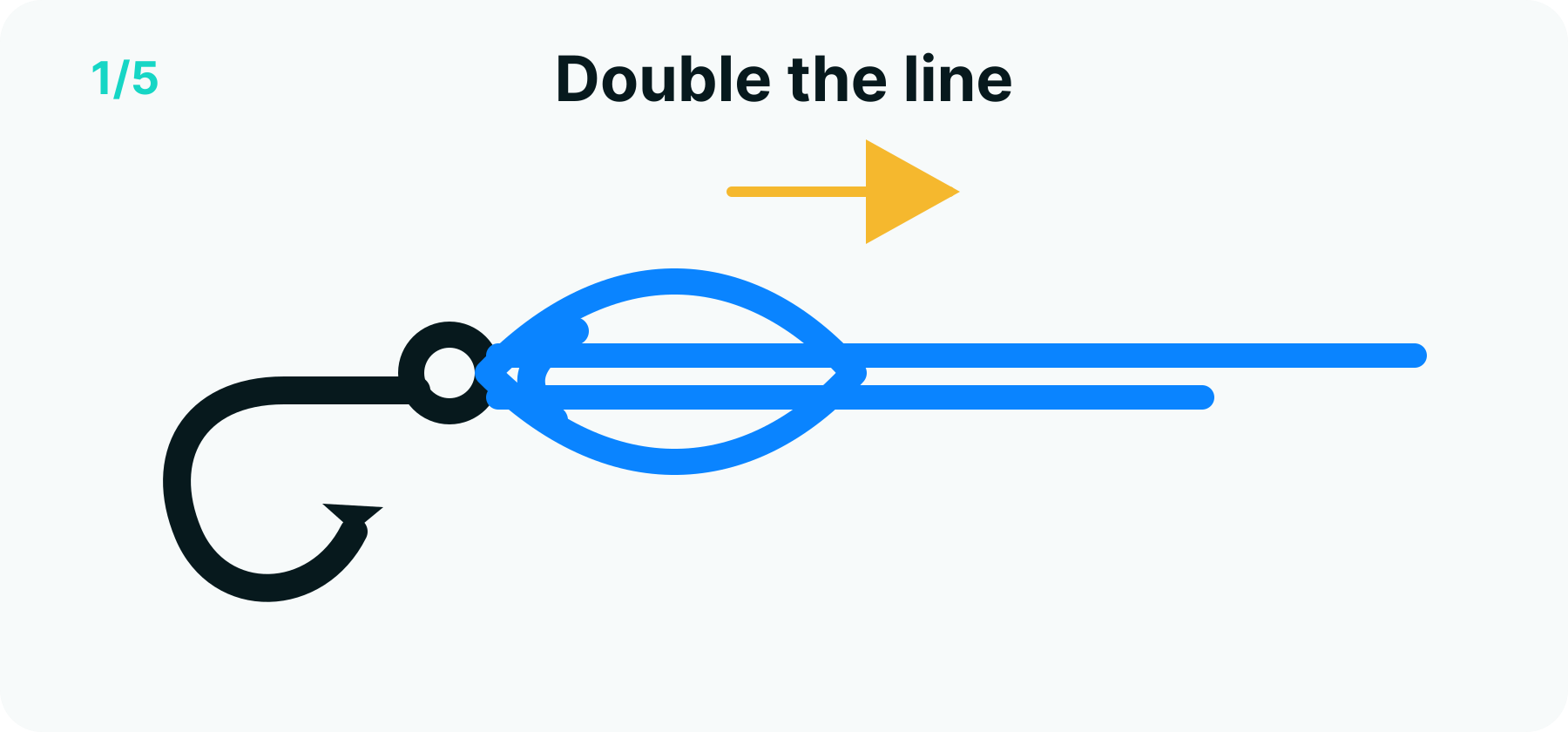 Step 1 of 5
Double the line
Fold about six inches of line into a loop (a bight) and pass the doubled line through the hook eye. Keep both legs even — an uneven bight is the first thing that ruins the knot's geometry.
-
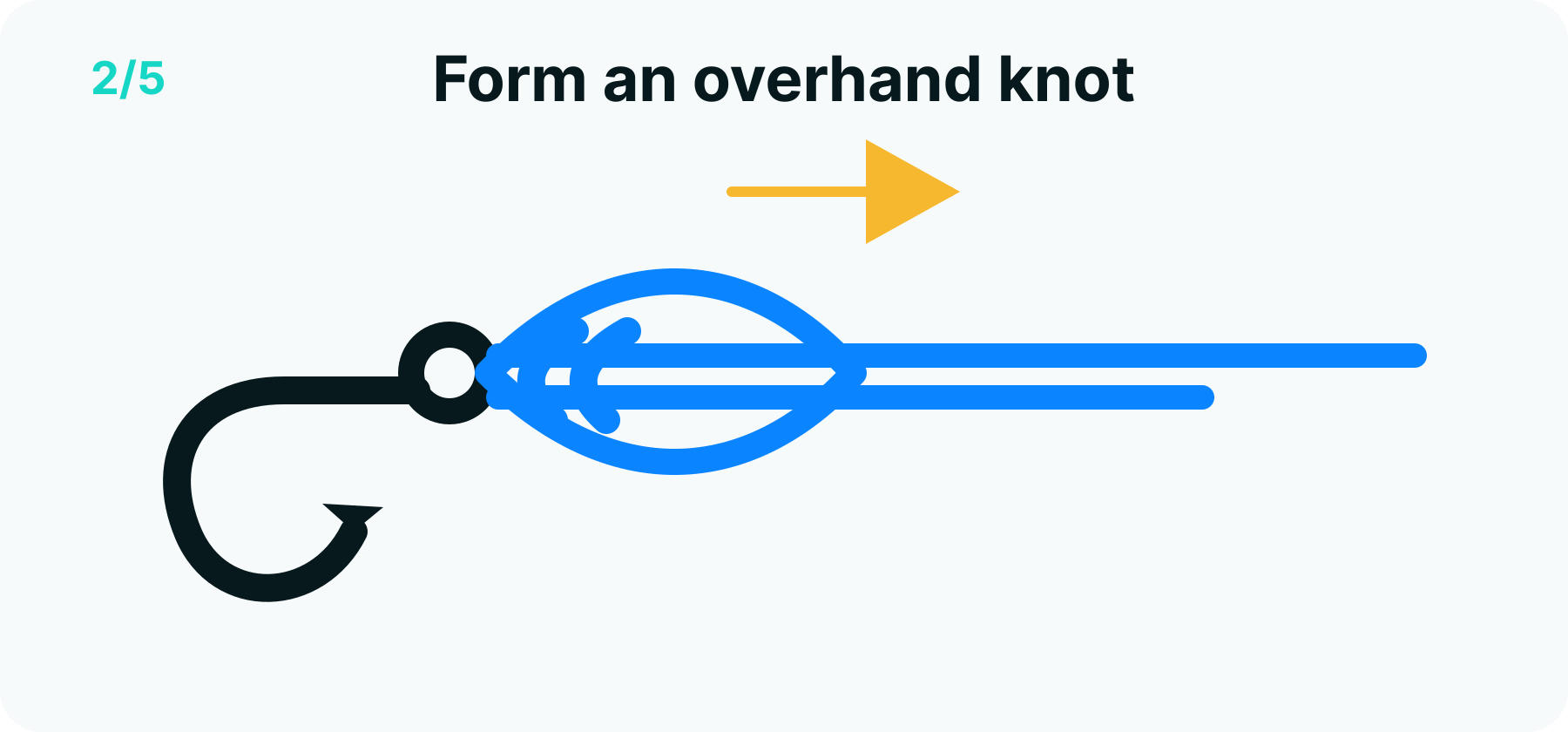 Step 2 of 5
Form an overhand knot
Tie a loose overhand knot with the doubled line, letting the hook hang free in the middle. Do not tighten anything yet — the opening must stay large enough for the next pass.
-
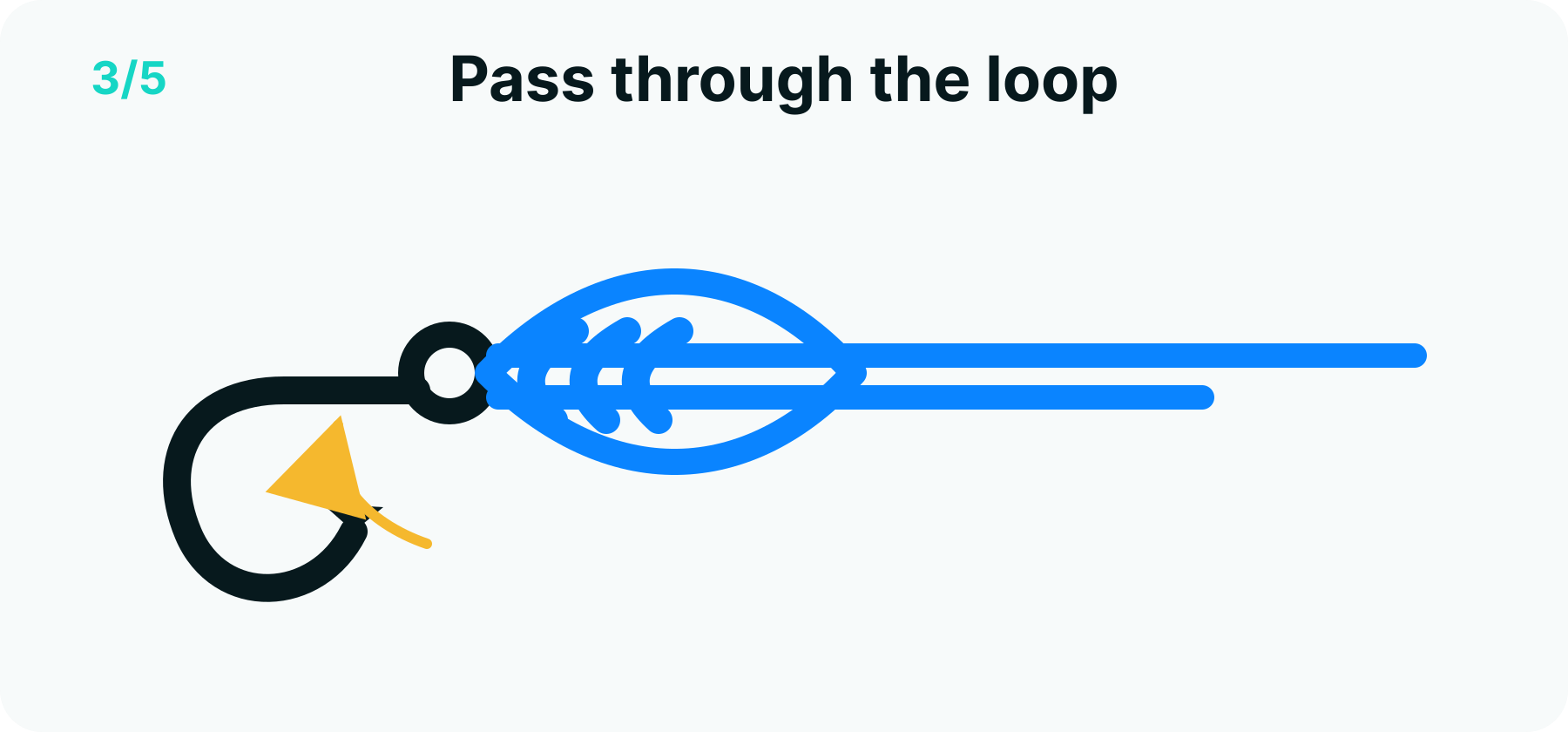 Step 3 of 5
Pass through the loop
Pull the end of the loop down and pass the entire hook or lure through it, so the loop ends up sitting above the hook eye on the standing line — not caught on the bend or shank.
-
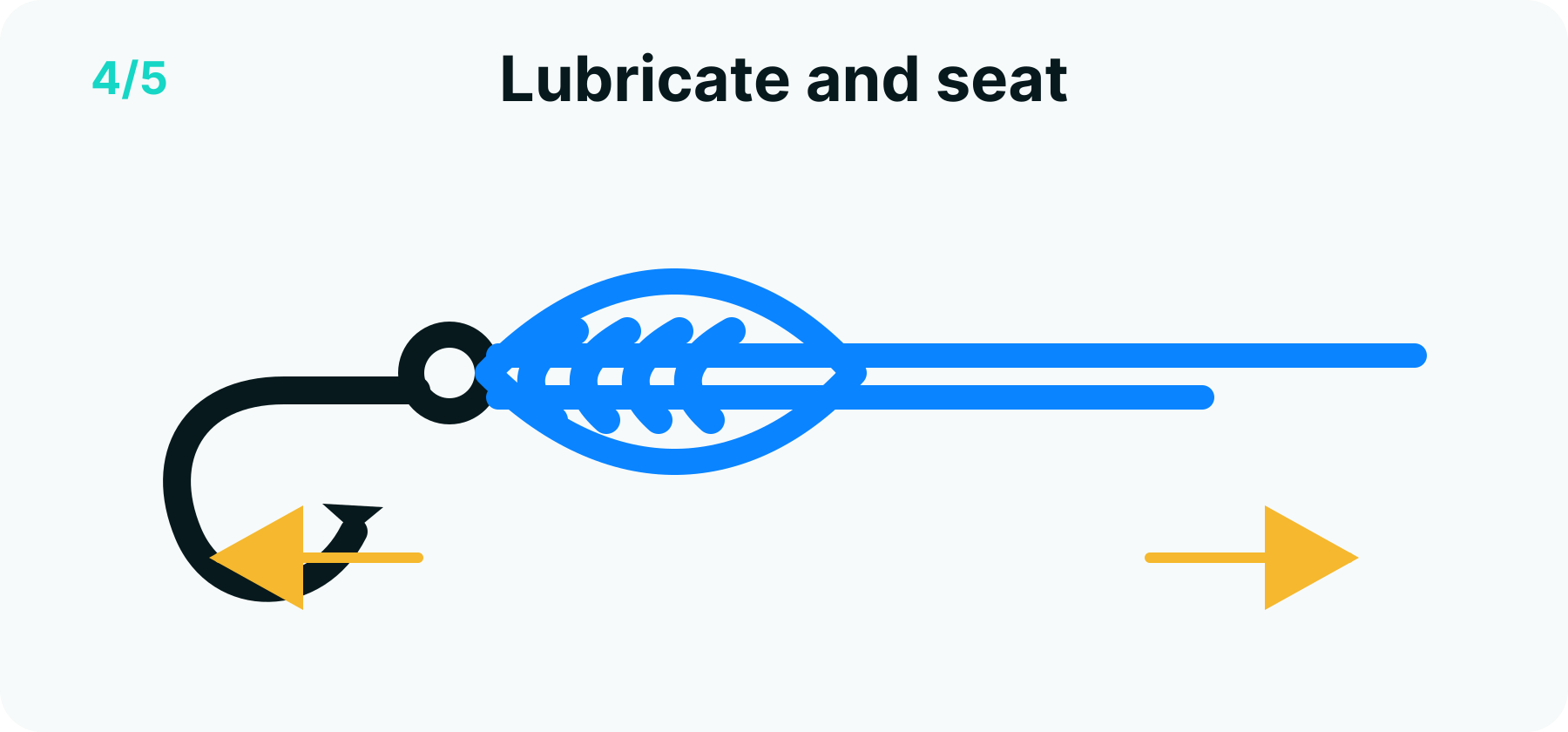 Step 4 of 5
Lubricate and seat
Moisten the knot, then pull the standing line and tag end together, steadily, until every part seats snugly against the eye. Check that the two strands lie parallel, not crossed.
-
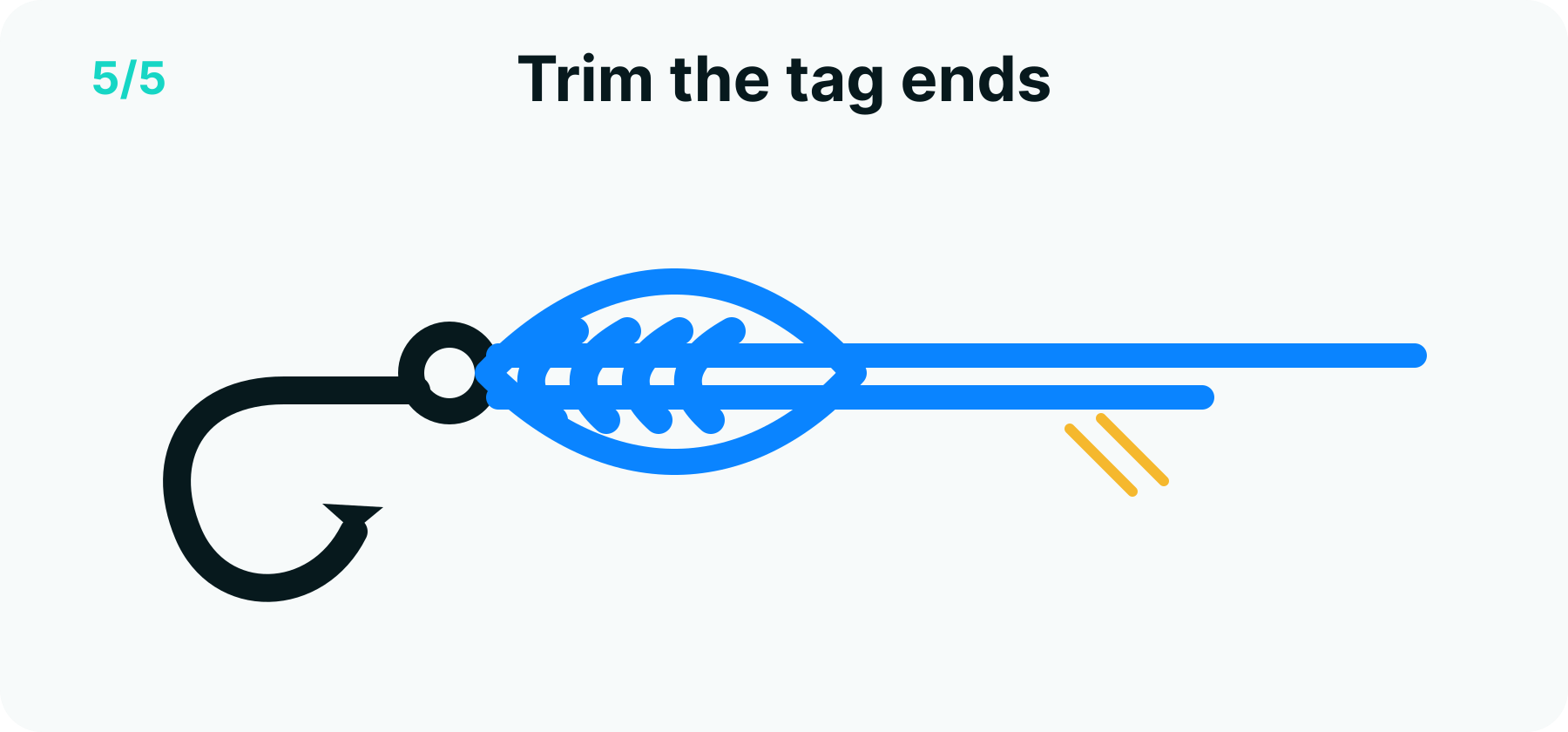 Step 5 of 5
Trim the tag ends
Confirm the knot is fully seated, then trim the tag end to about an eighth of an inch. A longer tag adds no strength — it only collects weed.
Same steps, animated and in your pocket: the knot guide inside the Fishing Club AI app walks you through every tie hands-free. Get the app.
The four steps
The Palomar is short enough to memorise, which is most of its appeal. Published manufacturer instructions give it as four movements: double about six inches of line and pass it through the eye of the hook; tie a simple overhand knot in the doubled line, letting the hook hang loose; pull the end of the loop down, passing it completely over the hook; then moisten and pull both ends of the line to draw the knot up.
Two details in that sequence do the real work. The first is letting the hook hang loose while you tie the overhand knot — if you tighten anything at this stage, the knot will not seat properly later. The second is passing the loop completely over the hook, so it ends up sitting above the eye on the standing line rather than caught on the shank.
Finish by trimming the tag end short, leaving roughly an eighth of an inch. Leaving it long does not add strength and gives weed and line something to catch on.
Why it suits braided line
Braid is slippery, and that is exactly the problem the Palomar solves. Manufacturer guides describe the knot as both strong and simple to tie, and recommend it specifically for braided line. Its structure is why: the line runs doubled through the eye and the loop is passed over the whole hook, so the connection grips through geometry rather than relying on friction between turns of line.
This matters because braided line has almost no stretch, so a knot that slips even slightly under load tends to keep slipping. Knot styles that hold well in monofilament, where a little stretch and surface grab helps, do not always transfer — the clinch family is the usual example, and our knots hub sorts every option by job.
The same doubling that helps with braid is what makes the knot awkward elsewhere, which is covered below.
The three mistakes that weaken it
Crossed strands in the overhand knot. The two strands of doubled line should lie parallel through the overhand turn. If they cross, they press into each other under load instead of sharing it. This is the most common reason a Palomar fails at a fraction of the line’s rated strength.
Seating the loop below the eye. After passing the loop over the hook, the knot should close on the standing line above the eye. If it catches on the shank or the eye itself, you have effectively tied a different, weaker knot.
Tightening it dry. Manufacturer instructions include the moistening step for a reason: pulling a knot tight generates friction, and friction is not kind to line. Wetting the knot before the final pull is a one-second habit.
Pull both the tag end and the standing line steadily when seating it, rather than yanking. A knot drawn up smoothly ends up neater and more consistent than one snapped tight.
About “strongest knot” claims
Be sceptical of them, including about this knot. Independent, published testing of fishing line and knot strength is thinner than the confident numbers online suggest. One study comparing measured fluorocarbon leader breaking strength with manufacturer claims noted that “few published studies actually test the breaking strength of a leader to determine the accuracy of manufacturers’ claims.”
That study also found the ranking shifted depending on whether a knot was involved: the leader that performed best unknotted was not the one that performed best with a knot. If the same line can change places in a ranking because of a knot, single-number claims about knot strength deserve caution.
The practical takeaway is unglamorous. A knot you can tie correctly, in the dark, in cold hands, every time, will outperform a theoretically stronger knot you tie inconsistently.
When to use something else
Skip the Palomar when the doubled line will not fit through the eye. Small hooks, some jig heads, and lures with tight split rings simply will not take two passes of line, and forcing it damages the line.
Reconsider it in heavy line too. As line diameter increases, the doubled-over knot gets bulky, harder to seat cleanly and more likely to end up with crossed strands. A uni knot handles heavy monofilament more gracefully.
Use a loop knot instead when the lure needs freedom to move. A snug knot at the eye limits the action of some hard baits and jigs; a non-slip loop lets them swing.
For joining two lines rather than tying to a hook, the Palomar is the wrong tool entirely. That job belongs to a line-to-line connection such as a uni-to-uni or a surgeon’s knot.
Practice it before you need it
Tie twenty in an armchair with a hook stuck in a cork. The knot is simple enough that this is genuinely all it takes for your hands to remember it, and it is a far better place to learn than a windy bank with fish showing.
Once it is automatic, check your first few on the water by pulling firmly against the rod before casting. A knot that is going to fail usually fails on that first steady pull rather than on a fish.
Frequently asked questions
Is the Palomar knot the strongest fishing knot?
It is widely recommended and manufacturer guides describe it as strong and simple, but we would avoid calling any knot the strongest. Independent testing of line and knot breaking strength is uncommon, and one published study found that which product performed best changed depending on whether a knot was involved. Tie whichever knot you can tie correctly every time.
Why do you have to wet a Palomar knot?
Because drawing a knot tight dry creates friction, and published manufacturer instructions include the step explicitly: moisten the knot before pulling both ends to draw it up. Wetting takes a second and costs nothing, so it is worth doing on every knot.
Can you tie a Palomar with braided line?
Yes, and it is one of the main reasons the knot is popular. Manufacturer guides recommend it for braided lines, which are slippery enough that some clinch-style knots can pull loose. The doubled line and the loop passed over the hook give braid something to grip.
When should I not use a Palomar knot?
When the doubled line will not pass through the hook eye, and with very heavy line where the finished knot becomes bulky. Large lures with a small split ring or tight eye are the usual problem. A uni knot or a loop knot is often easier in those situations.
Sources
- Palomar Knot — Take Me Fishing (Recreational Boating & Fishing Foundation). Accessed August 12, 2026.
- Fish Texas: knot tying for the beginning angler — Texas Parks & Wildlife Department. Accessed August 12, 2026.
- Angling tips, Winter Trout Stocking Program — Texas Parks & Wildlife Department. Accessed August 12, 2026.
- Top Five Must-Know Knots — Berkley Fishing (manufacturer documentation). Accessed August 2, 2026.
- Comparing Measured Fluorocarbon Leader Breaking Strength with Manufacturer Claims — arXiv preprint. Accessed August 2, 2026.
How we choose sources: sources policy.
More in this series
Know when it's worth going.
Fishing Club AI turns live weather, pressure and moon data into a simple bite forecast for your spot — so the skills you practise get used on the right day.
Get the App