How to Tie an Arbor Knot
To tie an arbor knot, pass the line around the reel spool's arbor, tie an overhand knot around the standing line, then tie a second overhand knot in the tag end as a stopper. Pull the standing line and the first knot slides down and jams against the spool with the stopper locking it. It is the standard way to start line on any reel — spinning, baitcasting or fly.
Key takeaways
- Four steps: around the spool, overhand around the standing line, stopper knot in the tag, slide and seat.
- The first knot slides like a noose; the stopper keeps the tag from pulling through — that pair is the whole mechanism.
- One knot serves every reel type: spinning, baitcasting and fly reels all start line the same way.
- It is a positioning knot, not a fighting knot — if a fish reaches your arbor knot, the problem is an empty spool.
- Slick braid can spin on a smooth arbor — back it with mono or add a wrap so the line grips.
- Snug the noose evenly before winding: line stacked on a loose foundation shifts under pressure later.
How to tie it, step by step
- Type Reel knot
- Difficulty Easy
- Best for Starting line on any reel spool
-
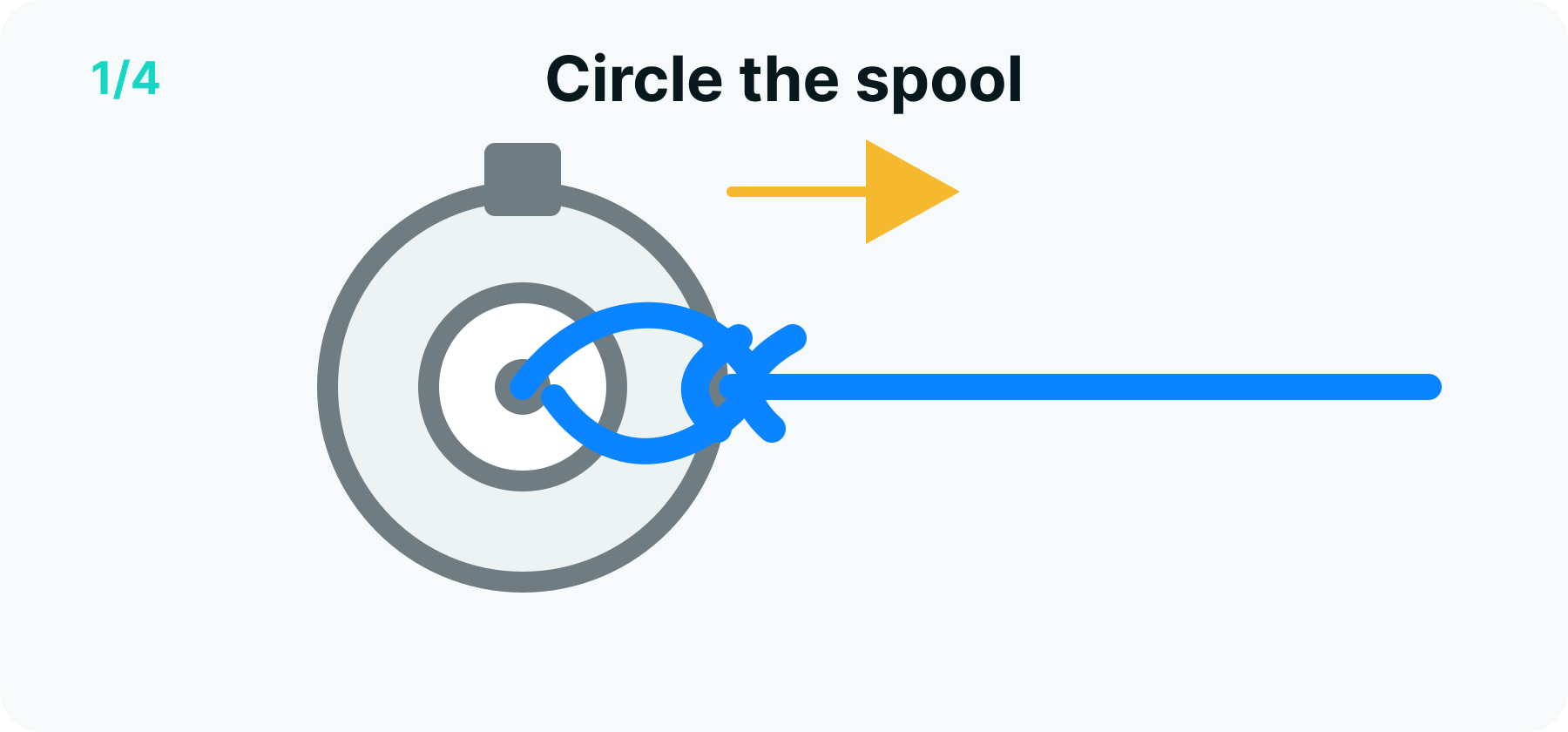 Step 1 of 4
Circle the spool
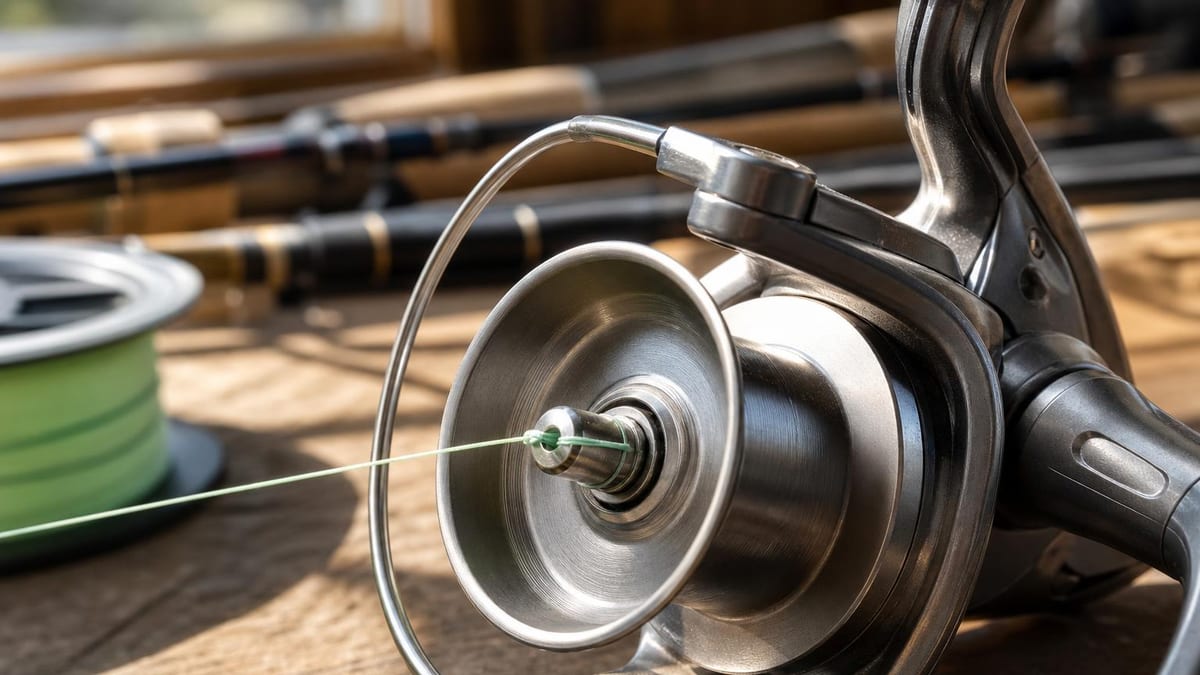
Open the bail or free the spool, pass the tag end around the arbor — the spool's central shaft — and bring it back alongside the standing line with a few inches to work with.
-
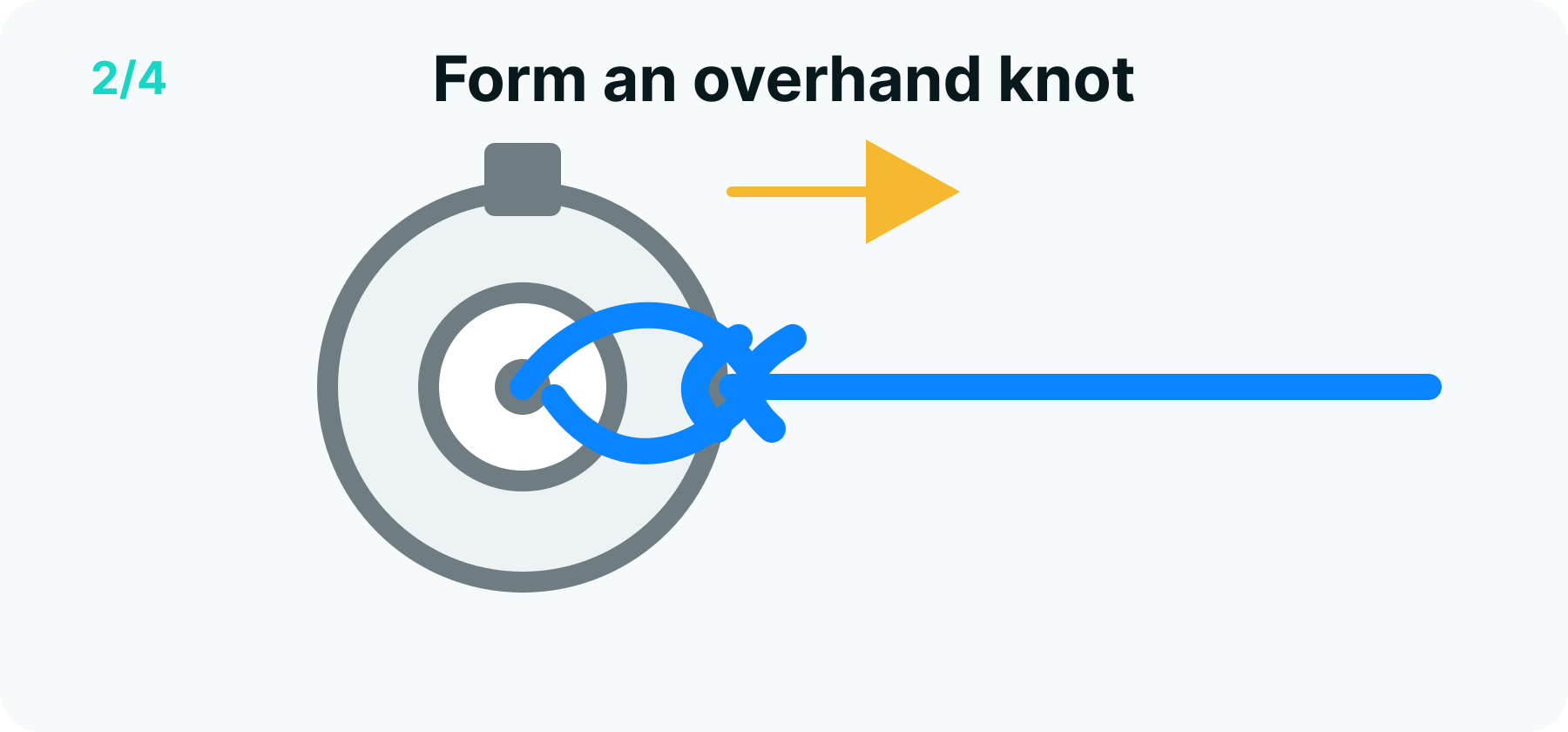 Step 2 of 4
Form an overhand knot
Tie a loose overhand knot with the tag end around the standing line. This creates a sliding noose that can travel down the line toward the spool.
-
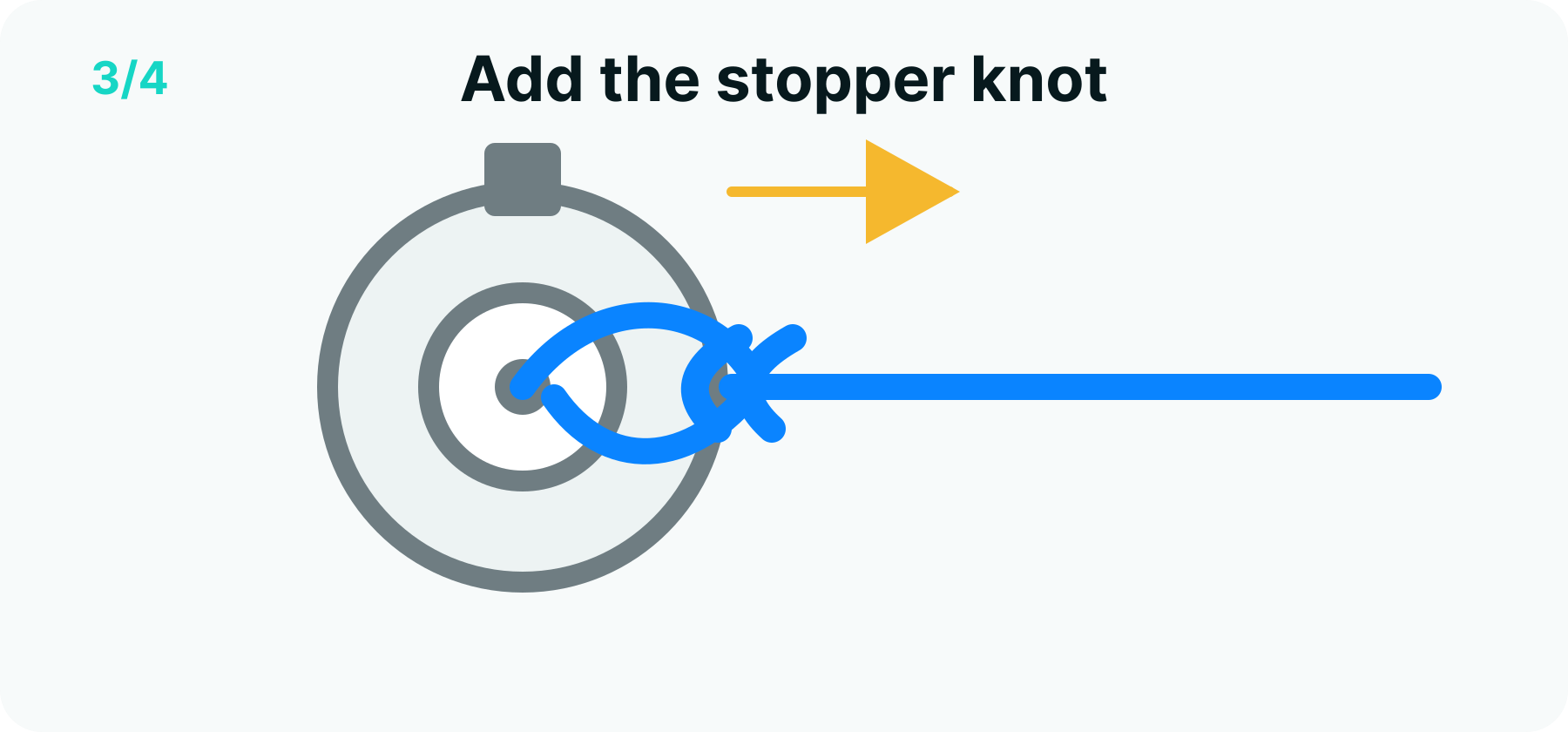 Step 3 of 4
Add the stopper knot
Tie a second, compact overhand knot near the very end of the tag itself. This stopper is what prevents the tag from pulling back through the first knot.
-
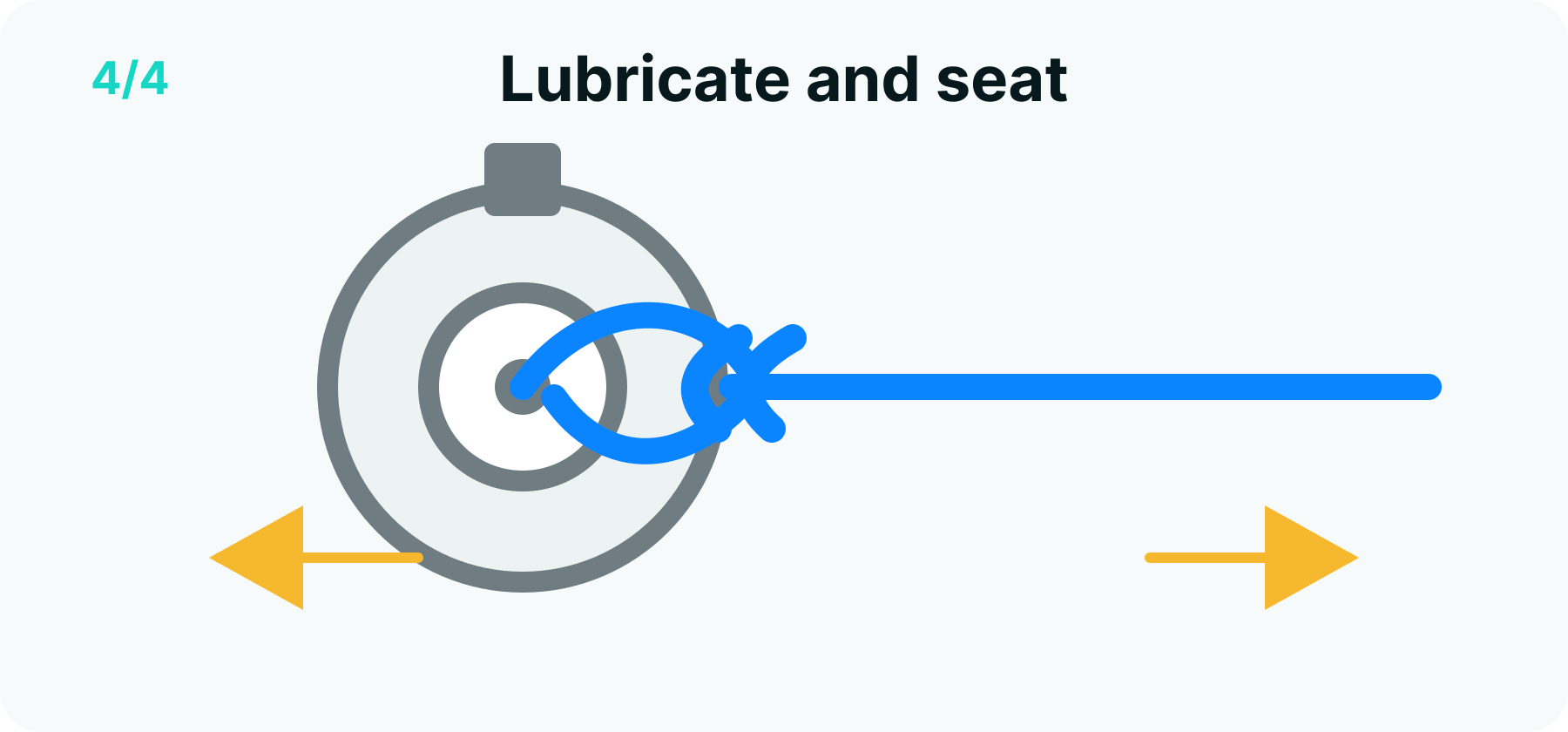 Step 4 of 4
Lubricate and seat
Moisten, then pull the standing line steadily: the noose slides down and jams against the arbor, and the stopper jams against the noose. Snug it evenly and trim close.
Same steps, animated and in your pocket: the knot guide inside the Fishing Club AI app walks you through every tie hands-free. Get the app.
The first knot every reel ever wears
Before any cast, before any leader, before the first lure is ever tied on, there is one knot already working underneath it all: the arbor knot, holding the line’s very first inch against the spool. It is the least glamorous tie in fishing and among the most universal — spinning reel, baitcaster or fly reel, the line starts the same way on all of them, looped around the arbor (the spool’s central shaft) and locked with the simplest mechanism in the knot book.
That mechanism deserves a sentence of admiration for its economy. The first overhand knot, tied around the standing line, is a noose — pull the standing line and it slides down and cinches against the arbor. The second overhand, tied in the tag itself, is a stopper — a lump that physically cannot fit through the first knot, so the tag can never escape. A slide and a doorstop; that is the whole machine. Two overhand knots that a child can tie combine into a grip that will quietly anchor a season of fishing.
An honest job description
The arbor knot’s duties are humbler than a terminal knot’s, and understanding them makes you better at tying it. Its everyday work is done in the first five minutes of its life: holding firm while you wind the foundation layer under tension. A noose that grips the arbor evenly gives the line a solid base to stack on; one seated loose or lopsided lets the foundation shift under a hard-pulling fish months later — felt as a spongy, creeping drag that seems to come from nowhere.
Its emergency duty — actually holding a fish — is a scenario worth naming plainly: it only happens when a fish has emptied the spool, and at that point the outcome is decided by circumstances, not knots. Anglers chasing long-running species like catfish or hard-running trout size their line capacity so the arbor knot never meets a fish. If yours ever does, the lesson is about backing and capacity, not tying.
There is one genuine technical caveat: braided line. Braid is so thin and slick that a snug noose of it can still rotate on a polished arbor — you turn the handle and the entire spool of line spins in place, transmitting nothing. The standard cures are simple: start with a few yards of monofilament backing (mono grips where braid skates) joined to the braid with a double uni, or take an extra turn around the arbor before tying so braid bites on braid. Either takes a minute and ends the problem permanently.
Tying it well, and what comes after
The diagrams above hold no surprises, so the craft is all in the finishing touches. Seat the noose evenly — work it down with a steady pull on the standing line so it lies flat all the way around the arbor, not pinched high on one side. Jam the stopper firmly home; the lock exists only when the two knots are in contact. Trim the tag close, because a protruding stub will catch the incoming wraps and bury a lump in your foundation layer. Then wind on under light, consistent tension — a soft pinch on the line above the reel does it — so the first layer beds down tight.
From that anchored beginning, the rest of the system builds in order, each connection covered step by step in our knots collection: backing to braid with a double uni, braid to leader with a double uni or FG, leader to lure with a uni or Palomar — a chain of small, learnable skills from arbor to hook point, with this humble slide-and-stopper holding the far end of all of it.
It is also, not incidentally, the perfect first knot to teach a new angler: two overhand knots they already know, a mechanism they can see working, and a result they will literally fish on top of all year — the same reason it opens the knot guide in the Fishing Club AI app, animated turn by turn for the day the new reel comes out of its box.
Frequently asked questions
What is an arbor knot for?
Attaching line to the bare spool of a reel — the arbor is the spool's central shaft, and this knot is the first thing between your reel and everything you will ever wind onto it. Spinning, baitcasting and fly reels all begin the same way. It is deliberately simple, because its job is humble: hold the line's starting point snug against the spool so the wraps above it stack on a firm foundation.
Does an arbor knot need to be strong?
Not in the way a terminal knot does, and it is worth being honest about why. The arbor knot only sees fighting load in one scenario: a fish has taken every yard of line off your reel and is now pulling against the knot itself. At that point you are one wrap from losing the contest regardless of knots. Its real jobs are grip — keeping the foundation from rotating on the spool — and reliability while you wind under tension. Both come from seating it properly, not from brute strength.
Why does braided line slip on the spool?
Braid is thin and slick, and on a polished metal arbor a snug noose of it can still rotate — you wind, and the whole spool of line spins uselessly in place. The standard fixes: start with a short backing of monofilament tied to the arbor first (mono grips where braid skates) and join the braid to it, or take an extra turn of braid around the arbor before tying so the line bites on itself. Some spools include a rubber ring or tape band for exactly this reason.
How tight should the arbor knot be before winding?
Snug enough that the noose cannot rotate around the arbor by hand, seated evenly so the line leaves the knot flat against the spool. Give the standing line a firm pull to jam the stopper against the sliding knot, trim the tag close so it cannot catch the incoming wraps, and keep light tension on the line as you begin winding. The first layer is the foundation of every layer above it — thirty seconds of care here saves a slipping, shifting spool all season.
Sources
- How to Tie an Arbor Knot — Take Me Fishing (Recreational Boating & Fishing Foundation). Accessed August 12, 2026.
- Fish Texas: knot tying for the beginning angler — Texas Parks & Wildlife Department. Accessed August 12, 2026.
- Common Fishing Knots, I FISH NY — New York Sea Grant, Stony Brook University. Accessed August 12, 2026.
- Uni Knot (reel arbor use) — Take Me Fishing (Recreational Boating & Fishing Foundation). Accessed August 12, 2026.
- Knot Tying Lesson Plan, I FISH NY Program — New York State Department of Environmental Conservation. Accessed August 12, 2026.
How we choose sources: sources policy.
More in this series
Know when it's worth going.
Fishing Club AI turns live weather, pressure and moon data into a simple bite forecast for your spot — so the skills you practise get used on the right day.
Get the App