Kayak Fishing Basics: What the Boat Changes, and What the Rules Require
A kayak gets you close to shore and into cover other boats cannot reach — Iowa's DNR's summary. Its rules for doing it: travel light, be confident paddling before you add fishing gear, wear a properly fitted life jacket, tie down the paddle and tackle, carry a small anchor, and stay well downstream of low-head dams. Federal law requires a wearable life jacket per person on board.
Key takeaways
- Iowa's DNR: kayaks are smaller, quieter and more maneuverable than almost any other boat, and get close to shore where others rely on long, less accurate casts.
- Its first rule is to travel light — leave the packed tackle box at home and bring only what the target species needs.
- Wisconsin's DNR states the law: every vessel, including canoes and kayaks, must carry a USCG-approved wearable life jacket for each person; federal law makes under-13s wear one underway.
- The National Weather Service: cold shock from 50–60°F water is as dangerous as from 35°F, and wearing a life jacket significantly increases survival.
- US Navigation Rules: a vessel under oars must at least have a torch or lantern showing a white light ready at hand, shown in time to prevent collision.
What the boat is for
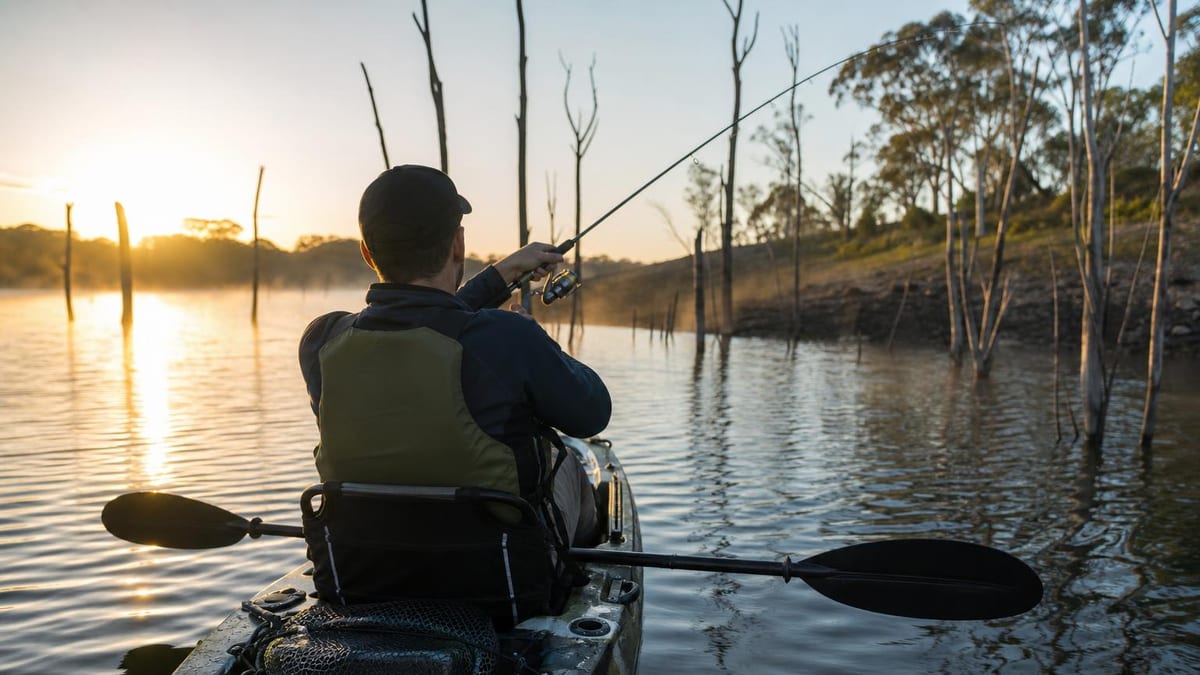
Iowa’s Department of Natural Resources describes the advantage in one line: kayaks are smaller, quieter and more maneuverable than almost any other boat on the water. The practical consequence is where you can fish. The agency’s examples are flooded timber on a relatively new reservoir, and shoreline so close that other boats have to rely on less accurate, long-distance casting to reach it.
That is the whole case. A kayak does not make you a better angler; it puts you in cover that a hull with a motor cannot enter, quietly enough not to empty it on the way in. Our reading water guide covers what to look for once you are there.
Two rules before the first fish
Iowa’s DNR opens its kayak-fishing tips with two instructions that most people do backwards.
Travel light. Leave the packed tackle box at home and bring only the basic tackle you need for the specific species you are after. A kayak has limited space and no counter to spread things on; the agency’s later tip — tie down the paddle, tackle box and other necessities so you do not lose them — is easier the less there is to tie.
Be confident first. Make sure you are confident paddling before you load the kayak with fishing gear, and learn the basic strokes and how to rescue yourself if needed. The agency points to hands-on instruction and online paddling safety courses. Fishing adds a rod, a hookset and a fish pulling sideways to a boat that already needs your balance; the boat skills come before the fishing skills, not alongside.
The life jacket: law first, then advice
Wisconsin’s DNR states the baseline that applies everywhere:
All vessels (including canoes, kayaks, and paddleboards) must have at least one USCG-approved wearable life jacket for each person on board.
It adds that federal law requires children under 13 to wear one while underway in an open vessel on federally controlled waters. Iowa’s DNR states that Iowa law requires life jackets on every watercraft — motorised boat, jet ski, kayak, canoe or paddleboard.
Carrying is the law. Wearing is what both agencies actually ask for, and their reasoning is the same: accidents on the water happen too quickly to reach a stowed jacket, and Wisconsin’s page notes that after an accident the jackets are usually not within reach — in cabinets, under the vessel, or floating away. On a kayak there is no cabinet, which makes the point sharper: a jacket you are sitting on is one you will not be wearing when you are in the water.
Iowa’s kayak page specifies a properly fitted jacket. Wisconsin’s notes that current designs include low-profile and belt-pack styles built for paddling, which removes the usual excuse.
Cold water is the hazard you do not see
The National Weather Service’s cold-water page is written for exactly the person who plans a spring kayak trip on a warm afternoon. Its facts:
- Cold shock can be just as severe and dangerous from water at 50–60°F as from water at 35°F.
- The gasp reflex and rapid breathing can be triggered by water as warm as 77°F.
- Wearing a life jacket significantly increases the chance of survival.
The mechanism, in the agency’s description: on sudden immersion, cold shock causes an involuntary gasp and rapid breathing that can drown a confident swimmer within the first two or three minutes; physical incapacitation — the loss of muscular control in arms, legs and hands — can begin within seconds and makes self-rescue virtually impossible without flotation; hypothermia follows as core temperature falls.
Iowa’s DNR condenses it into the rule paddlers use: dress for the water temperature, not the air temperature. Our water temperature page explains why lakes lag the air by weeks in spring, which is the season this catches people.
Rivers: the dam you cannot see
Iowa’s DNR devotes a section of its paddling safety page to low-head dams, and it is worth quoting the shape of it. The agency calls them extremely dangerous, notes that they have led to fatalities of Iowa anglers, boaters, paddlers, tubers, swimmers and would-be rescuers, and explains the trap: powerful recirculating hydraulics that hold a person under. From upstream, a dam with a drop of several feet can be almost impossible to see, and a paddler may not know they are in danger until they are within a few feet of it.
The agency’s instructions: obtain a map of the river and ask people who know it about hazards; watch for warning signs, markers and buoys, and for the retaining walls, which are easier to spot than the drop; portage around all dams and re-enter well downstream of the boil. Its kayak-fishing page adds the smaller-stream hazards — strainers (wood debris) on the outside bends, new snags, log jams and submerged logs.
Check the level before you go. Iowa’s DNR points paddlers at USGS real-time streamflow, and notes that river levels can rise quickly overnight from rain upstream. Our river levels page covers how to read a gauge.
Setting up to actually fish
Once the boat and the water are handled, Iowa’s DNR’s fishing tips are short:
| Tip | The agency’s reasoning |
|---|---|
| Carry a small anchor — folding-claw type, about 10 lb or less | Most kayaks move at the slightest breeze or even from your casting motion; an anchor locks you over a school or a piece of cover |
| Go with the flow | On a lake with a light breeze or current, start on the windward side of a shoreline and let it push you down it |
| Secure your gear | Tie down the paddle, tackle box and other necessities to avoid losing them |
| Phone in a dry bag | For emergencies |
| Buddy and a plan | Fish with someone and let a third person know where you are going |
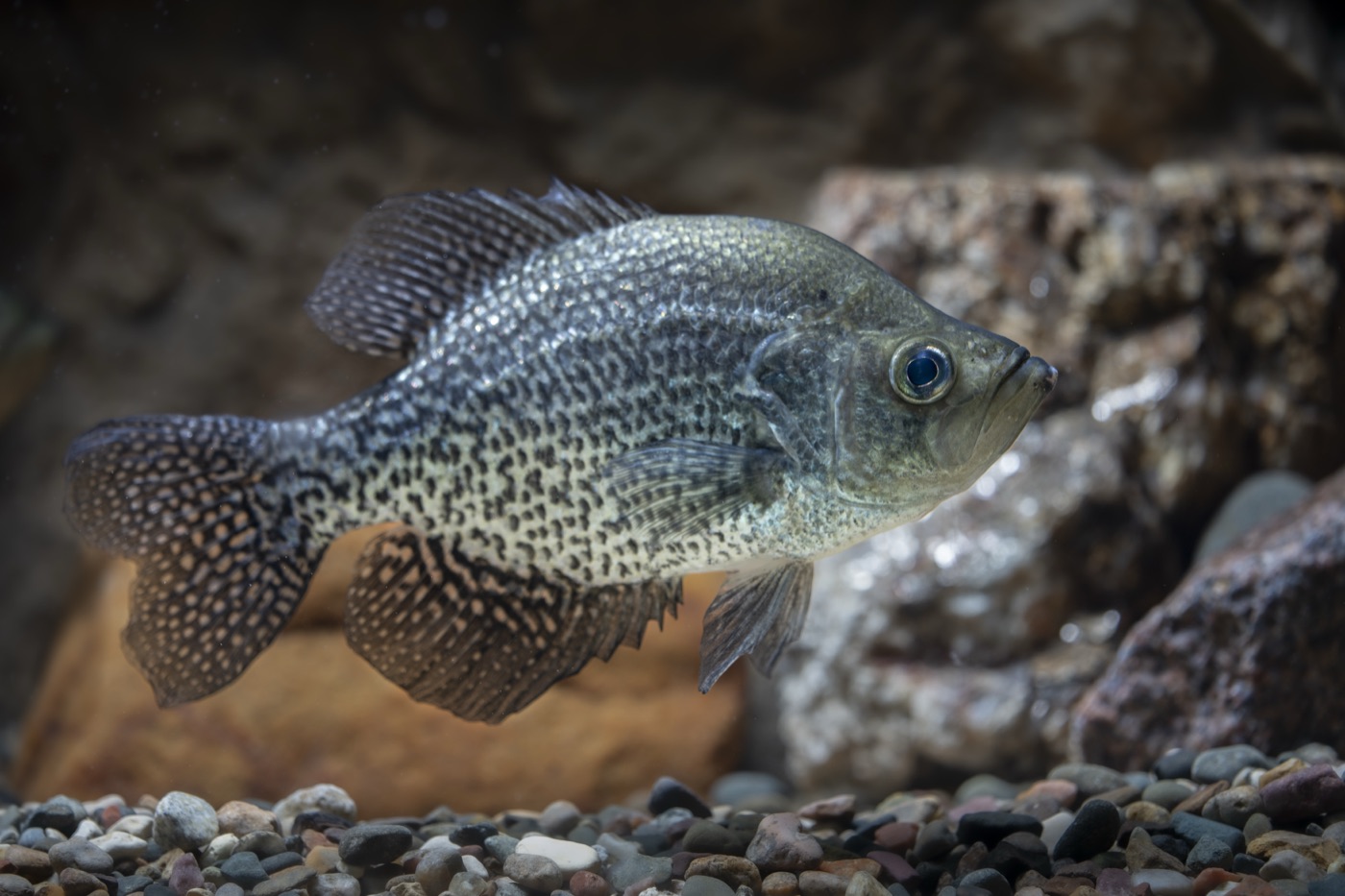
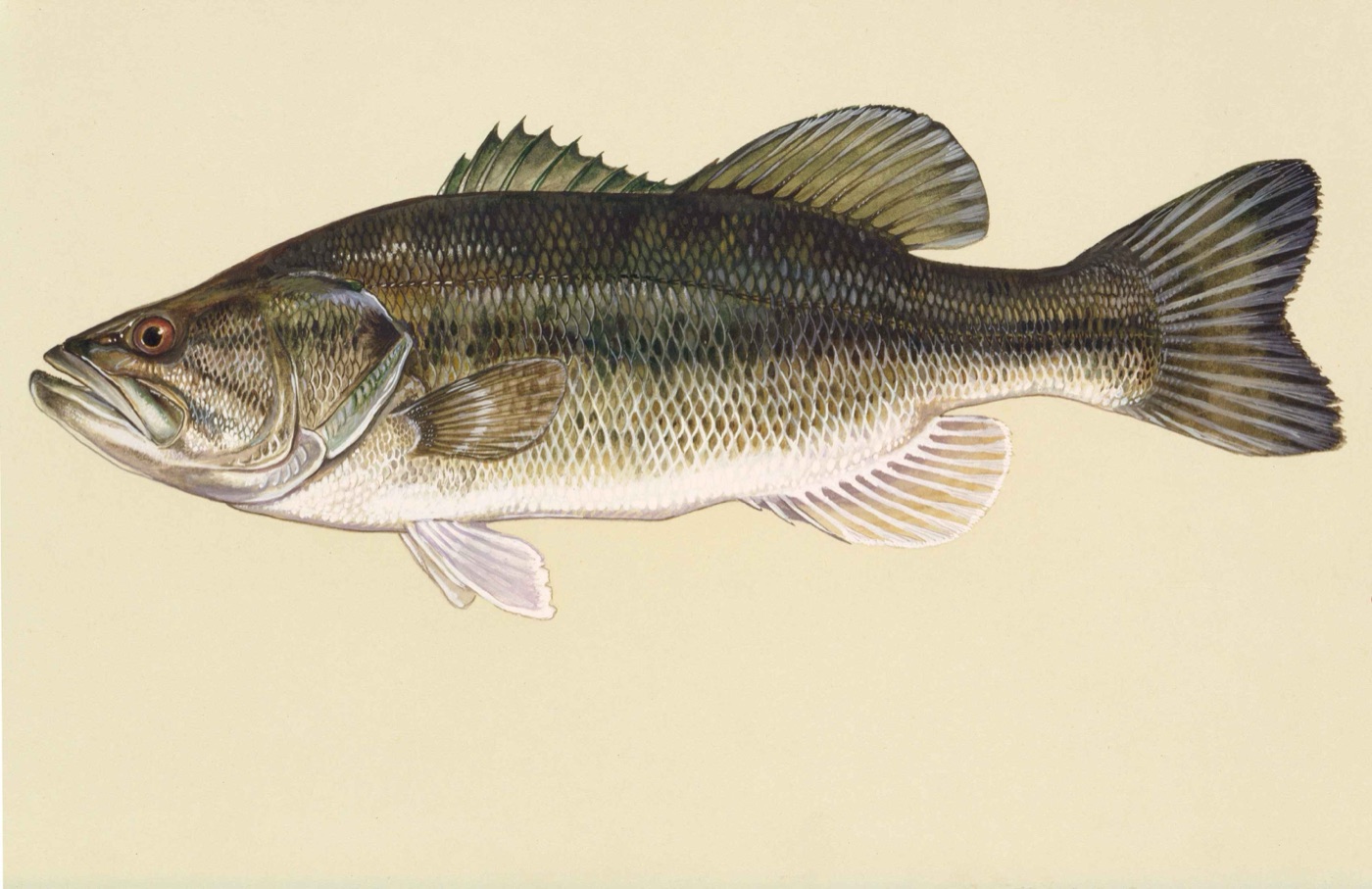
The drift-fishing tip is the one experienced kayak anglers lean on most: a kayak is a very good drifting platform, and a shoreline worked downwind covers more water than one anchored in three places. Species that hold tight to shoreline cover — largemouth bass in timber, crappie on brush — are the natural targets.
Lights, if you stay out
Kayak anglers often fish the dusk window, and the Navigation Rules do not exempt small boats from it. The rules concerning lights apply from sunset to sunrise. For a vessel under oars, the rule is specific: she may show the lights prescribed for a sailing vessel, but if she does not, she shall have ready at hand an electric torch or lighted lantern showing a white light, exhibited in sufficient time to prevent collision.
A headlamp within reach meets the wording. Showing it early to any approaching boat meets the intent — a kayak is the lowest, darkest thing on the water. Our night fishing guide covers the broader lighting rules.
Leaving the water
Iowa’s DNR closes its kayak page with Clean, Drain, Dry, and it applies more to kayaks than to most boats because of how much water they hold. Inspect the hull, paddle and gear for plants, mud and debris and dispose of it on dry land; tip the boat to drain every compartment, and empty bait buckets; dry everything, ideally for five days or more, because most aquatic invasive species can only survive wet.
Then the paperwork: Iowa requires a fishing licence from 16, and every state sets its own paddling registration and life-jacket rules on top of the federal ones. Our licences and regulations guide shows where each state publishes them.
Frequently asked questions
Why fish from a kayak?
Access, mostly. Iowa's Department of Natural Resources describes kayaks as small, quiet and more maneuverable than any other boat, which lets you get close to shore where other boaters have to rely on less accurate, long-distance casting. Its list of places to use that advantage includes flooded timber on newer reservoirs and shoreline cover that a larger hull cannot enter. The trade is capacity and stability: the same agency's first two tips are to travel light and to be confident paddling before you load the boat with fishing gear.
What are the life jacket rules for kayak fishing?
Wisconsin's DNR states the federal baseline: all vessels, including canoes, kayaks and paddleboards, must have at least one USCG-approved wearable life jacket for each person on board, and federal law requires children under 13 to wear one while underway in an open vessel on federally controlled waters. Iowa's DNR states that Iowa law requires life jackets on every watercraft, kayaks and paddleboards included, and recommends wearing one every time you are on the water because accidents happen too quickly to reach a stowed jacket. Wisconsin's page makes the same point — after an accident the jackets are usually out of reach. Both agencies: carry it is the law, wear it is the advice.
How cold is too cold to kayak fish?
Colder than the air suggests. The National Weather Service says warm air does not mean warm water, and that cold shock — the involuntary gasp and rapid breathing on sudden immersion — can be just as severe from water at 50 to 60°F as from water at 35°F, with gasping triggered by water as warm as 77°F. Physical incapacitation, the loss of muscle control in hands and limbs, can begin within seconds. Iowa's DNR advice for paddlers is to dress for the water temperature, not the air, and its kayak page adds to check water levels and weather before going and never paddle when lightning is in the area.
Do I need lights on a fishing kayak?
At night, yes, and the rule is specific. The US Navigation Rules say a vessel under oars may show the lights prescribed for a sailing vessel, but if she does not, she shall have ready at hand an electric torch or lighted lantern showing a white light, exhibited in sufficient time to prevent collision. The rules concerning lights apply from sunset to sunrise. A headlamp kept reachable satisfies the letter of it; shining it at oncoming boats early is the spirit. Our night fishing guide covers the rest of the lighting rules.
What is the biggest hazard for a kayak angler?
On rivers, low-head dams. Iowa's DNR calls them extremely dangerous, notes they have killed anglers, boaters, paddlers and would-be rescuers, and explains why: powerful recirculating hydraulics trap and drown people, and a dam with a drop of several feet can be almost impossible to see from upstream. Its instructions are to know the river before you run it, watch for signs, buoys and retaining walls, portage around every dam and re-enter well downstream of the boil. Its kayak-fishing page adds strainers — wood debris on the outside bends of small streams — and new snags and log jams.
How do I stop the kayak drifting while I fish?
An anchor, and a small one. Iowa's DNR points out that most kayaks move at the slightest breeze or even from your casting motion, and recommends a folding-claw kayak anchor of about 10 pounds or less to lock in position over a school or a piece of cover. Its lighter-touch alternative is to use the wind: start on the windward side of a shoreline and let the breeze push you down it. Either way, tie down the paddle, tackle and anything else you cannot afford to lose — the agency lists that as its own tip.
Sources
- Kayak Fishing — Tips for a Fun, Safe Kayak Fishing Adventure — Iowa Department of Natural Resources. Accessed September 25, 2026.
- Paddling Safety & Regulations — Iowa Department of Natural Resources. Accessed September 25, 2026.
- Life Jackets — Boating in Wisconsin — Wisconsin Department of Natural Resources. Accessed September 25, 2026.
- Cold Water Safety — National Weather Service (NOAA). Accessed September 25, 2026.
- Navigation Rules, Part C — Lights and Shapes (Rules 20–31) — United States Coast Guard Navigation Center. Accessed September 25, 2026.
How we choose sources: sources policy.
More in this series
Know when it's worth going.
Fishing Club AI turns live weather, pressure and moon data into a simple bite forecast for your spot — so the skills you practise get used on the right day.
Get the App