Smallmouth Bass
Micropterus dolomieu
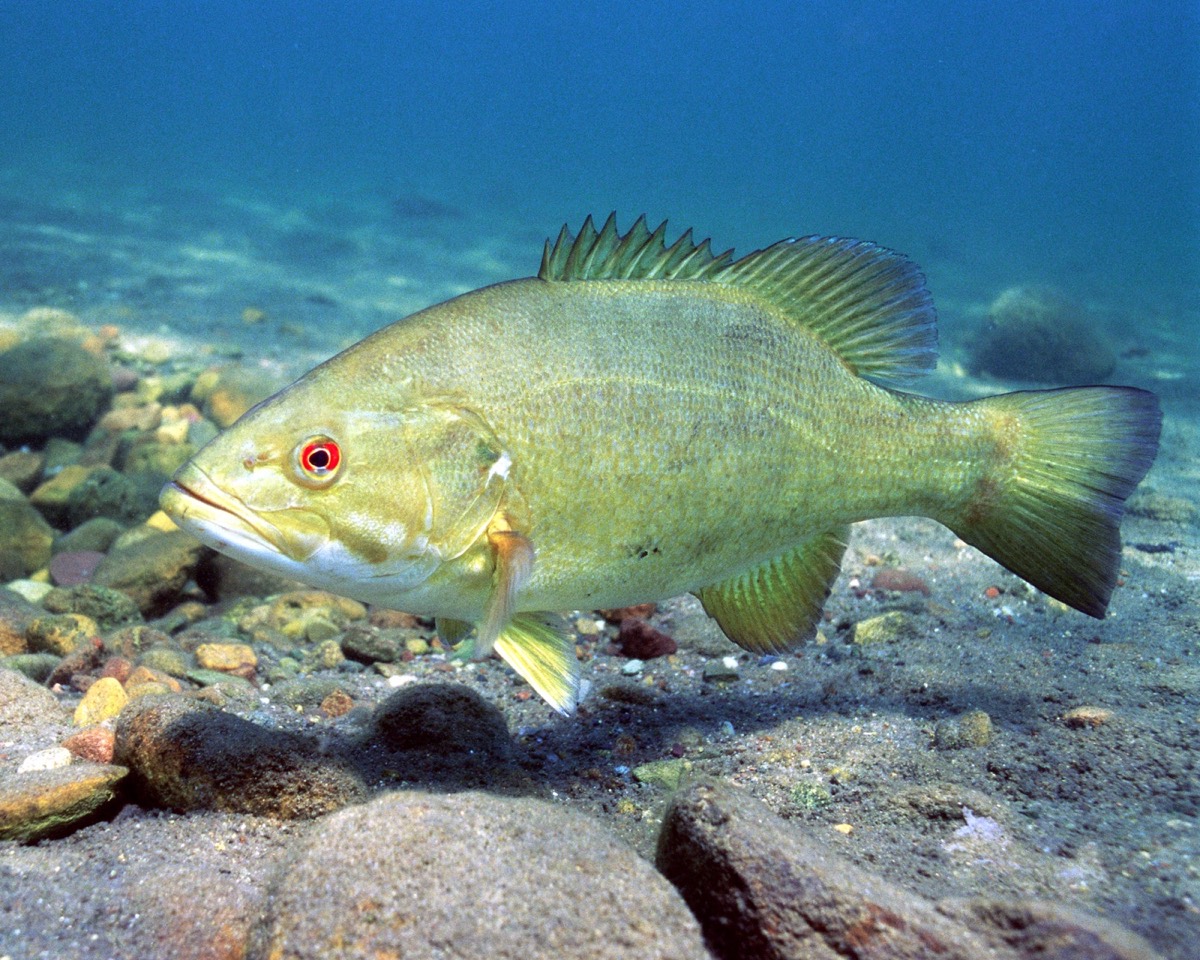
Smallmouth bass is a bronze-colored freshwater gamefish of the sunfish family, prized for a fighting strength that far exceeds its modest size.
MoreFull Species Details
- Species Name
- Micropterus dolomieu
- Family
- Centrarchidae
- Order
- Centrarchiformes
- Also Known As
- Smallie, Bronzeback, Brown bass, Bronze bass
Smallmouth Bass (Micropterus dolomieu) Fish Description
Smallmouth bass is a bronze-colored freshwater gamefish of the sunfish family, prized for a fighting strength that far exceeds its modest size.
The body is brown to bronze-green with dark vertical bars along the flanks, unlike the horizontal band of the largemouth bass. Red-tinted eyes and a jaw that ends level with the eye distinguish the species at a glance. The body is more torpedo-shaped and muscular than a largemouth's, built for holding in current. Coloration shifts with habitat: river fish tend toward deep bronze, while clear-lake fish appear paler and greener. The dorsal fin is continuous, with the spiny and soft sections joined rather than nearly split.
Smallmouth bass is native to the upper and middle Mississippi basin, the Great Lakes, and the St. Lawrence River system. Widespread stocking has since carried the species across the United States and into cool rivers and clear lakes on several continents. It favors cooler, cleaner, rockier water than the largemouth. Anglers seek smallmouth for their explosive, acrobatic fight: hooked fish run hard, bulldog toward the bottom, and leap repeatedly, giving the species a reputation as the hardest-fighting freshwater fish for its weight.
Interesting Facts About Smallmouth Bass
- The world record smallmouth bass weighed 11 pounds 15 ounces, caught in Tennessee in 1955.
- Smallmouth bass can live up to 15 years in cool northern waters.
- The species requires cleaner, more oxygen-rich water than the largemouth bass.
- Smallmouth spawn when water temperatures reach roughly 60 to 65 degrees Fahrenheit.
- Males guard the nest and fry for several weeks after hatching.
Show more facts
- Smallmouth bass have red eyes, a reliable field mark separating them from largemouth.
- River smallmouth hold in current seams and behind boulders to ambush prey.
- The species feeds heavily on crayfish, which shape its bronze coloration.
- Smallmouth bass rarely exceed 7 pounds, making trophy fish highly prized.
- Cold water slows the species' metabolism, extending lifespan in northern lakes.
- Smallmouth were introduced widely by rail in the late 1800s across North America.
- The species tolerates a narrower temperature range than most other black bass.
Average Speed & Size
Smallmouth bass is a strong, current-holding swimmer that typically reaches 10 to 18 inches and 1 to 4 pounds. Trophy fish exceed 20 inches and 5 pounds, with the largest approaching 12 pounds. The species combines burst acceleration with the stamina to hold in fast river current, using its muscular body to dart from cover and fight hard once hooked. Pound for pound, few freshwater fish pull with the sustained power of a smallmouth.
Where to Find Them
Smallmouth bass is found in clear, cool, rocky rivers and lakes across the northern and central United States. The species holds near current breaks in rivers and around rocky points, gravel flats, and drop-offs in lakes. Smallmouth favor water between 60 and 72 degrees Fahrenheit and shun the warm, weedy, muddy habitats that largemouth prefer. They concentrate where crayfish and baitfish gather among rocks. Smallmouth bass are largely absent from warm southern lowland waters and from silty, low-oxygen ponds, which fail to meet their need for clean, cool water.
Smallmouth Bass Fishing Tips
Smallmouth bass fishing is moderately challenging and highly rewarding, thanks to the fish's aggression and fight. Success comes from targeting rocky structure and current, and matching lures to the crayfish and baitfish smallmouth feed on.
Equipment
Use a 6-foot-6 to 7-foot medium spinning rod paired with a smooth reel spooled with 8- to 12-pound fluorocarbon or a light braid-to-leader setup. This balance handles the finesse presentations smallmouth often demand while retaining enough backbone for their hard runs. A sensitive tip helps detect the subtle pickups common in cold or clear water.
Chumming
Chumming is rarely used and often restricted for smallmouth, so anglers instead cover water and read structure. Drift or wade rocky river runs, casting to current seams and eddies, and work lake points thoroughly. Reaction baits like jerkbaits and topwaters draw strikes from active fish holding on structure.
Bait
Live crayfish and nightcrawlers are the top natural baits. Among lures, tube jigs, small crankbaits, drop-shot worms, and jerkbaits that imitate crayfish and baitfish consistently produce.
Patience
Smallmouth in clear water spook easily, so long casts and a quiet approach matter. Cold-water fish bite softly, rewarding a slow retrieve and close attention to the line.
Conditions that change the bite
- What Barometric Pressure Is Best for Fishing? No research supports a single best barometric pressure for fishing. What pressure really does, how big a weather swing is, and what to watch instead.
- Best Time of Day to Fish: What Evidence Shows Dawn and dusk are measurably better — and the edge is smaller than the folklore says. The 13-year dataset, the light mechanism, and what matters more.
- Dissolved Oxygen: The Condition Anglers Can't See Fish live or die by oxygen you can't see. How temperature, depth, dawn and turnover move it, which species need more, and how to fish around the invisible map.
Guides for fishing this species
- Bass Fishing for Beginners: Largemouth 101 Where largemouth bass hold, how the seasons move them, and the lure categories that catch them — a beginner's guide built on state agency sources.
- Best Knots for Joining Braid to Fluorocarbon How to join braid to a fluorocarbon leader: which line-to-line knots to use, why braid slips, and how to keep the connection small enough to pass the guides.
- Fishing Soft Plastics How to rig soft plastics, what research shows happens when a fish swallows one, and why bass colour vision makes most tackle-aisle shades irrelevant.
- How to Read Water Riffle, run, pool and glide — what each one is, why fish sit beside fast water rather than in it, and when hiding behind a rock stops paying off.
- How to Tie a Double Uni Knot The double uni knot in five diagrammed steps — the standard way to join braid to leader or any two lines, with the wrap counts that make it work.
- Kayak Fishing Basics: What the Boat Changes, and What the Rules Require Iowa's DNR publishes the kayak-fishing method; the Coast Guard and the Weather Service publish the parts that keep you alive. Both, with nothing invented.
Related Species
Know when they'll bite.
BiteScore forecasts when smallmouth bass will feed at your spot — from live weather, pressure, and moon data.
Get the App