Fish Spawning Temperatures: When Bass, Walleye, Crappie, Bluegill and Catfish Spawn
Spawning is triggered by water temperature, and state agencies publish the thresholds: walleye begin at 45–50°F (Texas Parks and Wildlife), largemouth and smallmouth bass at about 60°F (Texas), crappie at 61–68°F and bluegill when water approaches 67°F (Wisconsin DNR), and channel and flathead catfish at about 75°F (Wisconsin). The order is the same every spring — walleye first, catfish last.
Key takeaways
- Walleye spawn first: Texas Parks and Wildlife puts the trigger at 45–50°F, with eggs hatching in about seven days at 57°F.
- Largemouth and smallmouth bass move onto beds as water approaches 60°F, per Texas Parks and Wildlife; smallmouth eggs hatch in about 10 days in the mid-50s or 2–3 days in the mid-70s.
- Wisconsin's DNR: crappie spawning peaks in May and June between 61 and 68°F, in nests 1.5 to 6 feet deep — deeper than other sunfish.
- Bluegill males move shallow when water approaches 67°F; spawning peaks in June and normally stops above 80°F.
- Catfish spawn last, from May through July once water reaches about 75°F, with eggs hatching in six to seven days at 75–80°F.
The chart
Spawning is set by water temperature, and the agencies that manage these species publish the thresholds. Read top to bottom and you have the spring in order.
| Species | Spawning trigger (°F) | Agency | Where they spawn |
|---|---|---|---|
| Walleye | 45–50 | Texas Parks and Wildlife | Riffles after an upstream run; rip-rap dams and reefs in lakes. No nest |
| Smallmouth bass | approaching 60 | Texas Parks and Wildlife | Near shore in lakes; below boulders in streams. Male-guarded nest |
| Largemouth bass | about 60 | Texas Parks and Wildlife | 2–8 ft, quiet vegetated water, any bottom but soft mud. Male-guarded nest |
| Crappie | 61–68 | Wisconsin DNR | Colonies of nests 1.5–6 ft deep or more — deepest of the sunfish |
| Bluegill | approaching 67 | Wisconsin DNR | Saucer nests in the shallows, 2–6 in deep, up to a foot across |
| Channel and flathead catfish | about 75 | Wisconsin DNR | Hollow banks, rock overhangs, submerged roots, hollow logs |
The two agencies are 1,000 miles apart and their calendars differ — Texas spring comes before Wisconsin’s — but the temperature order is the same in both. That is the useful part: a thermometer tells you where the season is on your own water, whatever the date.
Walleye: first, cold, and at night
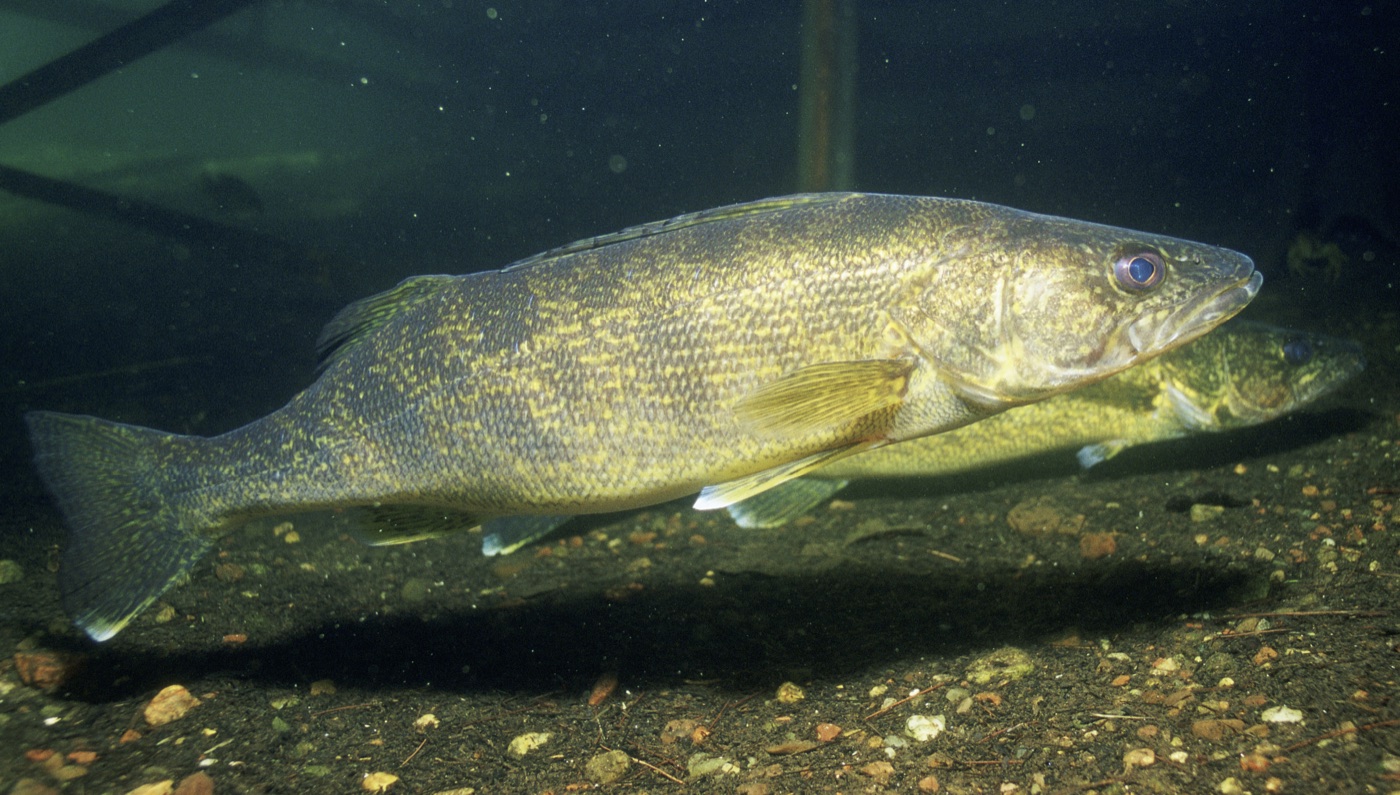
Texas Parks and Wildlife calls walleye early spring spawners and puts the trigger at 45 to 50°F, with spawning typically on riffles after the fish have moved upstream, or on rip-rap dams and reefs in lakes. There is no nest-building and no parental care. At 57°F the eggs hatch in about seven days; Wisconsin’s DNR adds the cold end — 26 days at 40°F, 21 days at 50–55°F.
Wisconsin’s guide gives the picture on its waters: between mid-April and early May walleye migrate to wind-swept rocky shorelines, flooded wetlands or gravel-bottomed inlet streams, sometimes travelling far — Lake Winnebago fish may swim 100 miles up the Wolf River. Males arrive first and outnumber females seven to one; a female spawns out in a single night. Texas notes the same thing: most walleye activity, spawning included, is nocturnal. Our walleye fishing guide covers why that carries through the rest of the year.
Bass: the 60-degree line
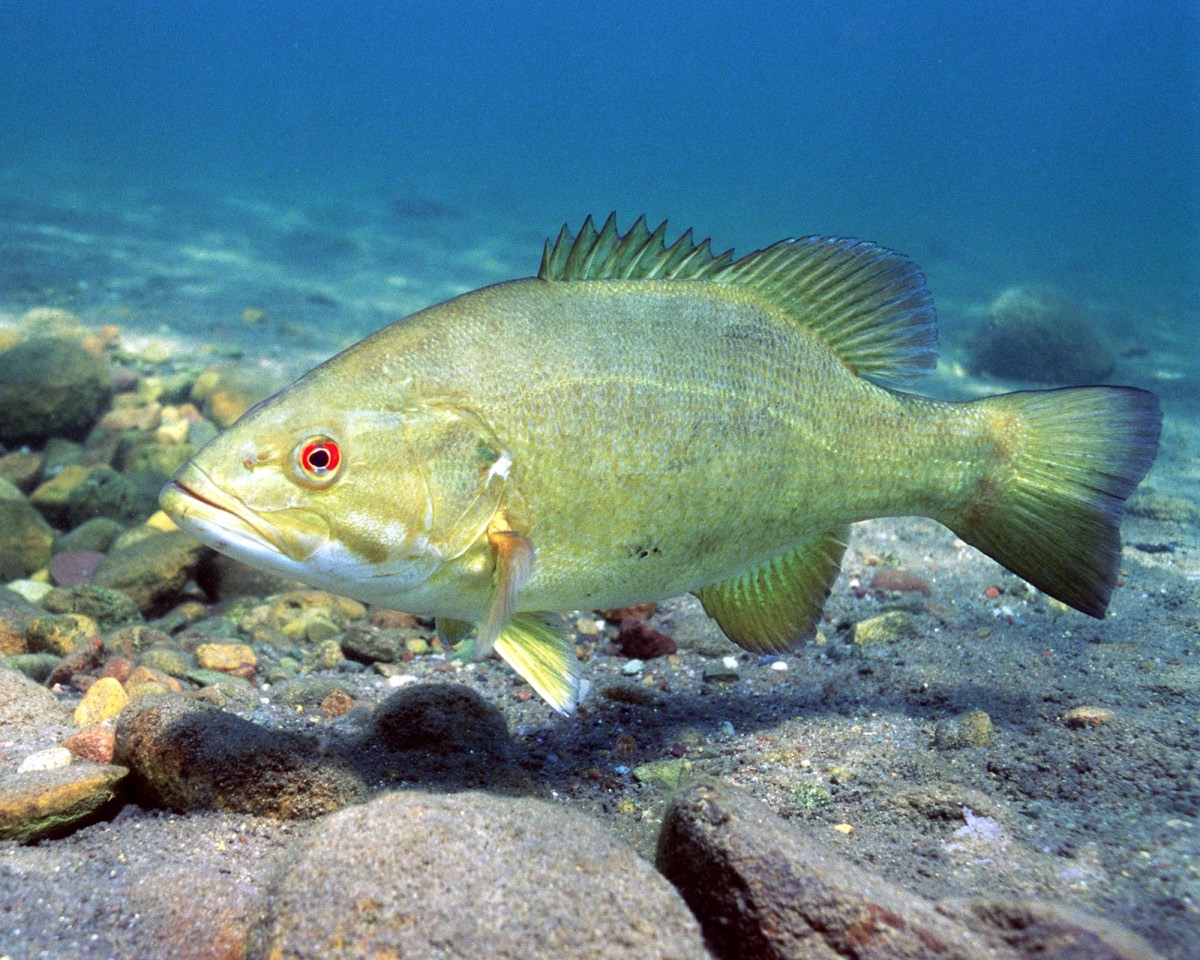
Both black bass move onto beds as water approaches 60°F, per Texas Parks and Wildlife.
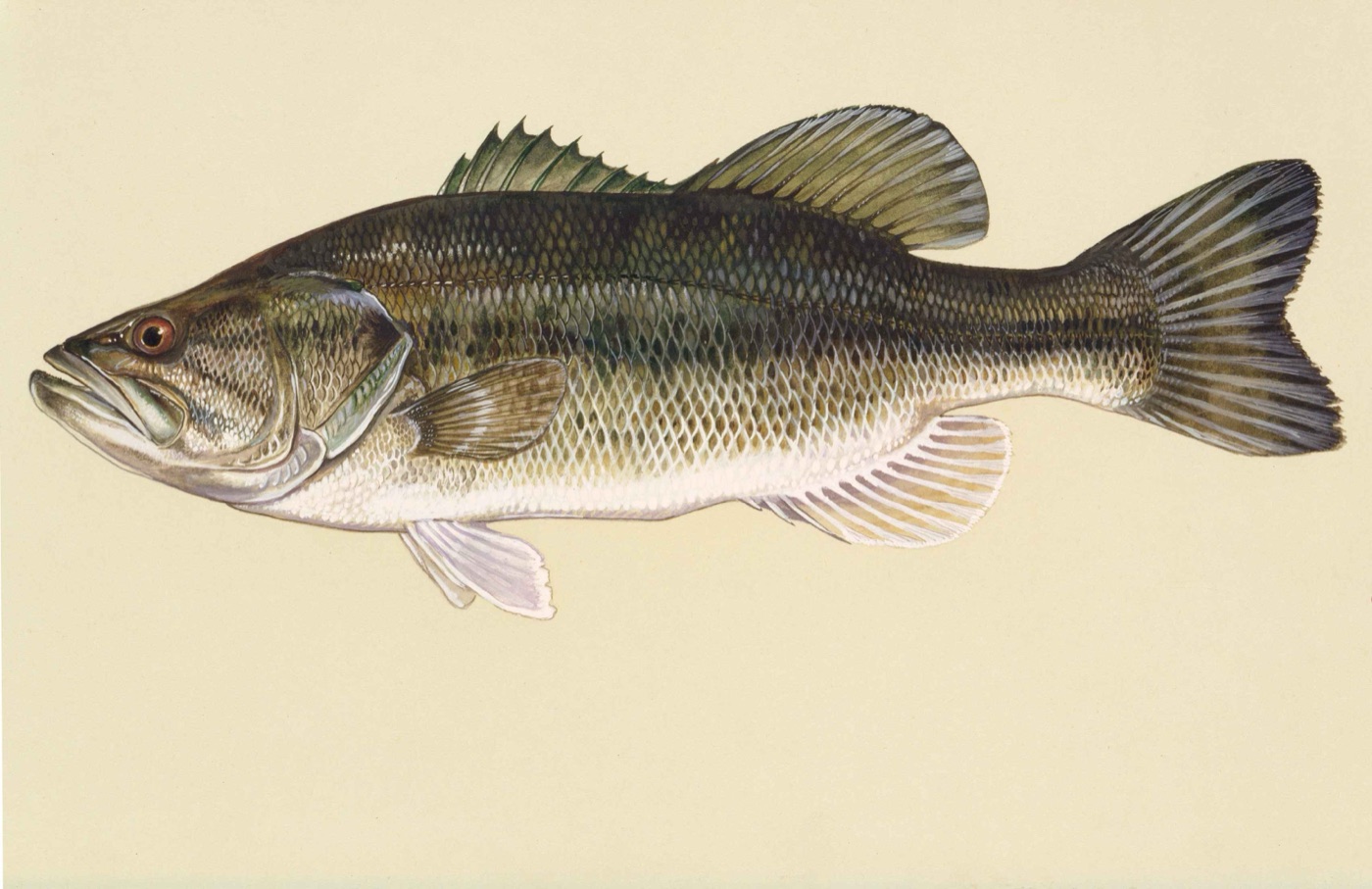
Largemouth spawning begins when water reaches about 60°F. Males build nests in two to eight feet of water and prefer quieter, more vegetated places than other black bass, using any substrate except soft mud, including submerged logs. Once the female has laid — 2,000 to 43,000 eggs — the male chases her off and guards the nest, then shepherds the fry for several days after hatching.
Smallmouth males move into spawning areas when water approaches 60°F, nesting near shore in lakes and downstream of boulders or other current breaks in streams. A nest holds about 2,500 eggs on average, up to 10,000; males may spawn with several females on one nest. The hatch rate is the sharpest temperature illustration on this page — about 10 days in the mid-50s, 2 to 3 days in the mid-70s — and the male guards the nest until the fry disperse, up to a month.
Our largemouth vs smallmouth page covers how to tell the two apart when you find them on beds.
Crappie: 61 to 68, deeper than you would look
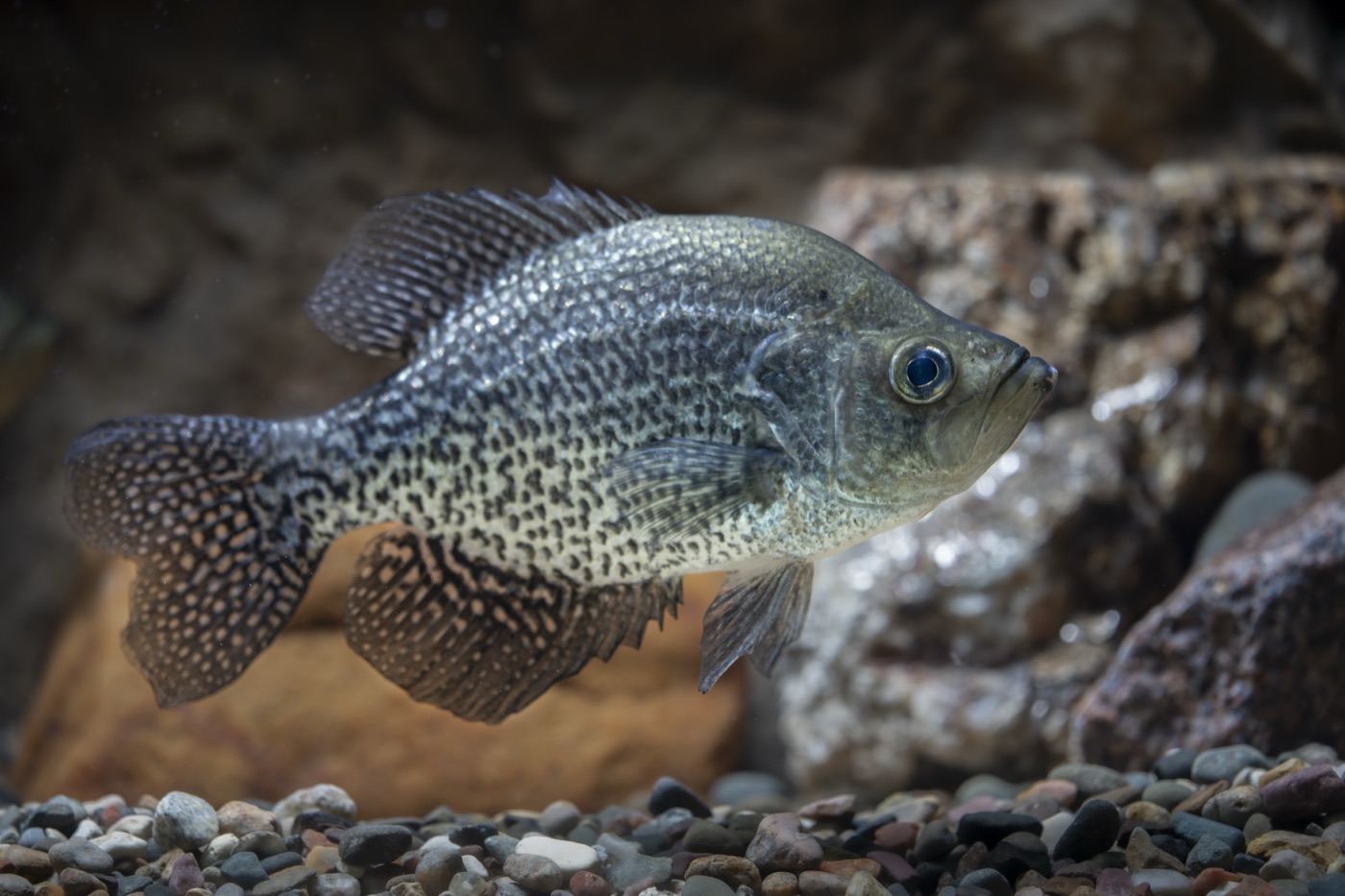
Wisconsin’s DNR: crappie spawning activity peaks in May and June, at 61 to 68°F, and can continue into July. Nests sit deeper than any other sunfish’s — 1.5 to 6 feet or more — in colonies of as many as 35, spaced from a few inches to six feet apart. Males defend them aggressively, chasing and biting intruders, which is why the agency describes spring as the easiest crappie fishing of the year. Find one nest and you have found a colony. Our crappie fishing guide has the tackle.
Bluegill: 67 up to 80
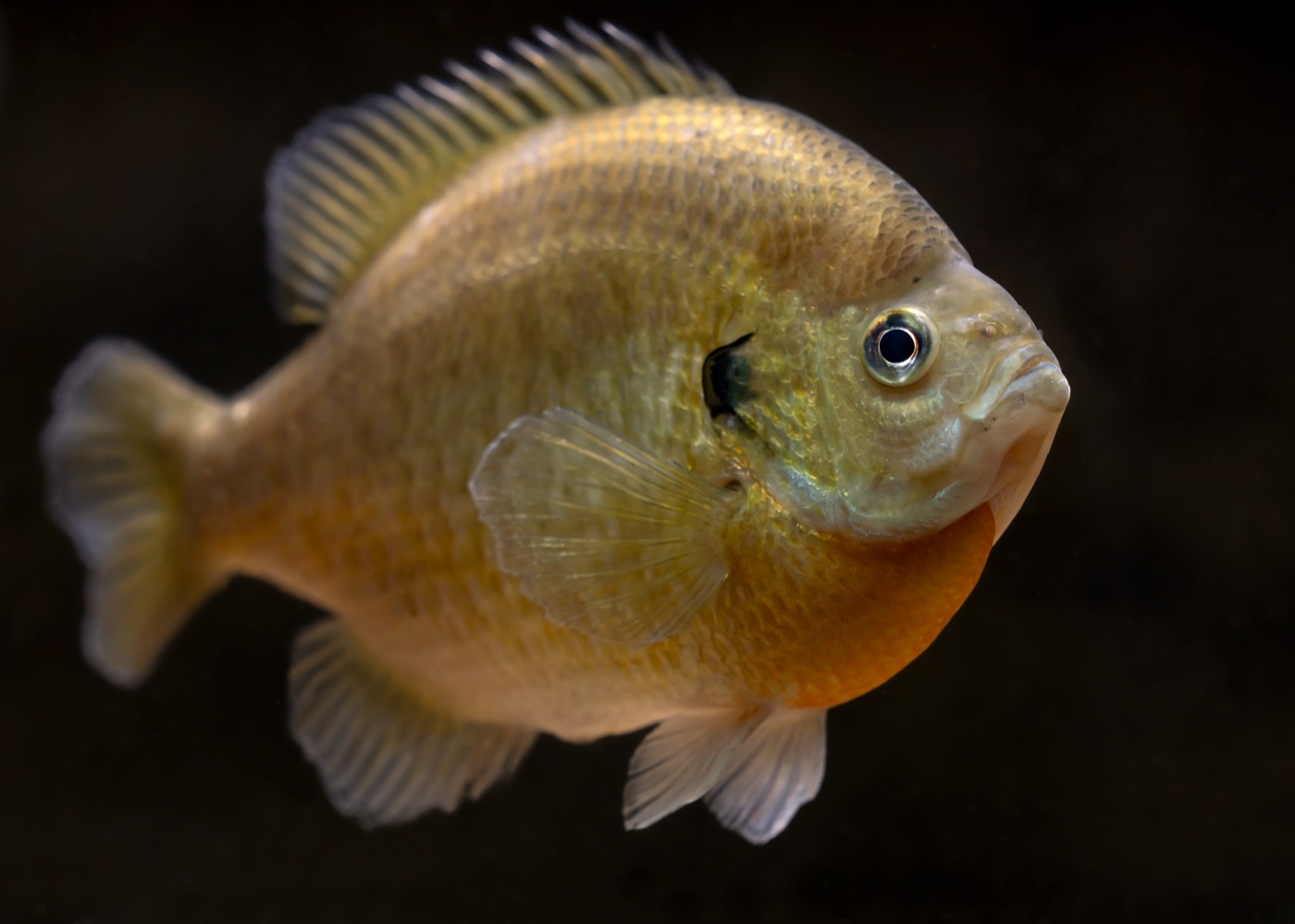
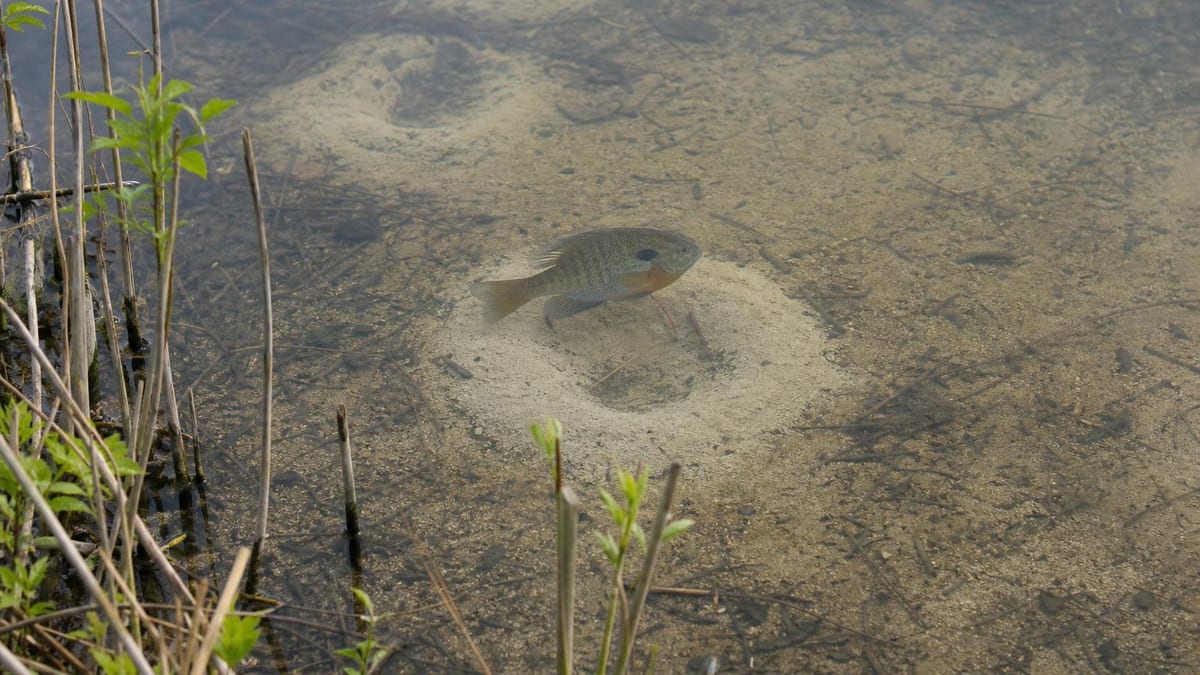
Wisconsin’s DNR describes male bluegill moving into shallow water in late spring, when the water temperature approaches 67°F, to claim spawning grounds. They sweep out saucer-shaped depressions 2 to 6 inches deep and up to a foot across, which from shore look like groups of light spots on a dark bottom — the agency compares a colony to craters on the moon. Spawning peaks in June and may run into August, but normally stops once water passes 80°F. Females may lay in more than one nest; males fan and guard the eggs. The panfish guide covers the fishing.
Catfish: about 75, last on the list
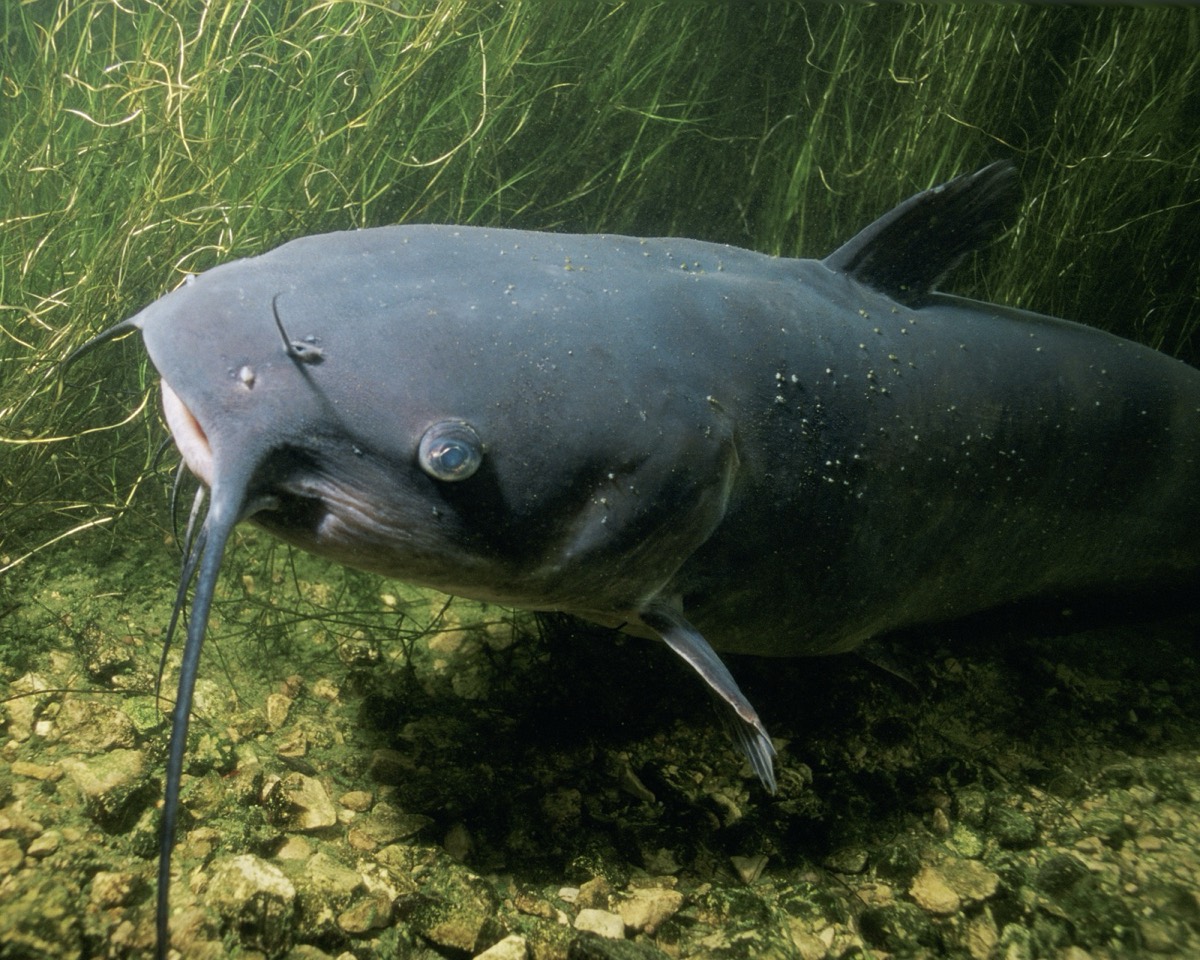
Wisconsin’s DNR: catfish spawn from May through July, when the water reaches about 75°F. They seek obscure, sheltered spots — hollow river banks, rock overhangs and ledges, submerged tree roots, hollow logs — and clear a nest with their tails, even using their mouths to move debris. Channel catfish make long upstream migrations to find sites; flatheads nest inside their home range. At optimum temperatures of 75 to 80°F the eggs hatch in six to seven days, and the male guards and herds the fry. The agency notes flatheads feed most actively from May to early June and again July through September — before and after the spawn, in other words. Our catfish fishing guide covers both windows.
Using the chart
The temperature is the thing to watch, and our water temperature page explains where to read it and why a small dark pond runs weeks ahead of a big clear lake beside it. Lake turnover covers the spring mixing that precedes the whole sequence.
Then the rules. Many states close waters, protect spawning areas or require catch-and-release during the spawn, and the dates differ by water. Your agency publishes them; our licences and regulations guide shows where. If you do fish bedding fish, our catch and release guide covers getting a guarding male back on the nest quickly — the agencies are clear that an unguarded nest is a lost one.
Frequently asked questions
What water temperature do bass spawn at?
About 60°F, for both black bass. Texas Parks and Wildlife states that largemouth bass spawning begins in the spring when water temperatures reach about 60°F, with males building nests in two to eight feet of water in quieter, more vegetated places than other black bass, on any bottom except soft mud. For smallmouth, the agency says males move into spawning areas when water temperatures approach 60°F, nesting near shore in lakes and downstream of boulders in streams; eggs hatch in about 10 days if water is in the mid-50s but in two to three days in the mid-70s, and males guard the nest for up to a month.
What temperature do walleye spawn at?
45 to 50°F, which makes them the earliest of the popular gamefish. Texas Parks and Wildlife describes walleye as early spring spawners whose spawning begins when water temperatures reach 45–50°F, typically on riffles after moving upstream, or on rip-rap dams and reefs in lakes; there is no nest and no parental care, and at 57°F the eggs hatch in about seven days. Wisconsin's DNR gives the calendar for its waters — mid-April to early May, on wind-swept rocky shorelines, flooded wetlands and gravel-bottomed inlet streams — and notes that spawning happens at night.
What temperature do crappie spawn at?
Between 61 and 68°F. Wisconsin's DNR says crappie spawning activity peaks in May and June in that range and can continue into July. Two details matter to anglers: crappie nest deeper than their relatives — 1.5 to 6 feet or more, the deepest of any sunfish — in colonies of up to 35 nests, and the males defend them aggressively, striking almost anything that comes near. That makes the spring spawn the easiest crappie fishing of the year, and a thermometer the tool for timing it.
What temperature do bluegill spawn at?
Around 67°F. Wisconsin's DNR describes male bluegill moving into shallow water in late spring, when the water temperature approaches 67°F, to claim spawning grounds and sweep out saucer-shaped nests 2 to 6 inches deep and up to a foot across. Spawning peaks in June and may continue into August, but the agency says it normally ceases once water exceeds 80°F. The nests are visible from shore as groups of light spots on a dark bottom, which is why the agency notes that cane poles long enough to reach the beds were the traditional bluegill tackle.
What temperature do catfish spawn at?
About 75°F, which puts catfish last on the calendar. Wisconsin's DNR says catfish spawn from May through July when water reaches about 75°F, in hollow banks, rock overhangs, submerged roots and hollow logs. Channel catfish make long upstream migrations to find nesting sites; flatheads nest within their home range. At optimum temperatures of 75 to 80°F the eggs hatch in six to seven days, and the male guards the fry. Wisconsin adds that flatheads feed most actively from May to early June — the pre-spawn — and again from July to September.
Does spawning happen on the same dates every year?
No — the same temperatures, not the same dates. Every agency figure here is a water temperature, and the calendar shifts with latitude and with the year's weather: Texas Parks and Wildlife and Wisconsin's DNR give different months for the same species because their waters warm at different times. A cold spring can push a bass spawn back by weeks; a small dark pond warms faster than a big clear lake beside it. Watch the temperature, not the date, and check your state's rules — many waters close or restrict fishing during the spawn.
Sources
- Largemouth Bass (Micropterus salmoides) — species account — Texas Parks and Wildlife Department. Accessed September 25, 2026.
- Smallmouth Bass (Micropterus dolomieu) — species account — Texas Parks and Wildlife Department. Accessed September 25, 2026.
- Walleye (Sander vitreus) — species account — Texas Parks and Wildlife Department. Accessed September 25, 2026.
- Crappie (PUBL-FM-708), Wisconsin fish species guide — Wisconsin Department of Natural Resources, Bureau of Fisheries Management. Accessed September 25, 2026.
- Bluegill (PUBL-FM-707), Wisconsin fish species guide — Wisconsin Department of Natural Resources, Bureau of Fisheries Management. Accessed September 25, 2026.
- Catfish (PUBL-FH-713), Wisconsin fish species guide — Wisconsin Department of Natural Resources, Bureau of Fisheries Management. Accessed September 25, 2026.
- Walleye (PUBL-FM-708), Wisconsin fish species guide — Wisconsin Department of Natural Resources, Bureau of Fisheries Management. Accessed September 25, 2026.
How we choose sources: sources policy.
More in this series
Know when it's worth going.
Fishing Club AI turns live weather, pressure and moon data into a simple bite forecast for your spot — so the skills you practise get used on the right day.
Get the App