Channel Catfish
Ictalurus punctatus
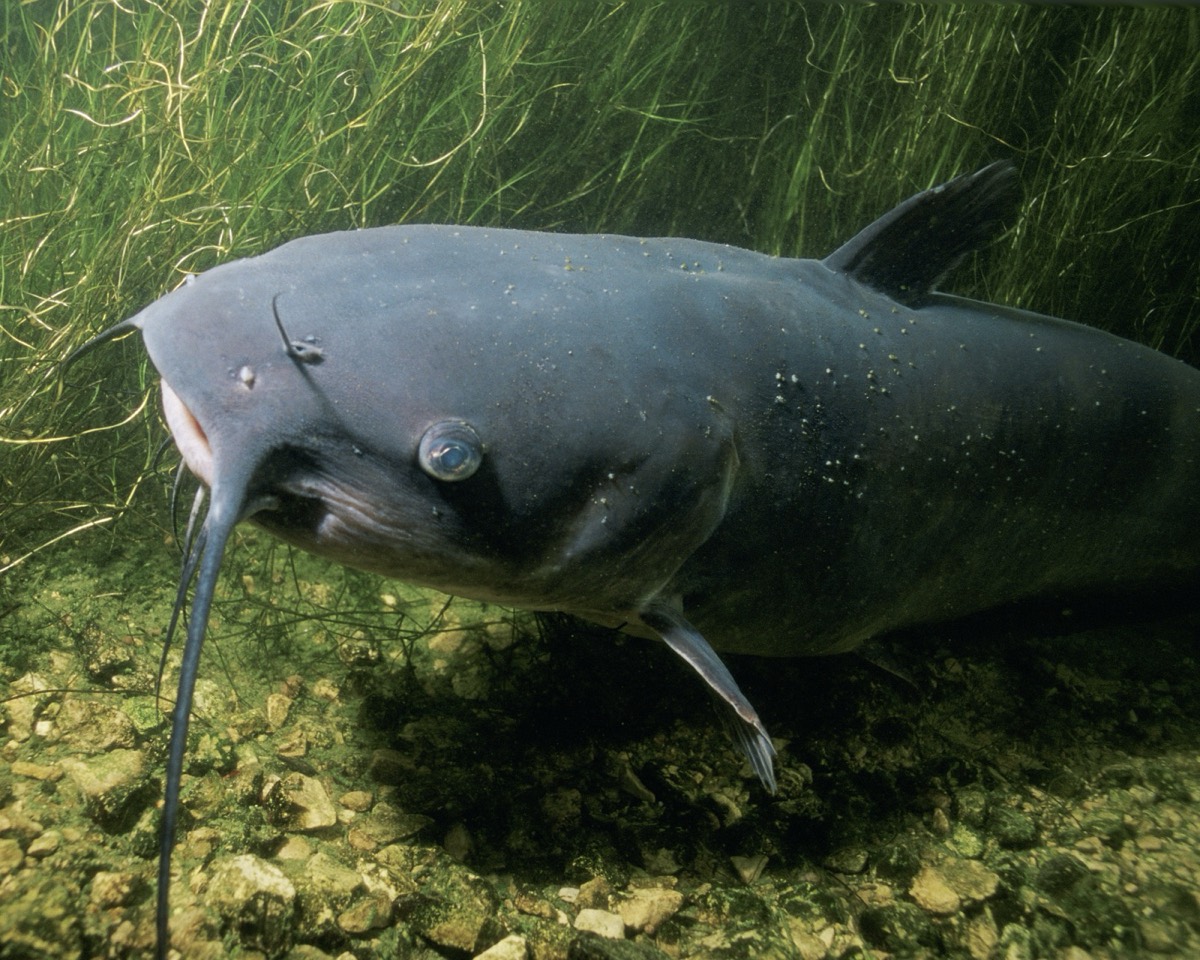
Channel catfish is a large, scaleless freshwater fish of the North American catfish family, distinguished by a deeply forked tail and dark scattered spots.
MoreFull Species Details
- Species Name
- Ictalurus punctatus
- Family
- Ictaluridae
- Order
- Siluriformes
- Also Known As
- Channel cat, Spotted cat, Fiddler, Lady cat
Channel Catfish (Ictalurus punctatus) Fish Description
Channel catfish is a large, scaleless freshwater fish of the North American catfish family, distinguished by a deeply forked tail and dark scattered spots.
The body is smooth and scaleless, slate-gray to olive-brown on the back fading to a silvery-white belly, with small dark spots scattered along the sides of younger fish. Eight whisker-like barbels around the mouth carry taste and smell receptors used to find food in dark or muddy water. The tail is deeply forked, separating the channel catfish from the square-tailed bullheads and flathead. A sharp spine at the front of the dorsal and each pectoral fin can deliver a painful jab. Large males darken and thicken about the head during the spawn.
Channel catfish is native to the central United States, southern Canada, and northern Mexico, throughout the Mississippi and Great Lakes basins. It is now the most widely farmed and stocked catfish in North America and has been introduced across the country and abroad. The species thrives in warm rivers, lakes, and reservoirs, tolerating a wide range of conditions. Anglers pursue channel catfish for their strong, dogged fight, their abundance and accessibility, and their firm, mild flesh, which supports a major aquaculture industry.
Interesting Facts About Channel Catfish
- The world record channel catfish weighed 58 pounds, caught in South Carolina in 1964.
- Channel catfish can live more than 20 years in the wild.
- The species uses about 250,000 taste buds spread over its entire body to find food.
- Barbels around the mouth carry smell and taste receptors for hunting in the dark.
- Channel catfish spawn in early summer in dark, sheltered cavities.
Show more facts
- Males guard the nest and fan the eggs until they hatch.
- The species can detect a single amino acid in extraordinarily dilute concentrations.
- Channel catfish is the most farmed fish species in the United States.
- The dorsal and pectoral spines can inflict a painful, venomous sting.
- Young channel catfish carry dark spots that often fade with age.
- The species feeds by day and night but is most active after dark.
- Channel catfish is the official state fish of five US states.
Average Speed & Size
Channel catfish is a strong, steady swimmer that typically reaches 12 to 24 inches and 2 to 10 pounds. Trophy fish exceed 30 inches and 20 pounds, with the largest approaching 58 pounds. The species patrols the bottom at a deliberate pace, relying on smell and taste rather than speed to locate food. Once hooked, a channel catfish pulls hard and stubbornly, using its muscular body and broad tail to bulldog toward cover in long, powerful runs.
Where to Find Them
Channel catfish is found in warm rivers, lakes, and reservoirs across most of North America. The species holds near the bottom around cover: deep holes, undercut banks, log jams, and channel edges where current concentrates food. Channel catfish favor water between 70 and 85 degrees Fahrenheit and roam widely at night to feed, returning to deeper holes by day. They tolerate murky, low-visibility water that other gamefish avoid. Channel catfish are largely absent from cold mountain streams and clear, oxygen-poor deep lakes, which fall outside their warm-water range.
Channel Catfish Fishing Tips
Channel catfish fishing is straightforward and productive, making it a favorite for anglers of all levels. Success comes from fishing scented bait on the bottom near cover, especially after dark when the fish feed most.
Equipment
Use a 7-foot medium-heavy rod paired with a sturdy reel spooled with 15- to 30-pound monofilament or braid. This setup handles heavy sinkers, tough bait, and the strong runs of a big cat toward cover. A stout rod and reliable drag are essential for turning large fish away from log jams and snags.
Chumming
Chumming is highly effective for channel catfish where legal, drawing fish to a spot through scent. Soured grain, cut bait, or commercial chum released up-current creates a scent trail that pulls foraging cats within casting range. Pre-baiting a hole for an hour before fishing concentrates the school.
Bait
Cut baitfish, nightcrawlers, chicken liver, and prepared stink baits are the top choices, all relying on strong scent. Fresh cut shad and dip baits excel for larger channel catfish.
Patience
Channel catfish locate bait by smell and may take time to find a stationary offering, so anglers set baits and wait. Fishing after dark and letting the scent work rewards patience over constant recasting.
Conditions that change the bite
- What Barometric Pressure Is Best for Fishing? No research supports a single best barometric pressure for fishing. What pressure really does, how big a weather swing is, and what to watch instead.
- Best Time of Day to Fish: What Evidence Shows Dawn and dusk are measurably better — and the edge is smaller than the folklore says. The 13-year dataset, the light mechanism, and what matters more.
- Dissolved Oxygen: The Condition Anglers Can't See Fish live or die by oxygen you can't see. How temperature, depth, dawn and turnover move it, which species need more, and how to fish around the invisible map.
Guides for fishing this species
- Catfish Fishing: The Bottom, the Bait and the Hole Catfish feed on the bottom and hide in deep holes by day. What each species eats, when to set the hook, and why fishing after rain works.
- Fishing Hook Sizes Explained: From #32 to 19/0 How hook sizing really works — numbers down, aughts up — plus hook anatomy, matching size to bait and species, and why agencies push circle and barbless hooks.
- How to Fillet a Fish: The Cuts, and Why Two of Them Matter Twice Iowa and Missouri agencies publish the same five filleting cuts. EPA's contaminant list explains why the skin and the dark lateral-line flesh come off.
- How to Snell a Hook: The Snell Knot The traditional snell knot in five diagrammed steps — why wrapping the shank instead of the eye changes hooksets, and where snelling shines.
- How to Tie an Arbor Knot The arbor knot in four diagrammed steps — the right way to start line on any reel spool, why it works, and the braid caveat worth knowing.
- Kayak Fishing Basics: What the Boat Changes, and What the Rules Require Iowa's DNR publishes the kayak-fishing method; the Coast Guard and the Weather Service publish the parts that keep you alive. Both, with nothing invented.
Related Species
Know when they'll bite.
BiteScore forecasts when channel catfish will feed at your spot — from live weather, pressure, and moon data.
Get the App