How to Fillet a Fish: The Cuts, and Why Two of Them Matter Twice
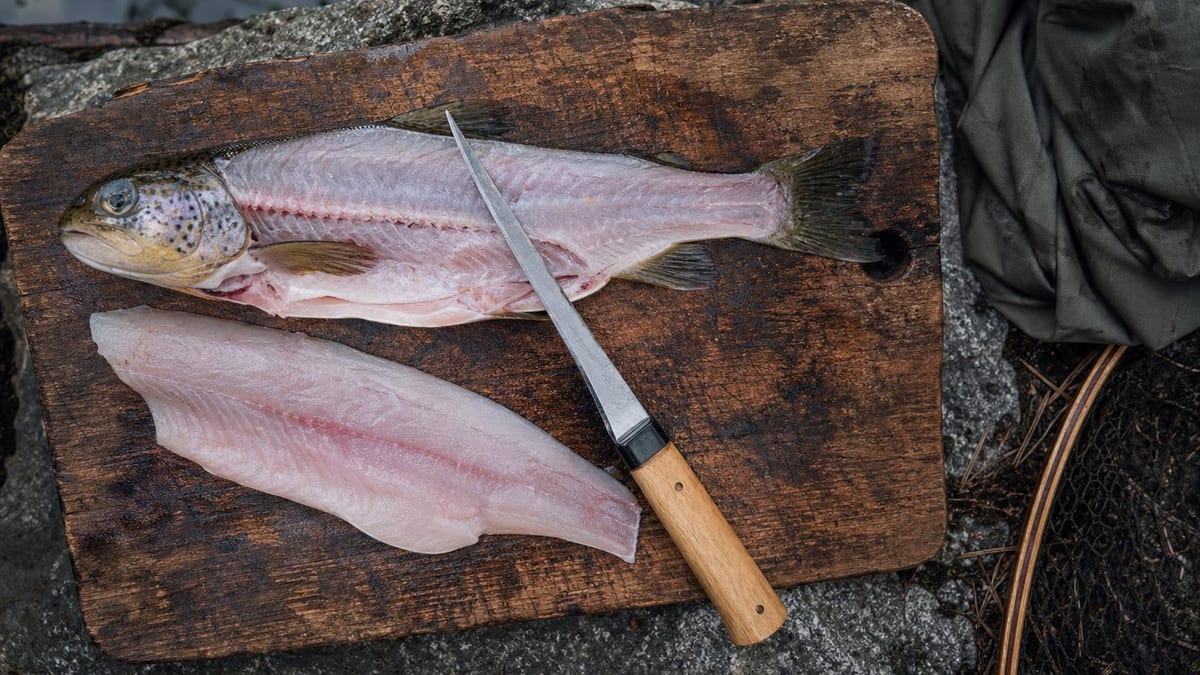
Cut behind the gill cover down to the backbone but not through it. Turn the blade parallel to the backbone and saw toward the tail. Free the fillet, then work the blade between skin and flesh from the tail end, and slice the rib bones out from the top down. Iowa's DNR publishes these five steps and recommends a fillet glove on the free hand.
Key takeaways
- Iowa's DNR sets out five cuts: behind the gill cover, along the backbone to the tail, skin from the tail end, ribs out from the top, then repeat.
- The agency recommends a thin flexible fillet knife and a fillet glove on the free hand to prevent serious cuts.
- Missouri's Department of Conservation says white bass and largemouth bass carry a strong-tasting dark layer along the lateral line that should be cut away.
- EPA lists the lateral line, belly flap, dorsal fat, dark muscle and skin among the fatty tissues where lipophilic contaminants accumulate — the same tissues those cuts remove.
- Wisconsin's DNR advises consulting its Fish Consumption Advisory, which it republishes every six months, before eating fish from a given water.
Five cuts, and nothing else
Filleting looks like butchery and is closer to tracing. Iowa’s Department of Natural Resources publishes the whole method in five steps, and the reassuring part is what it opens with: you do not need to remove the internal organs, head or fins, and the fillets are boneless.
| Step | The cut |
|---|---|
| 1 | Fish on its side on a firm flat surface, held by the head. Cut just behind the gill cover, down to — but not through — the backbone |
| 2 | Turn the blade against and nearly parallel to the backbone. Saw toward the tail, through the ribs, to the base of the tail |
| 3 | Knife near the tail end of the fillet, blade next to the skin. Hold the tail with your fingertips and work the blade forward between skin and flesh |
| 4 | Place the blade just under the top of the ribs and slice them out of the fillet |
| 5 | Repeat on the other side |
The agency notes an accepted variation on step two: some anglers fillet the meat around the ribs rather than cutting through them. Slower, slightly cleaner, and a matter of preference rather than correctness.
Missouri’s Department of Conservation describes the same sequence in its own words — cut from behind the head down to the backbone, slide the knife with a sawing motion toward the tail, slice out the rib bones from top to bottom — and adds the skinning detail: cut down to the skin near the tail, turn the blade, pull firmly on the tail section, and saw the knife between the skin and the flesh.
The two tools that matter
Iowa’s DNR names a sharp fillet knife with a thin, flexible blade, and then a second item most people skip: a fillet glove on your free hand, to prevent serious cuts. That is the agency’s phrasing, not a manufacturer’s.
Missouri’s list adds a scaler — or a dull knife or a spoon — and a glove to protect your hand and help grip the fish, which is the underrated half of the job. The same page points out that many fishing accesses and parks provide cleaning stations with water for rinsing, and that a dock, a paddle, a cooler lid or a flat rock all work otherwise.
Flexibility is what the thin blade buys you. Steps three and four are both cases of the blade following a surface — skin in one, rib cage in the other — and a stiff blade cannot track a curve without leaving meat behind.
Why the skin and the dark strip come off twice over
Here is the part most filleting guides leave out, and it is the reason to do steps three and four properly rather than quickly.
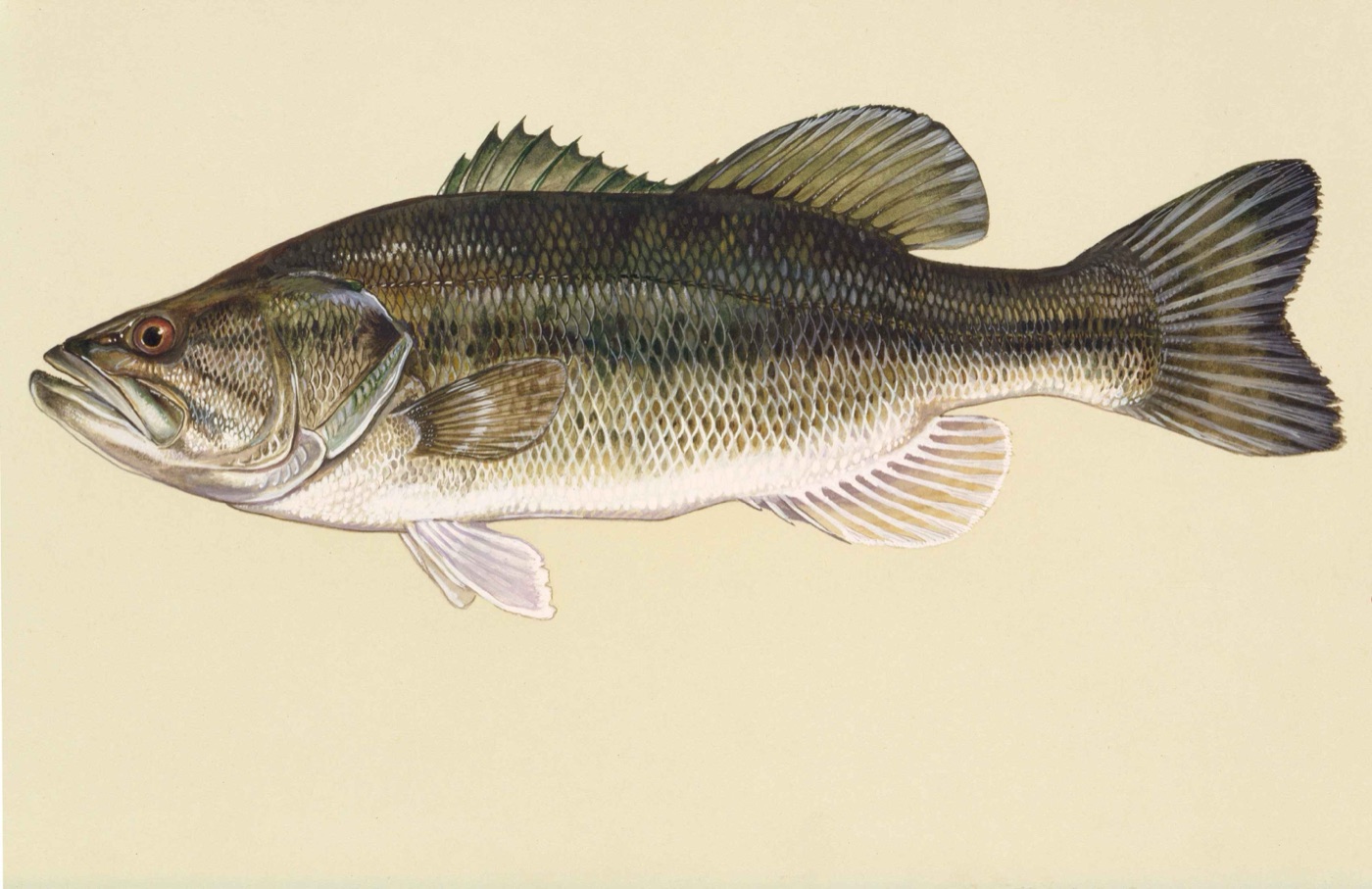
Missouri’s Department of Conservation gives the taste reason: some fish, such as white bass and largemouth bass, have a strong-tasting dark layer of flesh along their lateral lines that should be cut away before cooking or storage.
The EPA, writing about fish advisories rather than cooking, gives a second one. Its factsheet states that lipophilic — fat-soluble — chemicals such as PCBs accumulate mainly in fatty tissues, and lists them:
belly flap, lateral line, subcutaneous and dorsal fat, dark muscle, gills, eye, brain, and internal organs
The agency’s conclusion follows directly: removal of internal organs and skin and trimming the fat before cooking will decrease exposure.
Read those two lists side by side. The dark strip Missouri tells you to cut for flavour sits exactly where the EPA says fat-soluble contaminants concentrate. The skin you remove for texture is on the same list. A careful fillet is doing two jobs at once, and neither requires you to believe anything about the other.
One honest limit belongs here. Trimming addresses fat-soluble contaminants. It does not address mercury, which binds to muscle protein rather than fat — which is why agency advisories treat the two separately and why trimming is never presented as a substitute for reading the advisory.
Species that need something extra
Not every fish comes apart the same way.
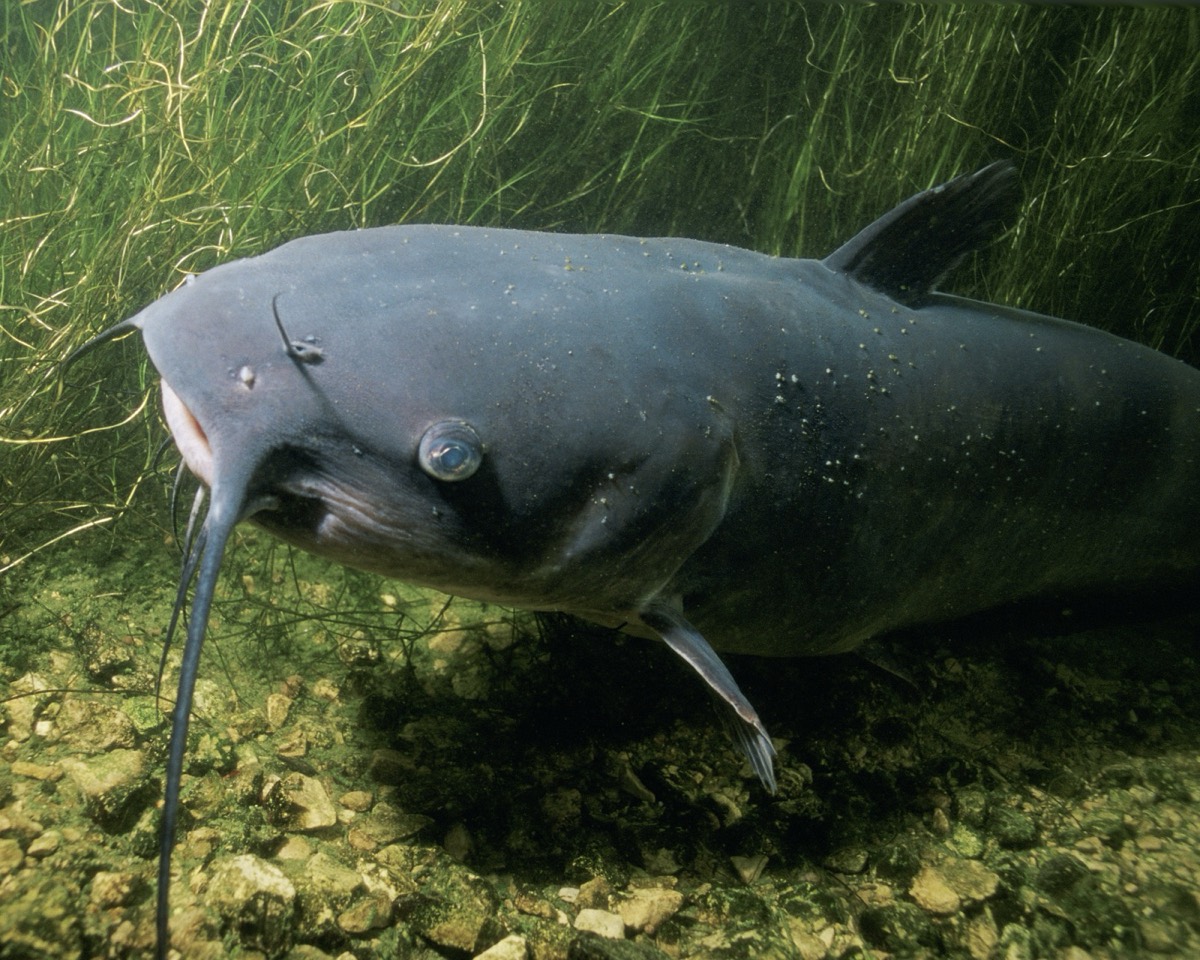
Catfish are scaleless, and Wisconsin’s DNR describes the skin as thick and tough. Its method is to make an incision around the head and down the belly, grip the skin with pliers, and pull it down toward the tail. Catfish can be filleted or cut into steaks. Our catfish fishing guide covers catching them; the agency also warns that the dorsal and pectoral spines are sharp and backed by venomous mucus glands, which is a cleaning-table concern as much as an unhooking one.
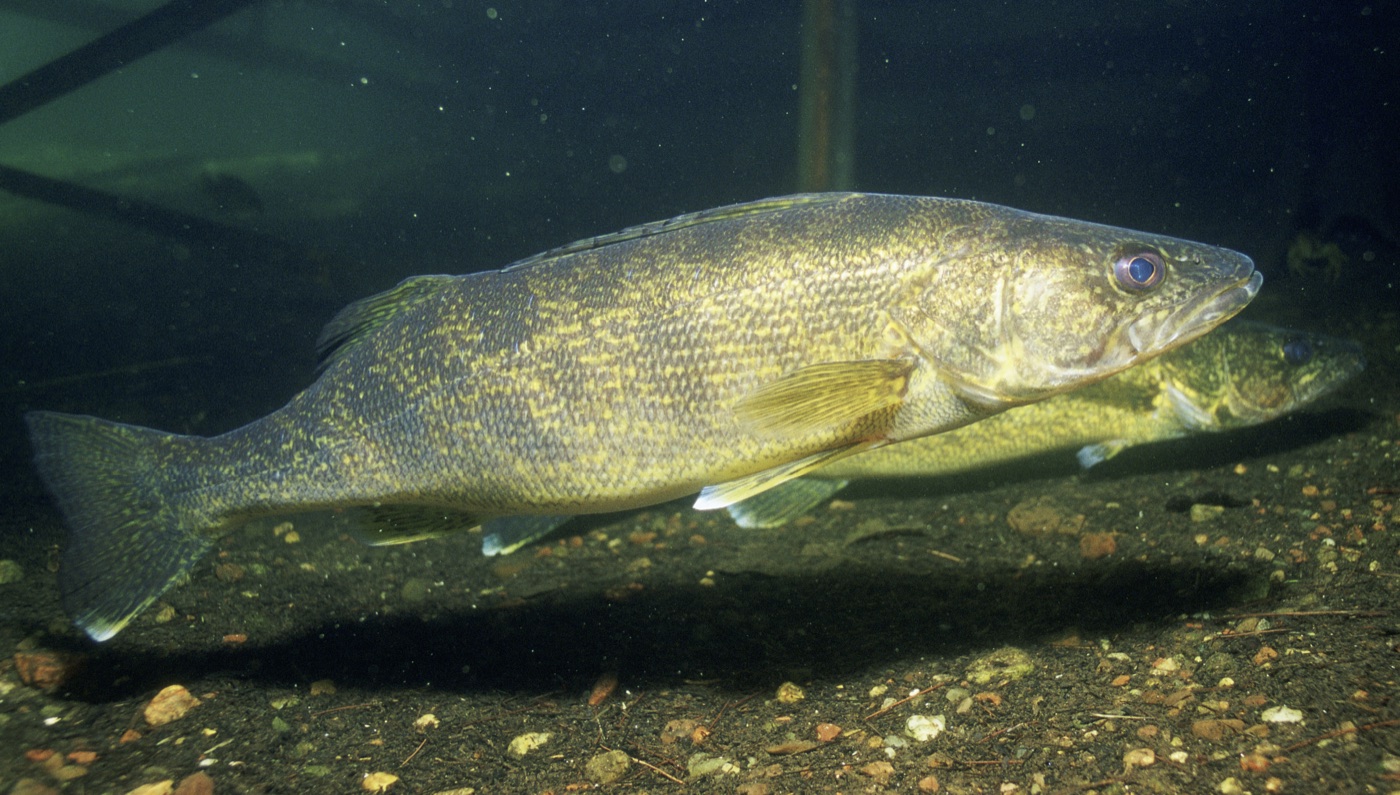
Large, older fish of any species deserve a second thought before the pan rather than a different knife. Wisconsin’s DNR explains the mechanism for walleye: they accumulate PCBs, pesticides and mercury in their bodies as they feed on smaller fish containing trace amounts of contaminants. For catfish the agency is more specific, noting that large individuals — generally those over 21 inches — from some waters may harbour high levels of pesticides or other toxins. This is one of the better arguments for catch and release on the biggest fish, alongside the fisheries one.
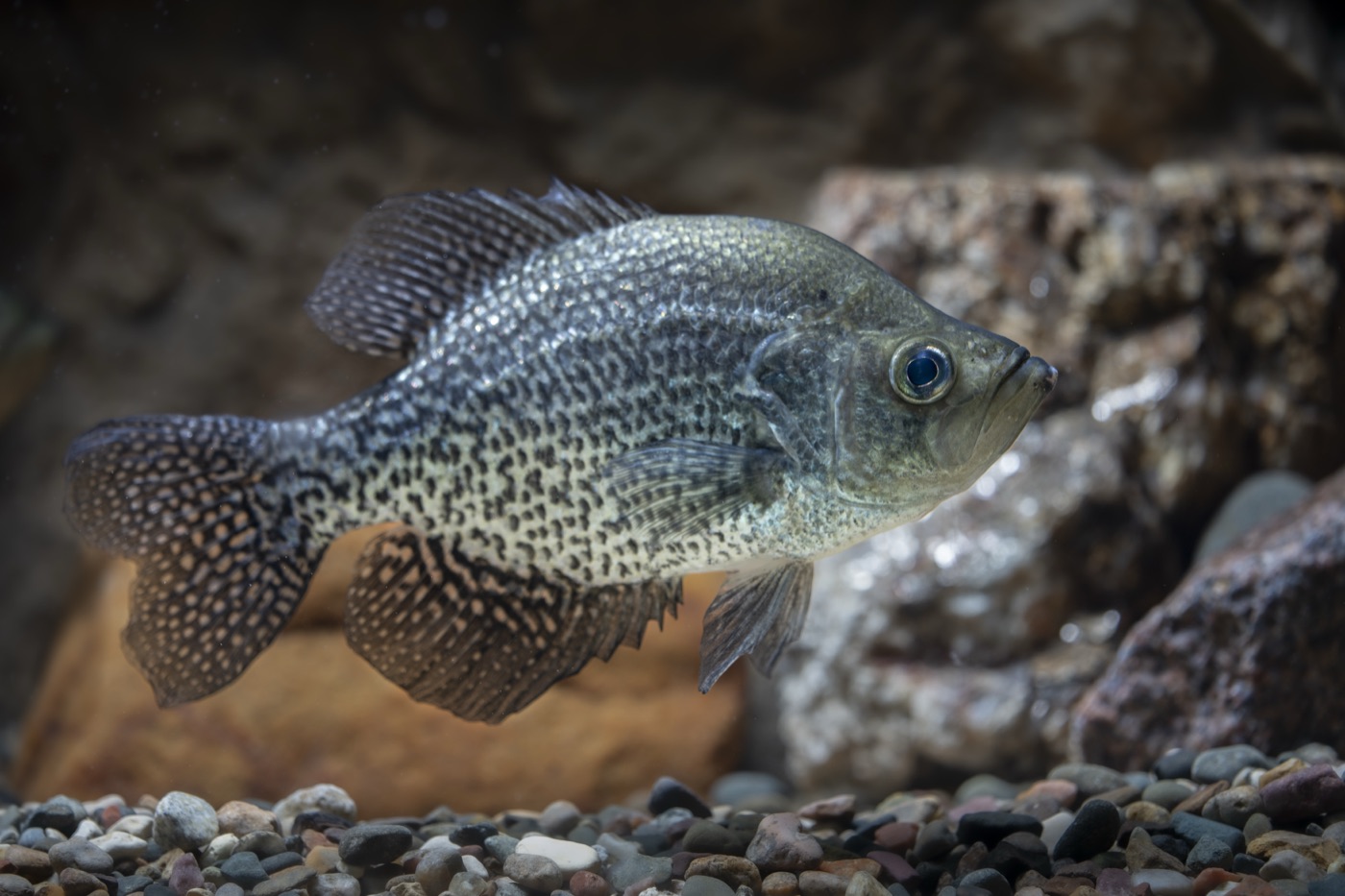
Panfish are often not filleted at all. Missouri’s alternative is pan-dressing: scale the fish by scraping the skin with a dull knife, spoon or scaling tool, cut along the sides of the fins on the back and behind the stomach and pull the fins out, remove the head, then slit the belly and scrape out the entrails. For a crappie or a bluegill that is often the faster route — see our panfish guide for which fish are worth which treatment.
Before you eat it
This is the one question a guide cannot answer for you. What is safe to eat, from which water, in what quantity, is published by your state agency as a fish consumption advisory — and Wisconsin’s DNR notes that it republishes its own every six months, listing the rivers and lakes whose fish are unsafe to eat.
Advisories are keyed to water body, species and often size, and they change. Look yours up before the fish goes in the cooler rather than after. Our licences and regulations guide explains where each state publishes them, along with the rules on how fillets must be transported and presented for identification, which also vary.
Frequently asked questions
How do you fillet a fish step by step?
Iowa's Department of Natural Resources publishes five steps. Place the fish on its side on a firm flat surface and hold it by the head, then cut just behind the gill cover and down to, but not through, the backbone. Turn the knife so the blade is against and nearly parallel to the backbone, hold the fish firmly and use a sawing motion to cut through the ribs toward the tail, continuing to the base of the tail. Place the knife near the tail end of the fillet with the blade next to the skin, hold the fish at the base of the tail with your fingertips, and work the blade forward between skin and flesh. Then place the edge of the blade just under the top of the ribs and slice them out. Repeat on the other side.
What knife do you need to fillet a fish?
A sharp fillet knife with a thin, flexible blade, according to Iowa's DNR, which also recommends wearing a fillet glove on your free hand to prevent serious cuts. Missouri's Department of Conservation lists much the same kit — a sharp knife, preferably a fillet knife, a scaler or dull knife or spoon, and a glove to protect your hand and help grip the fish. Missouri adds a practical note worth taking: many fishing accesses and parks provide cleaning stations with water for rinsing, and failing that a dock, paddle, cooler lid or flat rock will do.
Why do you cut away the dark meat along the side?
For two separate reasons that happen to point the same way. Missouri's Department of Conservation gives the culinary one: some fish, such as white bass and largemouth bass, have a strong-tasting dark layer of flesh along their lateral lines that should be cut away before cooking or storage. The EPA gives the other. Its fish advisory factsheet states that lipophilic chemicals such as PCBs accumulate mainly in fatty tissues, and the list it gives includes the belly flap, the lateral line, subcutaneous and dorsal fat, dark muscle, gills, eye, brain and internal organs. Removing internal organs and skin and trimming the fat before cooking will, in the agency's words, decrease exposure.
Do you need to gut a fish before filleting it?
No. Iowa's DNR states plainly that you do not need to remove the internal organs, head or fins, because filleting takes the meat off the frame and leaves the rest intact. That is the main practical advantage over pan-dressing, which Missouri's Department of Conservation describes as scaling the fish, cutting along the sides of the fins and pulling them out, removing the head, then slitting the belly and scraping out the entrails. Pan-dressing keeps small fish whole for the pan; filleting gives you boneless meat and one bag of waste.
How do you skin a fillet?
From the tail end, with the blade almost flat. Missouri's Department of Conservation describes cutting down to the skin near the tail, turning the knife blade, pulling firmly on the tail section, and sawing the knife between the skin and the flesh to separate them. Pulling the skin taut is what makes it work — the blade stays still against the skin while the skin moves under it. Catfish are the exception, being scaleless: Wisconsin's DNR describes removing the thick, tough skin by making an incision around the head and down the belly, gripping the skin with pliers, and pulling it down toward the tail.
Is it safe to eat the fish I catch?
That depends on the water, and only your state agency can tell you. Wisconsin's DNR advises anyone catching catfish for food to consult the Fish Consumption Advisory it publishes every six months, which lists rivers and lakes containing fish unsafe to eat, and it notes that large catfish — generally those over 21 inches — from some waters may harbour high levels of pesticides or other toxins in their bodies. The same agency gives a matching caution for large, older walleye, explaining that they accumulate contaminants as they feed on smaller fish that contain trace amounts. Size and water, not species alone, are what the advisories key on.
Sources
- Filleting (fish cleaning instructions) — Iowa Department of Natural Resources. Accessed September 22, 2026.
- Cleaning and Prepping Fish — Missouri Department of Conservation. Accessed September 22, 2026.
- Polychlorinated Biphenyls (PCBs) and Their Impact on Fish Advisories — United States Environmental Protection Agency, Office of Water. Accessed September 22, 2026.
- Catfish (PUBL-FH-713), Wisconsin fish species guide — Wisconsin Department of Natural Resources, Bureau of Fisheries Management. Accessed September 22, 2026.
- Walleye (PUBL-FM-708), Wisconsin fish species guide — Wisconsin Department of Natural Resources, Bureau of Fisheries Management. Accessed September 22, 2026.
How we choose sources: sources policy.
More in this series
Know when it's worth going.
Fishing Club AI turns live weather, pressure and moon data into a simple bite forecast for your spot — so the skills you practise get used on the right day.
Get the App