Crappie Fishing: How to Find Them and How Not to Lose Them
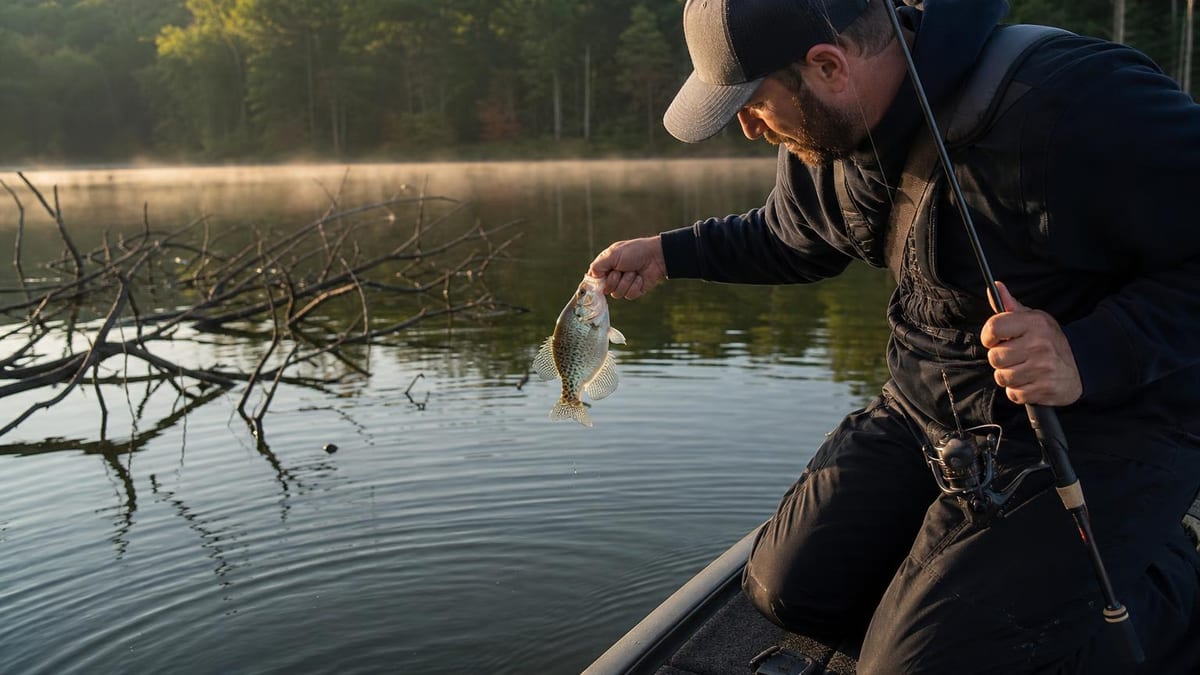
Crappie fishing comes down to two things. First, find structure: submerged stumps and logs, rocky ledges, deep river pools and emergent vegetation, because crappie travel in loose schools and hold near cover. Second, fish light. Crappie have a paper-thin membrane around the mouth — anglers call them papermouths — and Wisconsin's DNR notes that heavy tackle rips the hook straight out. They do not strike hard either; they gently suck the bait in, so a sensitive rod matters more than a strong one.
Key takeaways
- Crappie have a paper-thin mouth membrane. Wisconsin's DNR says light tackle is almost universally preferred because heavy tackle tears the hook free.
- They do not hit hard. The state's own description is that crappie 'gently suck the bait into their mouths' — so the bite is felt, not seen.
- Wisconsin's DNR reports crappie feed throughout the day, with peaks in the evening and early morning.
- Spawning peaks in May and June between 61 and 68°F, in nests 1.5 to 6 feet deep — deeper than any other sunfish.
- Most crappie run 8 to 10 inches; Wisconsin notes fish over 12 to 14 inches or a pound are uncommon, though 18 inches is possible.
The mouth is the whole problem
Every other piece of crappie advice follows from one anatomical fact. Wisconsin’s Department of Natural Resources describes crappie as having a very thin membrane around the mouth, and notes that many anglers have lost a good-sized “papermouth” by using too much force setting the hook.
The same agency describes the bite itself: crappie do not strike baits hard, they gently suck the bait into their mouths.
Put those together and the tackle decision makes itself. Light gear is not a sporting preference here, it is a landing-rate decision. A sensitive rod registers a bite you would otherwise miss, and a soft tip absorbs the head shakes that enlarge a hook hole until the fish falls off at the net.
What that looks like in practice: a light or ultralight rod, a soft sweep to set rather than a snap, and a drag set loose enough to give line at the surface. If you are used to bass hooksets, halve the effort.
Finding them: structure first, depth second
Crappie are a gregarious fish that rarely travel alone. Wisconsin’s DNR describes them moving and feeding in loose schools for much of the year, which is why the day is usually feast or famine: you find nothing, then you find thirty.
They like open water, but they relate to structure. The agency’s list is specific and worth memorising:
- submerged stumps and logs
- rocks and rocky ledges
- deep pools in rivers
- emergent aquatic vegetation, if it is not too dense
Anglers call the summer version of these places crappie holes, because of how reliably fish congregate in them. If one produces nothing, move — the same source notes crappie move around freely and can be found at almost any depth from surface to bottom depending on season and weather.
The seasonal pattern that decides your depth
| Season | Where they are | Why |
|---|---|---|
| Spring | Shallows, near emergent vegetation close to shore | Spawning; males aggressive and strike almost anything near the nest |
| Summer | Deep holes, river channels, sunken logs and brush; often near the thermocline | Seeking cooler water that still carries oxygen |
| Autumn | Deep submerged brush | Harder fishing than spring |
| Winter | Varying depths; still active | Crappie remain active all winter, so ice fishing is popular |
The thermocline detail is the one most anglers skip. Wisconsin’s DNR explains that although crappie tolerate low dissolved oxygen, they still seek out oxygenated water, which in summer often puts them at the depth where temperature changes rapidly — cooler, but not yet oxygen-poor. If your lake stratifies, that band is worth finding before you fish anything else. Our guide to dissolved oxygen covers why that layer exists.
Spawning: the easiest fishing of the year, and why
Crappie spawning activity peaks in May and June, when water temperatures are between 61 and 68°F, and can continue into July. That is a narrow enough window to plan around with a thermometer.
Two details make spring fishing productive. First, males defend nests aggressively, chasing and biting intruders — which is why they will strike almost anything that comes near. Second, crappie nest deeper than their relatives: Wisconsin’s DNR puts nests between 1.5 and 6 feet deep or deeper, the deepest of any sunfish, in colonies that may hold as many as 35 nests spaced from three inches to six feet apart.
Find one nest in spring and you have usually found a colony.
Expectations, honestly set
Crappie are a numbers fish, not a size fish. Wisconsin’s growth figures make that concrete: age one at 3.0 inches, age three at 7.2 inches, age five at 9.6 inches, and age ten at 13.1 inches. Most crappie in the state do not live much past their fifth year, grow larger than 12 to 14 inches, or weigh more than a pound — though 18-inch fish are possible.
There is also a year-to-year effect worth knowing. Fisheries biologists group all the fish spawned in one season as a year class, and crappie are known for having very irregular year classes even within the same lake. Some years produce a smaller-than-average class; every three to four years, the opposite happens and a larger-than-average class comes through. A lake that fished poorly for size two seasons ago is not necessarily the same lake now.
Overpopulation is the other side of that coin. Where crappie are too abundant for the available food and habitat, the result is stunted fish, and agencies encourage harvest partly to keep numbers in check.
Rigs and presentation
Nothing exotic is required, and the rigs we cover mostly apply as-is with lighter components:
- Minnow under a float — a slip float rig lets you set an exact depth over brush, which matters when the school is suspended.
- Jig and minnow — the combination Wisconsin’s DNR names as most popular. Small, and fished slowly.
- Vertical over structure — when fish are stacked in a hole, dropping straight down beats casting across.
Hook size is where papermouth logic returns: small enough to sit inside a soft mouth without tearing it. Our guide to hook sizes explains how the numbering works if you are unsure what “small” means in practice.
What to check before you go
Crappie rules differ by state and often by individual water body, and they change. Your state fish and wildlife agency publishes what applies where you are standing, and that is the only source worth trusting for it — our licences and regulations guide explains where to look.
Species pages for black crappie and white crappie carry identification and habitat detail, and the wider panfish guide covers where crappie sit among the other fish worth a frying pan.
Frequently asked questions
What is the best bait for crappie?
Small minnows are the standard, and Wisconsin's DNR describes them as the most popular crappie bait, often used with a light jig. Crappie will also take worms, grubs and insect larvae, along with artificial lures such as small spinners and spoons. Wet and dry flies work well when fish are on their spawning beds. In winter, small tear-shaped hooks are used alone or tipped with grubs. The pattern behind all of it is size: crappie feed heavily on zooplankton and insect larvae when small and on minnows and small fish when larger, so baits stay modest.
Where do crappie hold during the day?
Near structure, at a depth that changes with the season. Wisconsin's DNR describes crappie as migratory within a lake, moving in response to temperature, oxygen, season and food: shallows during the spring spawn, deeper water through summer, and varying depths in winter. In summer they are often found near the thermocline, the depth where temperature changes rapidly and the water is cooler but still holds oxygen. Submerged stumps and logs, rocky ledges, deep river pools and emergent vegetation all concentrate them.
Why do I keep losing crappie at the boat?
Almost always the hookset or the drag. The membrane around a crappie's mouth is thin enough that anglers nicknamed the fish papermouth, and Wisconsin's DNR states plainly that many anglers have lost a good-sized fish by using too much force on the hookset. The fix is a light rod, a soft sweep rather than a snap, and a drag loose enough that a head shake at the surface pulls line instead of tearing the hole wider.
What time of day is best for crappie?
Crappie feed throughout the day, according to Wisconsin's DNR, with peaks in the evening and early morning. That makes them more forgiving than species tied hard to low light. Season matters more than clock: spring fishing near the nests is the easiest of the year, while summer and autumn are harder because the fish move to deep holes and submerged brush.
Are black and white crappie fished differently?
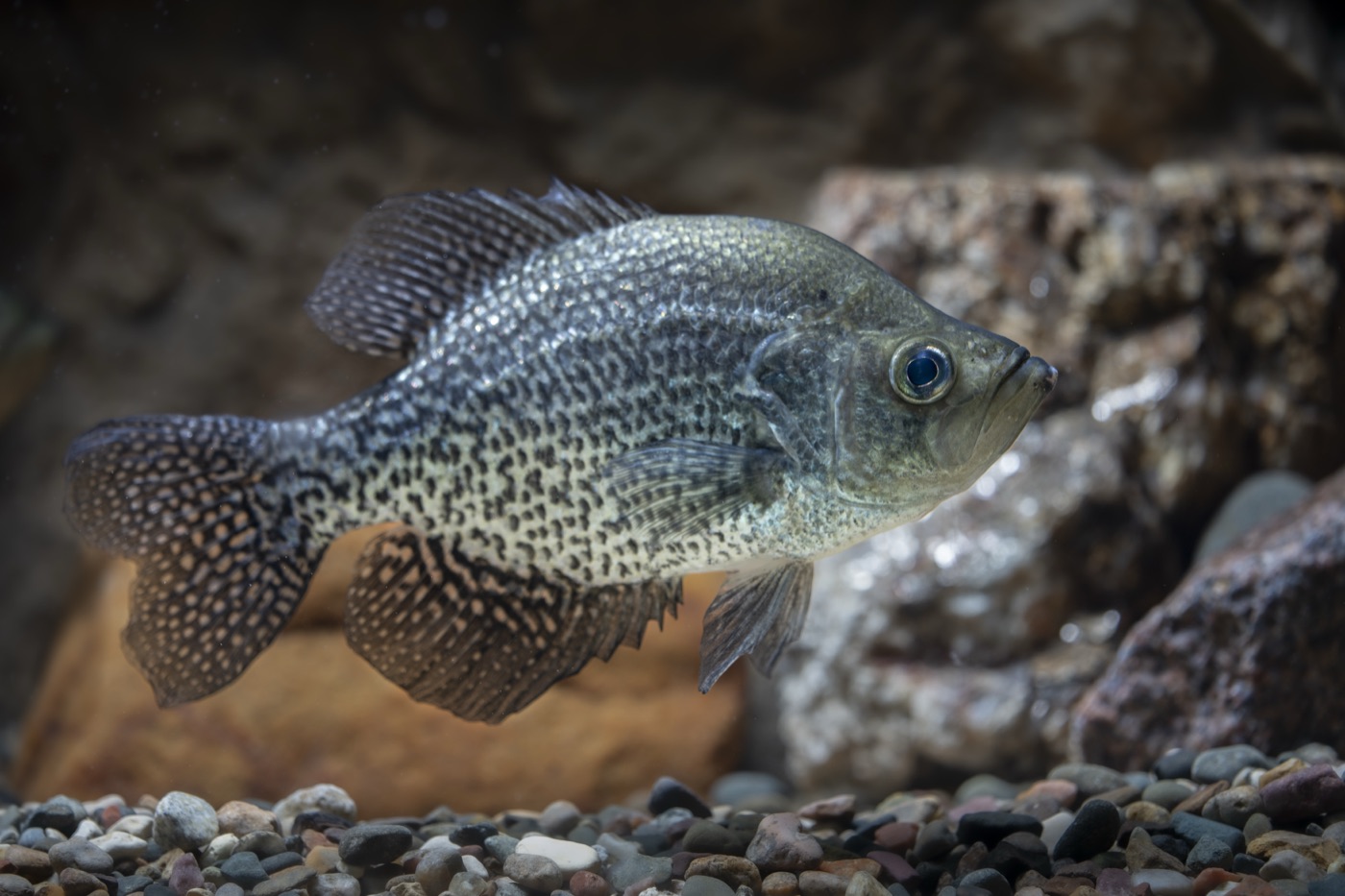
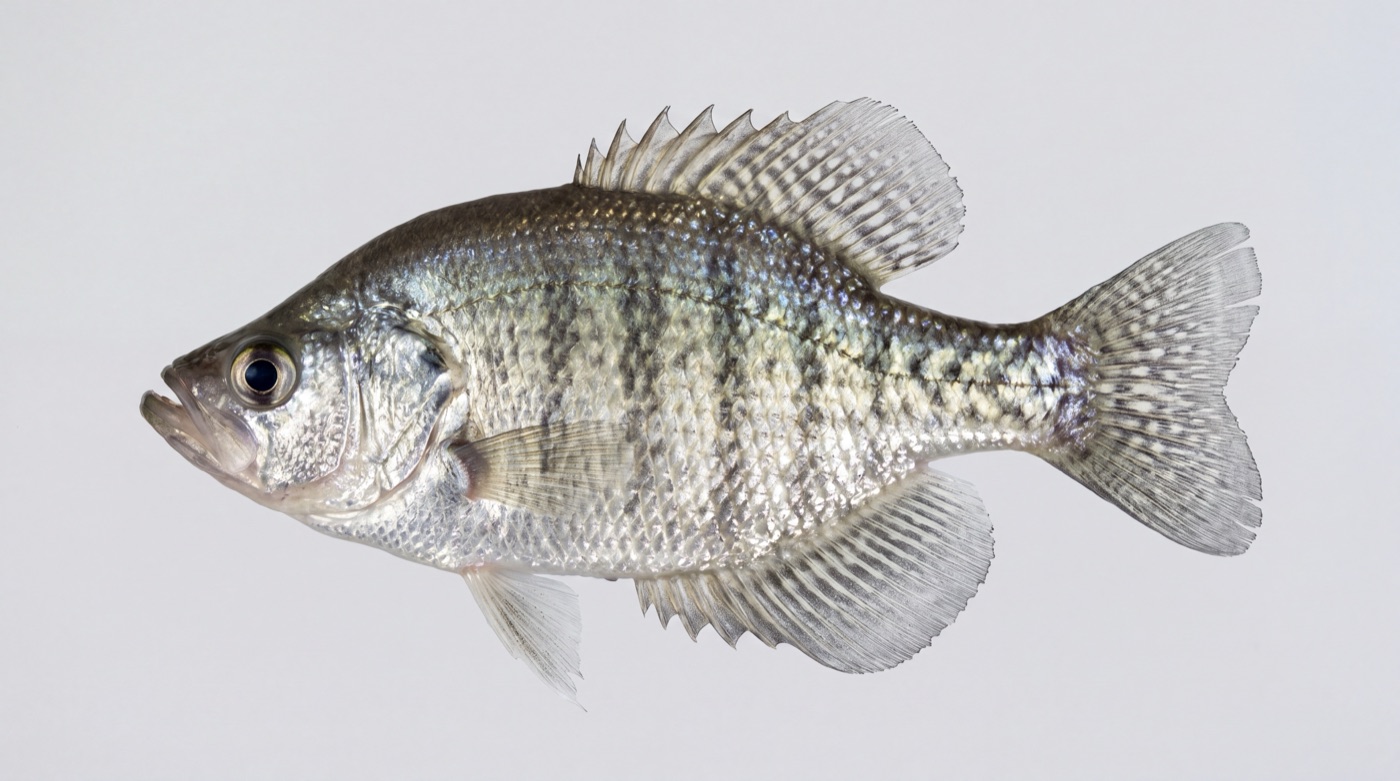
Not in technique, but often in water type. Wisconsin's DNR describes black crappie as preferring clearer, quieter water, while white crappie flourish in warmer, siltier, more turbid conditions — black crappie in the clear cool lakes of the North Woods, white crappie in rivers and streams. The most reliable way to tell them apart is the dorsal fin: black crappie usually carry seven or eight spines, white crappie normally six.
Sources
- Crappie (PUBL-FM-708), Wisconsin fish species guide — Wisconsin Department of Natural Resources, Bureau of Fisheries Management. Accessed August 21, 2026.
- Crappie — Missouri Department of Conservation. Accessed August 21, 2026.
- Freshwater fishing: lakes and reservoirs — Texas Parks and Wildlife Department. Accessed August 21, 2026.
- Bluegill (PUBL-FM-707), Wisconsin fish species guide — Wisconsin Department of Natural Resources, Bureau of Fisheries Management. Accessed August 21, 2026.
- Fishing regulations by water body — Virginia Department of Wildlife Resources. Accessed August 21, 2026.
How we choose sources: sources policy.
More in this series
Know when it's worth going.
Fishing Club AI turns live weather, pressure and moon data into a simple bite forecast for your spot — so the skills you practise get used on the right day.
Get the App