How to Snell a Hook: The Snell Knot
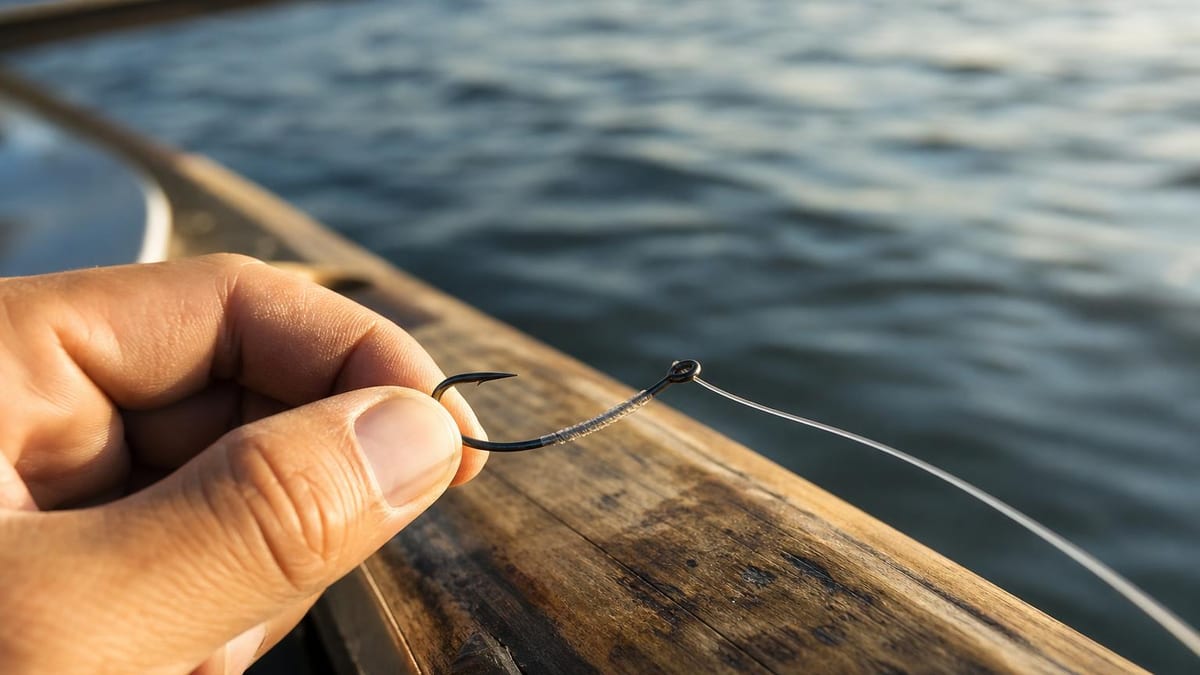
To snell a hook, pass the line through the eye twice to form a loop along the shank, wrap that loop seven to eight times around the shank and line together, then moisten and draw tight so the wraps seat in a neat column behind the eye. Because the line pulls in line with the shank rather than from the eye, a snelled hook drives its point home with unusual directness.
Key takeaways
- Five steps: double pass through the eye, wraps along the shank, seven to eight total, lock, moisten and seat.
- A snell grips the shank, not the eye — the pull runs straight down the hook's axis.
- That in-line pull is the point: pressure rotates the hook point into the fish instead of levering against the eye.
- It is the classic connection for bait hooks and the required tie for hooks with up-turned or down-turned eyes.
- Snelling suits leaders tied at home — it is a two-hands-and-attention knot, not a rocking-boat knot.
- Tandem rigs are built by snelling: the line continues past the first hook to a second, still in line.
How to tie it, step by step
- Type Terminal knot
- Difficulty Moderate
- Best for Bait hooks, offset-eye hooks, tandem rigs
-
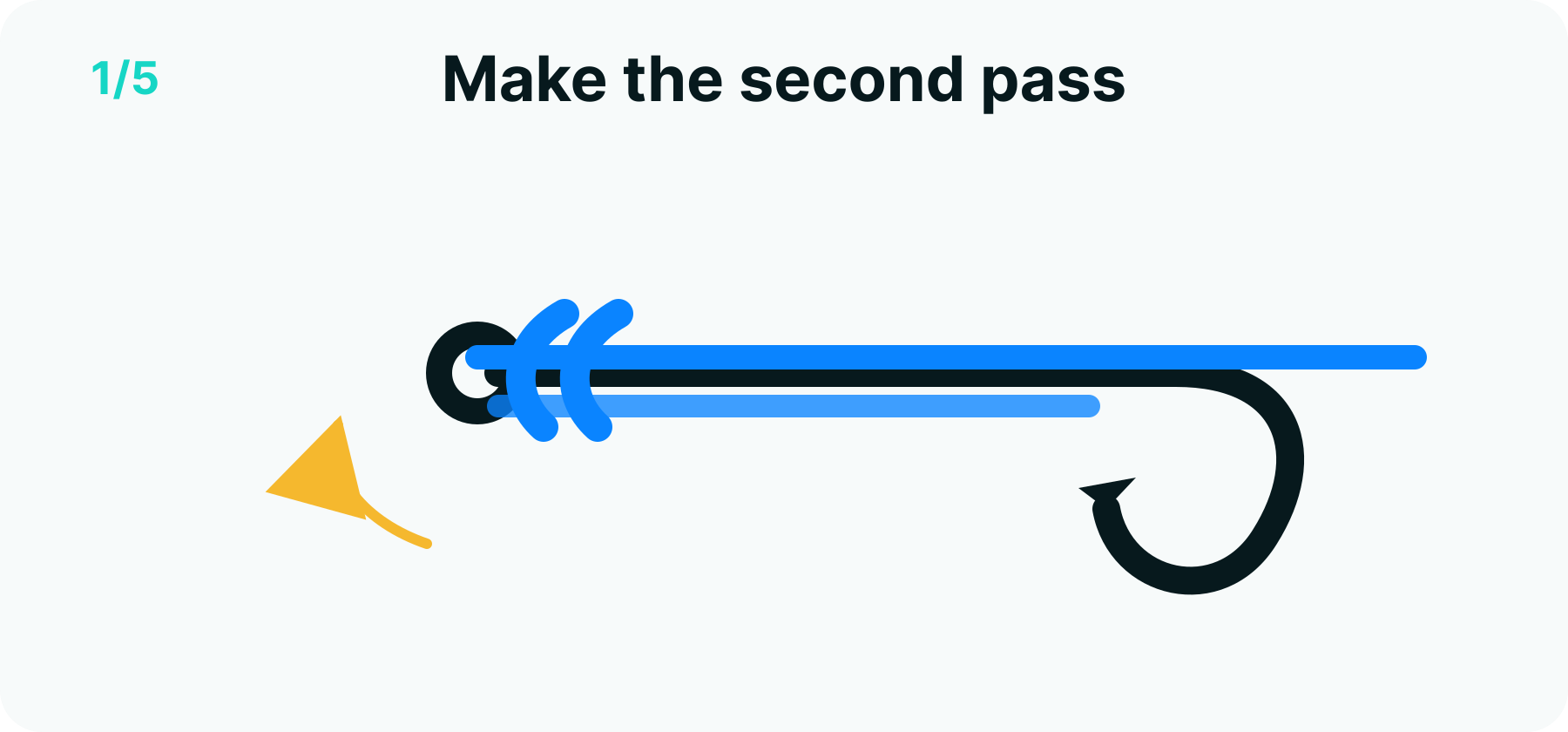 Step 1 of 5
Make the second pass
Pass the tag end through the eye, form a loop along the shank, and bring the tag back through the eye a second time in the same direction — leaving a long open loop lying against the shank.
-
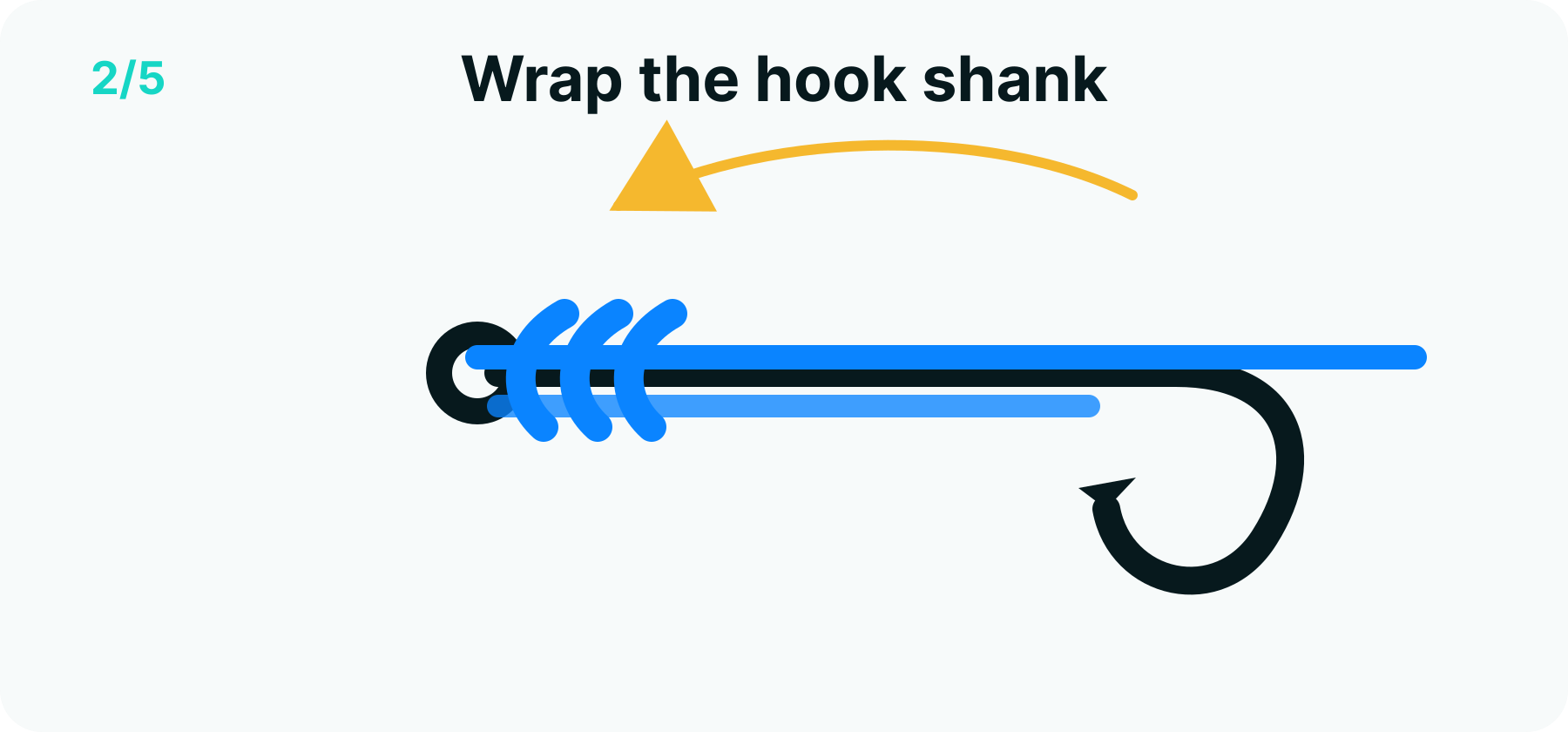 Step 2 of 5
Wrap the hook shank
Hold the loop against the shank and begin wrapping it around both the shank and the line, working in tight, adjacent turns away from the eye.
-
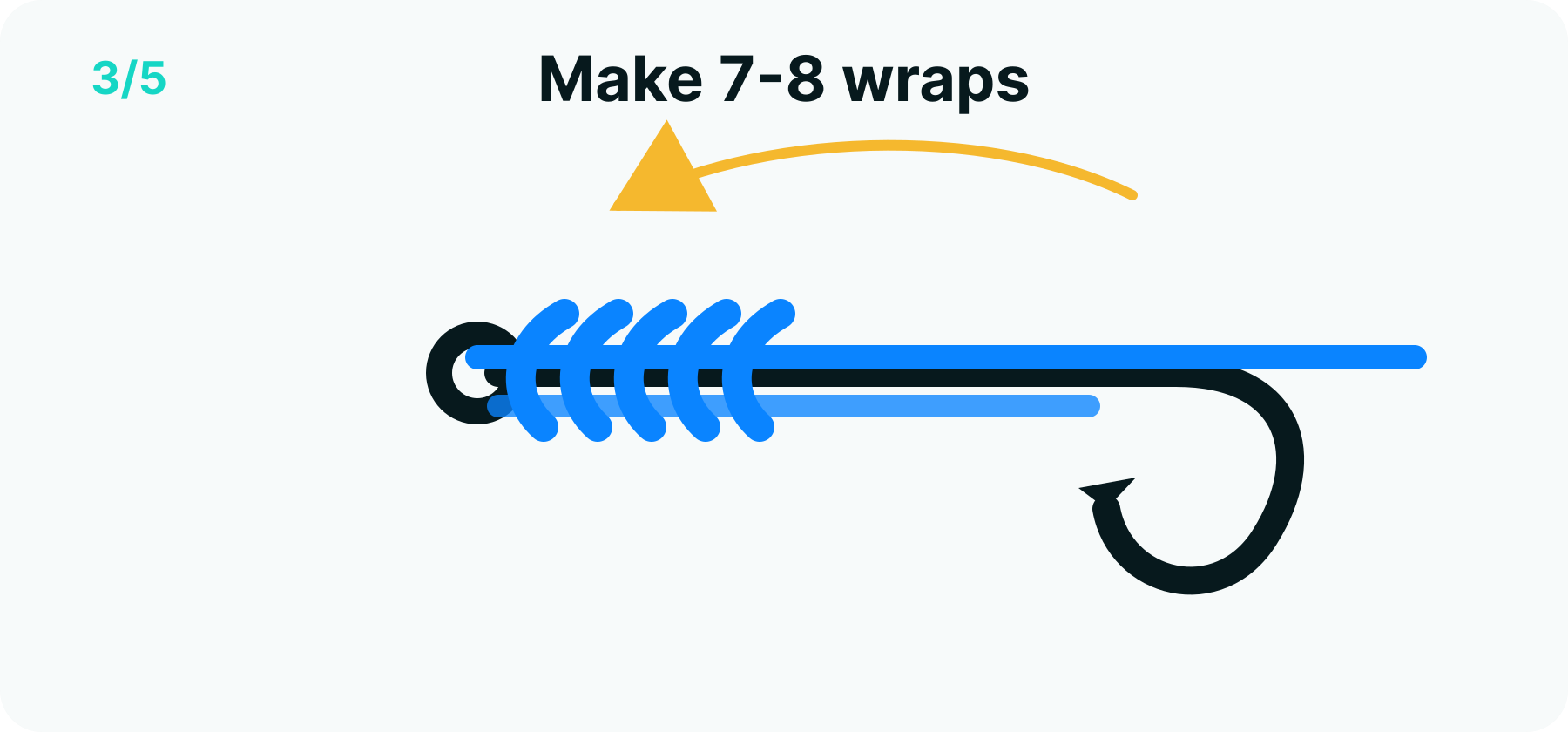 Step 3 of 5
Make 7-8 wraps
Continue until seven to eight neat wraps lie in a column along the shank. Keep each turn snug against the previous one — no gaps, no crossing.
-
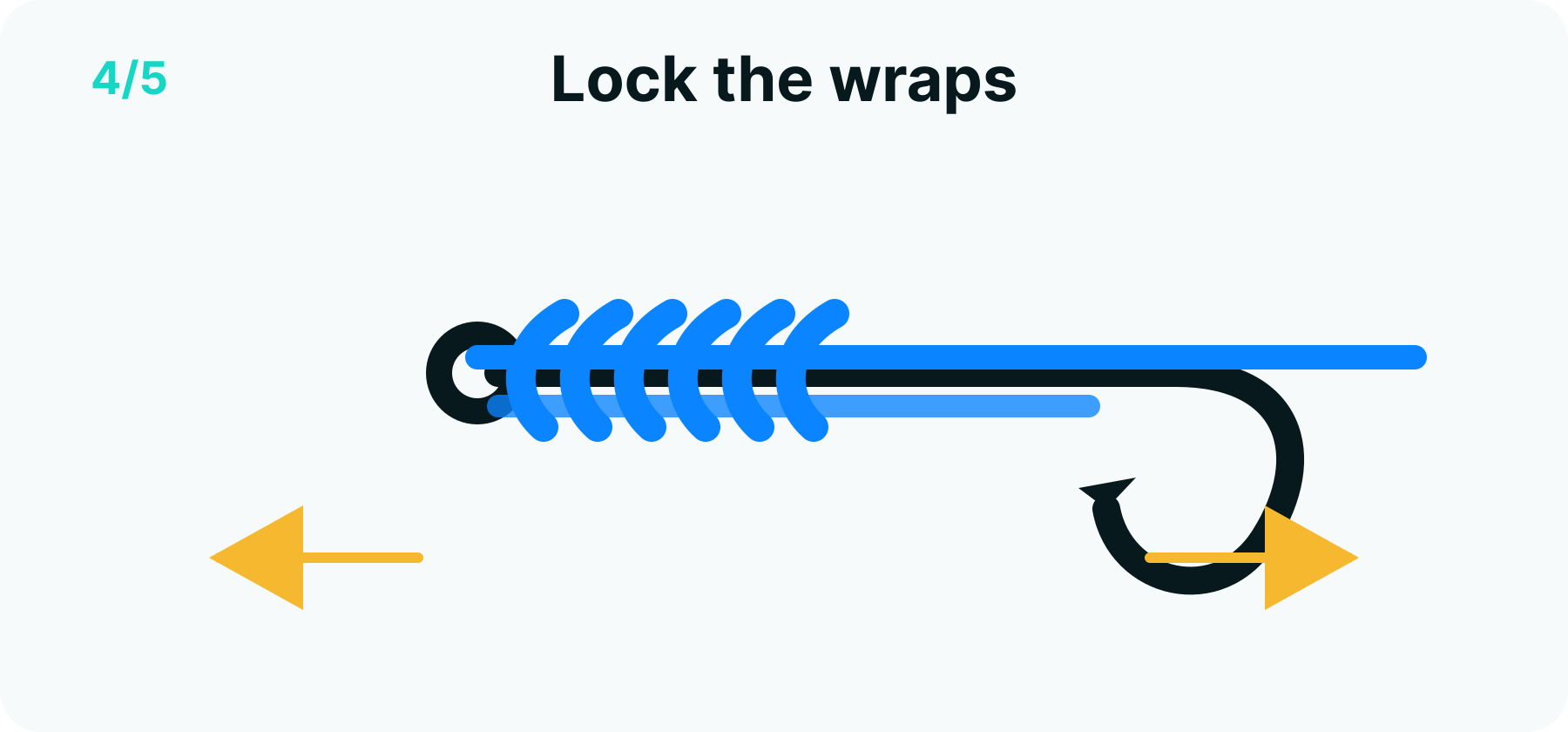 Step 4 of 5
Lock the wraps
Keep tension on the wraps with a fingertip while you take up slack from the standing line — the column must stay tight while the loop shrinks and locks.
-
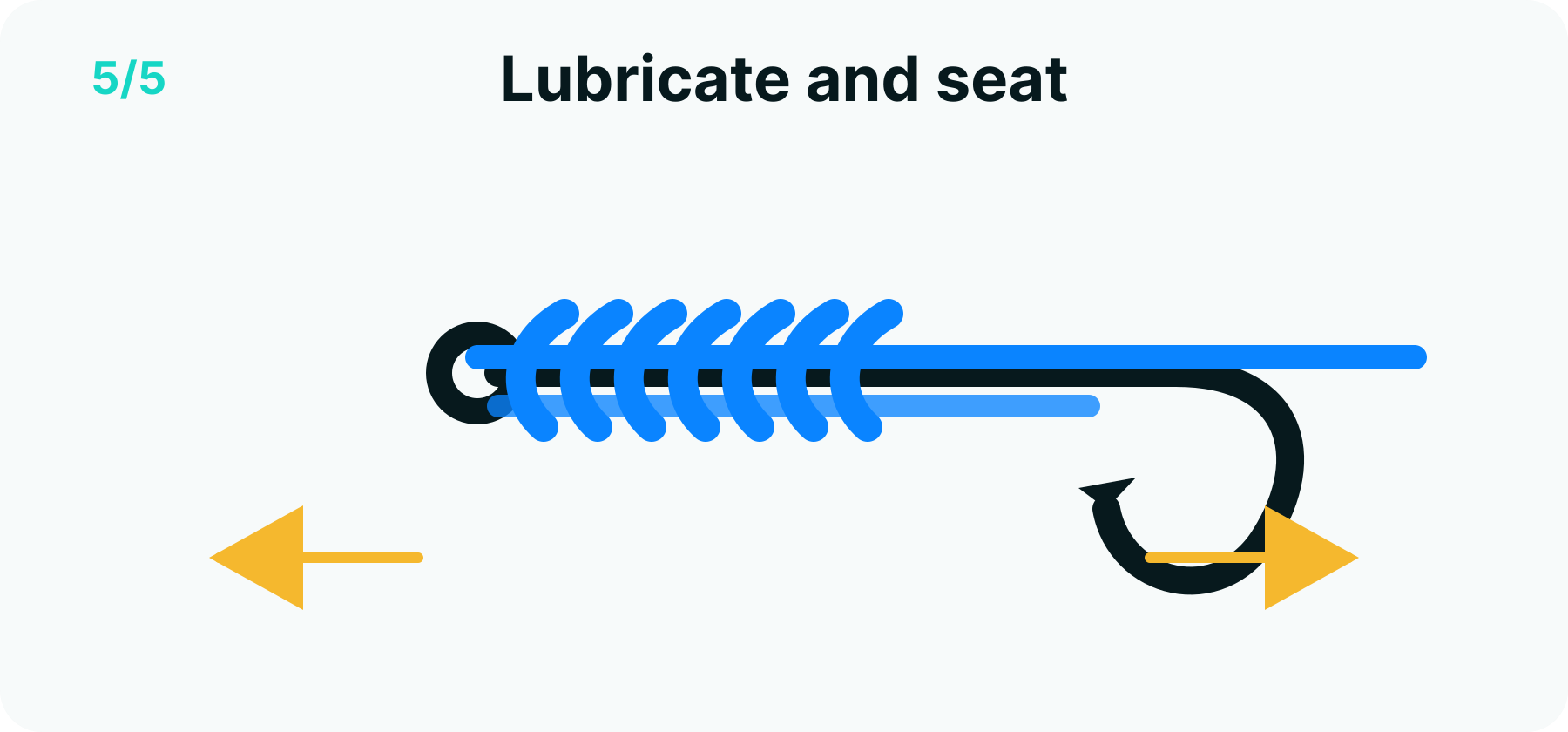 Step 5 of 5
Lubricate and seat
Moisten, then pull the standing line steadily so the whole column seats hard against the back of the eye. Check the coils, then trim the tag.
Same steps, animated and in your pocket: the knot guide inside the Fishing Club AI app walks you through every tie hands-free. Get the app.
The knot that ignores the eye
Every other knot in our collection treats the hook eye as the destination. The snell treats it as a doorway. Line enters through the eye, but the actual connection is a column of wraps gripping the shank — the hook’s straight spine — with the eye serving only to guide the line’s exit. It is less a knot in the conventional sense than a whipping, the same technique sailors use to bind rope ends, applied to a fish hook.
That structural oddity produces the snell’s defining behaviour: the pull arrives in line with the shank. An eye-tied hook receives pressure at whatever angle the knot happens to sit; a snelled hook receives it straight down its own axis, every time. On the strike, that alignment translates pressure into rotation — the point turns into the fish rather than the eye being levered sideways. Bait fishermen discovered this long before anyone could film it, and it is why the snell has survived every generation of tackle since.
Where snelling earns its keep
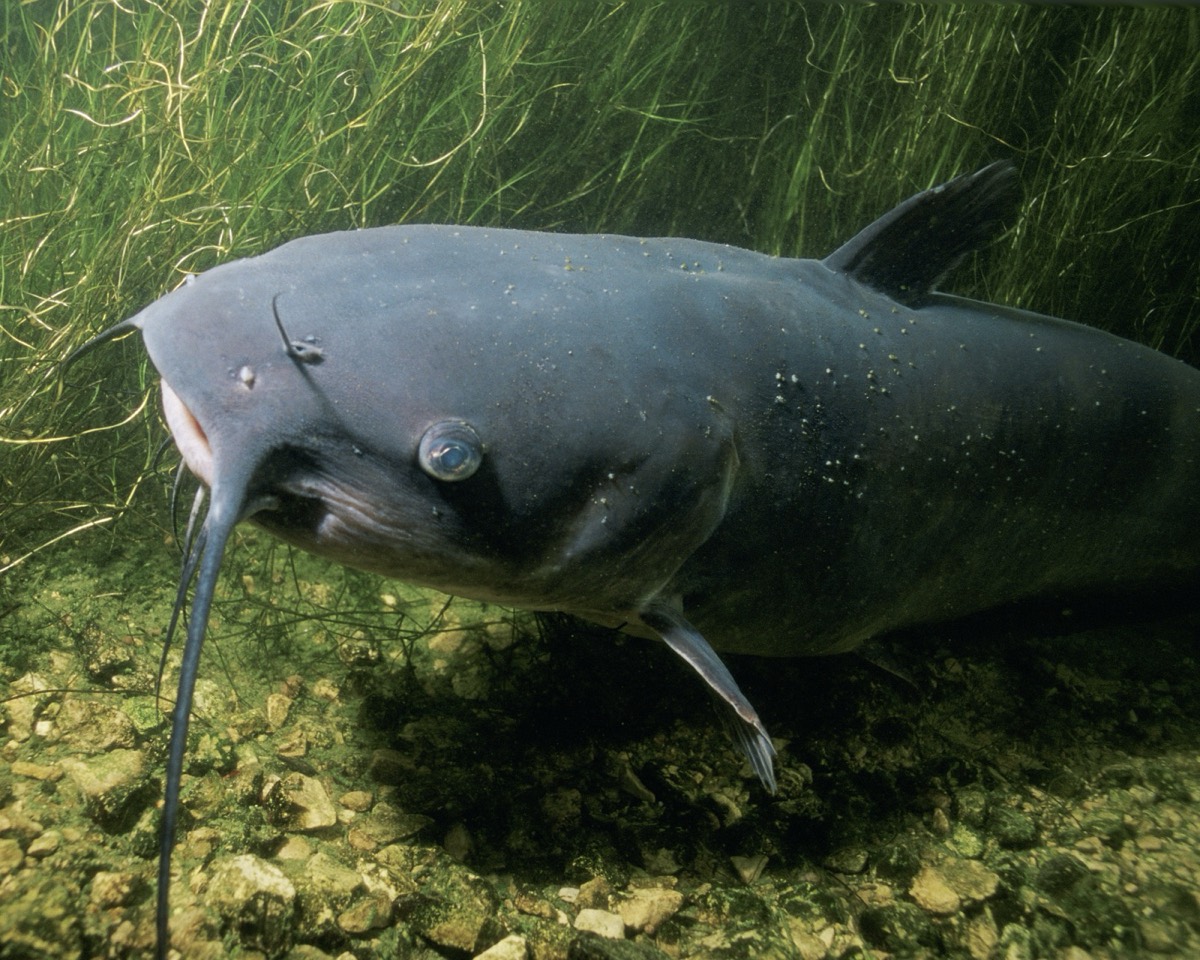
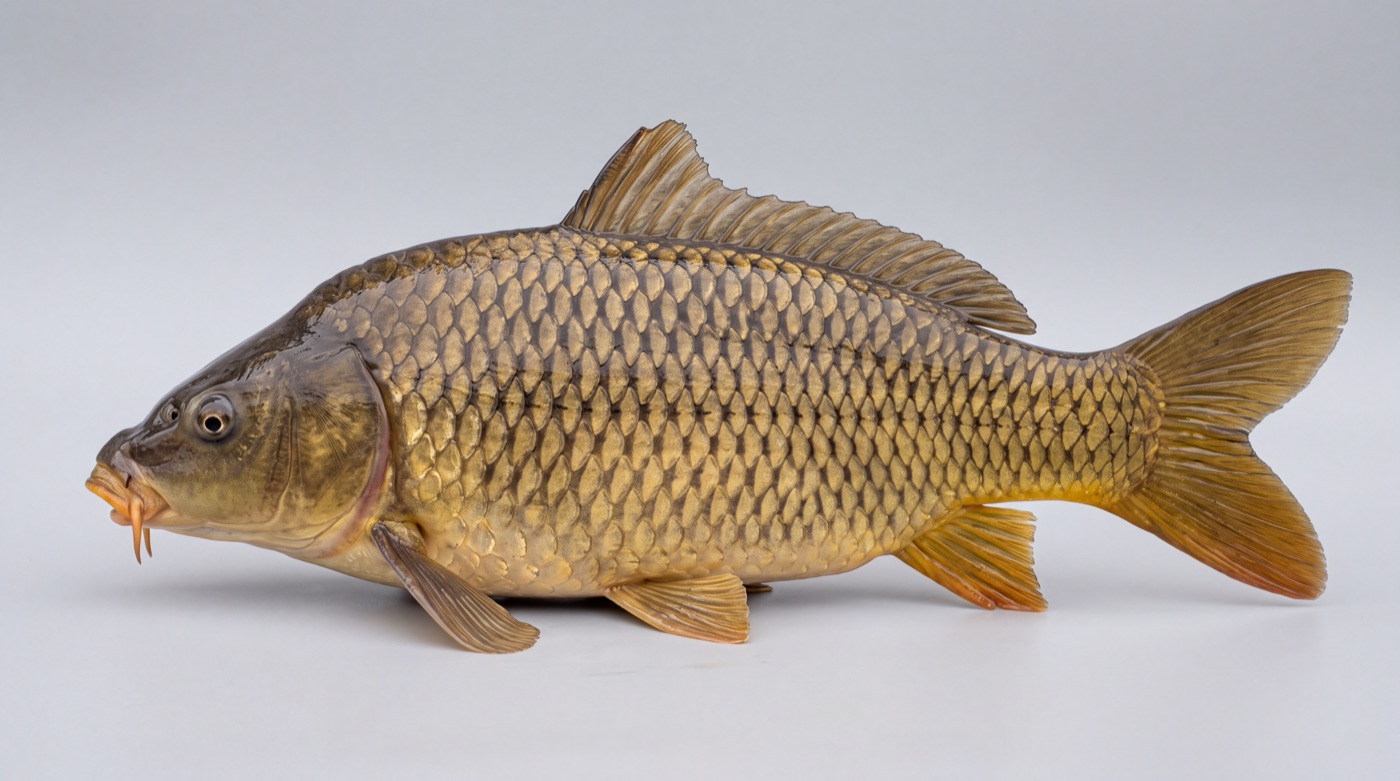
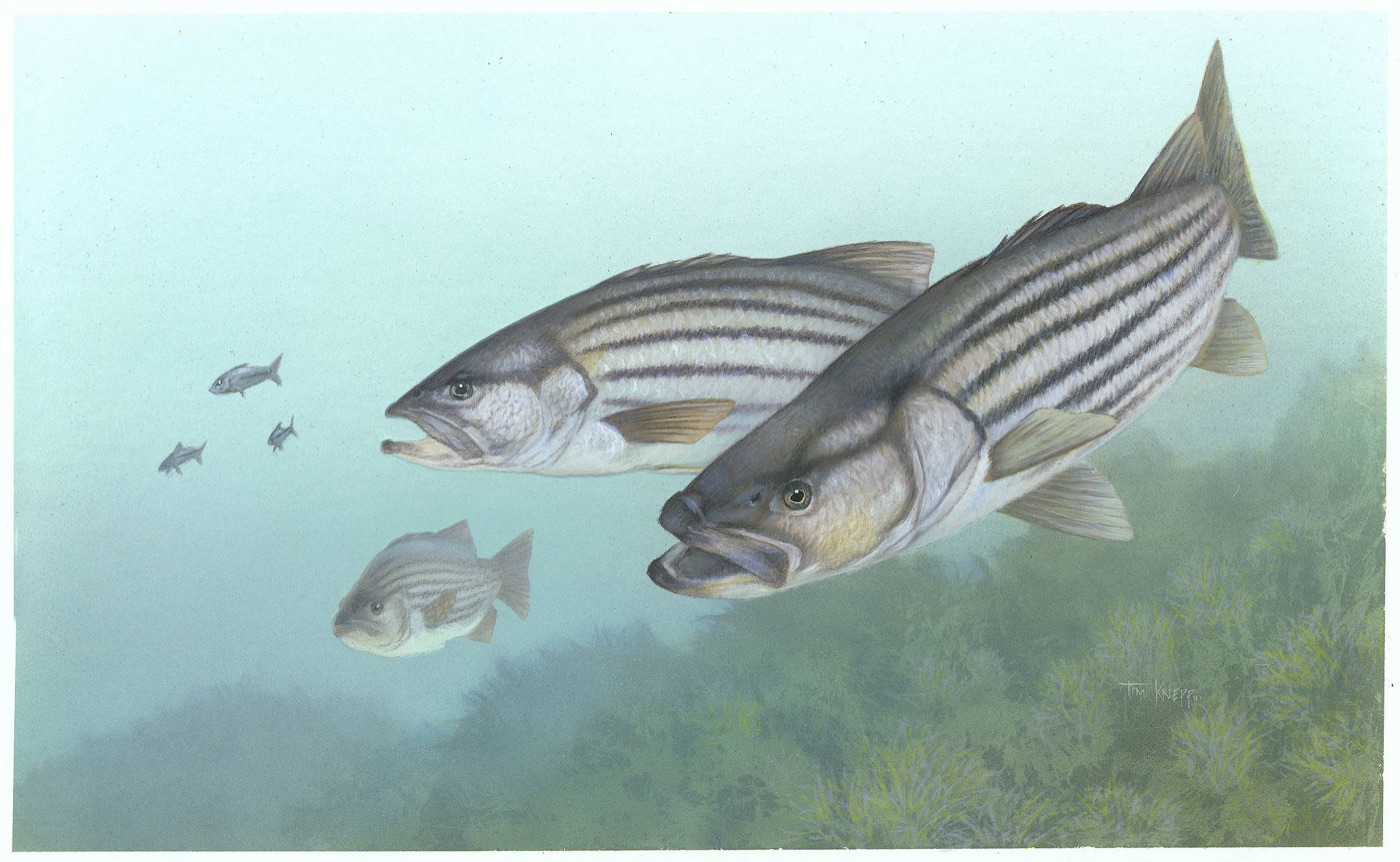
Bait fishing, first and always. The direct hookset is worth most when the fish takes the hook deliberately and the angler drives it home — the classic bait scenario, from catfish on cut bait to carp rigs to live-bait rigs for striped bass. The harder the mouth and the more deliberate the take, the more the geometry pays.
Offset-eye hooks, by necessity. Hooks with up-turned or down-turned eyes are designed around the snell: the line passes through the offset eye and along the shank in one clean line. Tie a conventional knot to those eyes and the hook hangs at an angle; snell them and the design makes sense. If a hook pattern’s eye points anywhere but straight, it is asking to be snelled.
Tandem rigs, uniquely. Because the snell leaves the line’s path through the eye unobstructed, the leader can continue past one hook to a second snelled below it — two hooks in series on a single straight line. Double-hook bait rigs are built this way, and no eye knot does it as cleanly.
The honest limitation: a snell wants two free hands, good light and a moment of attention. It is a knot for rigging at the table or in a calm boat, not for retying in surf with numb fingers. Most snell users pre-tie leaders at home and carry them ready — which suits bait fishing’s rhythm anyway.
Getting the column right
The snell’s quality lives entirely in its column of wraps, and the diagrams above show the traditional method: a doubled pass through the eye creating a long loop, the loop itself wrapped around shank and line, the final slack drawn out through the eye. Three details decide the outcome.
Keep the wraps adjacent and even — each turn touching the last, marching away from the eye. Gaps let coils shift under load; crossed turns cut into each other exactly as they do in a clinch knot barrel. Second, hold tension on the column with a fingertip through the entire lock-and-seat stage; a column that relaxes even briefly seats unevenly and never fully recovers. Third — the universal rule — moisten before the final pull, and draw the knot up with the standing line so the column beds down as one unit against the back of the eye.
Inspect the result like you mean it: a tight, uniform spiral behind the eye, tag trimmed with a small margin, line exiting the eye dead straight. That is a connection you can bait, cast and forget.
The snell in a complete system
Snelling covers a specific territory — bait hooks and their rigs — and does it better than anything else. Around it, the rest of the kit stays simple: an improved clinch or uni for lures, a double uni where braid meets leader, a dropper loop when a rig needs a branch. Learn the snell’s wrap-and-seat rhythm once at the kitchen table and it stays learned — and when you need a refresher with bait-smelling hands, the animated version in the Fishing Club AI app’s knot guide walks the column around the shank one wrap at a time.
Frequently asked questions
What is the advantage of snelling a hook?
Alignment. Every other terminal knot connects to the eye, so pressure arrives at an angle set by whatever the knot is doing that moment. A snell wraps the line along the shank itself, so pressure runs straight down the hook's axis — and on the strike, that geometry rotates the point into the fish rather than levering the eye sideways. Bait anglers have prized that direct hookset for generations, and it is why the snell remains standard on many bait rigs.
Do you need a special hook to snell?
No — any hook with an eye can be snelled — but the technique is at its best, and sometimes simply required, on hooks with up-turned or down-turned eyes. On those designs an eye knot sits at an awkward angle, while a snell turns the offset eye into an advantage: the line flows through the eye and along the shank in one straight path. On standard straight-eye hooks, snelling still works; it is simply one option among several.
How many wraps does a snell knot need?
Seven to eight in the traditional version our diagrams show. The wraps share the load along the shank, and the column needs enough turns to grip without stacking so long that it cannot seat evenly. As with every wrapped knot, the finished look is the test: a tight, even column of coils behind the eye, no gaps, no crossovers. Lumpy or loose means retie, not pull harder.
Can you snell a hook for a tandem rig?
Yes — this is one of snelling's quiet superpowers. Because the connection occupies the shank and leaves the line's path through the eye clear, the leader can continue past the first hook to a second one snelled further down. Two hooks, one straight line, both pulling in line with their shanks — the standard construction for double-hook bait rigs used on everything from live bait to cut bait.
Is a snelled hook stronger than a knot at the eye?
We avoid strength percentages here — controlled, independent knot testing is rare and numbers travel badly without their conditions. What can be said structurally: a snell distributes load across many wraps on the shank rather than concentrating it at one bend against the eye, and it eliminates the eye knot's tendency to lever at an angle. Its practical case has always rested on hookset geometry more than on raw breaking strain.
Sources
- How to Tie a Snell Knot — Take Me Fishing (Recreational Boating & Fishing Foundation). Accessed August 12, 2026.
- Best Fishing Knots (Snelling an Eyed Hook) — Take Me Fishing (Recreational Boating & Fishing Foundation). Accessed August 12, 2026.
- Fish Texas: knot tying for the beginning angler — Texas Parks & Wildlife Department. Accessed August 12, 2026.
- Knot Tying Lesson Plan, I FISH NY Program — New York State Department of Environmental Conservation. Accessed August 12, 2026.
- Common Fishing Knots, I FISH NY — New York Sea Grant, Stony Brook University. Accessed August 12, 2026.
How we choose sources: sources policy.
More in this series
Know when it's worth going.
Fishing Club AI turns live weather, pressure and moon data into a simple bite forecast for your spot — so the skills you practise get used on the right day.
Get the App