How to Tie a Blood Knot
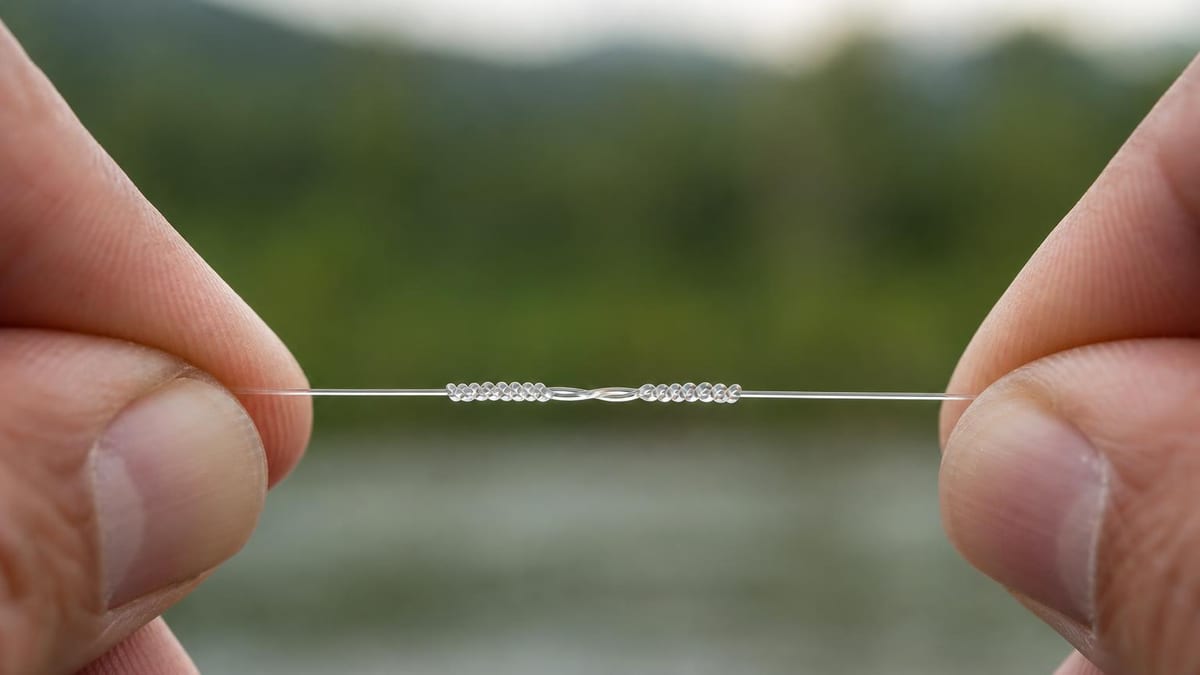
To tie a blood knot, overlap the two line ends, wrap one tag five times around the other line and bring it back through the centre opening, then wrap the second tag five times the opposite way and pass it through the same opening from the other side. Moisten and pull both standing lines — the wraps collapse into a slim, symmetrical barrel. It is the classic join for two lines of similar diameter.
Key takeaways
- Five steps: overlap, five wraps one way, five wraps back the other way, tags meet in the centre opening, seat.
- Built for lines of similar diameter — it is the traditional knot for joining leader sections.
- The two tags must exit the centre opening in opposite directions — same-side tags are the classic tying error.
- Its slim, symmetrical barrel passes through guides more cleanly than bulkier joins.
- Built for similar diameters — when the two lines differ sharply, tie a surgeon's knot or the improved blood variant instead.
- Moisten and pull both standing lines together — the two wrap sets must collapse as one.
How to tie it, step by step
- Type Line-to-line knot
- Difficulty Moderate
- Best for Joining similar-diameter lines; building leaders
-
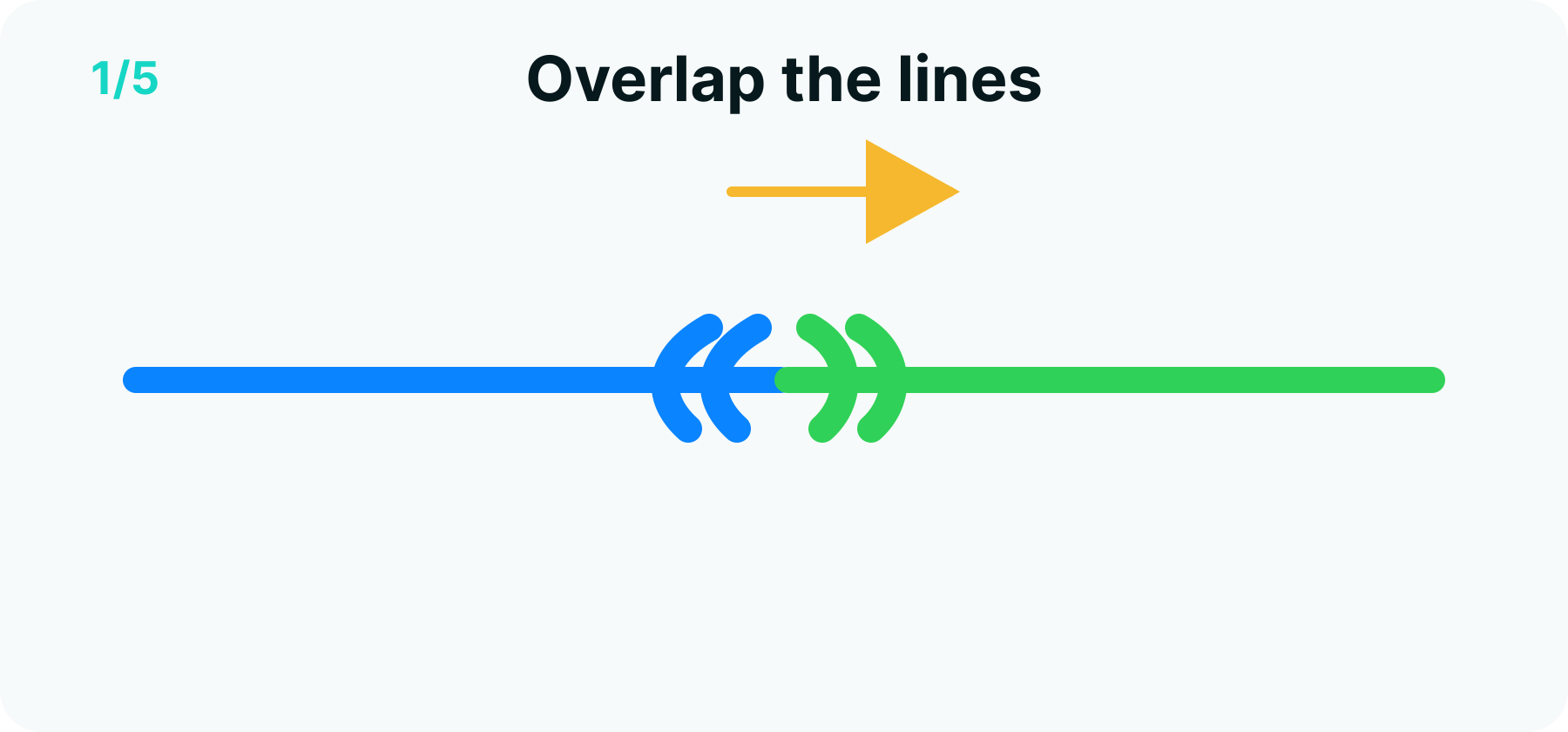 Step 1 of 5
Overlap the lines
Lay the two line ends alongside each other, overlapping by six to eight inches, tags pointing opposite directions. Pinch the midpoint where the knot will form.
-
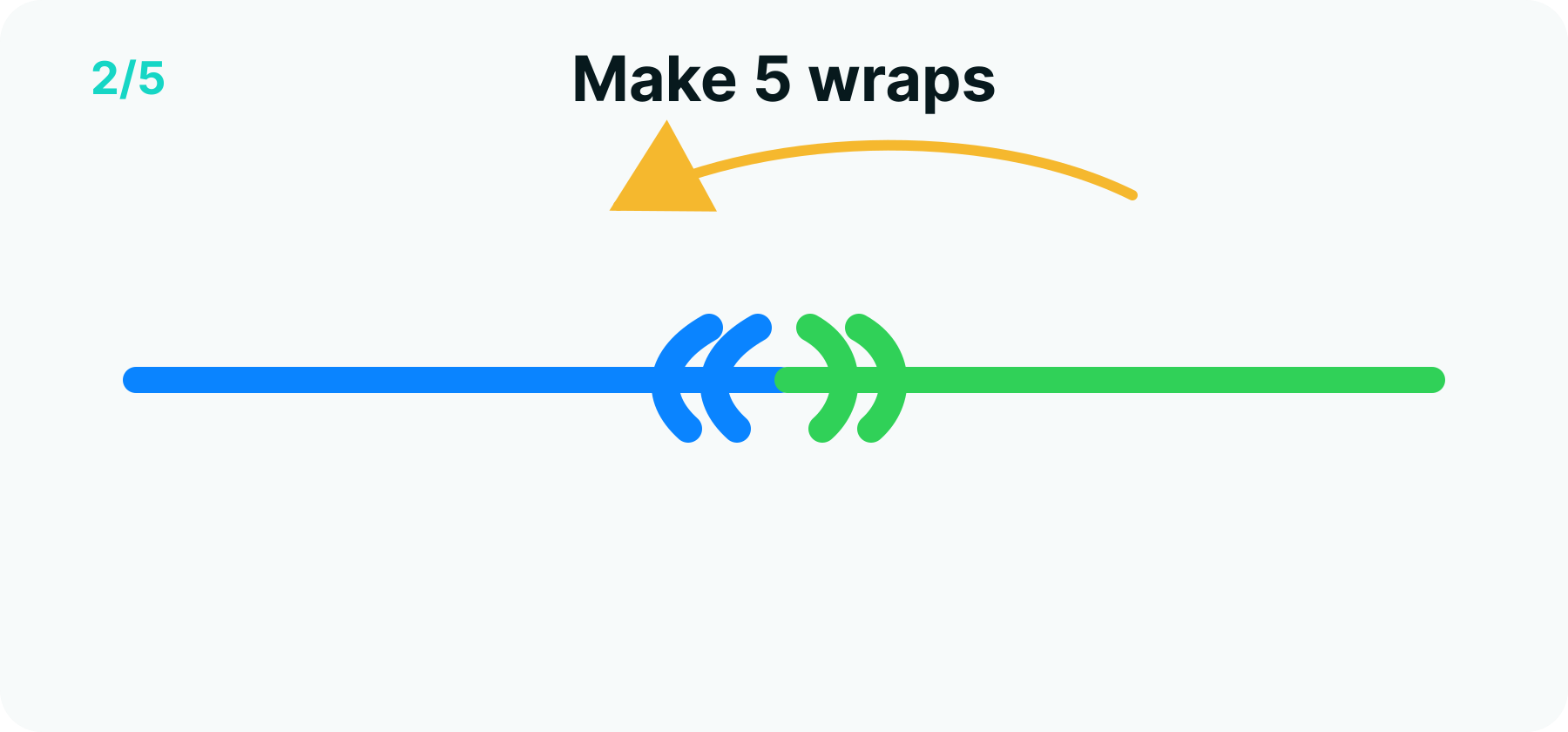 Step 2 of 5
Make 5 wraps
Wrap the first tag five times around the other line, working away from the pinch, then bring it back and lay it through the opening at the centre where the two lines cross.
-
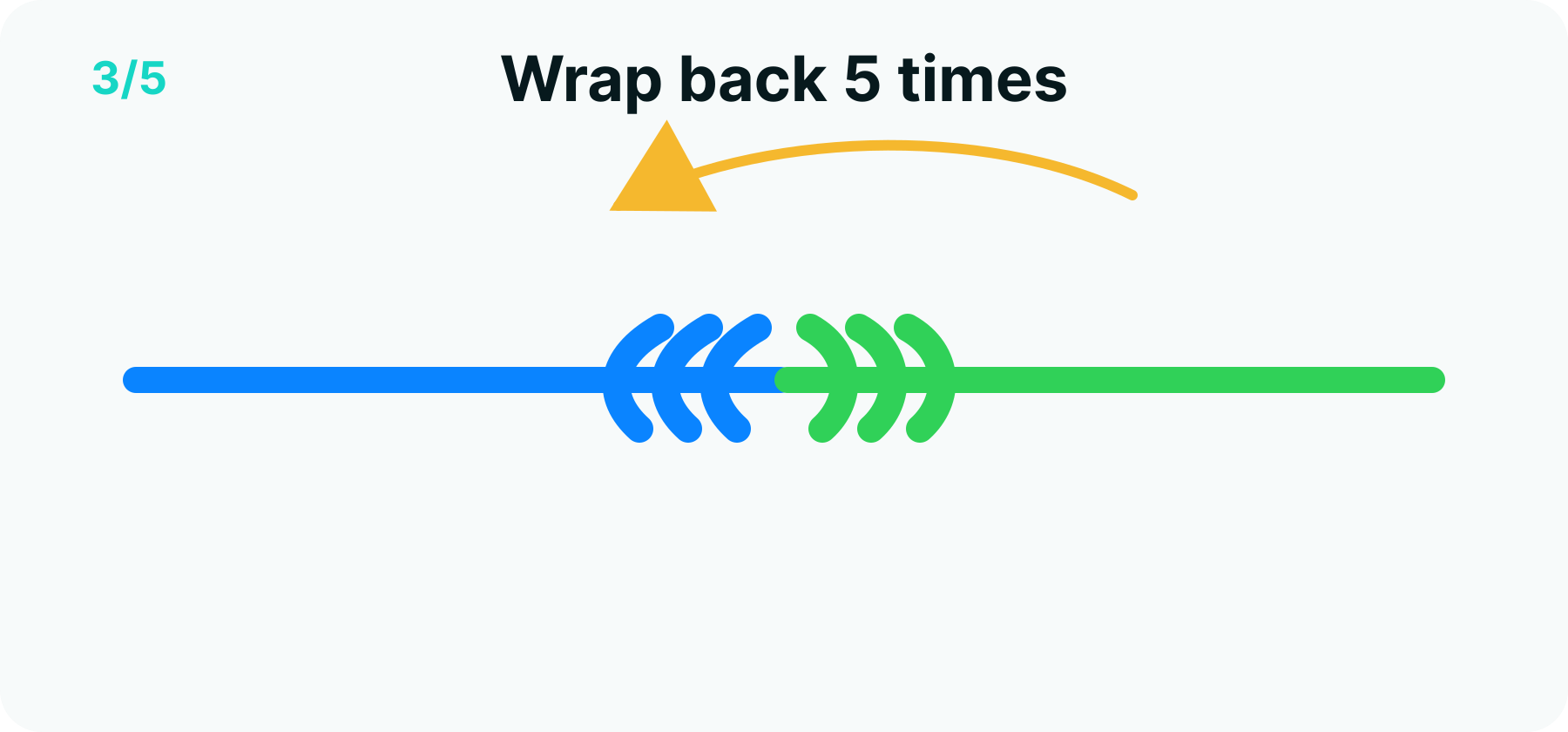 Step 3 of 5
Wrap back 5 times
Repeat in mirror image: wrap the second tag five times around the first line, the opposite way, and bring it back to the same centre opening.
-
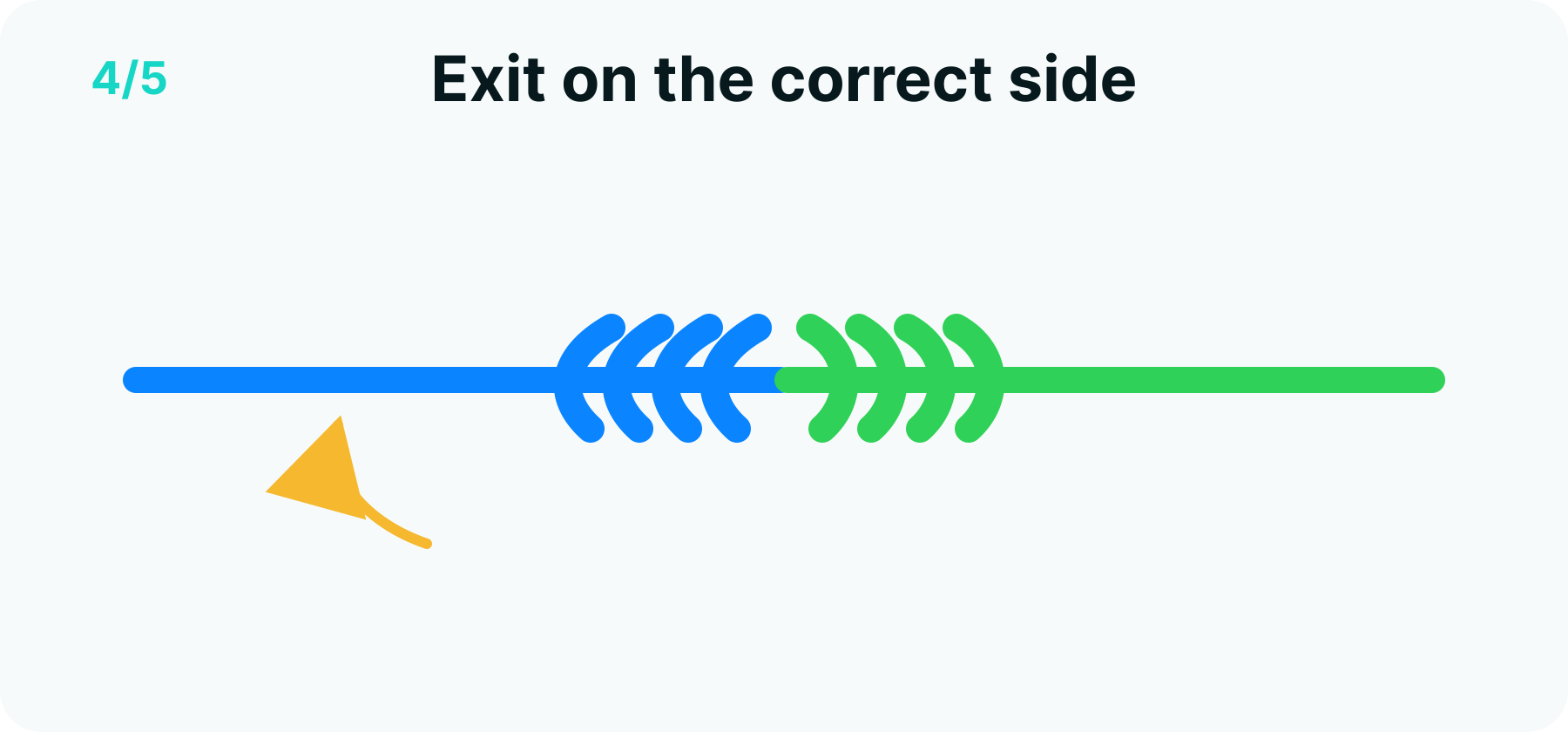 Step 4 of 5
Exit on the correct side
Pass the second tag through the centre opening in the opposite direction to the first — one tag up, one tag down. This opposition is the knot's lock; same-side tags will slip.
-
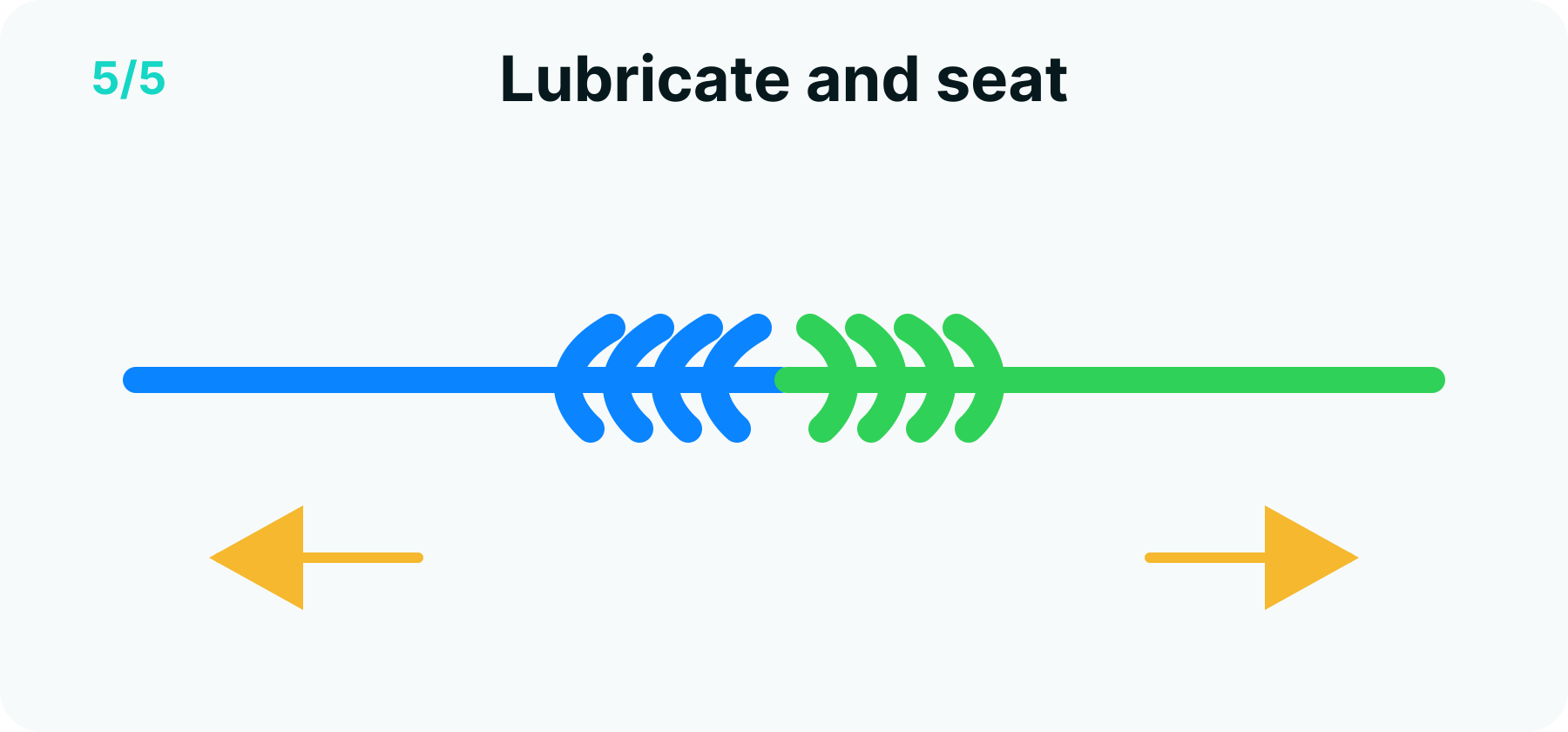 Step 5 of 5
Lubricate and seat
Moisten thoroughly, then pull both standing lines apart in one steady motion so both wrap sets collapse together into a slim barrel. Snug, inspect the symmetry, trim the tags.
Same steps, animated and in your pocket: the knot guide inside the Fishing Club AI app walks you through every tie hands-free. Get the app.
The leader-builder’s knot
Some knots are general-purpose tools; the blood knot is a precision instrument with one specialty it has owned for a century: joining two lines of similar diameter into a connection so slim and symmetrical it almost disappears. Fly anglers know it as the knot that builds tapered leaders — butt section to mid section to tippet, each step joined by a small, tidy barrel — and that remains the purest expression of what it does well. Any time two comparable lines must become one, from leader repair to adding tippet, this is the traditional answer.
Its structure explains the specialty. Each line wraps five times around the other, and the two wrap sets collapse toward each other into a single interlocked barrel. When the diameters match, the wraps bed into each other evenly and the load shares across all ten turns. When the diameters differ sharply, the thin line cannot grip the thick one’s surface and the geometry suffers — which is why agency guides describe the standard blood knot as a join for lines “of about the same diameter,” and why sharper mismatches go to the surgeon’s knot or to the improved blood variant, which doubles the thinner line before tying.
The detail that decides everything
Diagrams of the blood knot all look alike at a glance, and that glance hides the single detail that separates a locked knot from a slow-motion failure: the two tag ends must pass through the centre opening in opposite directions. One enters from above, one from below. That opposition is the mechanism — each tag pins the other’s wraps when the barrel closes.
Send both tags through the same way — the most natural mistake in the world, since the second tag simply follows the first — and you produce a convincing counterfeit. It looks right, it snugs down, and it slides apart under a real fish, because nothing inside it is actually locked. Step four of our diagrams exists for exactly this moment. Check it every time: before seating, the two tags should point away from each other through the centre, like arms signalling in opposite directions.
The seat has its own discipline. Moisten the whole structure, then pull both standing lines simultaneously in one steady motion. The two wrap sets must collapse together, meeting in the middle as one barrel; tighten one side first and it jams before the other can close, leaving a lopsided knot that never fully seats. Done right, the result is distinctive — a smooth, symmetrical little barrel with the tags emerging at its centre, ready to be trimmed close.
Blood knot and surgeon’s: a two-knot system
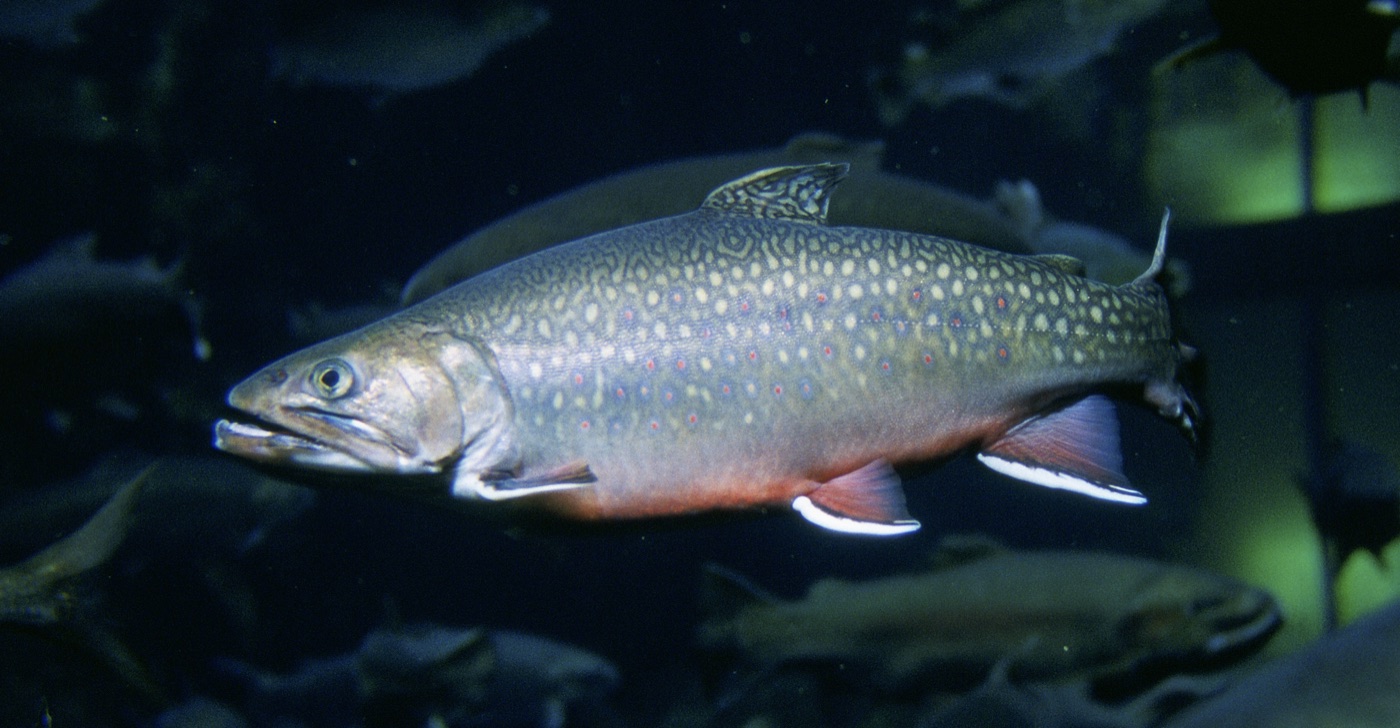
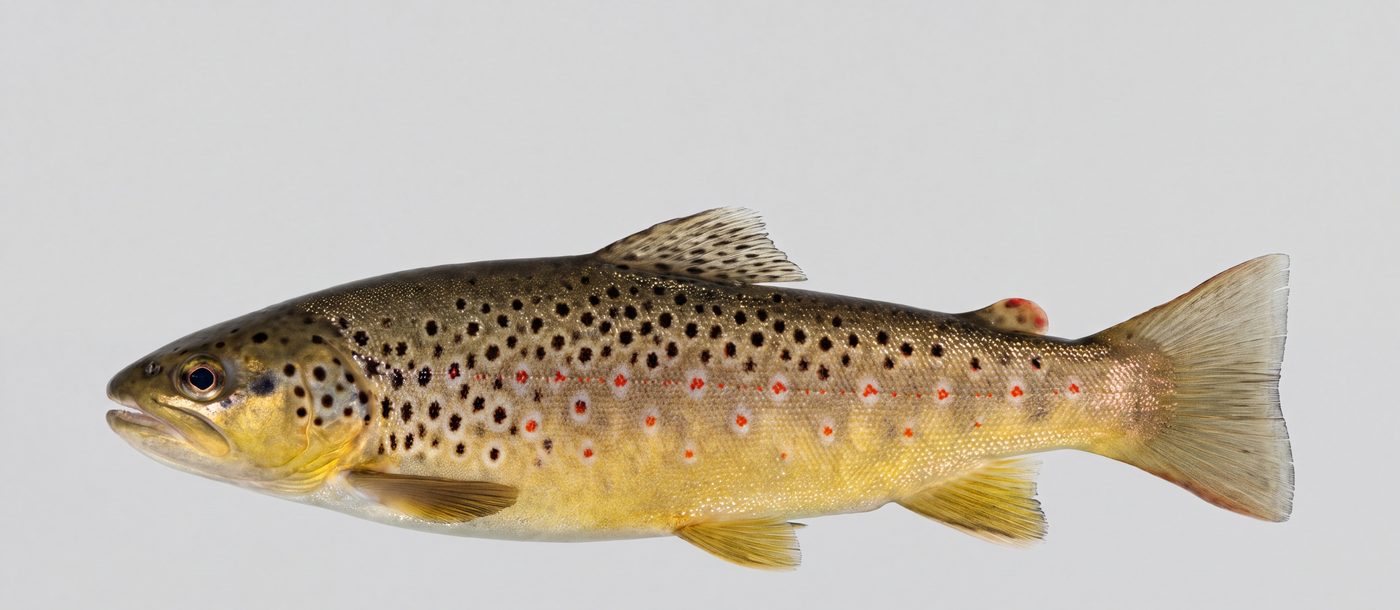
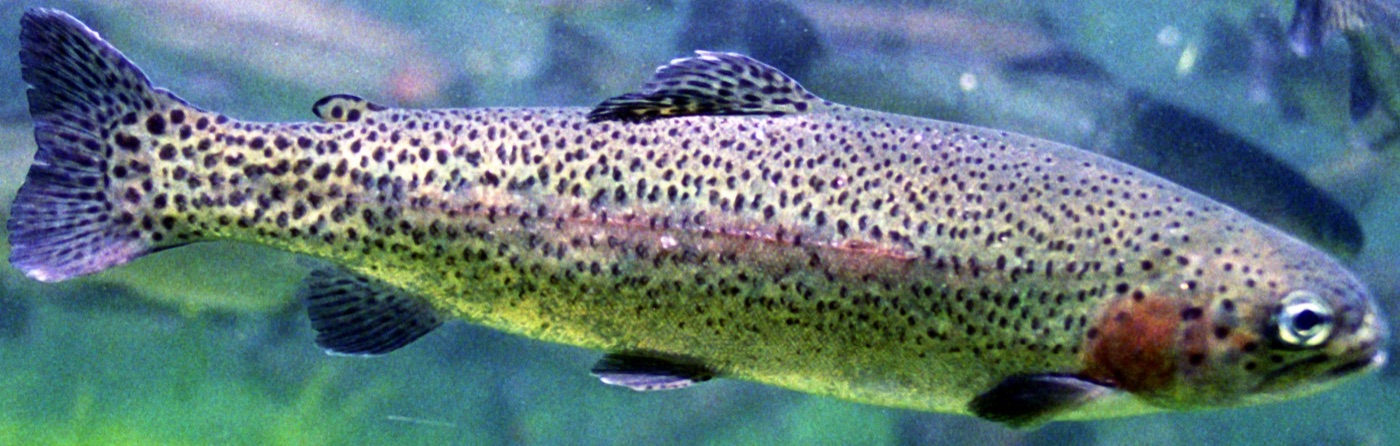
Fly anglers — the blood knot’s core constituency, tying it for brown trout, rainbows and brookies — mostly carry it as half of a pair. The blood knot is the bench knot: tied at home in good light, building the leader’s stepped sections into a clean taper that turns over beautifully on the cast and slides through guides without a tick. The surgeon’s is the water knot: faster, more tolerant of cold fingers and mismatched diameters, the one you tie standing in the river when the light is going.
That division of labour is worth copying even outside fly fishing. Line repair on a spinning reel, joining two spools’ worth of mono, adding a mono top-shot: similar diameters, time available — blood knot; mismatch or hurry — surgeon’s. Braid into the picture changes the answer entirely: slick, thin braid to a leader is the double uni or FG knot’s territory, as our braid-to-leader guide lays out.
Reading the finished barrel
Quality control takes five seconds. The barrel: slim, even, symmetrical — both halves the same length, no bulge on one side. The wraps: parallel spirals with no crossovers standing proud. The tags: exiting opposite ways at the centre, trimmed with a whisker of margin. The line: running dead straight into and out of the knot, no kink at either shoulder. Anything else, cut it and retie — a blood knot costs thirty seconds at the bench, and its failures always trace back to a check skipped here.
It rewards practice more than most knots on our knots page, because the wrap-return-oppose sequence only becomes reliable once the hands stop consulting the eyes. The animated version in the Fishing Club AI app’s knot guide exists for the learning phase — every wrap and both tag directions, replayable until the counterfeit version becomes impossible to tie by accident.
Frequently asked questions
What is a blood knot used for?
Joining two lines of similar diameter into one continuous, slim connection. Its natural home is leader building — connecting sections of monofilament or fluorocarbon in stepped-down diameters, which is how tapered fly leaders have long been assembled. It serves equally well repairing a snapped line or adding fresh tippet. What it is not built for is joining very different diameters — that job belongs to the surgeon's knot, the improved blood variant, or, for braid to leader, the double uni or FG.
How many wraps does a blood knot need?
Five per side is the standard our diagrams show, and symmetry matters more than the number. Both sides should carry the same count so the finished barrel loads evenly. With unusually heavy line, four turns seat more cleanly; with very fine tippet, some tiers go to six or seven for extra bite. If one side of the seated barrel looks longer or lumpier than the other, the counts drifted — retie.
Why does my blood knot pull apart?
Check where the tags exited. The knot's lock depends on the two tag ends passing through the centre opening in opposite directions — one from above, one from below. Send them through the same way and the knot looks nearly identical but has no lock; it slides apart under load. The other usual causes are the familiar ones: seated dry, wraps crossed, or the two sides tightened one at a time instead of together. Moisten, then pull both standing lines simultaneously.
Blood knot or surgeon's knot — which should I use?
By diameter gap. Similar diameters — leader sections, tippet to tippet — favour the blood knot: it is slimmer, more symmetrical, and runs through guides more quietly. Clearly different diameters favour the surgeon's knot, whose doubled-overhand structure grips unequal lines far more reliably, and which also ties much faster in cold or failing light. Many fly anglers carry exactly that rule: blood knot at the bench, surgeon's on the water.
What is the improved blood knot?
A variant built for mismatched lines. Take Me Fishing describes it as the version used when connecting lines of different diameter — such as attaching tippet to leader — with the key change that the smaller-diameter line is doubled before tying, giving the thin side twice the surface to grip with. If your two lines are similar, tie the standard version above; if they differ considerably and you still want a blood-family join, double the thin line and tie the improved form — or reach for the surgeon's knot, which handles mismatch by design.
Sources
- Knots Every Angler Should Know — Iowa Department of Natural Resources. Accessed August 12, 2026.
- Fish Texas: knot tying for the beginning angler — Texas Parks & Wildlife Department. Accessed August 12, 2026.
- Improved Blood Knot — Take Me Fishing (Recreational Boating & Fishing Foundation). Accessed August 12, 2026.
- Saltwater Fishing Knots — Take Me Fishing (Recreational Boating & Fishing Foundation). Accessed August 12, 2026.
- Common Fishing Knots, I FISH NY — New York Sea Grant, Stony Brook University. Accessed August 12, 2026.
How we choose sources: sources policy.
More in this series
Know when it's worth going.
Fishing Club AI turns live weather, pressure and moon data into a simple bite forecast for your spot — so the skills you practise get used on the right day.
Get the App