Brown Trout
Salmo trutta
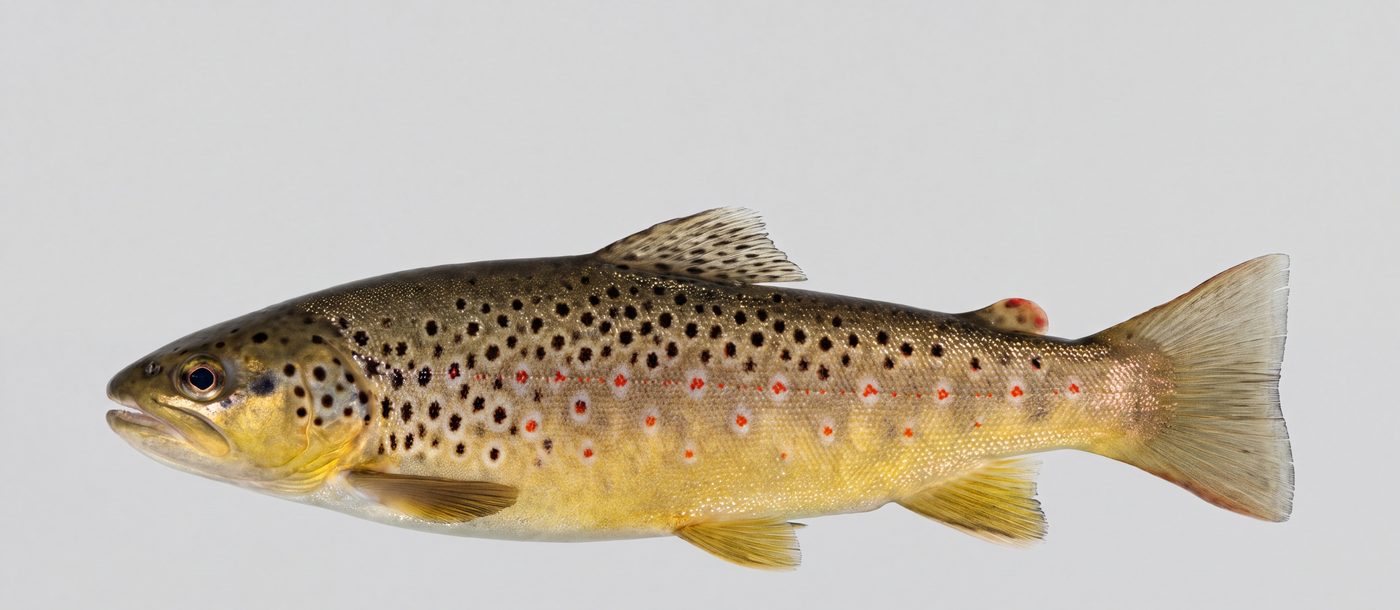
Brown trout is a European trout introduced across North America, identified by large dark spots ringed with pale halos, often mixed with red or yellow spots, and a squared tail carrying few or no spots.
MoreFull Species Details
- Species Name
- Salmo trutta
- Family
- Salmonidae
- Order
- Salmoniformes
- Also Known As
- German brown trout, Loch Leven trout, Von Behr trout, Brownie
Brown Trout (Salmo trutta) Fish Description
Brown trout is a European trout introduced across North America, identified by large dark spots ringed with pale halos, often mixed with red or yellow spots, and a squared tail carrying few or no spots.
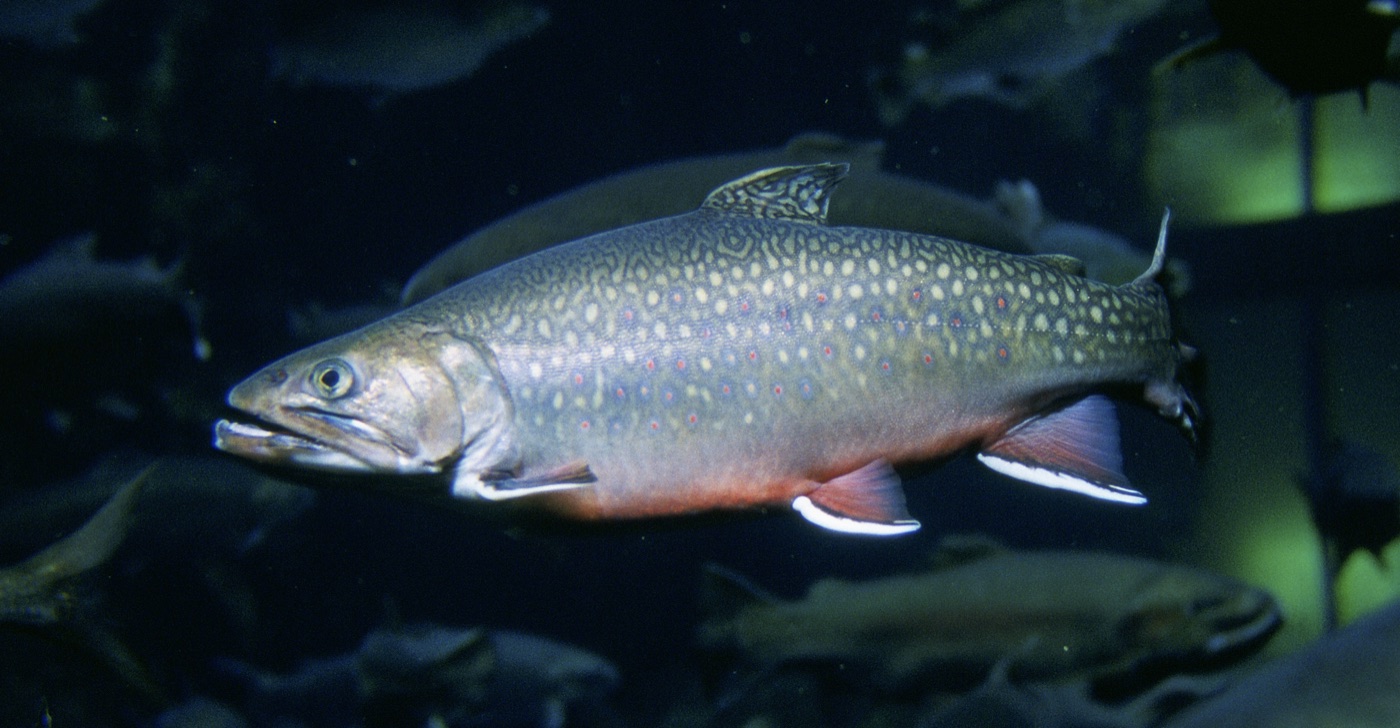
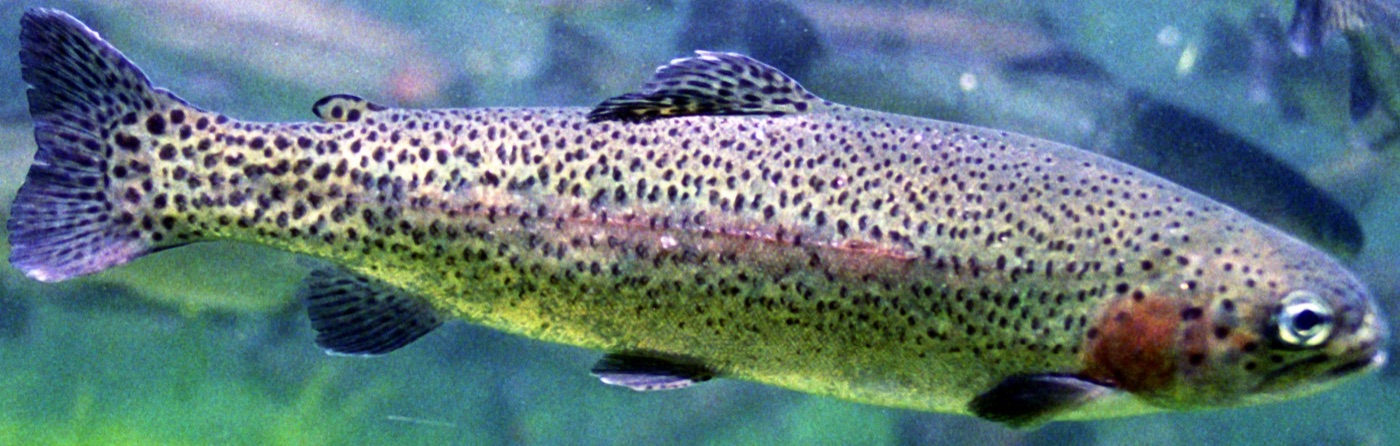
The body is golden-brown to olive, paler below, marked with large dark spots that Pennsylvania's Fish and Boat Commission describes as carrying pale halos — and sometimes with red or yellow spots as well. Colorado's parks and wildlife agency describes red spots with light halos dispersed along the side. The tail is the confirming check: usually few or no spots, and squared rather than deeply forked. That separates a brown from a rainbow at a glance, since a rainbow carries many small black spots and a heavily spotted tail. Brook trout also show red spots, but theirs sit in bluish halos alongside white-edged fins.
Brown trout are not native to North America. The US Fish Commission first imported them from Germany in 1883 and stocked them in Michigan's Pere Marquette River, and they now occupy cold water across much of the continent. The US Geological Survey records that natural reproduction is low or nonexistent in most states, so a great many brown trout fisheries are maintained by stocking rather than by wild spawning. The introduction had consequences: the same source notes that adult brown trout displaced adult native brook trout from the best habitats in a Michigan stream. They are also famously difficult — wary, easily spooked, and most active when the light is low.
Interesting Facts About Brown Trout
- They were first imported from Germany in 1883 and stocked in Michigan's Pere Marquette River.
- Their native range is Europe, northern Africa and western Asia.
- Natural reproduction is low or nonexistent in most US states, so many fisheries depend on stocking.
- In a Michigan stream, adult brown trout displaced adult native brook trout from the best habitats.
- Large dark spots with pale halos are the key mark; the tail usually has few or no spots.
Show more facts
- A rainbow trout is the opposite — many small black spots and a heavily spotted tail.
- Brook trout also carry red spots, but theirs have bluish halos and the fins are white-edged.
- Wisconsin's agency describes them as wary and often easy to spook.
- A 2018 telemetry study found movement lowest during the day, peaking at twilight and at night.
- The same study found the largest individuals moved the most.
- They spawn in autumn — one field study recorded spawning from 11 October to 23 November.
- In that study, juveniles began emerging from the gravel on 28 February the following spring.
Average Speed & Size
Size depends almost entirely on the water. Missouri's Department of Conservation gives stream fish a total length of 8 to 15 inches, while Wisconsin's figures for Lake Michigan brown trout run 16 to 30 inches and 2 to 16 pounds — the same species living two different lives. Missouri puts the maximum at around 37 inches and 26 pounds. Records go higher again: Wisconsin's state record is 32 pounds 8 ounces from Lake Michigan in 1978, and Arkansas records a 4-pound line class world record of 40 pounds 4 ounces from the Little Red River in 1992. A hooked brown fights deep and stubbornly rather than jumping, and a large one will use every undercut and log it knows.
Where to Find Them
Brown trout hold tight to cover, more so than most trout. Missouri's agency finds them most often around dense cover — submerged logs and undercut banks — or in deep water below riffles, which is a useful three-part description of where to cast. Wisconsin gives a preferred temperature range of 65 to 75 °F, while Missouri stocks waters that generally remain below 70 °F and Nevada's environmental agency cites laboratory optimum growth between about 13 and 19 °C. Spawning is in autumn, unlike the spring-spawning rainbow: one field study recorded it from 11 October to 23 November, with fry emerging the following February. Light matters as much as location — the fish move least in daylight.
Brown Trout Fishing Tips
Brown trout are the wariest of the common trout, and almost everything about fishing for them follows from that. Approach, light and cover matter more than fly or lure selection.
Equipment
Light tackle and long, fine leaders are the standard because these fish inspect what they eat. A four- to six-weight fly outfit covers most stream fishing, and spinning anglers use light line for the same reason — visible line costs more takes here than in most trout fishing.
Chumming
Chumming is prohibited in most trout waters and is beside the point for a species this cautious. Concealment does the work instead: stay low, keep off the skyline, and approach from downstream so you are behind the fish rather than in front of it.
Bait
Where bait is permitted, worms and small live baits fished naturally through cover work well. For lures and flies, aim to imitate what the fish is already eating and present it drifting with the current rather than dragging across it.
Patience
Fish the low light. A telemetry study found brown trout moved least during the day, with peaks at twilight and at night, and that the largest fish moved the most — which is why dawn, dusk and after dark are worth more than the middle of a bright day. Work cover carefully and cast to a specific log or undercut rather than to open water.
Conditions that change the bite
- What Barometric Pressure Is Best for Fishing? No research supports a single best barometric pressure for fishing. What pressure really does, how big a weather swing is, and what to watch instead.
- Best Time of Day to Fish: What Evidence Shows Dawn and dusk are measurably better — and the edge is smaller than the folklore says. The 13-year dataset, the light mechanism, and what matters more.
- Dissolved Oxygen: The Condition Anglers Can't See Fish live or die by oxygen you can't see. How temperature, depth, dawn and turnover move it, which species need more, and how to fish around the invisible map.
Guides for fishing this species
- Trout Fishing for Beginners: Water Temperature First A thermometer teaches more than a tackle box. Where trout can survive, when to stop fishing for them, and the light rigs that work on stocked water.
- Trout vs Salmon: Same Family, Very Different Lives Trout, salmon and char all share one family — the real split is life history. Why Pacific salmon die after spawning, steelhead don't, and where char fit in.
- Dry Fly vs Nymph: Which One, and When Dry flies copy adult insects on top; nymphs copy the stage that lives underwater for months. The biology behind the choice, and the rule agencies give.
- Fly Line, Leader and Tippet: The Setup Explained Backing, fly line, leader, tippet — what each section does, how line weights match your rod, and the knots that join them. The fly setup, front to back.
- How to Fly Cast: The Basic Overhead Cast The four-part overhead cast taught by state angler education: pick up, back cast, forward cast, lay down — plus the pause that makes it work.
- How to Tie a Blood Knot The blood knot in five diagrammed steps — the classic join for two similar lines, the fly angler's leader knot, and the detail most tiers miss.
Related Species
Know when they'll bite.
BiteScore forecasts when brown trout will feed at your spot — from live weather, pressure, and moon data.
Get the App