How to Tie a Surgeon's Knot
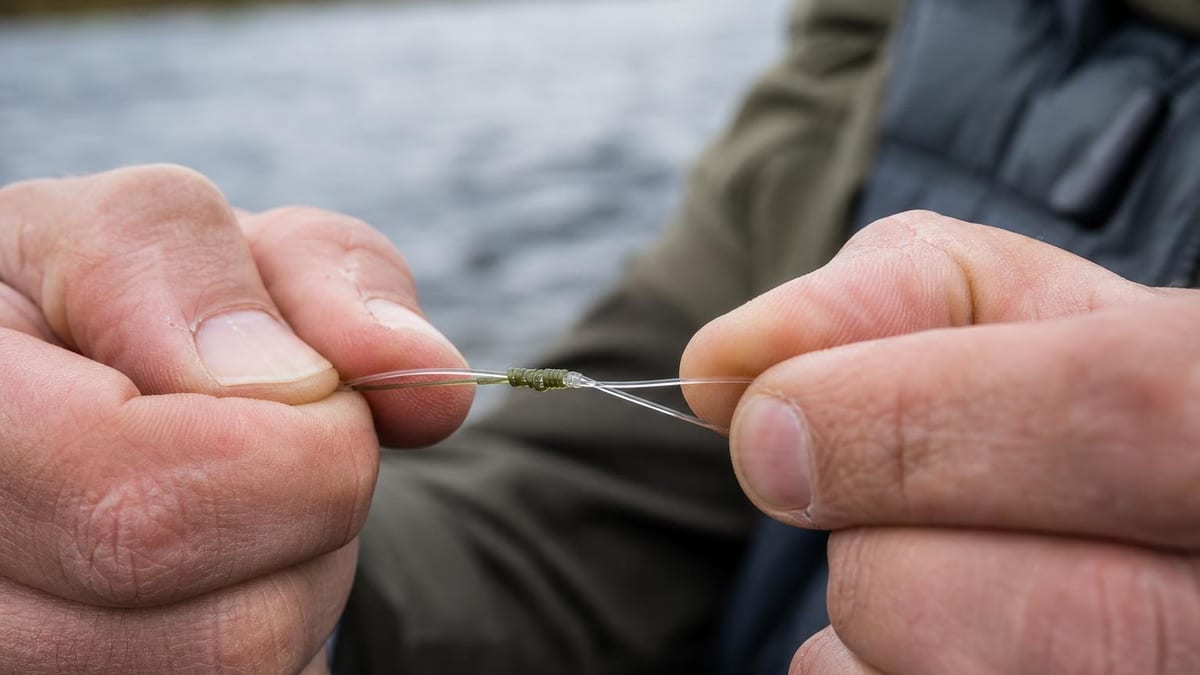
To tie a surgeon's knot, overlap the two lines by several inches, tie a loose overhand knot with both lines together, then pass the same tag and overlapped section through the loop a second time before moistening and drawing all four ends tight. It is the fastest dependable line join in fishing — and the standard choice when the two lines differ in diameter.
Key takeaways
- Five steps: overlap, loose overhand with both lines, pass through twice, seat all four ends, trim.
- It is simply a doubled overhand knot tied with two lines at once — nothing to memorise, everything to keep loose until the end.
- The join of choice for lines of different diameters, where the blood knot struggles.
- Fast enough for cold hands and bad light — the classic on-the-water leader repair.
- Seat it by pulling all four ends — both standing lines and both tags — or the wraps close unevenly.
- Its small offset bulk is the trade-off: slightly less tidy than a blood knot, far more forgiving.
How to tie it, step by step
- Type Line-to-line knot
- Difficulty Easy
- Best for Fast joins; lines of different diameters; tippet to leader
-
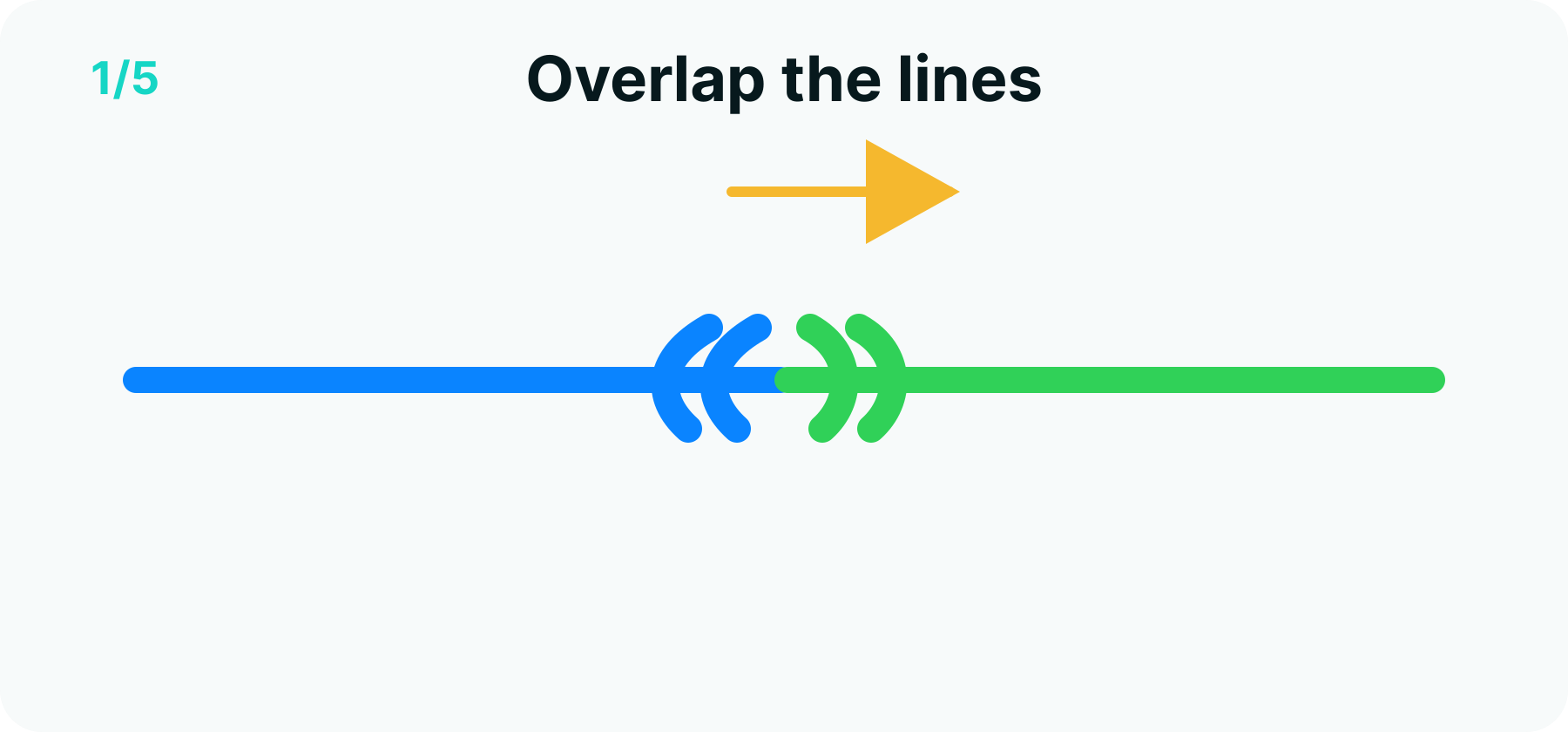 Step 1 of 5
Overlap the lines
Lay the two lines alongside each other, overlapping by four to six inches, tags pointing in opposite directions. Handle the pair as if it were one thick line from here on.
-
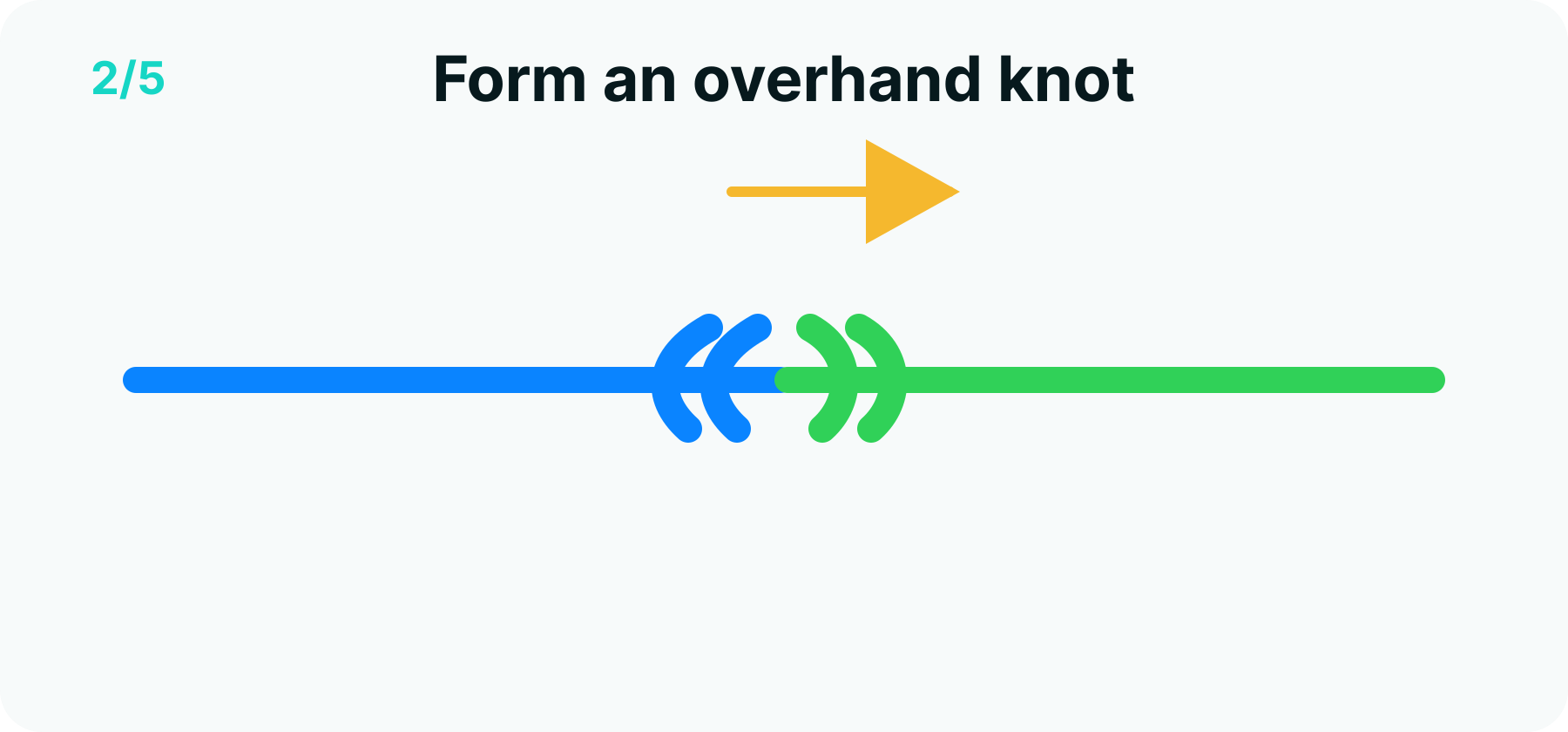 Step 2 of 5
Form an overhand knot
With the overlapped pair, tie a single loose overhand knot — and keep it loose. The loop must stay wide open for the passes to come.
-
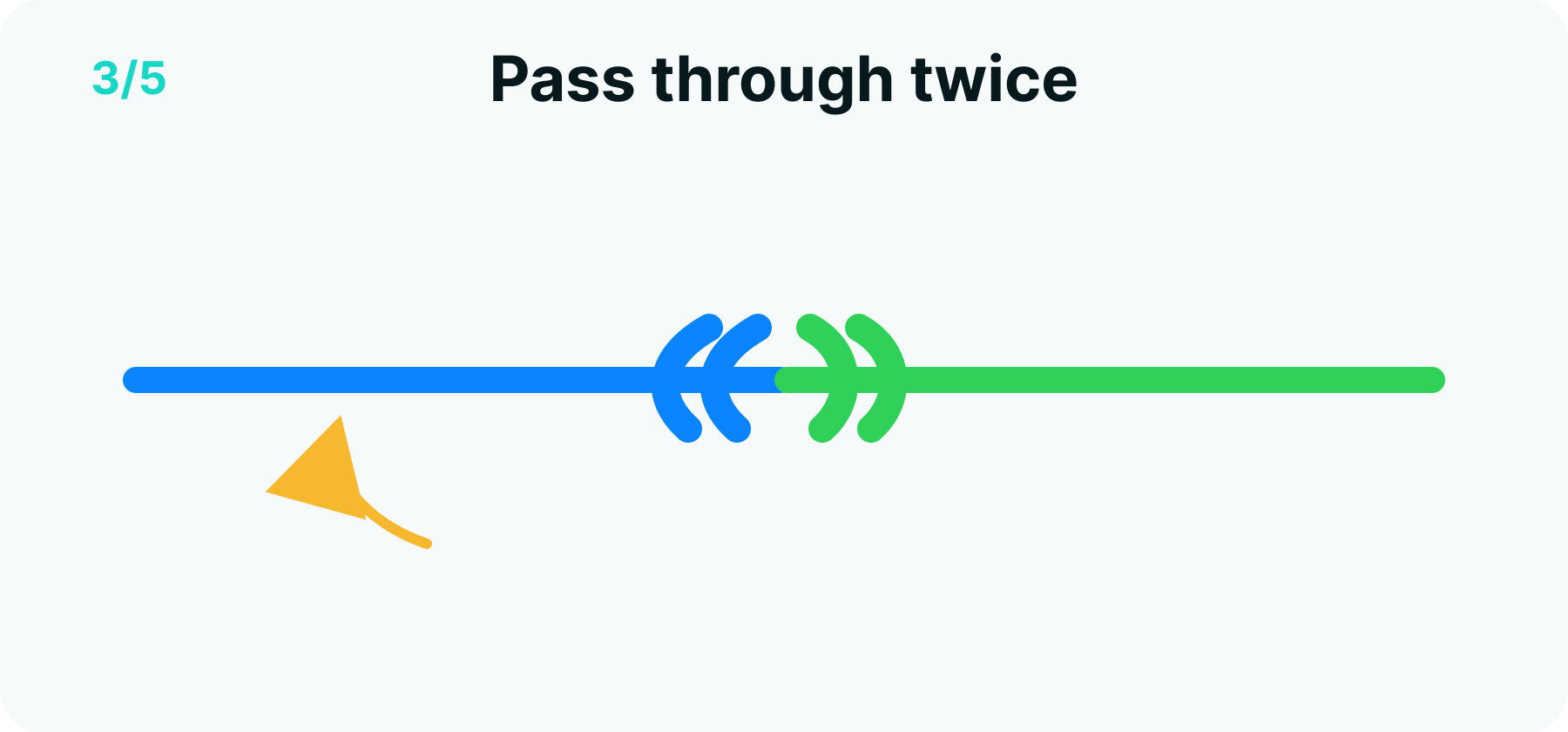 Step 3 of 5
Pass through twice
Pass the tag end and its overlapped section through the loop a second time — the same motion again. For a triple surgeon's, add one more pass; for the standard knot, two is complete.
-
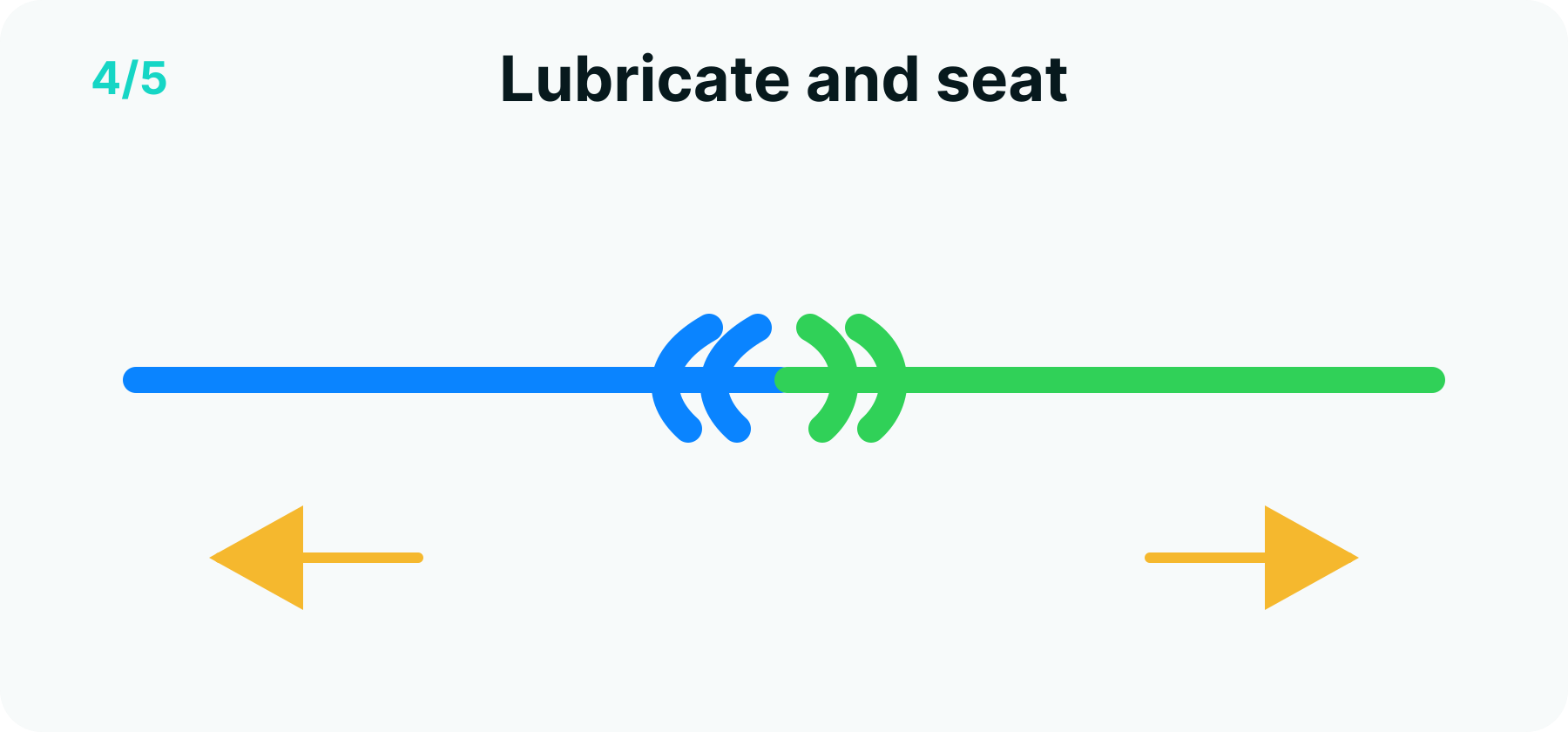 Step 4 of 5
Lubricate and seat
Moisten, then pull all four ends — both standing lines and both tags — steadily apart so the wraps close together into one snug bundle.
-
 Step 5 of 5
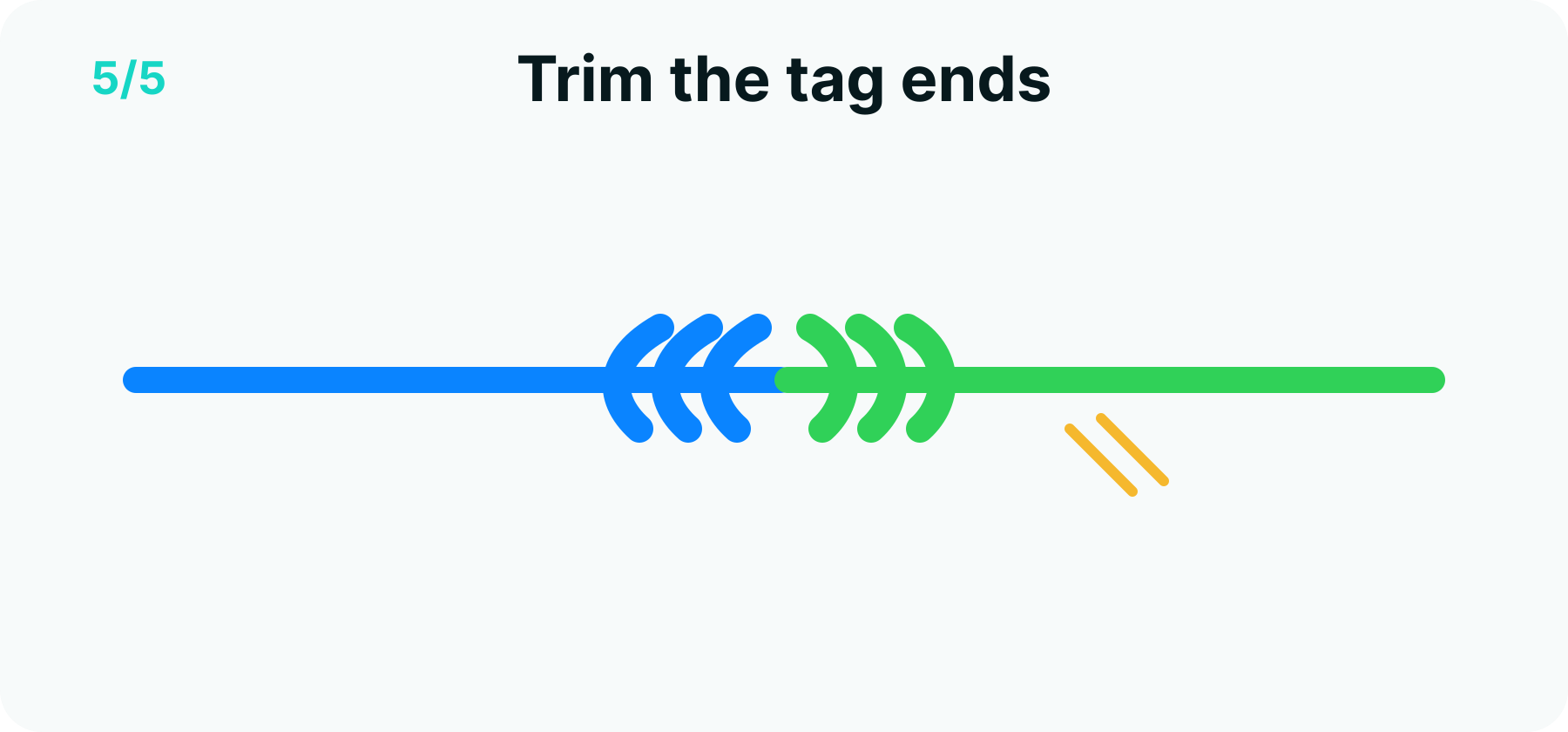
Trim the tag ends
Check the wraps closed evenly and the lines exit straight, then trim both tags with a small margin. The finished knot is compact, slightly offset, and done in under a minute.
Same steps, animated and in your pocket: the knot guide inside the Fishing Club AI app walks you through every tie hands-free. Get the app.
The join that respects your circumstances
Knot lists tend to rank ties by strength or elegance. On the water, a third axis matters as much as either: how reliably a knot forms when your fingers are cold, the light is going, and the fish are moving now. On that axis the surgeon’s knot has no rival among line joins. It is a doubled overhand knot tied with two lines at once — a motion every human hand already knows — and it produces a dependable connection in under a minute, in conditions that would butcher an FG weave or tangle a blood knot.
Speed is only half its case. The other half is tolerance for mismatched diameters. Because both lines pass through every wrap together as a single bundle, the knot never asks a thin line to grip a thick one’s surface — the demand that unravels wrapped joins when diameters diverge. Thick leader and fine tippet ride the same tunnel and get pinned by the same coils. That is why “add tippet with a surgeon’s” is among the oldest standing advice in fly fishing, and why the knot serves just as well when a walleye angler’s leader meets a heavier shock section.
Keep it loose, then close it all at once
The tie itself barely needs teaching — overlap, overhand, second pass — so the craft concentrates in two disciplines the diagrams above make explicit.
Discipline one: looseness until the end. The overhand loop must stay wide open through both passes. The natural urge to snug things as you go is the enemy here; a half-closed loop turns the second pass into a fumble and twists the bundle inside the knot. Form it loose, pass through loose, and only then think about tightening.
Discipline two: four-end seating. The surgeon’s closes correctly only when all four ends — both standing lines and both tags — are drawn apart together, two in each hand. Moisten first, then one steady spreading pull. Seat it from the standing lines alone and the tags bleed slack into the coils; the knot appears finished, then quietly re-seats itself under the first fish, smaller and weaker than you tied it. The four-end pull is what locks the bundle as a single unit, and it is the habit that makes this knot as dependable as its reputation.
The standard knot takes two passes. A third — the triple surgeon’s — adds grip for very fine or very slick materials at a cost in bulk; beyond that the knot gains nothing. Its finished form is honest about its nature: compact, slightly offset rather than perfectly symmetrical, built for service rather than beauty. If you want the tidier barrel and have matched lines and good light, that is the blood knot’s territory, and choosing between them is exactly the bench-knot-versus-water-knot pairing described in that guide.
One motion, a family of uses
Learn this tie once and you inherit relatives for free. The same doubled overhand folded in a single line becomes the surgeon’s loop — a fixed end-loop for loop-to-loop rigging. The dropper loop covers the mid-line branch. And where braid enters the system, hand the job to the double uni — slick braid is the one material the surgeon’s bundle grips least happily, and there is no need to force it when better tools sit one page away in our knots collection.
A note on strength claims, because surgeon’s-knot discussions attract percentages: we publish none. Independent controlled testing is scarce, and numbers detached from their test conditions mislead more than they inform — our editorial policy treats them accordingly. The structural facts stand on their own: every pass shares load across both lines, mismatch does not weaken the mechanism, and a properly seated surgeon’s fails far less often than the circumstances it gets tied in would predict.
The last word is the practical one. This is the knot to drill, precisely because its moment is always inconvenient — practise it until your hands can close it in the dark, and the animated walkthrough in the Fishing Club AI app’s knot guide is there for the refresher when the river is louder than your memory.
Frequently asked questions
What is a surgeon's knot used for in fishing?
Joining two lines quickly and dependably — above all when their diameters differ. Adding fresh tippet to a thicker leader is its signature job in fly fishing; repairing a break, extending a leader, or attaching a heavier shock section are the same move elsewhere. Where the blood knot wants matched lines and patience, the surgeon's accepts mismatch and hurry, which is why it is the join most anglers actually tie standing in the water.
How many times do you pass the line through a surgeon's knot?
Twice is the standard surgeon's knot — a double overhand — and what our diagrams show. A third pass makes the triple surgeon's, which some anglers prefer with very slick or very fine line for extra security at the cost of extra bulk. Beyond three passes the returns vanish and the seat gets ugly. For most line combinations, the double version tied cleanly is the answer.
Why does a surgeon's knot work with different line diameters?
Because both lines travel through the knot together as one bundle. The overhand wraps trap the pair against each other along their whole path, so grip does not depend on a thin line biting into a thick one's surface — the structural weakness that limits wrapped joins like the blood knot when diameters diverge. The thick and thin lines simply share the same tunnel, and tightening pins them both.
How do you tighten a surgeon's knot correctly?
All four ends, together. Moisten the knot, then take both standing lines and both tags — two in each hand — and draw steadily until the wraps seat as one unit. Pulling only the standing lines lets the tags feed slack into the knot and the coils close unevenly; the knot then reseats itself, weaker, under the first load. Four-end seating is the single habit that separates reliable surgeon's knots from surprising ones.
Is the surgeon's knot the same as the surgeon's loop?
Same motion, different geometry. Tie the identical double overhand in a single folded line — rather than two overlapped lines — and the result is a surgeon's loop: a fixed loop at the line's end used for loop-to-loop connections. Knowing one gives you the other free, which is part of this knot family's charm: one simple motion, two of fishing's most useful structures.
Sources
- Double Surgeon's Knot — Take Me Fishing (Recreational Boating & Fishing Foundation). Accessed August 12, 2026.
- Easy Fishing Knots — Take Me Fishing (Recreational Boating & Fishing Foundation). Accessed August 12, 2026.
- Fish Texas: knot tying for the beginning angler (Double Surgeon's Loop) — Texas Parks & Wildlife Department. Accessed August 12, 2026.
- Knot Tying Lesson Plan, I FISH NY Program — New York State Department of Environmental Conservation. Accessed August 12, 2026.
- Common Fishing Knots, I FISH NY — New York Sea Grant, Stony Brook University. Accessed August 12, 2026.
How we choose sources: sources policy.
More in this series
Know when it's worth going.
Fishing Club AI turns live weather, pressure and moon data into a simple bite forecast for your spot — so the skills you practise get used on the right day.
Get the App