How to Tie an FG Knot
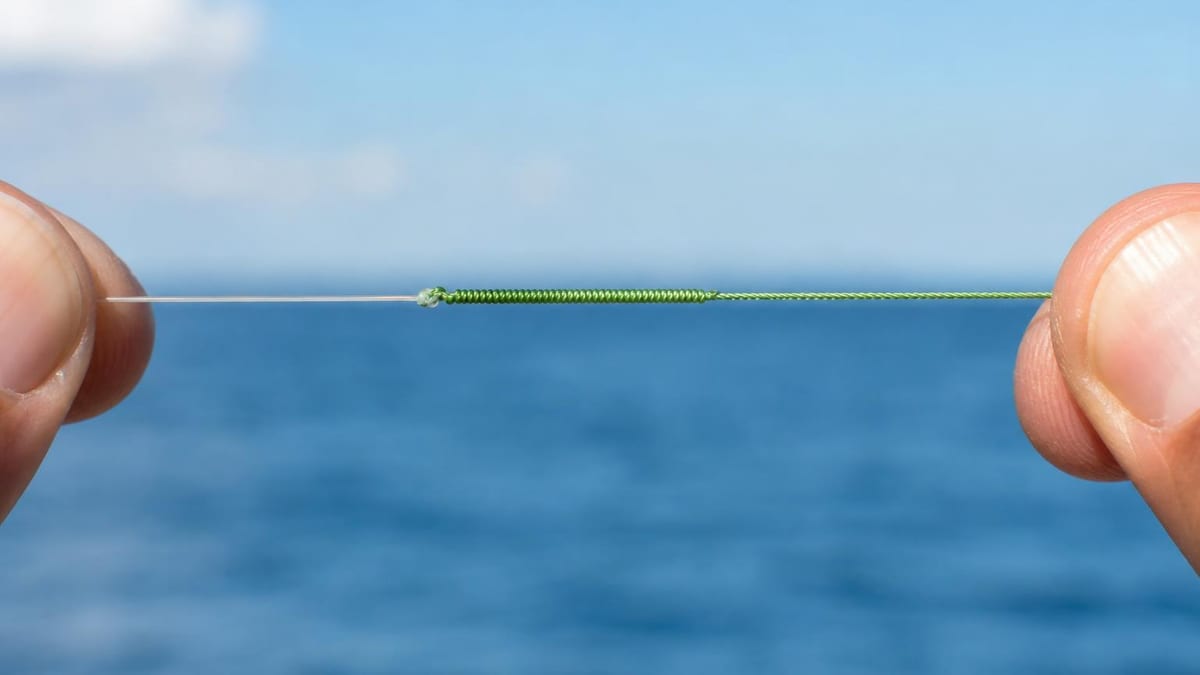
To tie an FG knot, hold the leader under steady tension and weave the braided line over and under it in alternating wraps — sixteen to twenty-two of them — then lock the weave with six to eight half hitches and trim. The result is the slimmest braid-to-leader connection in common use, thin enough to run through rod guides almost silently.
Key takeaways
- Five stages: set tension, build the alternating weave, complete 16-22 wraps, lock with 6-8 half hitches, trim.
- The FG holds by wedging woven braid into the leader's surface — tension while tying is not optional, it is the knot.
- Its virtue is slimness: the weave lies along the leader instead of forming barrels, so it runs through guides cleanly.
- A rushed FG is worse than a good double uni — practise at home before trusting it on the water.
- Test every FG before fishing it: a correct weave grips harder as you pull; a wrong one slides apart immediately.
- Best value when you cast often and far with braid — the guide-contact knot par excellence.
How to tie it, step by step
- Type Line-to-line knot
- Difficulty Advanced
- Best for Braid to fluoro or mono leader, slimmest profile
-
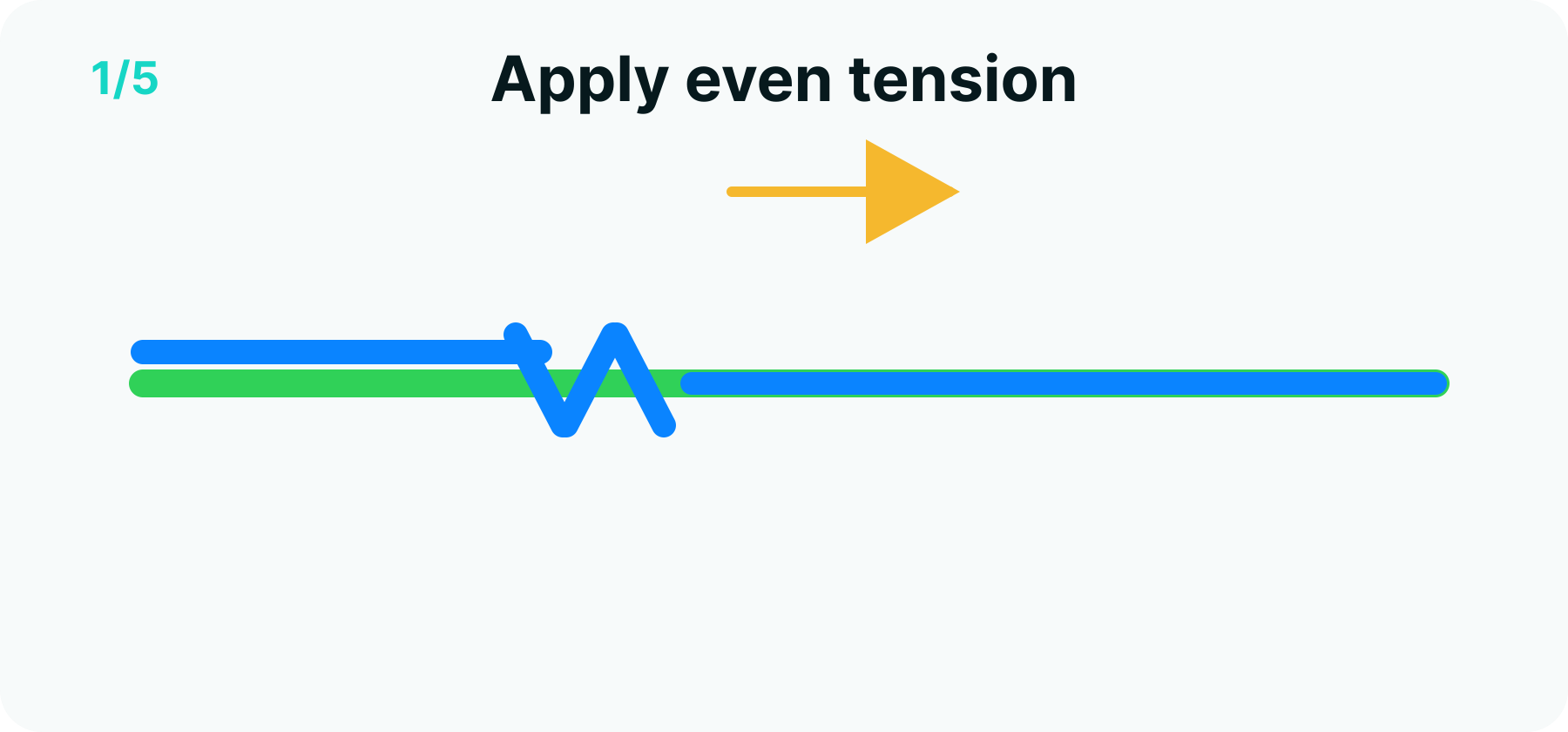 Step 1 of 5
Apply even tension
Put the leader under steady tension — tuck it under a finger, between your teeth, or against the reel — and keep it loaded for the entire tie. The weave only grips a taut leader.
-
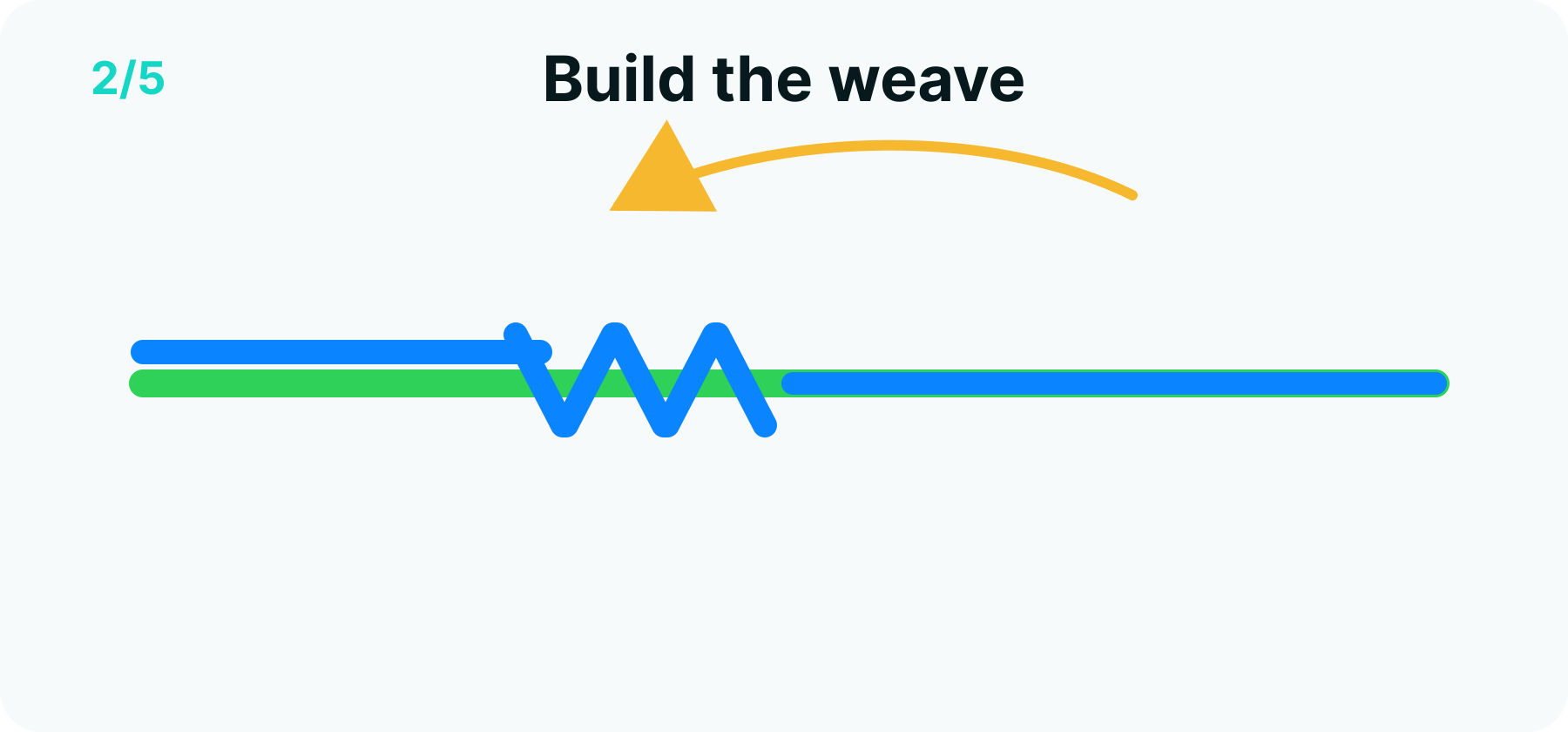 Step 2 of 5
Build the weave
Weave the braid over the leader, then under it, alternating with every wrap. Each pass should snap down snug against the last — over, under, over, under, without exception.
-
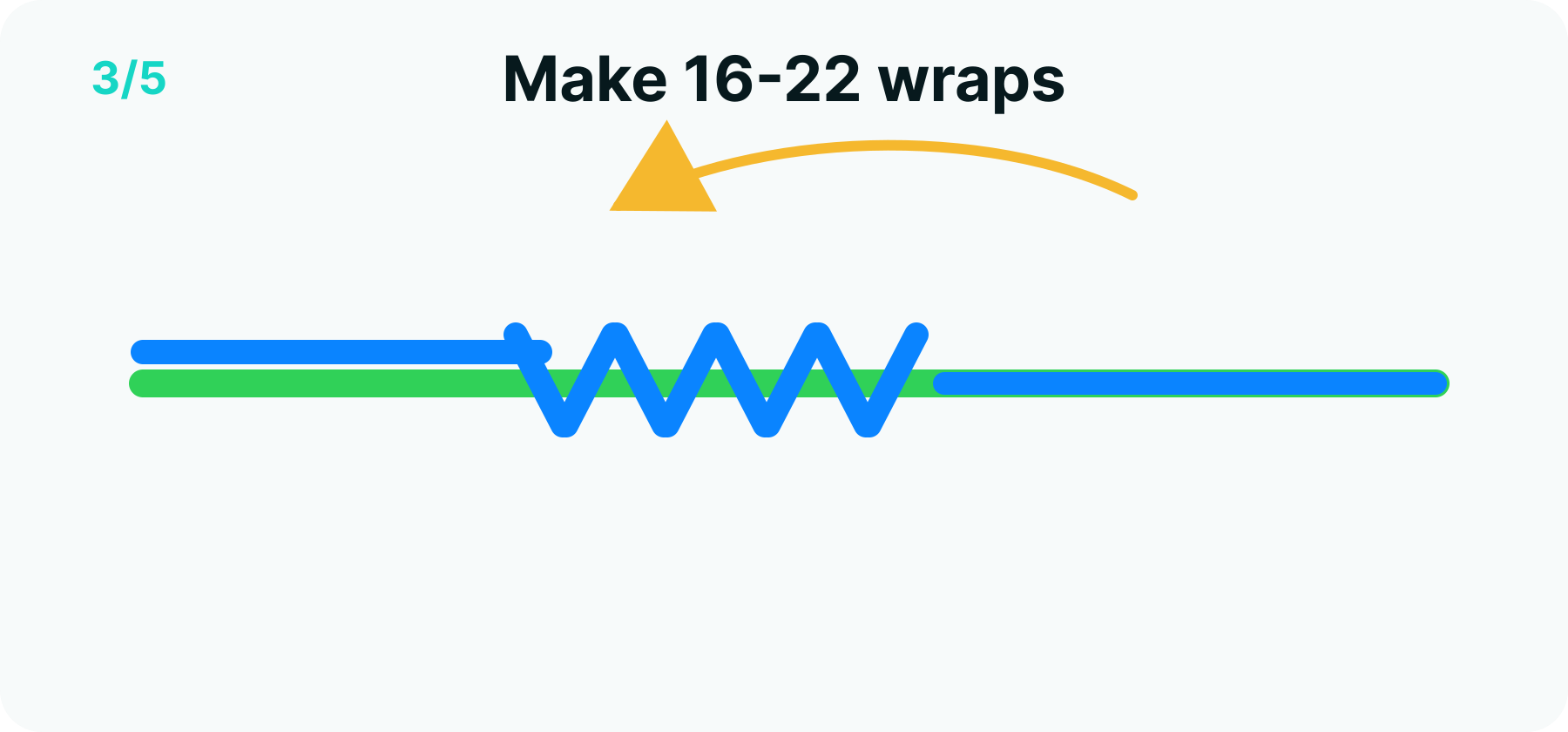 Step 3 of 5
Make 16-22 wraps
Continue until sixteen to twenty-two alternating wraps lie in a tight, even column. The weave should look like a smooth braid sleeve biting into the leader.
-
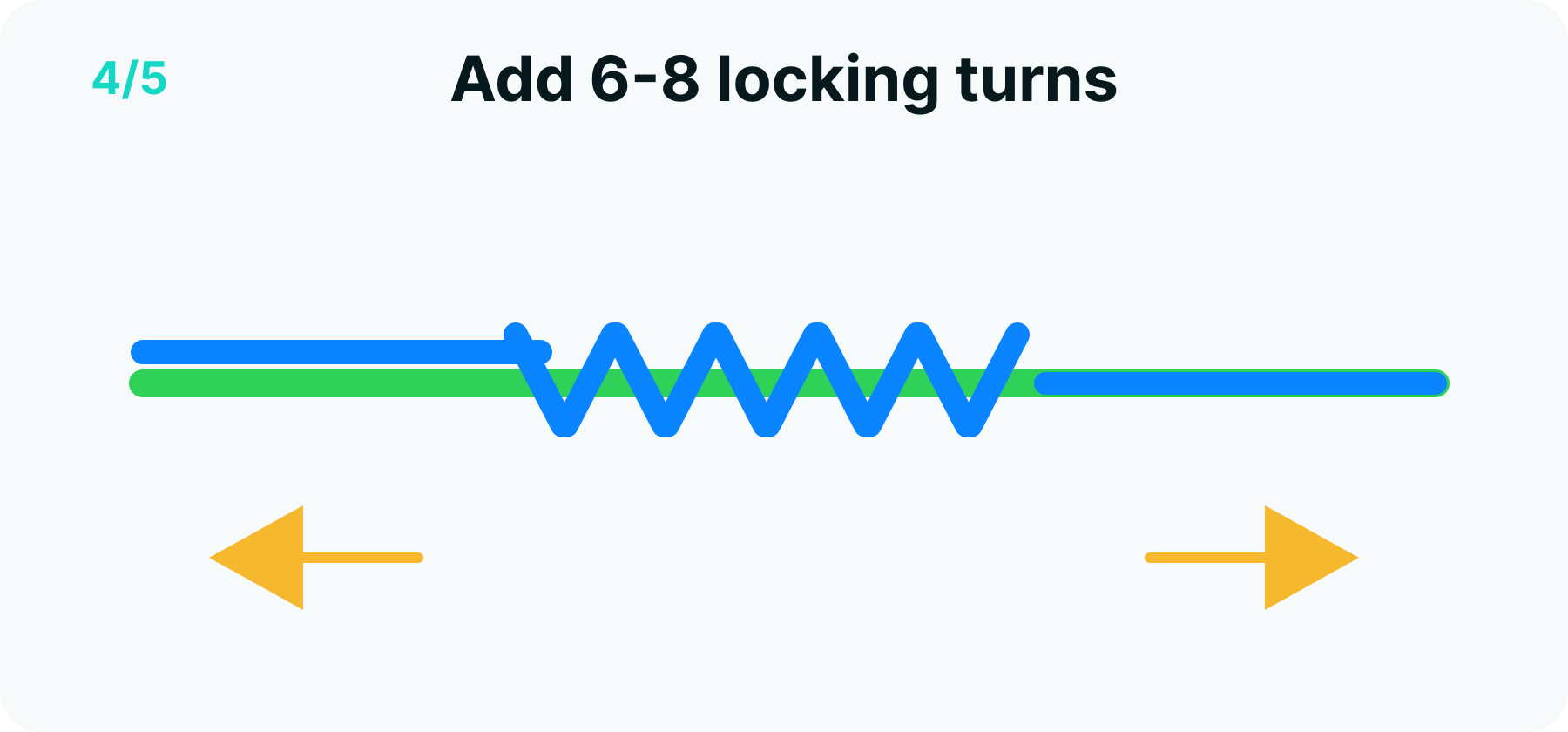 Step 4 of 5
Add 6-8 locking turns
Lock the weave with six to eight half hitches of the braid tag around braid and leader together, keeping the wraps under tension as you cinch each one.
-
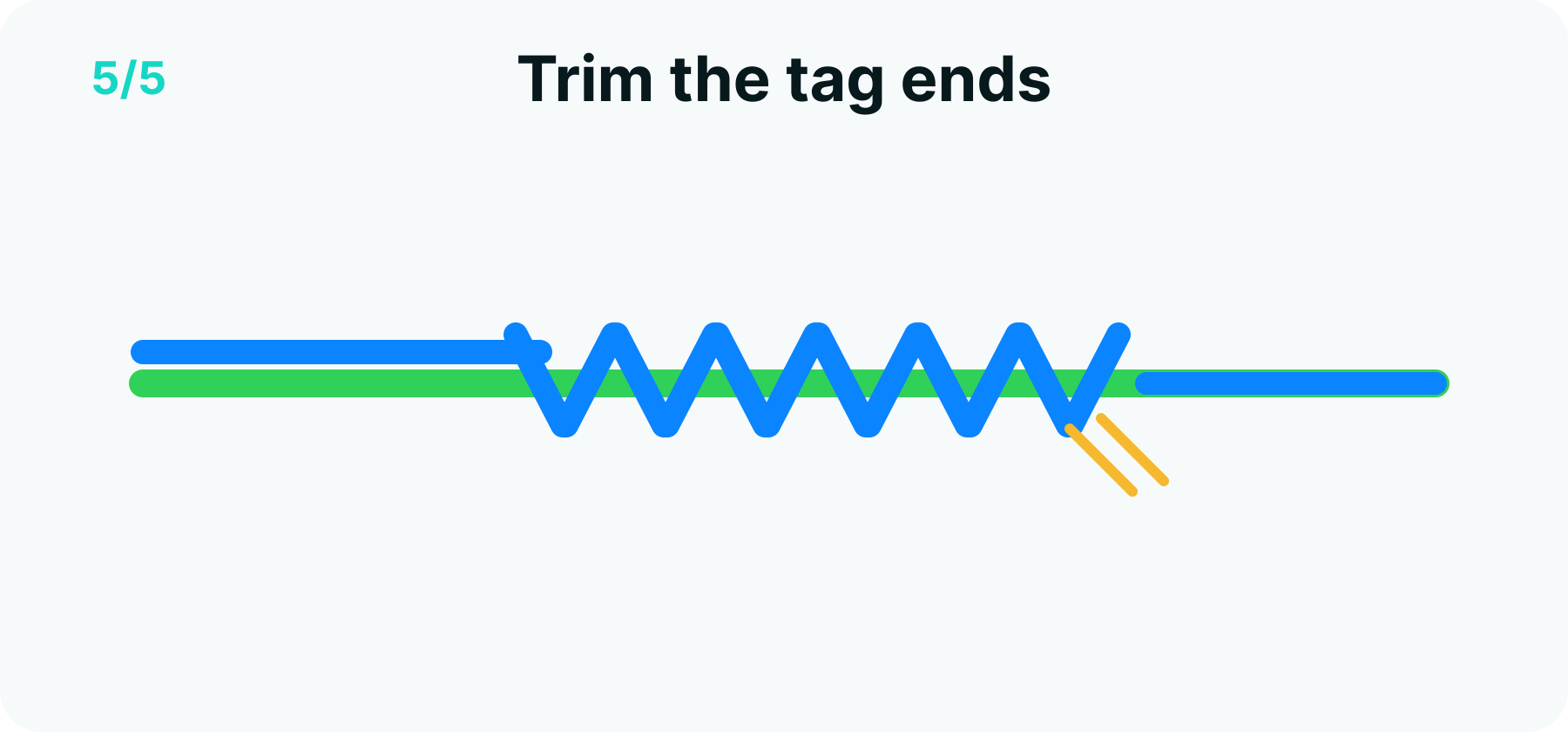 Step 5 of 5
Trim the tag ends
Load-test the connection hard, then trim the leader tag close and the braid tag with a small margin. A correct FG bites harder the harder you pull.
Same steps, animated and in your pocket: the knot guide inside the Fishing Club AI app walks you through every tie hands-free. Get the app.
A different kind of knot entirely
Most line-to-line joins are knots in the ordinary sense — line folded and passed through itself until friction and geometry lock it. The FG is something else: a weave. The braid never ties into the leader at all; it wraps over and under it, again and again, until the woven sleeve wedges into the leader’s surface like a finger trap. Pull harder and it bites harder. That mechanism is why the FG achieves what no barrel-style join can: a connection scarcely thicker than the leader itself.
Slimness is the entire sales pitch, and it is a good one. Every cast with a braid-to-leader rig drags the connection through the rod guides — sometimes twice per cast. Twin barrels, like the double uni’s, tick audibly through the rings and shave distance; a well-tied FG passes almost without contact. For anglers who cast all day — surf, jigging, long-range shore work for snook or redfish — that difference compounds hourly.
Tension is not a tip — it is the knot
Everything people get wrong about the FG traces to one misunderstanding: treating tension as good practice rather than as the mechanism itself. Each wrap of braid grips because it was formed against a loaded leader — the tension is what lets the wrap wedge into the surface. Tie the same weave over a slack leader and you produce a perfect-looking impostor that slides apart at hand strength.
So the first step in our diagrams is not a formality. Anchor the leader — under a finger, against the reel foot, between your teeth as many boat anglers do — and keep it loaded from first wrap to final hitch. The second non-negotiable is alternation: over, under, over, under, no exceptions. Two consecutive wraps on the same side create a flat spot with no grip, and one flat spot is enough. This is also why the FG earns its “advanced” tag — not because any single motion is hard, but because the tie punishes divided attention in a way the uni family never does.
The finish matters just as much: six to eight half hitches lock the weave so it cannot creep backward when slack. And then the test, which should be ritual: load the connection sharply, several times, before it fishes. A true FG visibly cinches down and will not move; a false one betrays itself immediately, in your hands, where it costs nothing.
When the effort pays — and when it doesn’t
The FG rewards a specific kind of fishing: braid main line, frequent casting, and the knot inside the guides. There its virtues are structural and permanent. But it is worth being honest about the other side of the ledger. It takes longer to tie than anything else on our knots page; it is genuinely difficult on a pitching boat, in wind, or with cold fingers; and a rushed FG is the worst knot you can fish, because it fails silently and completely.
That is why the sensible pairing is FG plus double uni, not FG instead of it. The double uni is the join you can always tie; the FG is the join you graduate to per-situation, once home practice has made it automatic. Rig fresh FGs the evening before, run the double uni when conditions turn ugly, and you get the best of both without gambling. Our braid-to-leader comparison sets the two side by side in detail.
Reading a finished FG
Before fishing any FG, give it three looks. The weave: a smooth, even sleeve, slightly translucent where braid has bitten into leader — no gaps, no crossed pairs, no loose coils standing off the surface. The hitches: snug against the end of the weave, stacked neatly, tag pointing back along the braid. The test: loaded hard, nothing moved. If all three pass, you are fishing the slimmest, quietest connection the sport currently knows. If any fails, retie without negotiation — and if that happens twice in the wind, tie the double uni and fish on. The animated FG in the Fishing Club AI app’s knot guide is built for exactly that moment: every wrap, on screen, at your pace.
Frequently asked questions
What is the FG knot used for?
Connecting braided main line to a monofilament or fluorocarbon leader — that one job, done with the slimmest profile of any common join. Instead of tying knots into the leader, the FG weaves braid around it in alternating wraps that bite into the leader material under load. Because the connection lies flat along the line, it passes through rod guides with minimal contact, which is why it dominates in casting-heavy fishing with braid.
How many wraps does an FG knot need?
Our diagrams show sixteen to twenty-two alternating wraps, finished with six to eight locking half hitches. Fewer wraps concentrate the load on too little weave; many more add bulk without meaningful benefit and multiply the chance of a crossing error. Consistency beats quantity — twenty perfect alternating wraps beat thirty sloppy ones every time, because a single crossed pair breaks the wedge geometry the knot depends on.
Why does my FG knot slip apart?
Almost always lost tension. The FG only exists while the weave is under load — each wrap wedges into the leader because it was formed against a taut line. Let the leader go slack mid-tie and the wraps sit loose on the surface instead of biting in; they will look fine and slide apart on the first fish. The second cause is missed alternation: two wraps on the same side create a straight section with no grip. Tie it under tension, check the weave pattern, and load-test before fishing.
Is the FG knot worth learning over the double uni?
If you cast braid frequently — yes, eventually. The honest sequence: the double uni is easier, faster and nearly foolproof, and a well-tied double uni beats a badly tied FG without exception. Learn the FG at home, in good light, until it comes out right without concentration; switch to it on the water once that is true. Its payoff is real — quieter casts, less guide wear, longer distance — but only a correct weave delivers it.
How do you test an FG knot?
Pull it, hard, before it ever sees a fish. Grip the braid above the knot and the leader below it and load the connection sharply several times. A correct FG visibly bites down — the weave darkens and tightens on the leader and will not move. A flawed one slides or 'milks' along the leader immediately, at hand strength, long before fish strength. Ten seconds of testing converts the FG from a gamble into a certainty.
Sources
- 5 Best Saltwater Fishing Knots for Florida Inshore Trips — Take Me Fishing (Recreational Boating & Fishing Foundation). Accessed August 12, 2026.
- Best Knot to Tie Braid to Mono Leader Depends on These Factors — Take Me Fishing (Recreational Boating & Fishing Foundation). Accessed August 12, 2026.
- Common Fishing Knots, I FISH NY — New York Sea Grant, Stony Brook University. Accessed August 12, 2026.
- Knot Tying Lesson Plan, I FISH NY Program — New York State Department of Environmental Conservation. Accessed August 12, 2026.
- Learn to fish: tying the knot — Utah Division of Wildlife Resources. Accessed August 12, 2026.
How we choose sources: sources policy.
More in this series
Know when it's worth going.
Fishing Club AI turns live weather, pressure and moon data into a simple bite forecast for your spot — so the skills you practise get used on the right day.
Get the App