Largemouth vs Smallmouth Bass
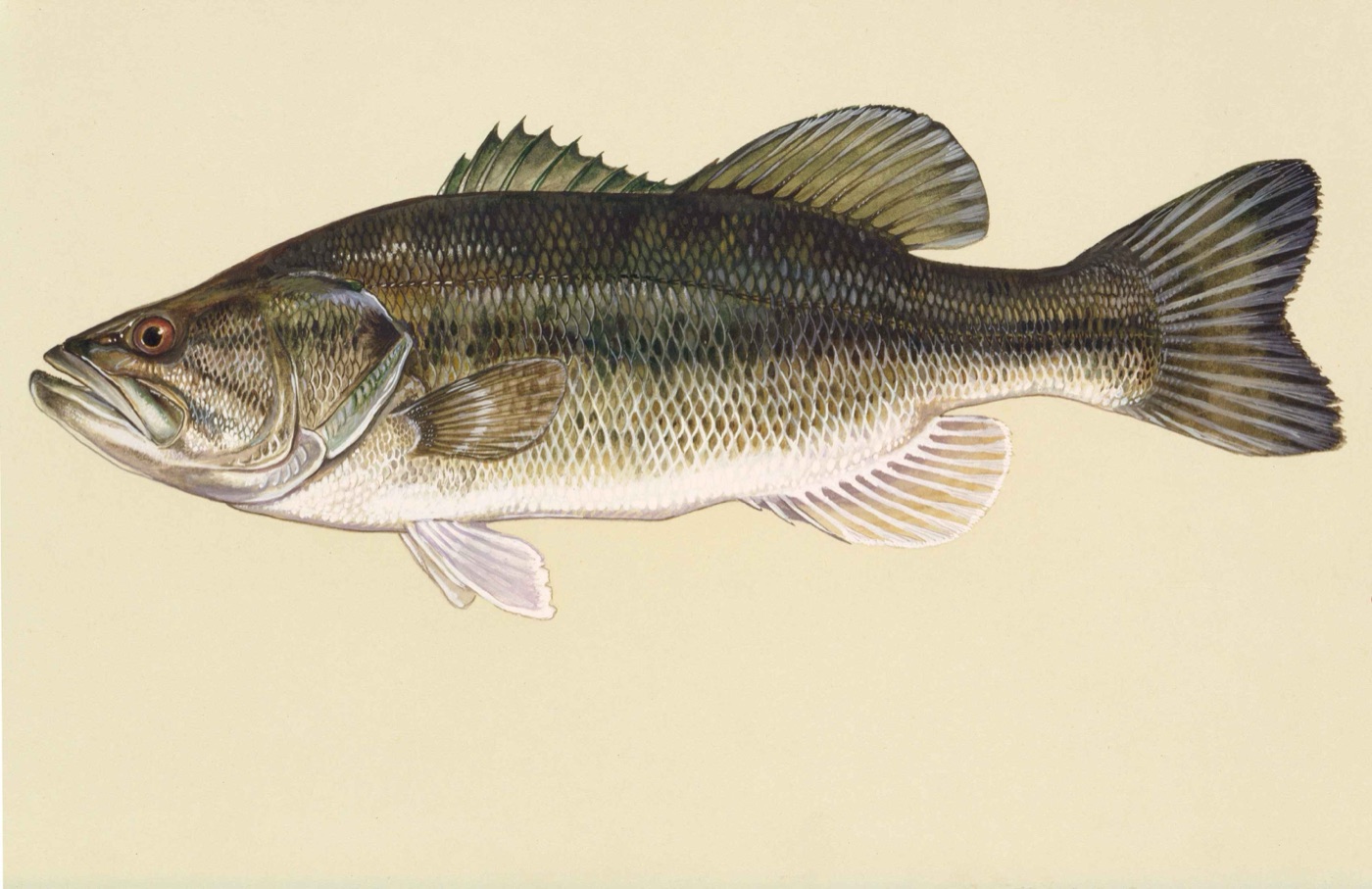
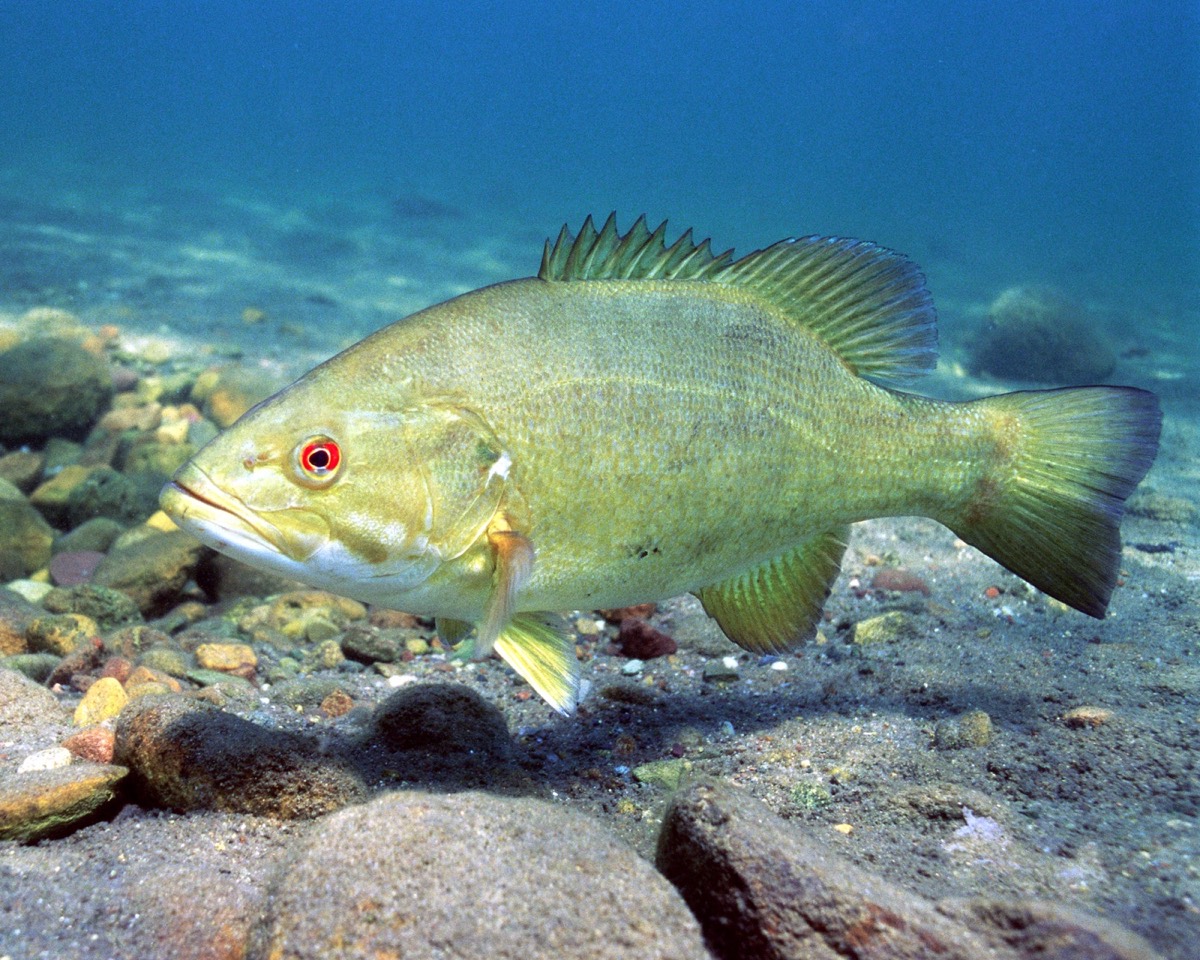
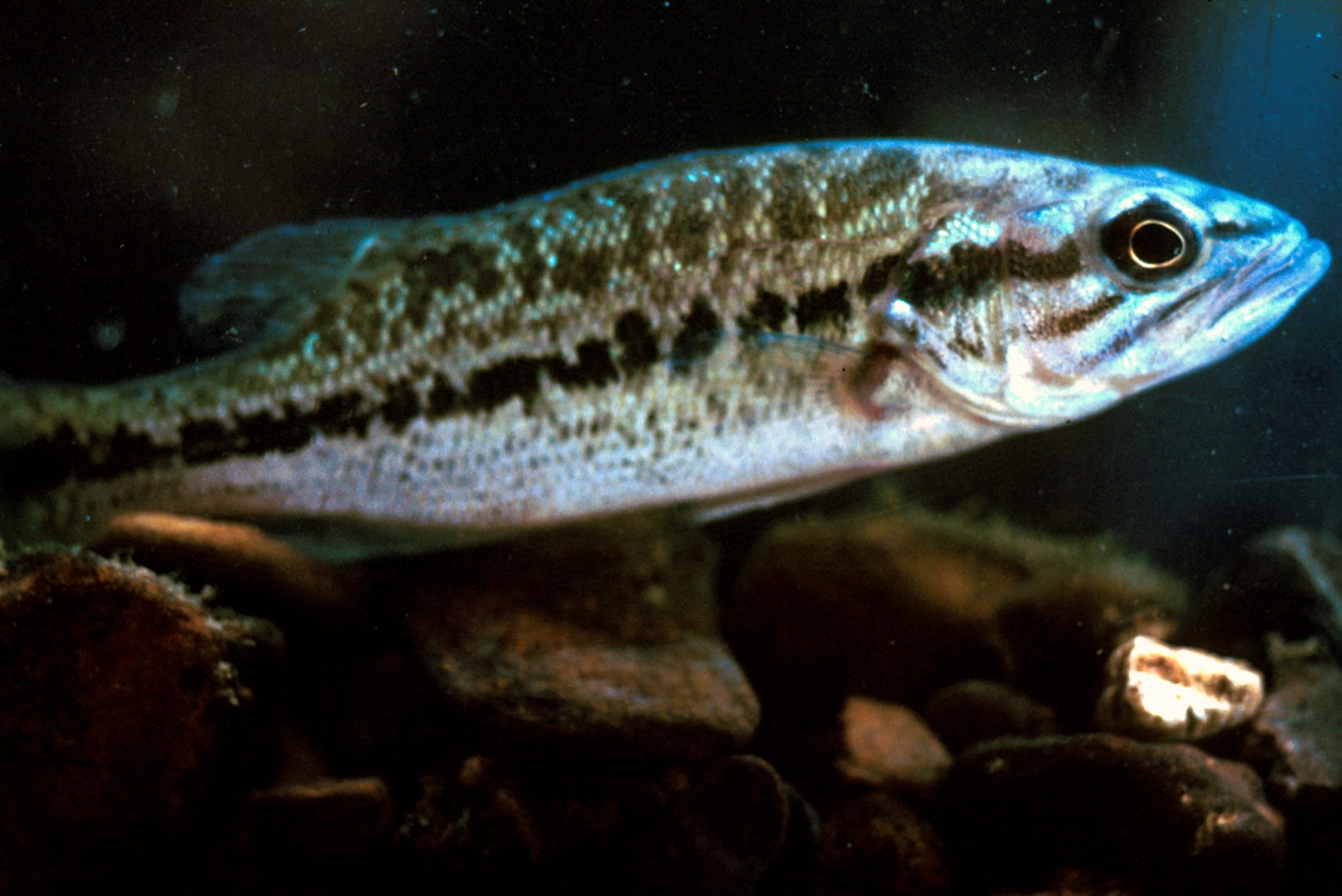
Three checks separate them. On a largemouth the upper jaw extends past the eye; on a smallmouth it stops at the eye. A largemouth's two dorsal fins are barely connected by a deep notch; a smallmouth's are broadly connected with only a shallow notch. And a largemouth wears one dark horizontal band along its side, where a smallmouth wears vertical bars — plus bars radiating back from the eye.
Key takeaways
- Jaw check: largemouth's upper jaw reaches past the rear of the eye; smallmouth's stops at it.
- Dorsal check: largemouth fins are barely connected; smallmouth's are broadly connected with a shallow notch.
- Markings: one horizontal band says largemouth; vertical bars and cheek bars say smallmouth.
- Habitat is the fourth check: warm weedy stillwater vs cool clear rock and current.
- The two species hybridize — Texas lists the cross among its state records.
The jaw check comes first
Every reliable identification starts at the mouth, because it is the one mark that never varies with water colour or mood. New York’s conservation department states it plainly: largemouth bass have an upper jaw that extends past the eye; on smallmouth bass the upper jaw does not extend past the eye.
Missouri’s field guides add the precision. On a largemouth, the upper jaw reaches far beyond the rear margin of the eye — except in small young, a caveat worth keeping for juvenile fish. On a smallmouth, the upper jaw extends to about the rear margin of the eye and no further.
Oklahoma’s version is the easiest to use on a fish in hand: close the mouth and see where the hinge sits. On a largemouth, the mouth hinge lines up vertically behind the back edge of the eye. On a smallmouth, it lines up in front of it. Imagine a vertical line dropped from the back of the eye; the hinge falls on one side or the other, and the question is answered.
The dorsal fin confirms it
Run a finger along the back and the second check is done. A largemouth’s spiny and soft dorsal fins are barely connected — Missouri describes them as not well connected, Oklahoma as barely connected — so the fin reads as two fins with a deep notch between them.
A smallmouth’s dorsal is one continuous structure. Iowa’s biologists put it exactly: the spiny and soft parts of the dorsal fin are broadly connected with only a shallow notch between. Where the largemouth’s fin nearly breaks in two, the smallmouth’s merely dips.
This check earns its keep on fish that refuse to cooperate on colour — a pale largemouth from stained water, a dark smallmouth from a deep lake. Fins do not tan.
Read the direction of the markings
Colour misleads on bass, but the direction of the pattern does not. The green-versus-bronze rule of thumb fails often enough that agencies describe the markings instead.
A largemouth wears its identity horizontally: Missouri describes a broad, dark, continuous stripe along the midside, and New York calls it a dark horizontal band across the body. One line, nose toward tail.
A smallmouth wears everything vertically. Washington’s department describes smallmouth as mottled with dark vertical bars, and Missouri’s comparison piece makes the contrast explicit — smallmouth lack the horizontal line but may have vertical bars instead. Then comes the detail that settles ambiguous fish: Iowa notes five olive-green bars radiating backward from the eye, and one forward to the end of the snout. Largemouth have no such face markings.
Two smaller marks back these up when needed. Most smallmouth carry a rough tooth patch on the tongue that largemouth usually lack, and a smallmouth’s cheek scales are noticeably smaller than its body scales.
Habitat is the fourth check
Where you are fishing predicts what you caught, because the two species have divided the water between them.
Largemouth take the warm, soft, still side. Missouri places them in warm, moderately clear waters with little or no current — lowland lakes, impoundments, the quiet backwaters of large rivers — and New York adds the shallow, weedy areas and downed-tree cover every bass angler knows.
Smallmouth take the cool, hard, moving side: clear streams with silt-free rock or gravel bottoms near riffles, in Missouri’s wording, and cool, clear, swift rivers and cool, deep, rocky lakes in New Jersey’s. Iowa notes they are sight feeders that prefer low-turbidity water, which is why dirty water rarely fishes well for them.
The numbers that exist are worth having. New York puts smallmouth across a wide 5-to-35-foot depth range and calls 60 to 75 °F the best window for bass fishing generally; New Jersey adds that smallmouth activity picks up above 50 °F, below which they hold in deep wintering areas. Spawning runs on similar clocks — roughly 62 to 65 °F for largemouth in Oklahoma’s account, and 60 °F and up for smallmouth, on gravel in three to twenty feet of water.
When the fish refuses the checklist
Some fish blur the lines honestly. The two species hybridize, and the cross is established enough that Texas Parks and Wildlife lists Largemouth bass x Smallmouth bass as its own state-record category — the standing record an 11.07-pound fish from O.H. Ivie in 2022. A hybrid can mix the jaw of one parent with the markings of the other.
And within each species, our full profiles cover what this comparison compresses: the largemouth bass and smallmouth bass pages carry sizes, seasons and tactics, and the spotted bass page covers the third member of the family most often mistaken for both — jaw stopping at the eye like a smallmouth, but wearing a largemouth’s horizontal band.
Frequently asked questions
What is the fastest way to tell a largemouth from a smallmouth?
Close the mouth and look at the jaw hinge. New York's conservation department words it directly: largemouth have an upper jaw that extends past the eye; on smallmouth bass the upper jaw does not extend past the eye. Oklahoma frames the same check as the mouth hinge lining up behind versus in front of the eye's back edge. One glance, settled.
Do the colours reliably separate them?
The pattern does more than the colour. A largemouth carries a broad, dark, continuous horizontal stripe along the midside; a smallmouth is mottled with dark vertical bars instead, and Iowa's biologists add five olive-green bars radiating backward from the eye. Colour itself shifts with water and mood — green versus bronze is a hint, the direction of the markings is the evidence.
Which fights harder, largemouth or smallmouth?
We only repeat what agencies say, and they do have a view: New York's department calls smallmouth one of the hardest fighting freshwater fish, and New Jersey's describes them as best known for airborne leaps and sudden deep dives. Largemouth earn their reputation differently — the same New York page notes they will eat pretty much anything that fits in their oversized mouths, including fish, frogs, snakes and mice.
Where does each species live?
Missouri's department draws the line cleanly: largemouth favour warm, moderately clear water with little or no current — weedy lakes, ponds and quiet backwaters — while smallmouth belong to clear streams with silt-free rock or gravel bottoms near riffles, and to cool, deep, rocky lakes. If you are casting at weeds in still water, think largemouth; over rock in current or clear depths, think smallmouth.
Can largemouth and smallmouth crossbreed?
Yes. The hybrid is real enough that Texas Parks and Wildlife lists 'Largemouth bass x Smallmouth bass' as a state-record category, with an 11.07-pound specimen from O.H. Ivie in 2022. Hybrids blend the parents' marks, which is worth remembering when a fish refuses to fit the checklist.
Sources
- Fishing for Largemouth and Smallmouth Bass — New York State Department of Environmental Conservation. Accessed August 9, 2026.
- Largemouth Bass — Field Guide — Missouri Department of Conservation. Accessed August 9, 2026.
- Smallmouth Bass — Field Guide — Missouri Department of Conservation. Accessed August 9, 2026.
- Spot Check for Bass — Missouri Conservationist. Accessed August 9, 2026.
- Largemouth Bass and Smallmouth Bass — Field Guide — Oklahoma Department of Wildlife Conservation. Accessed August 9, 2026.
- Smallmouth Bass — Iowa Department of Natural Resources. Accessed August 9, 2026.
- Smallmouth Bass (Micropterus dolomieu) — Washington Department of Fish and Wildlife. Accessed August 9, 2026.
- Focus on Fishing: Smallmouth Bass — New Jersey Department of Environmental Protection, Fish & Wildlife. Accessed August 9, 2026.
- Freshwater State Records — Texas Parks & Wildlife Department. Accessed August 9, 2026.
How we choose sources: sources policy.
More in this series
Know when it's worth going.
Fishing Club AI turns live weather, pressure and moon data into a simple bite forecast for your spot — so the skills you practise get used on the right day.
Get the App