King Mackerel
Scomberomorus cavalla
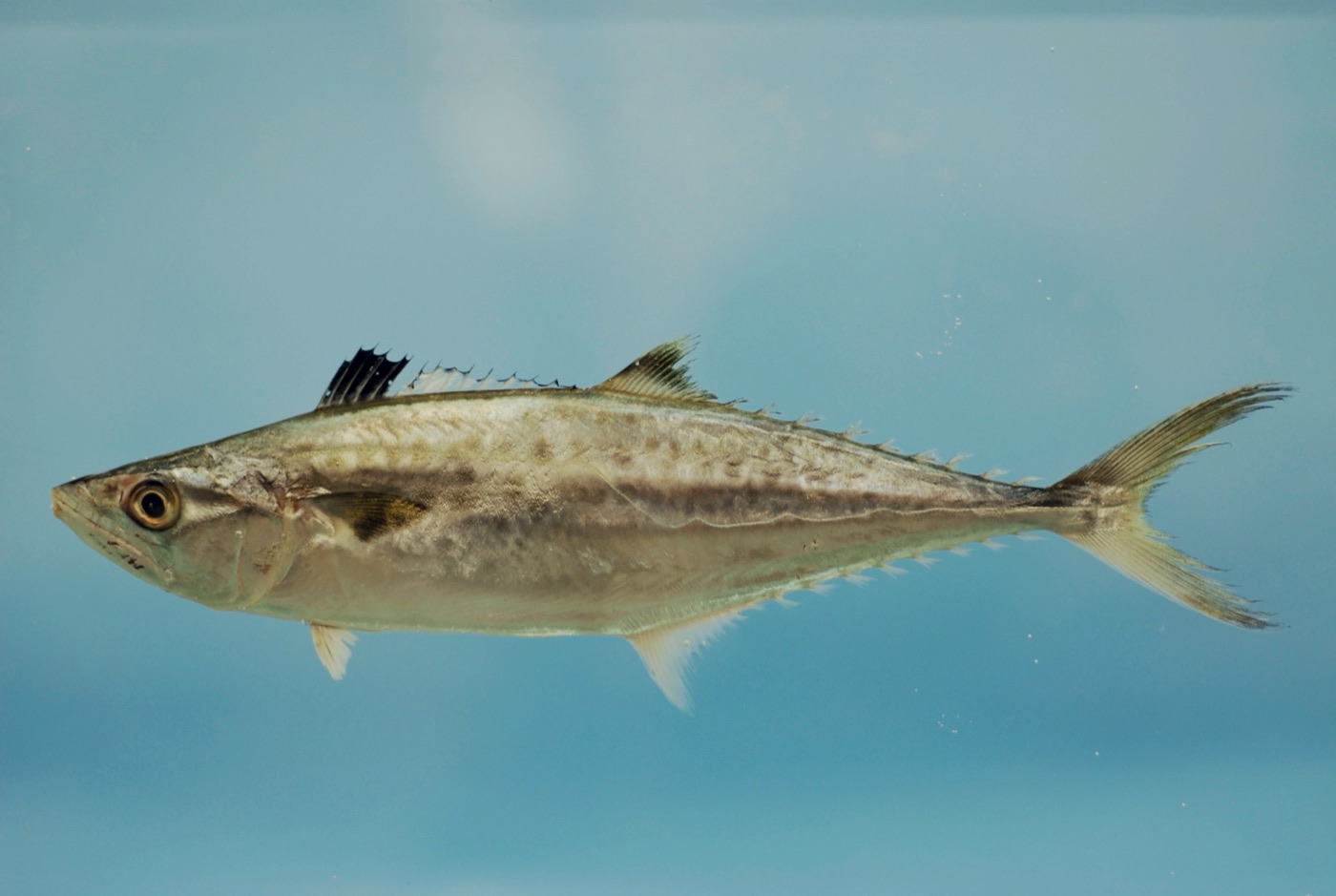
King mackerel is a fast, migratory member of the mackerel family, built as a streamlined open-water predator with a steeply dropping lateral line.
MoreFull Species Details
- Species Name
- Scomberomorus cavalla
- Family
- Scombridae
- Order
- Scombriformes
- Also Known As
- Kingfish, King, Cavalla, Smoker
King Mackerel (Scomberomorus cavalla) Fish Description
King mackerel is a fast, migratory member of the mackerel family, built as a streamlined open-water predator with a steeply dropping lateral line.
The body is long, slender, and iron-gray to greenish above with a silvery belly and no distinct markings on adults. The lateral line drops sharply beneath the second dorsal fin, a reliable field mark separating the king from the smaller, spotted Spanish mackerel. Rows of razor-sharp teeth line the jaws, capable of slicing bait and leaders alike. A series of small finlets runs to the deeply forked tail, marking the fish as a high-speed swimmer. Young king mackerel carry spots that fade with age, while adults stay plain and chrome-bright.
King mackerel is native to the western Atlantic, from the Gulf of Mexico and the southeastern United States south to Brazil. The species is highly migratory, following warm water and baitfish along the coast in large seasonal runs. King mackerel roam from nearshore reefs and wrecks to open offshore waters, usually near the surface. Anglers pursue the species for its blistering, reel-screaming runs, its habit of chasing fast-trolled baits, and its firm flesh, which is often smoked, making the king mackerel a favorite target of coastal and tournament anglers.
Interesting Facts About King Mackerel
- The world record king mackerel weighed 93 pounds, caught off Puerto Rico in 1999.
- King mackerel can swim in bursts exceeding 30 miles per hour.
- The species has a lateral line that dips sharply below the second dorsal fin.
- King mackerel migrate long distances along the coast following warm water and bait.
- The species can live up to 14 years or more in the wild.
Show more facts
- Razor-sharp teeth allow king mackerel to slice baitfish cleanly in half.
- Anglers often use wire leaders to prevent the sharp teeth from cutting the line.
- King mackerel frequently strike a trolled bait with an explosive leaping run.
- The species spawns offshore in warm water through the summer months.
- Young king mackerel carry spots that fade as the fish matures.
- Large king mackerel over 20 pounds are known to anglers as smokers.
- The species schools around reefs, wrecks, and bait concentrations.
Average Speed & Size
King mackerel is an extremely fast, open-water swimmer that typically reaches 24 to 40 inches and 8 to 20 pounds. Smokers exceed 50 inches and 40 pounds, with the record near 93 pounds. The species cruises steadily in search of bait, then accelerates in explosive, high-speed bursts to run down prey or to strip line after a strike. A hooked king often erupts in a long, sizzling run and may leap clear of the water, making it one of the fastest and most exciting coastal gamefish.
Where to Find Them
King mackerel is found in warm coastal and offshore waters along the Atlantic and Gulf coasts, usually near the surface. The species holds around reefs, wrecks, buoys, and bait schools, and roams open water following warm currents. King mackerel favor water from the upper 60s to the low 80s Fahrenheit and migrate seasonally, moving north and inshore in summer and south in cooler months. They concentrate wherever baitfish gather. King mackerel are absent from cold northern seas and shallow inshore flats, ranging the warm, bait-rich waters of the continental shelf.
King Mackerel Fishing Tips
King mackerel fishing is fast and exciting, built around trolling live or dead baits through areas holding fish. Success comes from covering water near bait and structure and using wire leaders to defeat the king's slashing teeth.
Equipment
Use a 6-foot-6 to 7-foot medium-heavy trolling rod paired with a high-speed reel spooled with 15- to 30-pound line and a wire leader. The wire is essential to withstand the king's razor teeth, while the fast reel keeps up with blistering runs. A slow-trolling setup with a stinger rig of two hooks improves the hookup rate on short-striking fish.
Chumming
Chumming with live or cut baitfish draws king mackerel toward the boat and up into the water column. A steady chum line near a reef or wreck concentrates fish and triggers aggressive feeding. Anglers often anchor up-current and drift baits back through the slick to intercept kings following the scent.
Bait
Live menhaden, blue runners, and ribbonfish are the top baits, slow-trolled on a stinger rig. Effective lures include spoons, diving plugs, and skirted trolling lures pulled at speed.
Patience
King mackerel often short-strike, cutting a bait in half without taking the hook, so a trailing stinger hook and a steady troll matter more than a fast retrieve. Cover water near bait and let the trolled offering find aggressive fish.
Conditions that change the bite
- What Barometric Pressure Is Best for Fishing? No research supports a single best barometric pressure for fishing. What pressure really does, how big a weather swing is, and what to watch instead.
- Best Time of Day to Fish: What Evidence Shows Dawn and dusk are measurably better — and the edge is smaller than the folklore says. The 13-year dataset, the light mechanism, and what matters more.
- Dissolved Oxygen: The Condition Anglers Can't See Fish live or die by oxygen you can't see. How temperature, depth, dawn and turnover move it, which species need more, and how to fish around the invisible map.
Guides for fishing this species
- How to Tie an FG Knot The FG knot in five diagrammed steps — the slim braid-to-leader weave, why tension is everything, and when its extra effort actually pays.
Related Species
Know when they'll bite.
BiteScore forecasts when king mackerel will feed at your spot — from live weather, pressure, and moon data.
Get the App