How to Tie a Clinch Knot
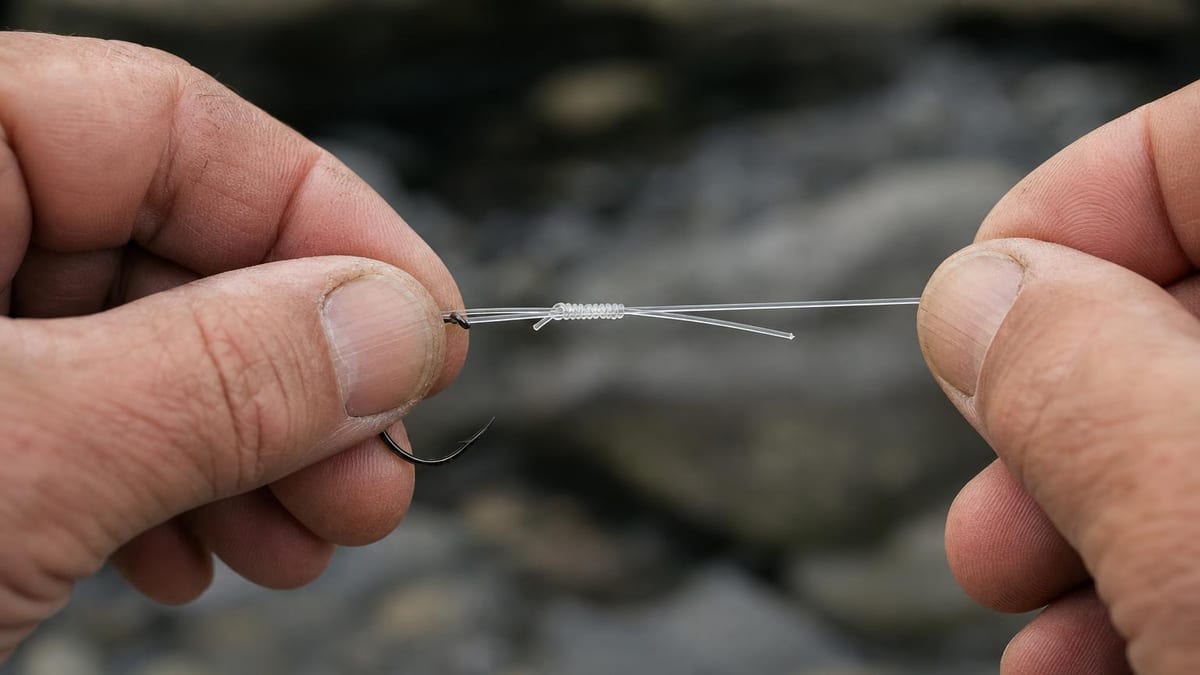
To tie a clinch knot, pass the tag end through the hook eye, make five to eight twists around the standing line, bring the tag back through the small loop next to the eye, then moisten and pull tight. It is the original, simpler version of the improved clinch — one pass instead of two — quick to tie but with less insurance against slipping.
Key takeaways
- Four steps: through the eye, five to eight twists, back through the loop at the eye, moisten and seat.
- It is the improved clinch minus the second tuck — faster to tie, easier to slip.
- Fine mono and light tackle are its natural home; the missing lock matters more as line gets heavier and slicker.
- Moisten before seating and pull the standing line, not the tag — same discipline as every clinch-family knot.
- If you learn only one of the pair, learn the improved version; the extra pass costs two seconds.
How to tie it, step by step
- Type Terminal knot
- Difficulty Easy
- Best for Light mono to hooks and small lures
-
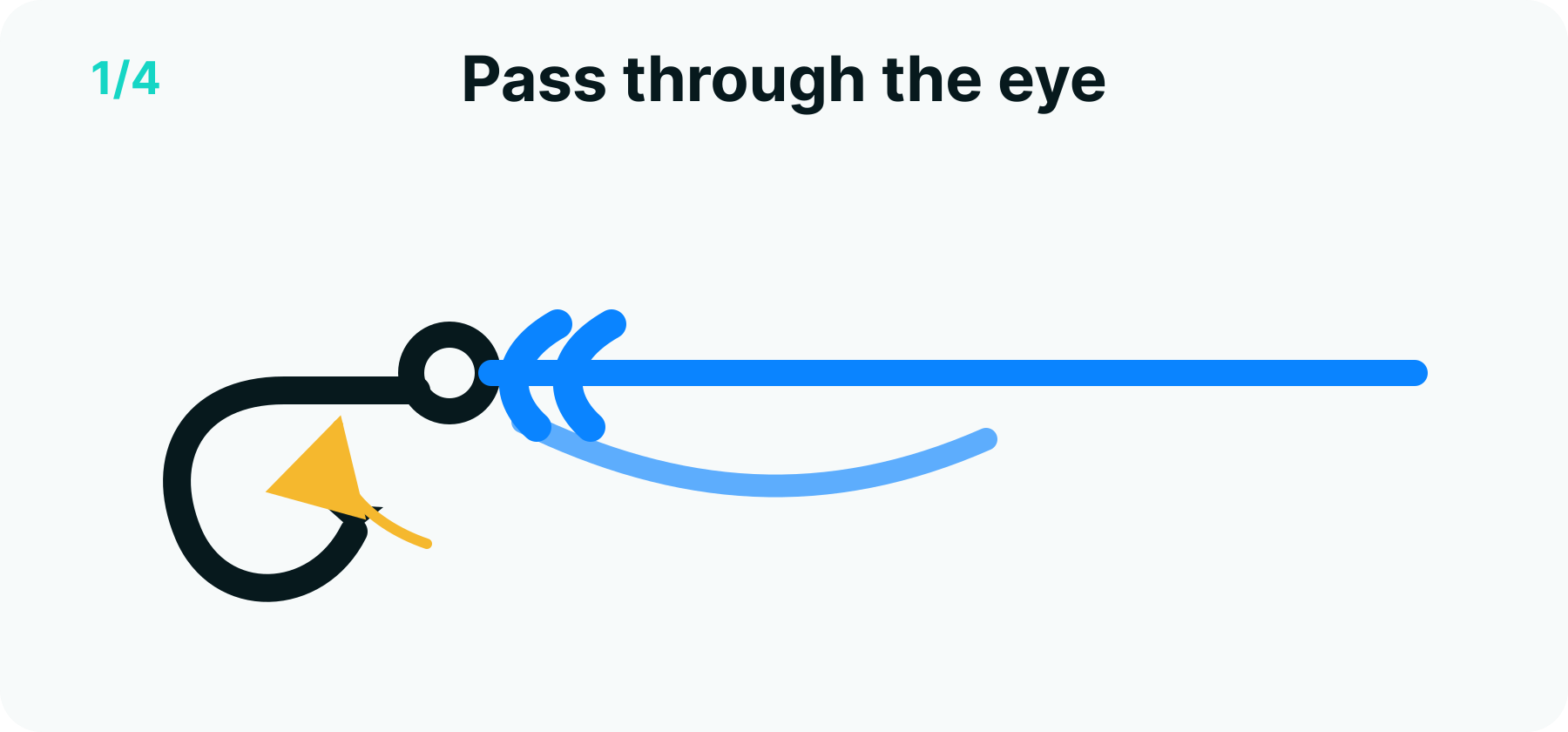 Step 1 of 4
Pass through the eye
Feed the tag end through the hook, lure or swivel eye and pull through six inches or so of working line — enough for all the twists to come.
-
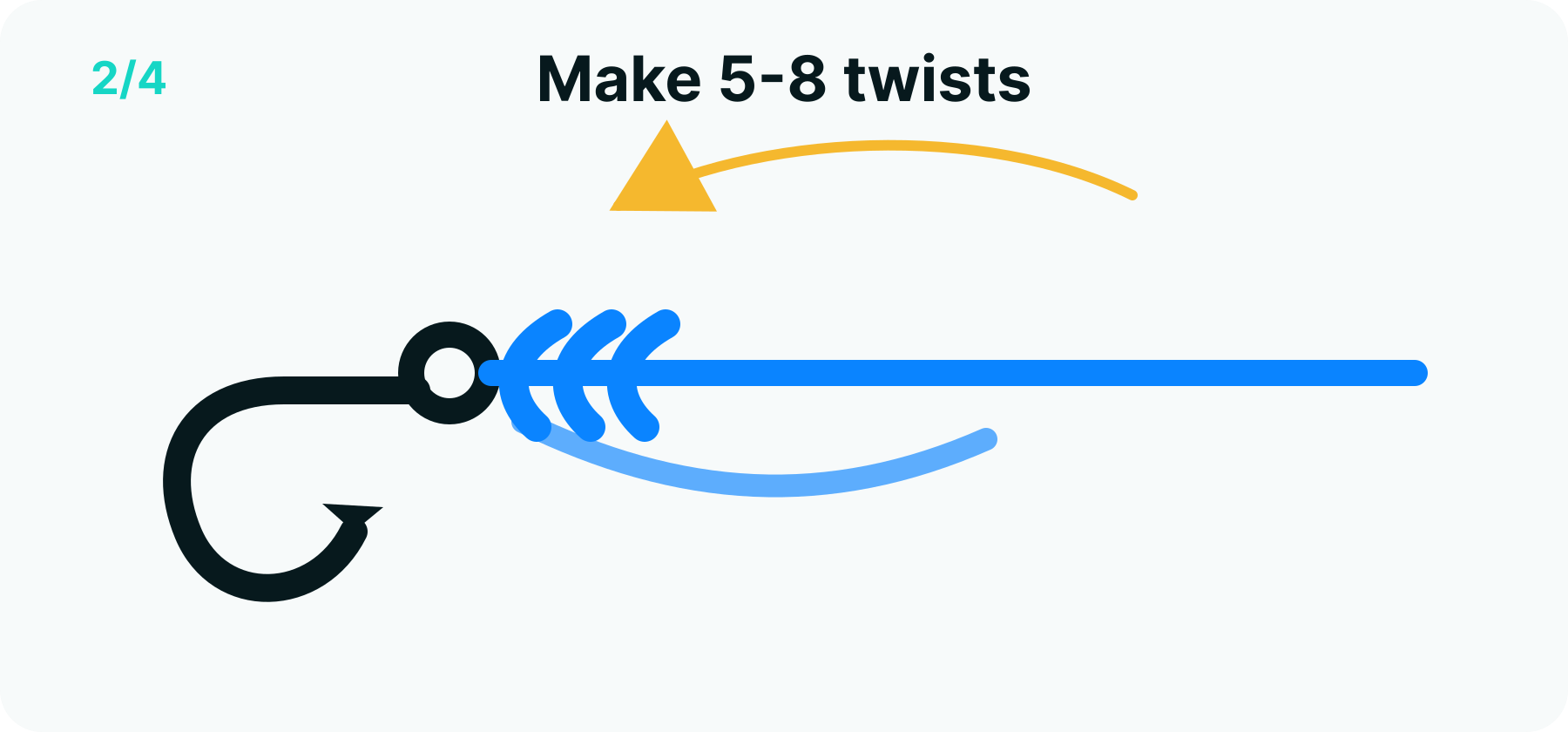 Step 2 of 4
Make 5-8 twists
Twist the tag end around the standing line five to eight times, keeping light tension on both strands so the twists lie even and parallel.
-
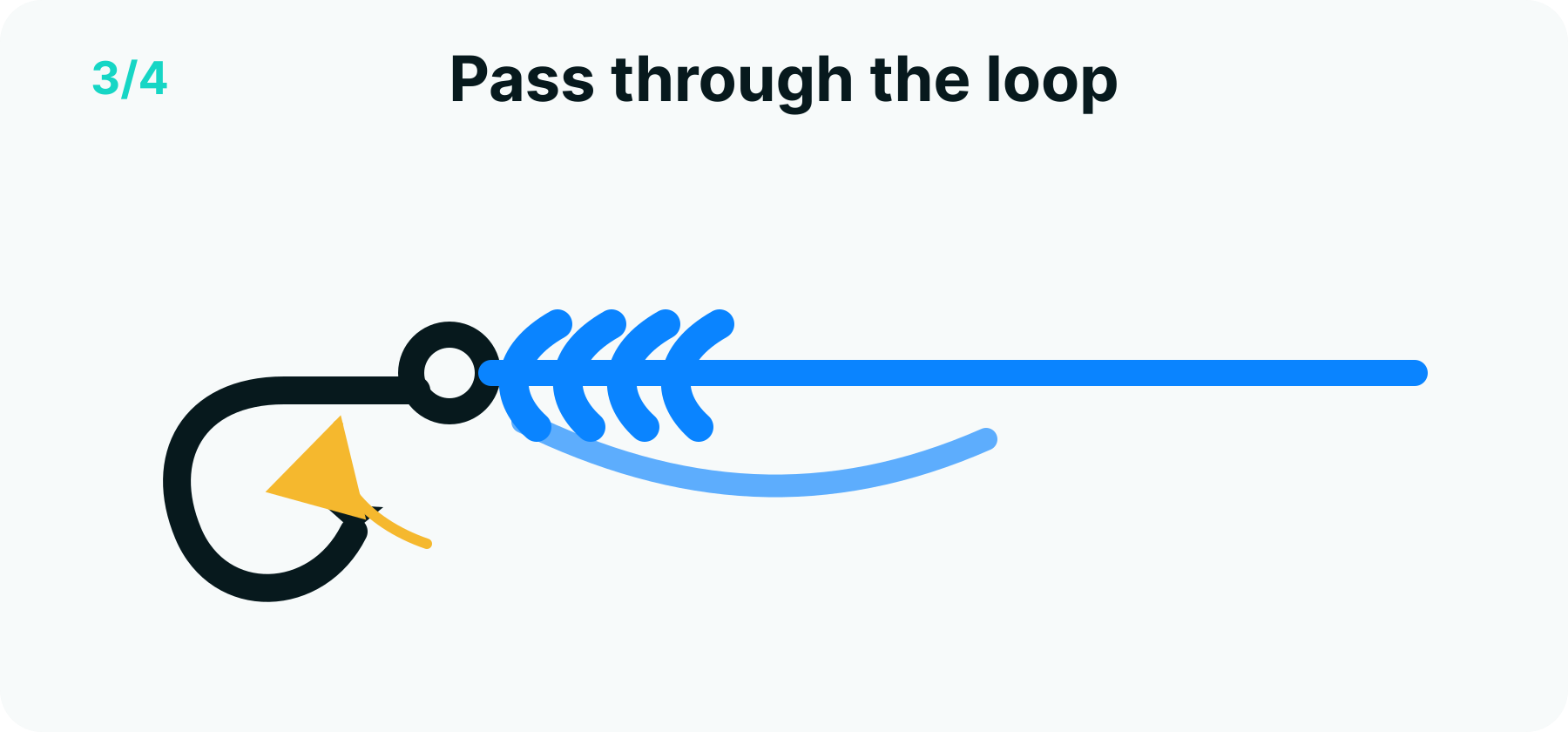 Step 3 of 4
Pass through the loop
Bring the tag end back and push it through the small loop just above the eye — the opening between the eye and the first twist. Keep that loop open as you do.
-
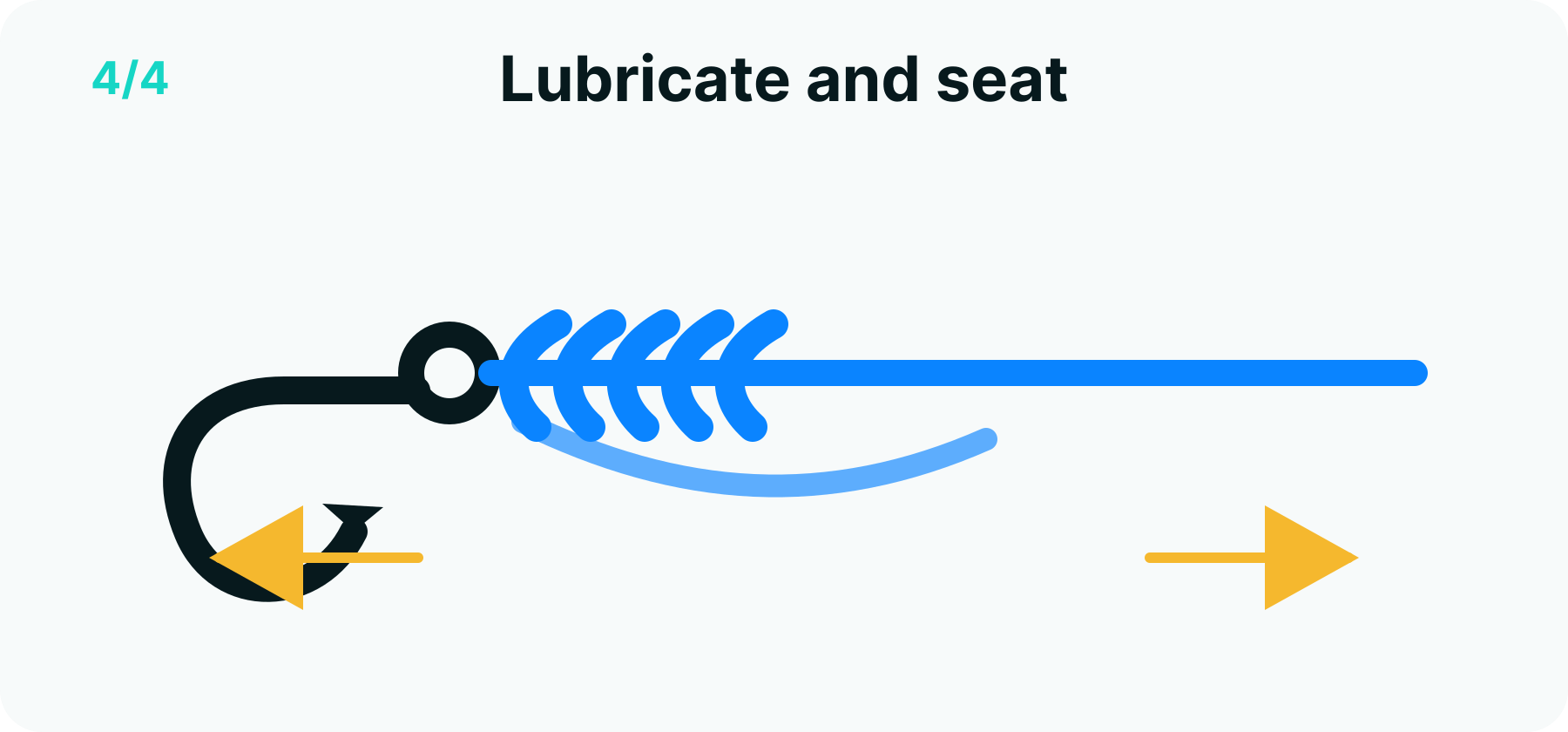 Step 4 of 4
Lubricate and seat
Moisten the knot, pull the standing line steadily until the twists spiral down snug against the eye, then trim the tag to about an eighth of an inch.
Same steps, animated and in your pocket: the knot guide inside the Fishing Club AI app walks you through every tie hands-free. Get the app.
The original, and what “improved” replaced
Before there was an improved clinch, there was this: the twist-and-tuck knot that generations of anglers learned on a dock with a spincast reel. The plain clinch is the improved clinch with one step removed — the tag goes through the small loop at the eye and stops, without the second pass that traps it. That single omission is the entire story of this knot: what it saves in time, it gives back in security.
It survives in modern fishing for two honest reasons. First, speed: at the light-tackle end of the sport — small hooks, fine mono, fish measured in ounces — it is the fastest respectable way to get tied on, and the loads involved never come near its limits. Second, pedagogy: the clinch motion is the alphabet from which several other knots are spelled, and hands that have automated it learn the improved version, the uni, and half the terminal knots in the book almost for free.
How it holds, and how it lets go
The clinch holds by friction alone. Drawing the standing line tightens the spiral of twists around it, and the harder the pull, the harder the spiral grips — up to a point. The failure mode is not usually breaking but slipping: under steady pressure, especially with slick or springy line, the tag end can feed back through the loop it came in by, and the knot unwinds as if it were never there. No drama, no curl of broken line — just a bare hook and a story.
Three habits push that failure mode away. Moisten the knot before seating it, so the twists bed in without friction heat. Pull the standing line — never the tag — to seat it, so the spiral stacks neatly against the eye. And leave an eighth of an inch of tag rather than trimming flush, so any micro-slip runs out of road. These are the same disciplines every clinch-family knot demands; the plain version simply forgives less.
Line choice matters more than technique, though. Fine monofilament, with its grippy surface and stretch, is what this knot was made for. Fluorocarbon’s stiffness makes neat seating harder as diameters climb. And slick braided line strips the knot of the only thing holding it together — for braid, skip the whole debate and tie a Palomar.
Choosing between the two clinches
The practical question is not “which knot is better” — the improved version is, by design — but “when does the difference matter.” A fair rule: if the fish you expect can take drag against a properly set reel, tie the improved clinch. If you are fishing a worm under a bobber for bluegill or perch, the plain clinch tied well will never be the weak point of that system, and its speed is real — more time with the bait in the water, less with the rod between your knees.
There is also a case for learning them as a pair, in order. The plain clinch teaches the twists; the improved clinch adds the lock; and from there the terminal-knot family opens up — the snell for bait hooks, the uni for everything from lures to the spool. Every one of them is diagrammed step by step in our knots hub, and animated in the Fishing Club AI app’s knot guide when you need your hands walked through it streamside.
One last honesty note, because our editorial policy demands it: anglers argue endlessly about knot strength percentages, and we publish none here. Independent, controlled knot testing is rare, and numbers travel the internet far detached from their test conditions. What can be said plainly is structural: the plain clinch has one security mechanism, the improved clinch has two, and two is better. Tie whichever you tie correctly — a perfect clinch beats a botched anything.
Frequently asked questions
Is the clinch knot the same as the improved clinch knot?
Almost — the difference is one pass. The plain clinch sends the tag back through the small loop at the eye and stops there. The improved clinch continues through the big loop created by that first pass, trapping the tag. Under load, the plain version relies purely on the friction of its twists; the improved version adds a lock. The tying motion is otherwise identical, which is why most anglers graduate from one to the other without noticing.
How many twists should a clinch knot have?
Five to eight, scaled to the line. Fine line benefits from more twists (more friction surface); heavier line seats better with fewer. Our diagrams show the middle of the range. The test is what the seated knot looks like: a clean, even spiral snugged against the eye. Coils that stand apart or stack on each other mean the count is wrong for that line.
When is the plain clinch knot good enough?
Light line, light tackle, and fish that don't test the lock — the panfish-and-stocked-trout end of fishing, where the knot's speed is genuinely useful and the loads stay far from the line's limit. It also remains a fine teaching knot: the twists-and-tuck motion is the foundation for several other ties. For anything that pulls hard, surges or runs, the two extra seconds of the improved version are the better trade.
Why does a clinch knot slip?
Because friction is all it has. If the twists were too few, the line too slick — braided line is the worst case — or the knot seated unevenly, the tag can feed back through the loop under steady pressure, and the knot simply unwinds. Moistening before seating, keeping the twists parallel, and leaving an eighth of an inch of tag all reduce the risk. Eliminating it is what the improved clinch's second pass is for.
Sources
- How to Tie a Clinch Knot — Take Me Fishing (Recreational Boating & Fishing Foundation). Accessed August 12, 2026.
- Knot Tying Lesson Plan, I FISH NY Program — New York State Department of Environmental Conservation. Accessed August 12, 2026.
- Improved Clinch Knot: Fishing Knot Tying Steps — Take Me Fishing (Recreational Boating & Fishing Foundation). Accessed August 12, 2026.
- 5 Best Saltwater Fishing Knots for Florida Inshore Trips — Take Me Fishing (Recreational Boating & Fishing Foundation). Accessed August 12, 2026.
- Learn to fish: tying the knot — Utah Division of Wildlife Resources. Accessed August 12, 2026.
How we choose sources: sources policy.
More in this series
Know when it's worth going.
Fishing Club AI turns live weather, pressure and moon data into a simple bite forecast for your spot — so the skills you practise get used on the right day.
Get the App