The Fish Finder Rig: Sliding Sinker Bottom Fishing
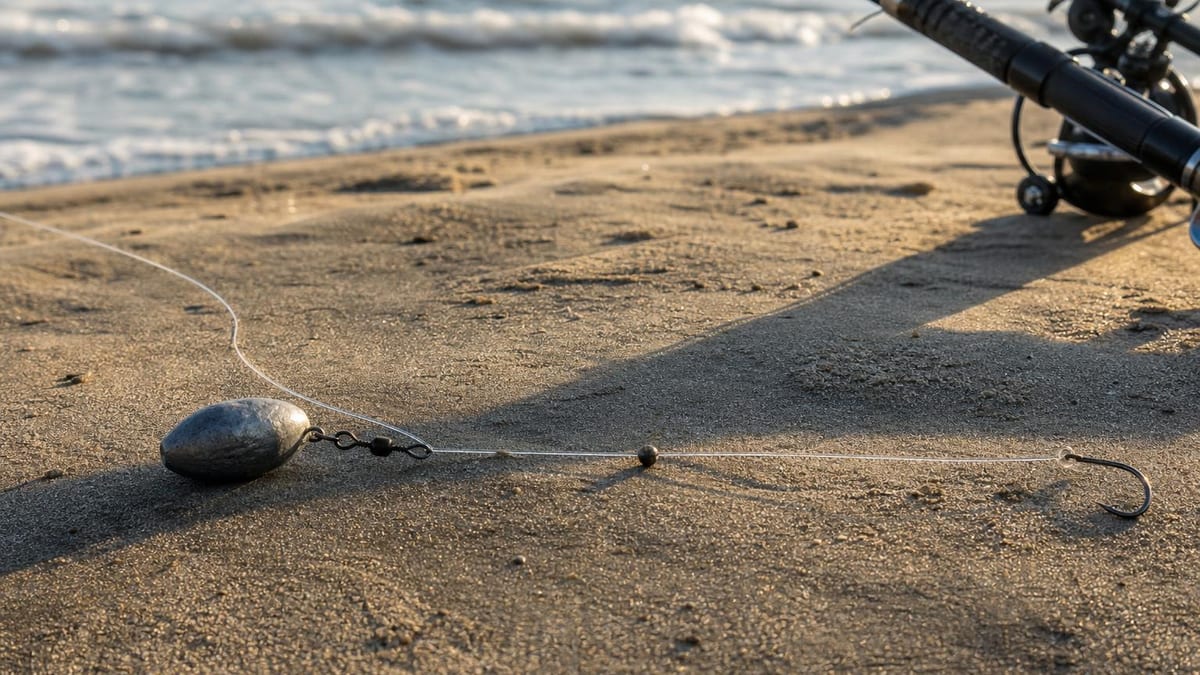
The fish finder rig threads your main line through a sliding sinker before it reaches a swivel and leader, so the weight rests on the bottom while a fish can take line without feeling it. Slide on an egg sinker and a bead, tie the main line to a barrel swivel, add a leader and hook, and you have the most popular beach and bottom rig going.
Key takeaways
- The sinker slides on the main line — a fish picks up the bait and pulls line straight through the weight, feeling nothing.
- Build order: sliding sinker → plastic bead → barrel swivel → leader → hook. The bead stops the weight nicking your knot.
- Take Me Fishing calls it the most popular of the beginner beach rigs; it works from shore and while drifting a boat.
- Sinker rule of thumb from the same source: use the lightest weight that keeps the bait in the feeding zone.
- Texas Parks and Wildlife recommends a slip-sinker style rig for live bait 'where the fish can swim freely' — and a heavy grabbing sinker in the surf.
- Pair it with a non-offset circle hook: New York's DEC says do not set the hook — point the rod, reel steadily, keep reeling 5–10 seconds as the line comes tight.
The problem this rig solves
Bottom fishing has one built-in flaw: the weight that holds your bait down is also the weight a fish feels when it picks that bait up. Tie a sinker into the line and every take is transmitted through several ounces of lead — plenty of fish spit the bait before the rod ever moves.
The fish finder rig removes the weight from the equation without removing it from the rig. The main line runs through the sinker rather than being tied to it, so the sinker sits on the bottom and the line slides freely inside it. Take Me Fishing describes the result precisely: the sinker rests on the bottom with the bait suspended above, which “prevents the fish from feeling the weight as the line passes through the sinker,” and keeps the rig from hanging up on rocks or weed. Their sinker page states the payoff for bait fishing outright — when the fish picks up the bait, the line passes through the sinker and the fish doesn’t feel the weight.
That single mechanical trick is why the same source ranks it first among beach rigs for beginners: of all the starter surf rigs, “this is the most popular.”
Building it, in order
Four components, threaded in a fixed sequence:
- Sliding sinker — an egg sinker is the classic: egg-shaped with a hole bored through it. Slide it onto the main line.
- Plastic bead — next onto the line. Small job, real purpose: Take Me Fishing notes the bead protects your knot from being nicked by the weight sliding into it.
- Barrel swivel — tie the main line to it. The swivel is the stopper: the sinker can slide down to it but no further, and it keeps line twist out of the leader.
- Leader and hook — attach the leader to the swivel’s other end and the hook to the leader. Their saltwater build uses a 6- to 12-inch leader snelled to the hook; treat that as a published starting point, not a law, and size hook and leader to the fish you’re after.
For heavier work, the same source offers the variation: swap the egg sinker for a pyramid sinker with a plastic sleeve for the line to run through, or use a fishfinder slide and clip a heavier weight to it — their note is that egg sinkers work comfortably up to about three or four ounces.
Knot-wise, nothing exotic: a uni or improved clinch to the swivel, a snell or clinch to the hook, and — if you run braid to a leader — a double uni or FG at the junction.
Sinker choice: light as you can get away with
The single most useful sinker rule in the verified literature is Take Me Fishing’s: use the lightest sinker that will keep the bait in the feeding zone. More weight than that costs you casting distance, bite detection and natural bait movement, and buys nothing.
Conditions set the floor. Texas Parks and Wildlife’s surf guidance is blunt — in the surf, a heavy grabbing sinker is needed to hold bait stationary against the wash — while a slack tide off a pier might need a fraction of that. Shape follows function too: bank sinkers are round or bell-shaped to slip past structure, pyramids bite into sand, eggs slide. When the current or surf picks up, go heavier; when it slackens, come back down.
One responsibility that comes with sinkers. Lost lead is eaten by waterbirds. New York’s DEC states that lost sinkers, especially split shot, may be mistaken for food by ducks, geese, swans, gulls and loons, and that even a single lead sinker can sicken a bird — which is why DEC has restricted the sale of lead sinkers weighing half an ounce or less. Maine’s fisheries agency goes further: ingested lead tackle is the third leading cause of death for its adult common loons, and it is unlawful there to use or sell lead sinkers and unpainted lead jigs measuring 2.5 inches or less or weighing an ounce or less. Maine also names the alternatives — tungsten, denser and harder than lead, plus tin, bismuth and steel alloys — while warning that zinc tackle is not recommended because it is also toxic to wildlife. Rules differ by state; the non-lead option exists everywhere.
Circle hooks: the pairing, and the technique change
This rig is a bait rig, and bait rigs are where circle hooks earn their reputation. NOAA’s release best practices recommend circle hooks alongside barbless designs and warn that some fisheries require them — check your state’s current regulations. New York’s DEC explains the mechanism: circle hooks reduce deep or gut hooking because they are “designed to slide out of the throat if swallowed and hook the lip or mouth of a fish,” and specifies the non-offset (in-line) version, where the point and barb sit in the same plane as the shank.
The trade is a habit you must unlearn. DEC’s instructions: do not set the hook. Point the rod tip at the fish and reel steadily; when the line comes tight, keep reeling for five to ten seconds before raising the rod tip. Anglers who strike hard with a circle hook mostly pull the bait away from the fish. Our hook sizes guide covers the shape in more depth, and catch and release covers what happens after the fish is on.
Where it shines
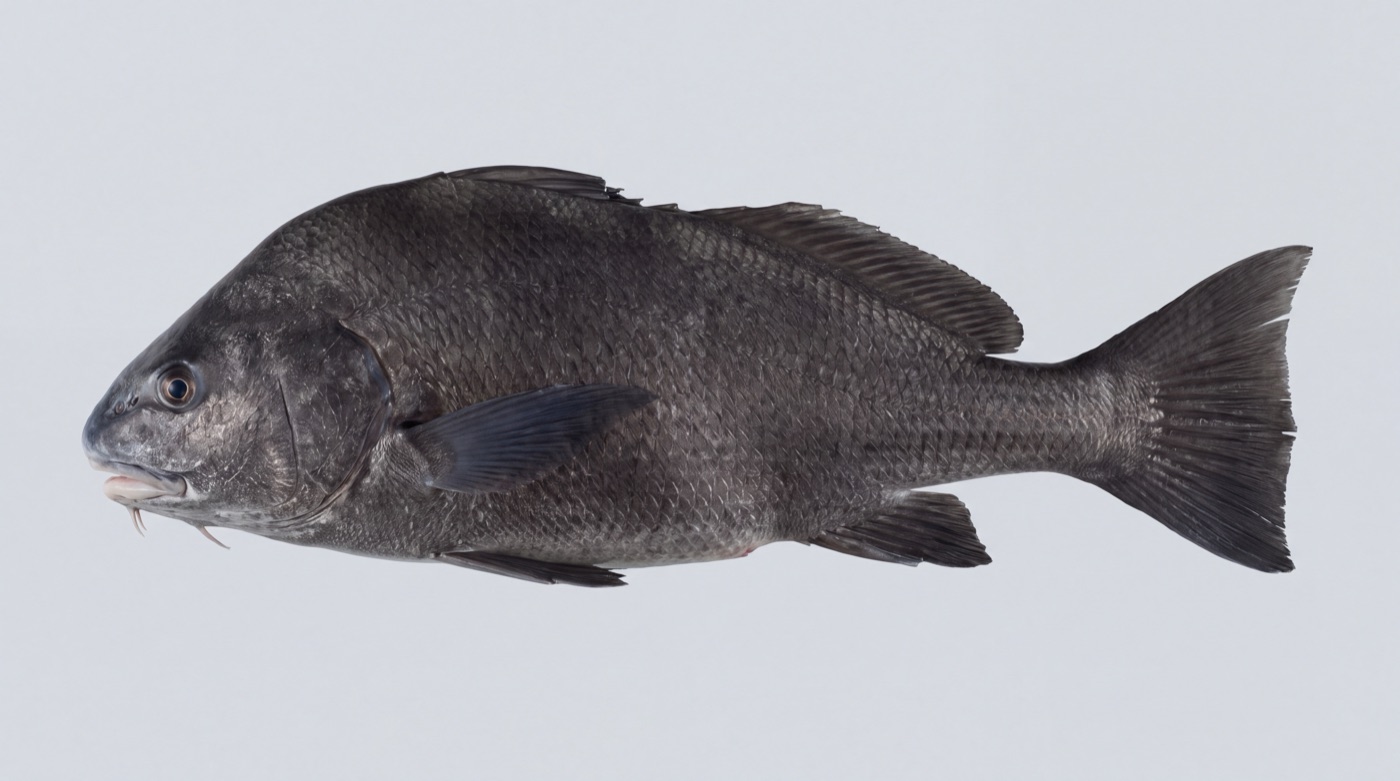
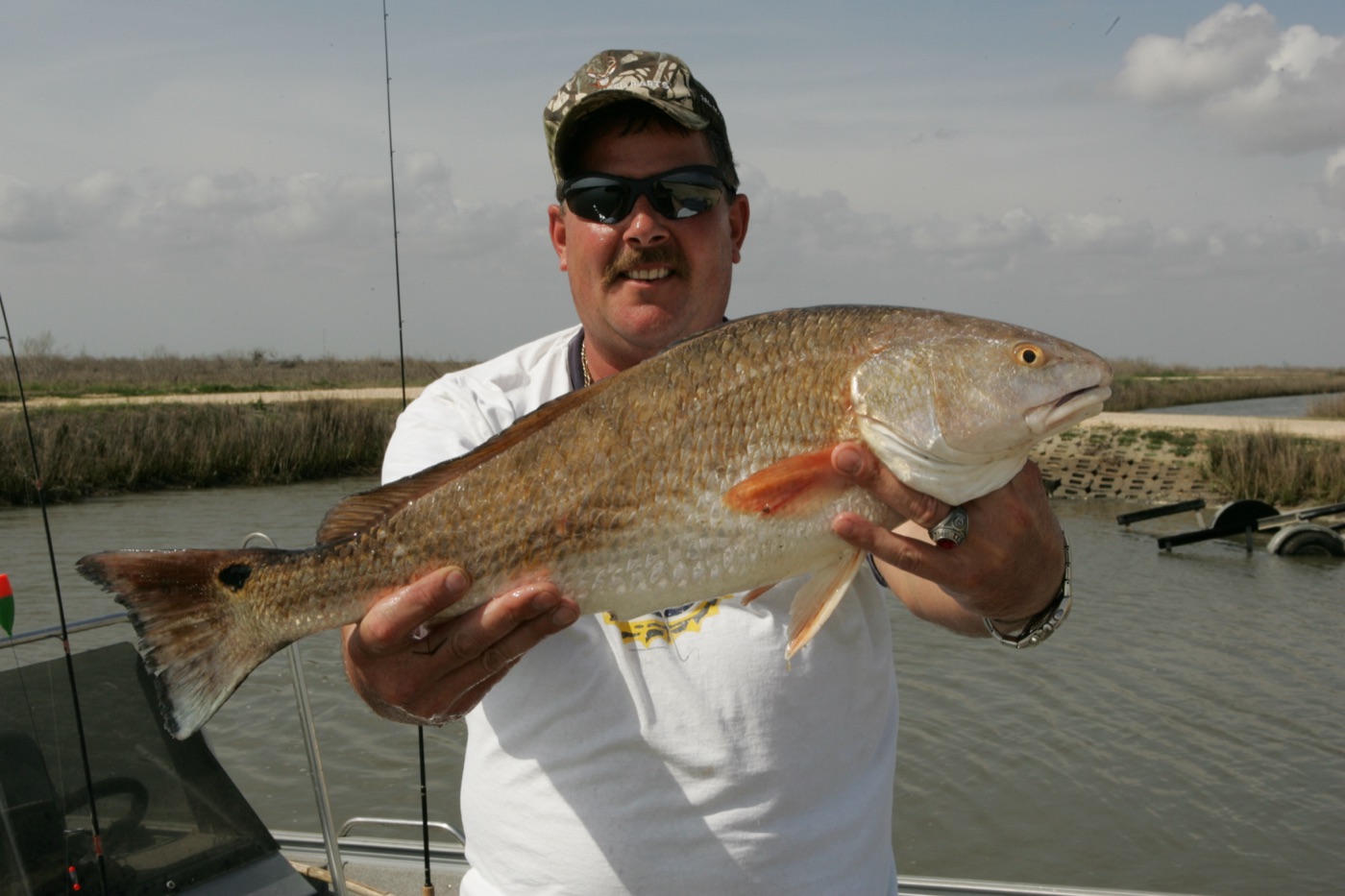
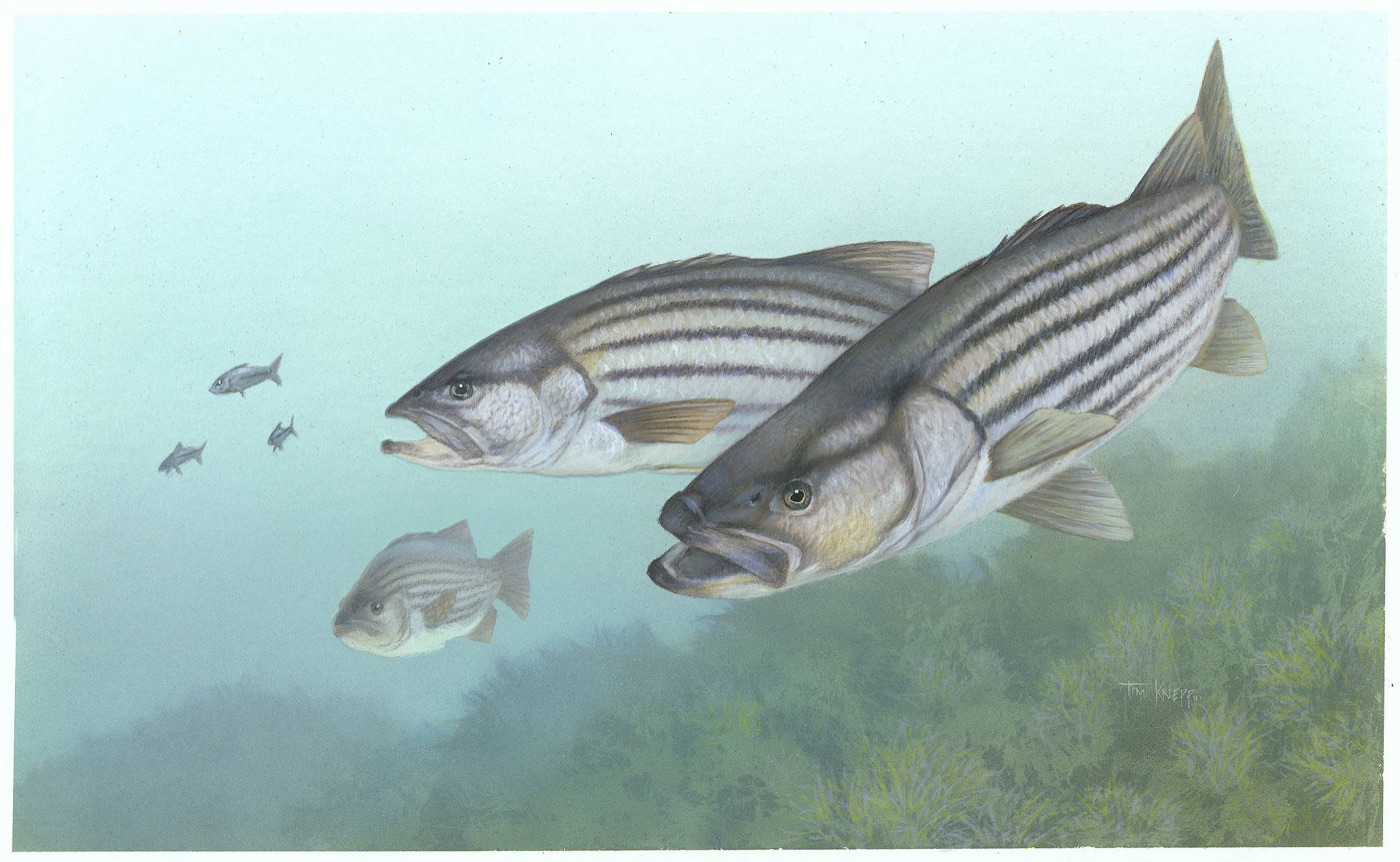
Anywhere bait fishes on the bottom and you want the fish to move off with it unimpeded. In the surf it is the default for redfish and black drum; around structure and channel edges it takes striped bass on live and cut bait. Texas Parks and Wildlife’s red drum guidance captures the principle for live bait generally: fish it on the bottom “using a slip-sinker type of rig where the fish can swim freely.”
Freshwater anglers know the same geometry as the Carolina rig — our Texas and Carolina rig guide covers the soft-plastic version, and TPWD’s beginner advice to place a sinker four to eight inches above the hook so live bait looks natural is the same idea at smaller scale. When you want two baits working instead of one, the high-low rig is the other half of the bottom-fishing toolkit; every rig on our rigs page is a different answer to where in the water column your bait should sit.
Frequently asked questions
What is a fish finder rig and why is it called that?
It is a bottom rig built around a sliding sinker: the main line passes through the weight, then a bead, then a barrel swivel, and a leader carries the hook. Take Me Fishing describes the effect plainly — the presentation lets the sinker rest on the bottom with the bait suspended above, which 'prevents the fish from feeling the weight as the line passes through the sinker.' The name is fishing shorthand; some sources also call it the sliding sinker bottom rig or the saltwater Carolina rig.
How do I tie a fish finder rig?
Four components in order. Slide an egg sinker onto your main line, then a small plastic bead — Take Me Fishing notes the bead protects your knot from being nicked by the weight. Tie the main line to a barrel swivel, then attach a leader to the swivel's other end and a hook to the leader. Their saltwater version uses a 6- to 12-inch leader snelled to the hook; the right length depends on your target species, so treat it as a starting point rather than a rule.
What sinker should I use for this rig?
The lightest one that does the job — that's Take Me Fishing's stated rule of thumb: use the lightest sinker that keeps the bait in the feeding zone. Egg sinkers are the classic sliding weight; pyramid sinkers with a plastic sleeve serve the same role in surf, and a fishfinder slide lets you clip on heavier weights than an egg sinker comfortably handles. Texas Parks and Wildlife's surf guidance is simply that a heavy grabbing sinker is needed to hold bait stationary in the wash.
Should I use a circle hook on a fish finder rig?
It is the natural pairing for bait, and agencies push it. NOAA's release best practices recommend circle hooks and note some fisheries require them. New York's DEC explains why — circle hooks 'are designed to slide out of the throat if swallowed and hook the lip or mouth of a fish' — and gives the technique that comes with them: do not set the hook, point the rod tip at the fish and reel steadily, and once the line comes tight keep reeling 5 to 10 seconds before raising the rod. DEC also specifies non-offset (in-line) circles, where point and barb sit in the same plane as the shank.
Is this rig only for saltwater?
No — the mechanism works anywhere bait is fished on the bottom. The same sliding-sinker principle is what the freshwater Carolina rig uses, and Texas Parks and Wildlife recommends a slip-sinker style rig for live bait so the fish can swim freely with it. Surf, pier, jetty, river bottom or lake flat: if you want bait held near the bottom while a fish takes line unimpeded, this is the rig.
Sources
- 3 Must-Know Beach Fishing Rigs for Beginners — Take Me Fishing (Recreational Boating & Fishing Foundation). Accessed August 16, 2026.
- Saltwater Fishing Rigs — Take Me Fishing (Recreational Boating & Fishing Foundation). Accessed August 16, 2026.
- Saltwater Fishing Sinkers — Take Me Fishing (Recreational Boating & Fishing Foundation). Accessed August 16, 2026.
- Red Drum in Texas — Texas Parks & Wildlife Department. Accessed August 16, 2026.
- Best Practices for Saltwater Fishing — New York State Department of Environmental Conservation. Accessed August 16, 2026.
- Catch and Release Fishing Best Practices — NOAA Fisheries. Accessed August 16, 2026.
- Use of Lead Fishing Tackle on Inland Waters — Maine Department of Inland Fisheries and Wildlife. Accessed August 16, 2026.
- Being a Responsible Angler — New York State Department of Environmental Conservation. Accessed August 16, 2026.
How we choose sources: sources policy.
More in this series
Know when it's worth going.
Fishing Club AI turns live weather, pressure and moon data into a simple bite forecast for your spot — so the skills you practise get used on the right day.
Get the App