How to Choose Lure Colour
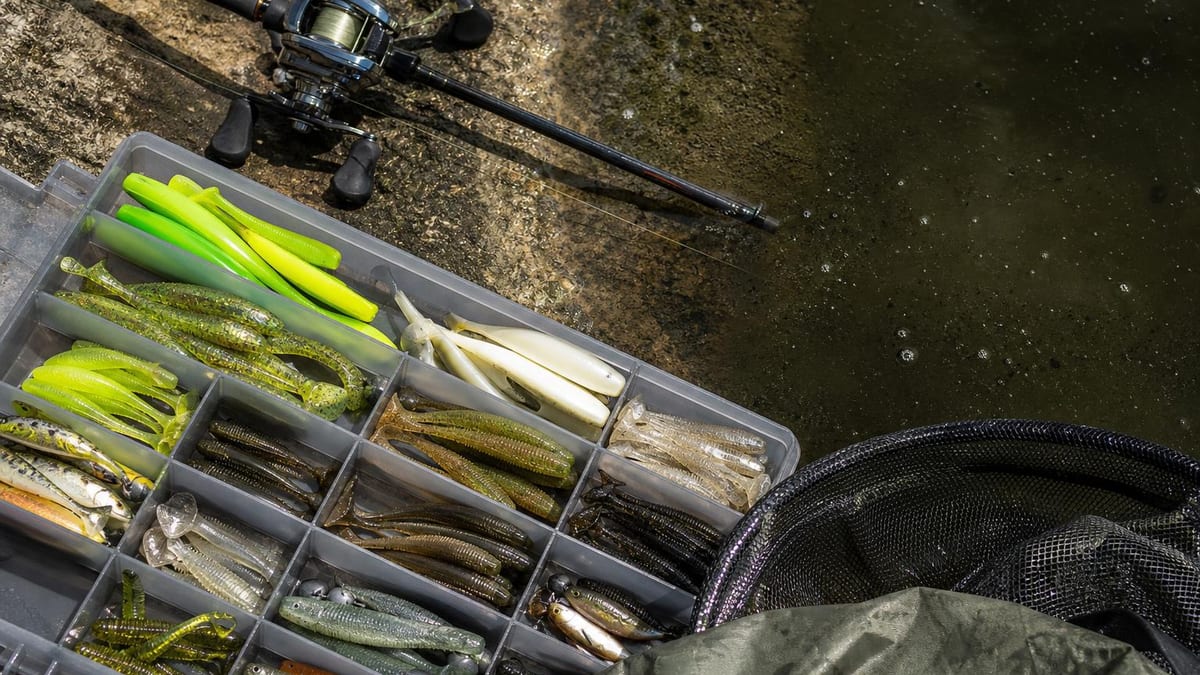
Choose lure colour for visibility in the conditions you are fishing rather than by rule of thumb. Water absorbs red light first and blue last, so warm colours lose their appearance with depth while darker silhouettes and high-contrast patterns stay visible. In murky water or low light, contrast matters more than the specific colour.
Key takeaways
- NOAA: blue light penetrates best, then green, yellow, orange, and red last.
- A red lure at depth is not red to a fish; with no red light to reflect, it reads as dark.
- Fish do have genuine colour vision — a cichlid study showed discrimination independent of brightness.
- We found no verified research showing specific lure colours reliably catch more fish for anglers.
- Think in terms of contrast against the background rather than matching a colour chart.
What water does to colour
Water filters light unevenly, and that is the whole basis of choosing lure colour sensibly. NOAA states the order plainly: “Blue light penetrates best, green light is second, yellow light is third, followed by orange light and red light.”
The consequence is that a lure does not keep its colour as it sinks. Once the wavelengths that make a colour visible are gone, the object cannot reflect them. NOAA describes exactly this effect in deep-sea fish: at depth a red fish “appears blackish because there is no red light to reflect at that depth, and the fish absorbs all other wavelengths of color.”
Those figures come from the open ocean, where NOAA notes red light is gone by around 100 metres. Most fishing happens far shallower, and inland water is far less clear, so the filtering happens much faster than in blue ocean water. The direction of the effect is what transfers: warm colours go first, and they go first fastest where the water is stained.
Fish can see colour — but not necessarily yours
Fish are capable of true colour vision, so colour is not purely an angler’s superstition. The mechanism is real. In a controlled study of a Lake Malawi cichlid, “most fish were significantly more likely to choose the trained over the distracter stimuli, irrespective of brightness,” which shows genuine colour discrimination rather than a response to how light or dark something looked.
Fish that can discriminate colour can, in principle, respond to it, which is why the question is worth taking seriously rather than dismissing.
What it does not establish is which colours matter to the species you fish. Visual systems differ enormously between fish, tuned to the light of the habitats they evolved in. A cichlid in clear tropical rock habitat is not a stand-in for a catfish in a stained river.
What we could not verify
We found no accessible, published research demonstrating that specific lure colours reliably produce more fish for anglers under real conditions. Colour charts and rules — chartreuse for stained water, natural for clear — are common, consistent enough to be useful shorthand, and largely untested in public research.
There is a plausible reason such research is scarce. Isolating colour from everything else in fishing is hard: retrieve speed, depth, action, light, water clarity and angler confidence all move at once. Studies that have looked at angling outcomes have tended to examine gear configuration or technique rather than colour.
So this guide gives you the physics, which is solid, and stops short of promising results, which is not.
A practical way to choose
The useful question is how visible your lure is in this particular water, not which colour the fish prefer today. Start with visibility, not colour. Ask how far a fish can see in this water, and what will stand out against the background it is being seen against. That question has an answer you can observe; “what colour do they want today” mostly does not.
Clear water, good light. Subtle, natural finishes are visible without looking wrong, and fish get a long look at the lure. This is where translucent and baitfish-pattern finishes make sense.
Stained or muddy water. Contrast beats subtlety. Dark, solid colours give a strong silhouette; bright, high-contrast patterns are easier to track. Both work for the same underlying reason — they are easier to separate from the background.
Deep water or low light. Remember that warm colours are already gone. A dark lure viewed from below against a lighter surface gives the clearest outline, which is why black and dark profiles have such a following for night fishing.
Overcast versus bright. Less light reaching the water compresses the same effect into shallower depth, so treat a dull day slightly more like deeper water.
Let other senses do some work
When visibility is genuinely poor, colour has limited room to matter. Vibration from a blade or a wide-wobbling body, a rattle, or a bulkier profile pushing more water gives fish something to find that does not depend on light at all.
The same logic applies to speed. A lure moving too fast in murky water can pass a fish before it is detected, regardless of how visible the colour would be under better conditions.
Water clarity and light also change with conditions on the day — wind that stirs a shallow bank changes visibility within an hour. Our guide to how wind affects fishing covers that mechanism.
Limitations and context
The NOAA figures describe open ocean water. Fresh water, especially stained or algae-rich water, absorbs and scatters light differently and much faster, so treat depths in this guide as direction rather than measurement.
Confidence is also a real factor and worth admitting. An angler who trusts a colour fishes it more carefully, longer and in better places, and that alone can change results. If a colour makes you fish better, that is a legitimate reason to tie it on — just not evidence that the fish agree.
Frequently asked questions
Does lure colour actually matter?
Colour clearly changes how visible a lure is, and fish can genuinely see colour rather than only brightness. What we could not verify is any published research showing that specific colours reliably catch more fish in real angling conditions. Treat colour as one way of managing visibility, not as a hidden key.
Why do red lures stop looking red underwater?
Because water absorbs red light first. NOAA explains that blue light penetrates best, followed by green, yellow, orange and red. At depth there is no red light left to reflect, so a red object appears blackish — the same reason many deep-sea animals are red.
What colour should I use in muddy water?
Prioritise contrast and other senses rather than colour itself. In water where visibility is measured in inches, a dark silhouette against the surface light or a bright, high-contrast pattern is easier to pick out than any subtle finish, and vibration or a rattle often does more work than colour.
Do fish see colour the same way people do?
No. Colour vision varies widely between species, and their visual systems evolved for their own habitats. Research on a Lake Malawi cichlid found the fish were more likely to choose a trained colour over distractors regardless of brightness, which demonstrates true colour discrimination — but it does not mean that species sees what you see.
Sources
- Why are so many deep-sea animals red in color? — NOAA Ocean Exploration. Accessed August 2, 2026.
- Behavioral color vision in a cichlid fish: Metriaclima benetos — PMC (open access). Accessed August 2, 2026.
How we choose sources: sources policy.
More in this series
Know when it's worth going.
Fishing Club AI turns live weather, pressure and moon data into a simple bite forecast for your spot — so the skills you practise get used on the right day.
Get the App