Fishing with Kids: How a State Education Programme Sets Up a First Trip
Give each child a short closed-face rod, practise casting with a hookless plug before any hook appears, keep one adult for every five children, and fish for panfish close to shore under a bobber. That is Minnesota's MinnAqua programme, which also recommends barbless hooks for young anglers and says the safety message on casting cannot be repeated enough.
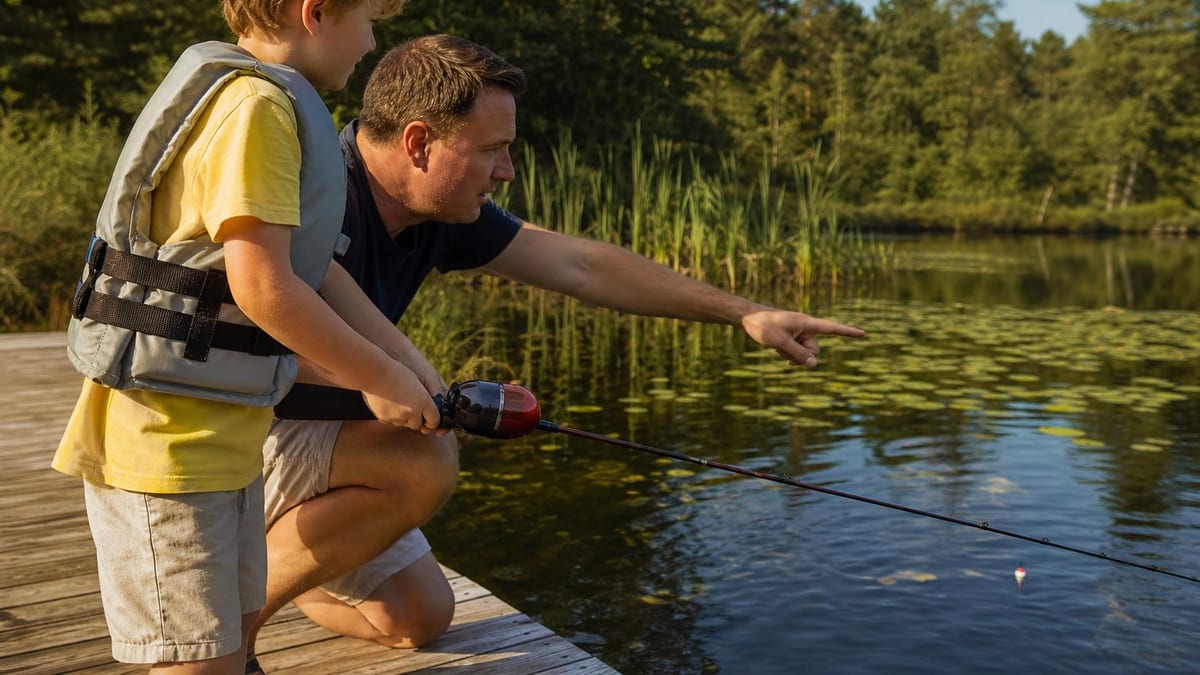
Key takeaways
- Minnesota's MinnAqua lessons use short kid-sized rods with closed-face reels and a casting plug instead of a hook until the cast is learned.
- The programme's adult ratio is one adult per five participants for casting and fishing sessions.
- Barbless hooks are recommended for young anglers, and hooks are secured to the rod's hook keeper when walking.
- The take-along guide's rules: know where your hook is at all times, stay a pole's length apart on shore, and on a pier just drop the line straight down.
- The target is panfish close to shore — the U.S. Fish and Wildlife Service and MinnAqua both aim children at docks, weeds and fallen logs, not open water.
Borrow the plan from people who do this every week
Minnesota’s Department of Natural Resources runs an aquatic education programme called MinnAqua that has been taking school groups fishing for decades, and it publishes its lesson plans. That is a better starting point than any parenting blog, because the lessons were built for the hardest version of the job — twenty children, one shoreline, hooks — and everything in them scales down to one child easily.
The programme’s own summary of the goal is worth holding onto: the students learn to carry a rod and cast safely, cast toward cover where fish hide, and with practice aim with consistency. Catching a fish is treated as the reward for doing those things, not the lesson.
The gear, and why it is what it is
MinnAqua’s casting lesson specifies short, kid-sized rods with closed-face reels. Its rods-and-reels lesson explains the choice: the closed-face (push-button) reel is the simplest type to learn to use because the line is less likely to tangle than with an open-face reel, and the rods that go with it are about five feet long with small guides. The U.S. Fish and Wildlife Service’s first-time guide lands on the same rig and adds the fitting test — a rod the angler can hold comfortably in one hand.
Hooks are small and barbless. The lesson recommends barbless hooks for its youngest students, and the rigging sessions use size 6 and 8; the Fish and Wildlife Service’s beginner range is 6 to 10. Our hook sizes guide explains the numbers.
The rest of the programme’s kit list, from its equipment matrix, is what a parent’s tackle bag should look like:
- bobbers — one-inch round clip-on type, one per child
- split shot sinkers
- fingernail clippers, five or six (for cutting line — never teeth)
- needle-nosed pliers
- a first aid kit and a phone
- the current fishing regulations
- a fishing licence for anyone over the state’s age
The clippers are there for a reason the lesson spells out: people who cut line with their teeth can chip a tooth or swallow a loose piece of line. Our fishing tackle for beginners guide covers the same list in more detail.
The first cast has no hook on it
This is the single most useful thing in the programme. Before a child ever holds a baited rod, MinnAqua has them cast a casting plug — a hookless weight — at targets about twenty feet away, three casts per turn, in a lane with the other children well apart. The plug is tied on with an improved clinch knot, which the lesson teaches first using a hula-hoop as a giant hook eye.
The cast itself is the standard overhead: hold the button, look over your shoulder and overhead for people, power lines, branches, bushes and pets, bring the rod tip back to about ten o’clock, forward to two, release as it comes forward. The lesson’s scoring rubric says what “good” looks like: always looks to the side, front and back before casting, and carries the rod in a vertical position. Our how to cast guide has the full breakdown and the three common faults.
Two rules from the take-along guide belong on the shoreline:
- Stay a pole’s length away from your neighbour when fishing from shore.
- On a pier, don’t bother casting — just drop the line straight down.
The second one removes most of the risk at a stroke, and piers and docks are exactly where the fish are anyway.
The pop-can rig, if you want the day to stick
MinnAqua’s third casting lesson has children build a fishing rig from an ordinary soda can: monofilament wrapped around the can, a bobber, a sinker and a size 6 or 8 hook tied on with the clinch knot. The whole assembly is cast by hand, the way much of the world still fishes.
The lesson’s reasoning is not nostalgia. It points out that expensive high-tech equipment is not necessary for catching fish, and that catching a fish on a rig you built yourself is exciting and satisfying. For a child whose attention span is shorter than a bobber’s patience, a rig they made is an hour of engagement before the water is even reached.
How many adults
The programme’s equipment matrix gives the ratio it uses: one adult per five participants for casting, rigging and fishing sessions, with at least two adults who have fishing experience present for the equipment lesson. The pop-can lesson relaxes it to one per five to ten because nothing has a hook on it until the end.
A family does not need a spreadsheet, but the principle transfers exactly: each child with a hook in the water needs an adult whose attention is on that hook rather than on their own rod. Two children and one adult means the adult does not fish. That is the day.
Where to fish, and what for
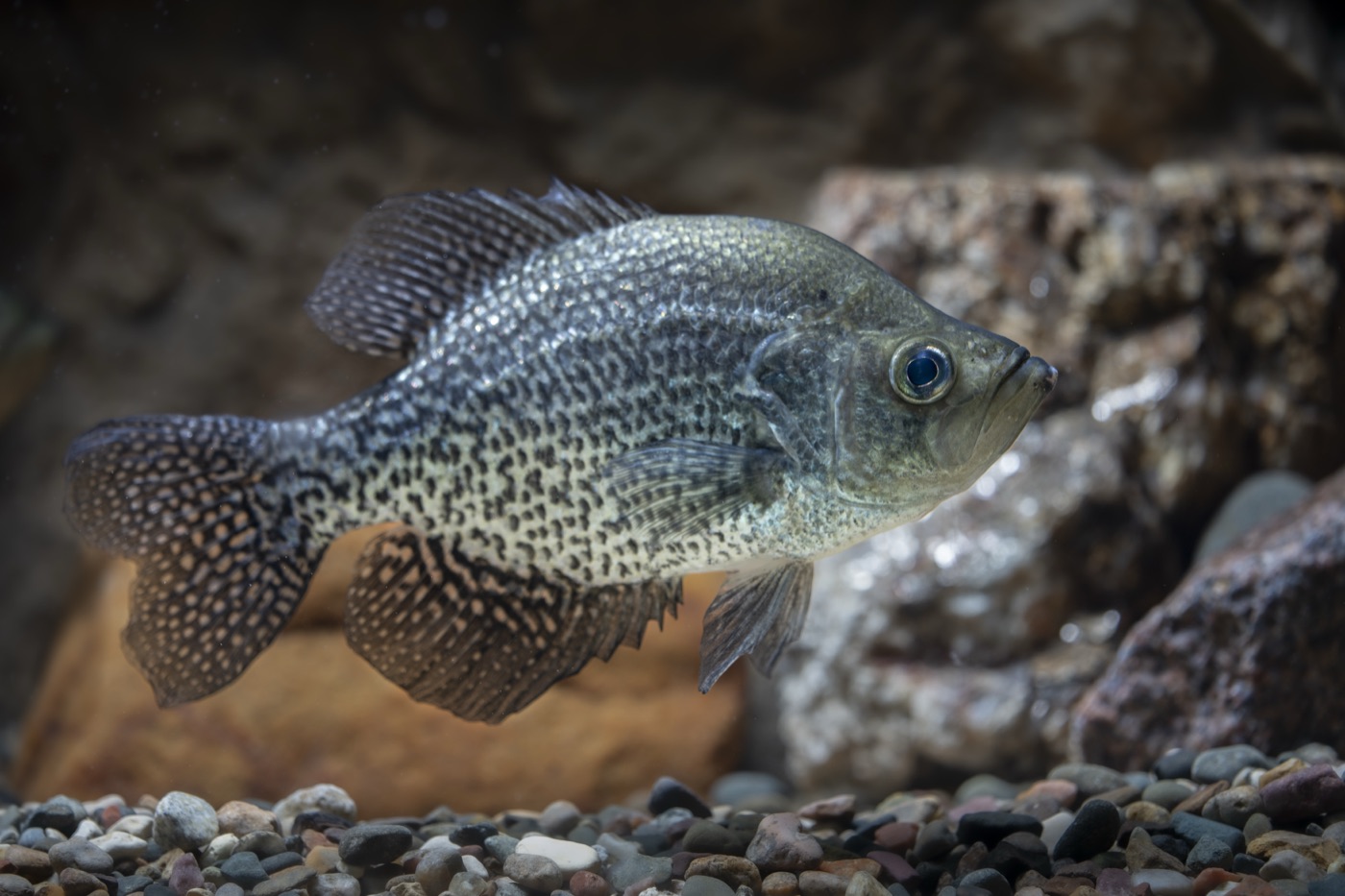
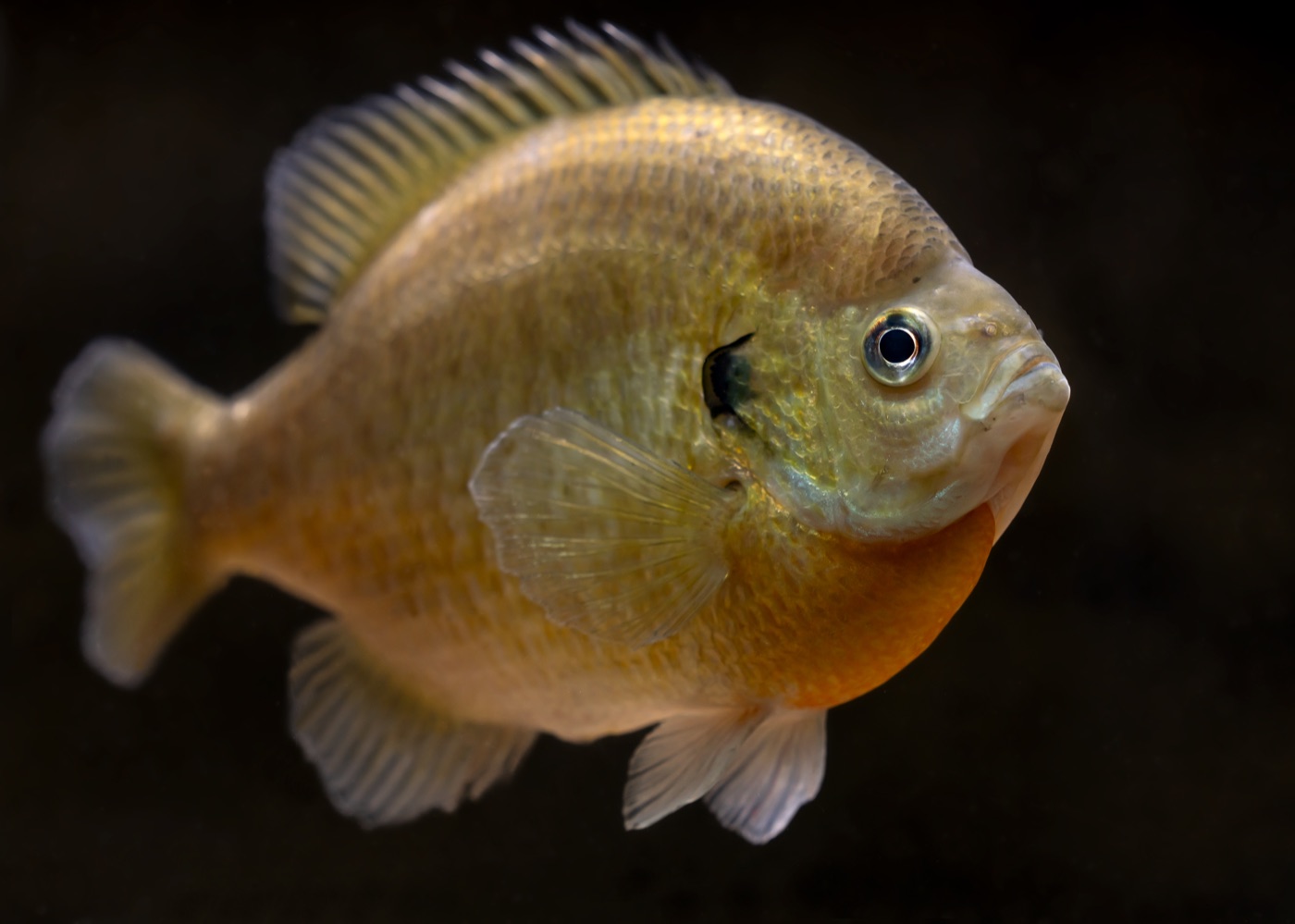
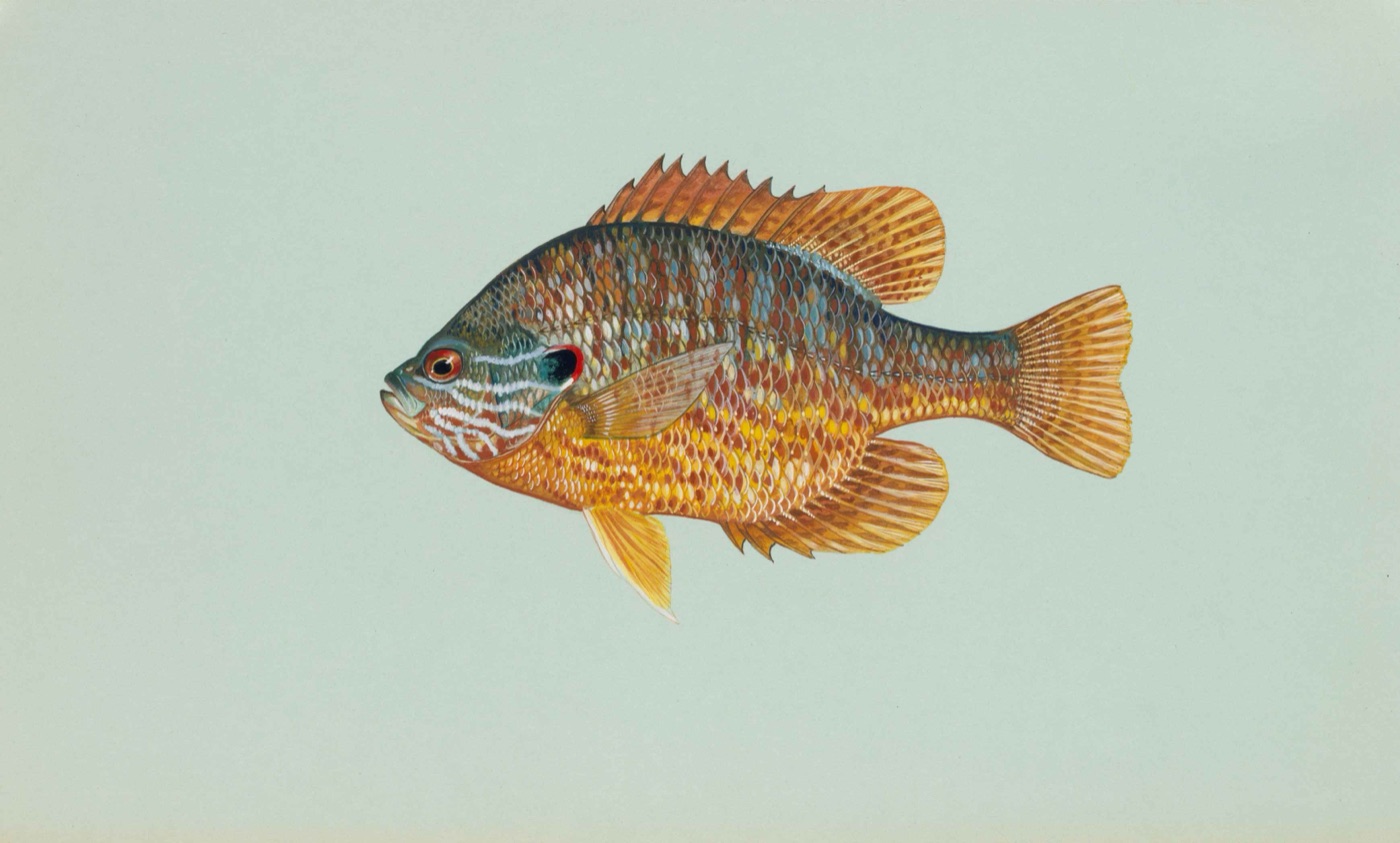
Panfish close to shore are the target. MinnAqua’s casting lesson tells students to think of the practice targets as sunfish habitat — under docks, near plants and fallen logs — and its take-along guide lists the summer spots: under and around docks and piers, around submerged trees, stumps and brush piles, among aquatic plants, under the shade of overhanging trees. The Fish and Wildlife Service’s beginner advice is the same: a weedy or rocky area a few feet deep, and cast as far from shore as you can.
The rig is a worm on a small hook under a bobber, sinker six to twelve inches up the line, and the instruction is simply to watch it. Small panfish nibble first; when the bobber goes under, lift the rod. Our panfish guide covers the species — bluegill and pumpkinseed are the usual first fish — and shore fishing basics covers working a bank.
Two more from the take-along guide. Fish have a vibration-sensing lateral line, so loud talking and stamping feet scare them off — which is a surprisingly effective way to get a group of children quiet. And the programme’s rules of thumb for when to go — morning and evening over midday, overcast over bright sun — are offered to be tested, which is a good frame for a child: run the experiment.
Handling the fish
The Fish and Wildlife Service’s release rules are simple enough for a child to own: wet your hands before touching the fish, keep it in the water as much as possible, and if it has swallowed the hook, cut the line rather than pull. A rubber net and rubber gloves protect the fish’s mucus layer. Our catch and release guide covers the rest, including how to revive a tired fish — a job children take seriously if it is given to them.
When to call it
Lightning ends the day, no discussion — MinnAqua’s take-along guide says never fish when lightning is near. The programme also publishes a temperature threshold for taking groups out in winter: below 0°F or wind chill, consider rescheduling; colder than minus 10°F, definitely reschedule. That is conservative for a summer bank, but the reasoning transfers to any season — a cold, wet child does not ask to come back.
Licence ages are the last thing to check: Minnesota’s materials note a licence is needed over 16, Texas exempts under-17s, and most states run free fishing days. Our licences and regulations guide shows where to look.
Frequently asked questions
What is the best fishing rod for a child?
A short closed-face combo. Minnesota's MinnAqua casting lesson specifies short, kid-sized rods with closed-face reels, and its rods-and-reels lesson explains why: the closed-face reel is the simplest type to learn to use because the line is less likely to tangle than with an open-face reel. The rods used with them are about five feet long with small guides. The U.S. Fish and Wildlife Service's first-time guide makes the same recommendation and adds the practical test — choose a rod the angler can hold comfortably in one hand.
How do you teach a child to cast safely?
Without a hook, first. MinnAqua's lesson has students practise with casting plugs instead of hooks, in a lane with targets about twenty feet away, three casts per turn. Before each cast the child is taught to look over the shoulder for people and overhead and behind for obstacles such as power lines, branches, bushes and pets. The lesson's scoring rubric rewards a student who always looks to the side, front and back before casting and who carries the rod vertically. Its take-along guide adds that when fishing from shore, each angler stays a pole's length from the next, and that from a pier there is no need to cast at all — just drop the line straight down.
How many adults do you need?
MinnAqua's equipment matrix specifies a ratio of one adult per five participants for its casting, rigging and fishing lessons, with two or more adult helpers who have fishing experience for the rods-and-reels session. Its pop-can casting lesson allows one adult per five to ten students because there are no hooks involved. For a family outing the number is smaller, but the principle holds: every child with a hook needs an adult who is watching that hook, not their own line.
What hooks should kids use?
Small and barbless. MinnAqua's casting lesson recommends barbless hooks for its youngest age group, and its rigging sessions use sizes 6 and 8 — the U.S. Fish and Wildlife Service's beginner range is 6 to 10. The lesson also teaches where the hook lives when it is not in the water: hooked to the small loop near the rod grip or the bottom line guide, with the line tightened, so it cannot swing. The programme's phrasing is 'always carry your hook and pay attention to where it is — never let it swing.'
What should kids fish for?
Panfish, close to shore. MinnAqua's casting lesson tells children to aim at sunfish habitat — under docks, near plants and fallen logs — and its take-along guide lists where panfish sit in summer: under and around docks and piers, around submerged trees, stumps and brush piles, among aquatic plants, and under the shade of overhanging trees. The Fish and Wildlife Service's advice for beginners is the same target: a weedy or rocky area a few feet deep, a worm on a small hook under a bobber, and watch it. Sunfish bite readily and often, which is the point with a child.
When should we cancel?
Lightning, always. MinnAqua's take-along guide says never fish when lightning is near, and Iowa's paddling guidance is to leave the water immediately if it occurs. Cold has a published threshold too: the programme's winter lesson tells leaders that if the temperature or wind chill is below 0°F, consider rescheduling, and colder than minus 10°F, definitely reschedule. That was written for groups of children on ice, so it is conservative for a summer shoreline — but it is an agency's number, and the reasoning behind it is that a cold, wet, miserable child does not come back.
Sources
- Pier Notes: Casting, Finding, Landing, and Fish Senses — a take-along guide for fishing with kids — Minnesota Department of Natural Resources (MinnAqua). Accessed September 25, 2026.
- Fishing: Get in the Habitat! Lesson 5:2 — Casting a Closed-face Rod and Reel Combo — Minnesota Department of Natural Resources (MinnAqua) / USFWS Sport Fish Restoration. Accessed September 25, 2026.
- Fishing: Get in the Habitat! Lesson 5:3 — Pop Can Casting — Minnesota Department of Natural Resources (MinnAqua) / USFWS Sport Fish Restoration. Accessed September 25, 2026.
- Basic Fishing Equipment Matrix (Appendix 11:3) — Minnesota Department of Natural Resources (MinnAqua) / USFWS Sport Fish Restoration. Accessed September 25, 2026.
- A Guide to Fishing for the First Time — Responsible Fishing Tips for New Anglers — U.S. Fish and Wildlife Service. Accessed September 25, 2026.
How we choose sources: sources policy.
More in this series
Know when it's worth going.
Fishing Club AI turns live weather, pressure and moon data into a simple bite forecast for your spot — so the skills you practise get used on the right day.
Get the App