Best Fishing Spots in Wisconsin: Five Great Lakes Spots and When the Fish Run
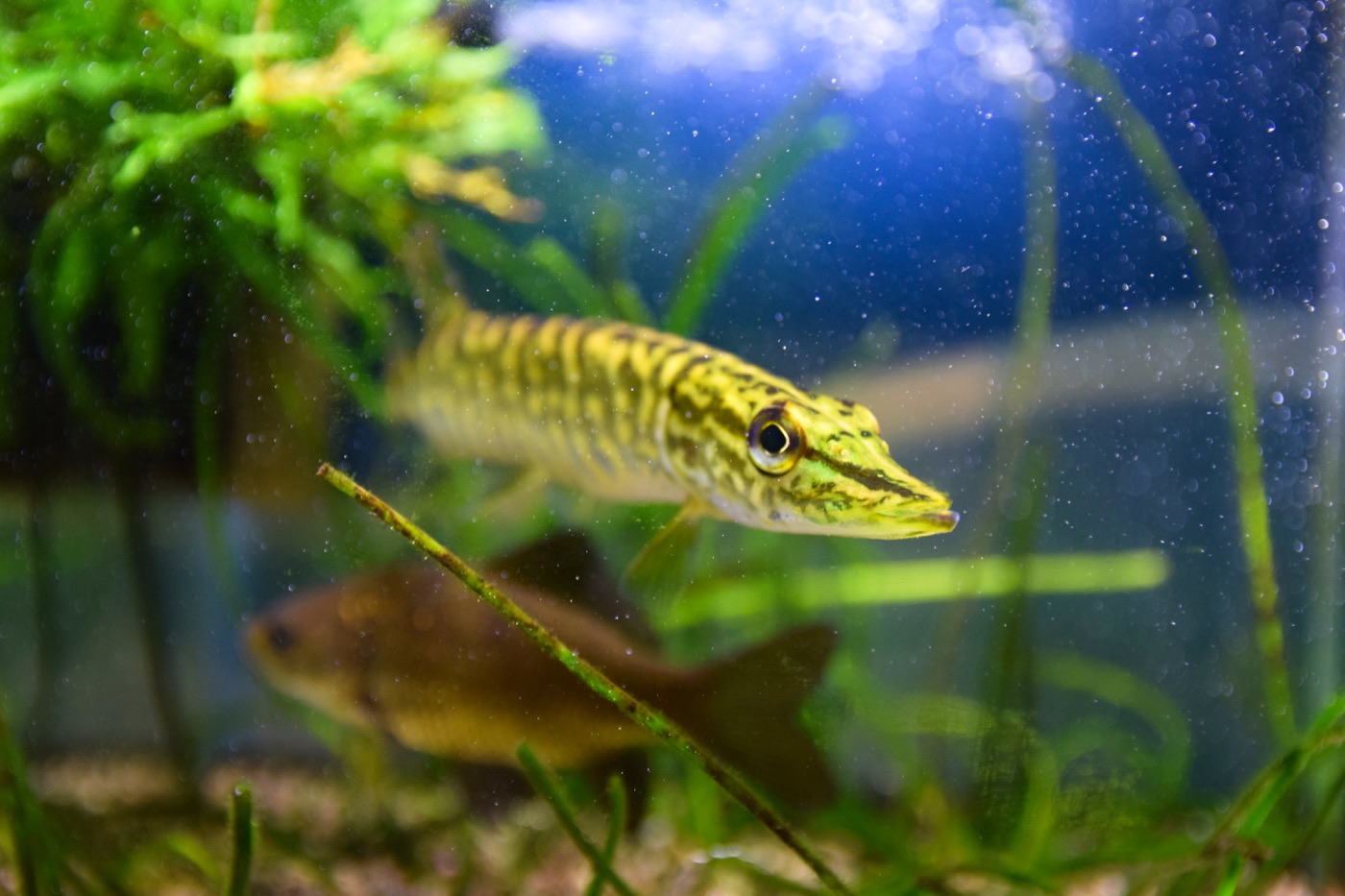
Five Wisconsin spots the state's Department of Natural Resources names itself, all on the Great Lakes coast it calls the state's most-visited water: Lakeshore State Park in downtown Milwaukee, the Root River at Lincoln Park in Racine, the Port Washington breakwalls, the Bois Brule River below US Highway 2 and the coal dock at Washburn on Chequamegon Bay. Salmon, steelhead and brown trout lead; walleye and pike on Lake Superior.
Key takeaways
- The Wisconsin DNR calls Lake Michigan 'the No. 1 most frequently visited water in Wisconsin' and lists 50 shore spots within an hour of downtown Milwaukee.
- Its Milwaukee brochure puts the fall peaks at September for chinook and steelhead, October for coho and December for brown trout.
- On the Bois Brule, the DNR counts about 27,000 angler trips a year aimed at lake-run steelhead, brown trout and coho below US Highway 2.
- The DNR's Lake Superior calendar names shore casting for walleye and northern pike off the coal dock in Washburn as a May fishery.
- Trout and salmon in Wisconsin need a stamp on top of the licence — the Great Lakes trout and salmon stamp on Lake Michigan and its tributaries, the inland trout stamp on the Brule.
How these five were chosen
The Wisconsin Department of Natural Resources is unusually specific about where to fish its Great Lakes coast. It publishes a brochure of 50 shore spots within an hour of downtown Milwaukee, each with its dominant species and directions; a page on its Root River steelhead facility; a detailed guide to the Bois Brule River; and a month-by-month calendar for Lake Superior that names docks and bays. Every pin on this page is a place one of those documents names.
The DNR also explains why the coast comes first: it calls Lake Michigan “the No. 1 most frequently visited water in Wisconsin,” with millions of fish stocked each year.
| # | Pinpoint | Water | Main fish (DNR) | Access |
|---|---|---|---|---|
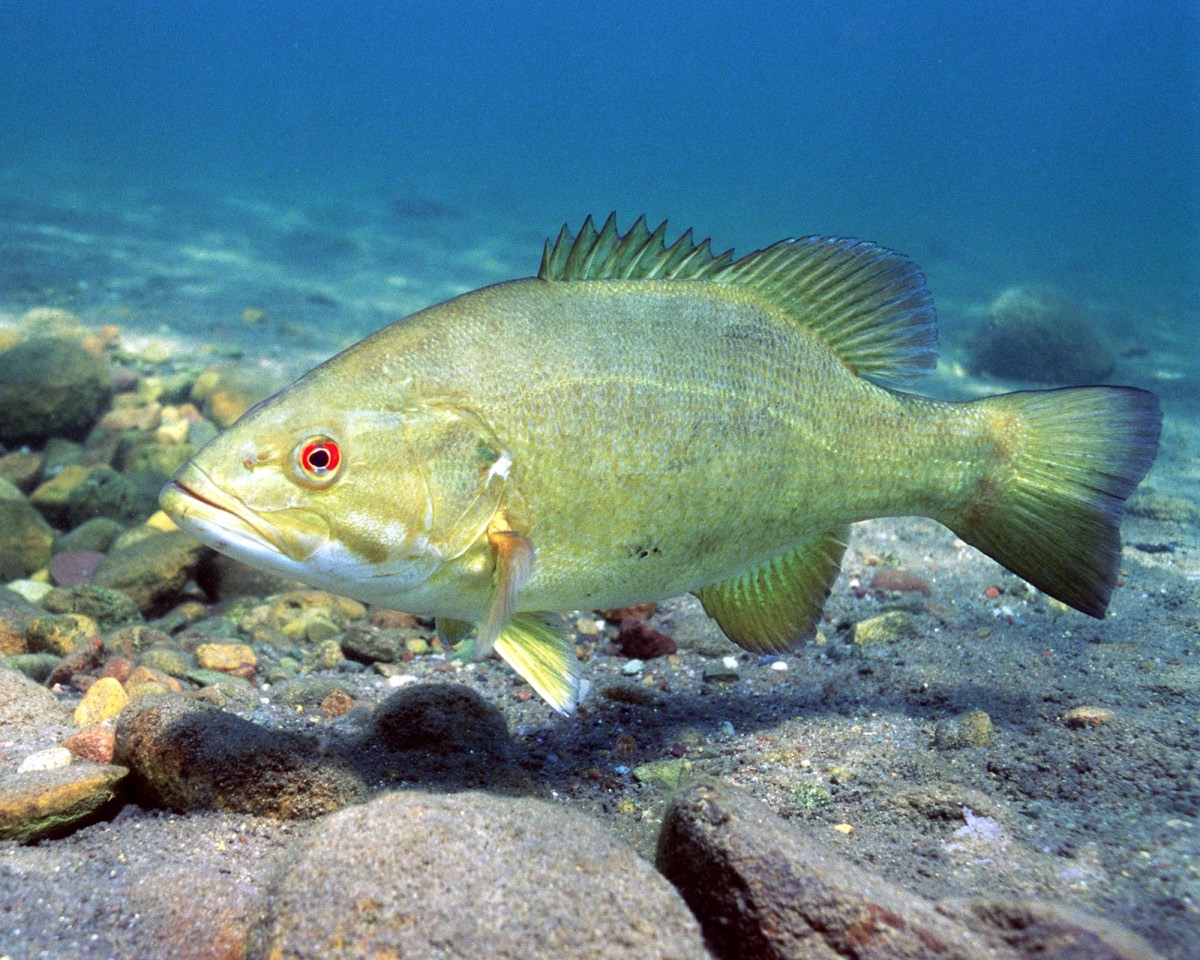
| 1 | Lakeshore State Park | Lake Michigan, Milwaukee | Brown trout, salmon, largemouth bass | Shore |
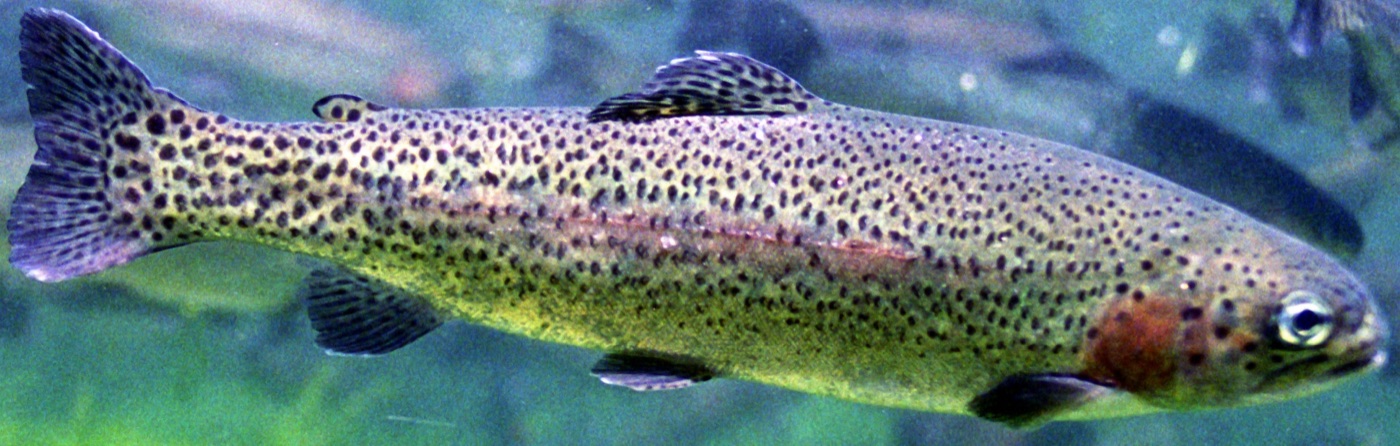
| 2 | Root River at Lincoln Park | Lake Michigan tributary, Racine | Salmon, steelhead, brown trout | Wade, bank |
| 3 | Port Washington breakwalls | Lake Michigan harbour | Brown trout, salmon, steelhead | Pier, shore |
| 4 | Bois Brule below US Hwy 2 | Lake Superior tributary | Steelhead, brown trout, coho, chinook | Wade, bank |
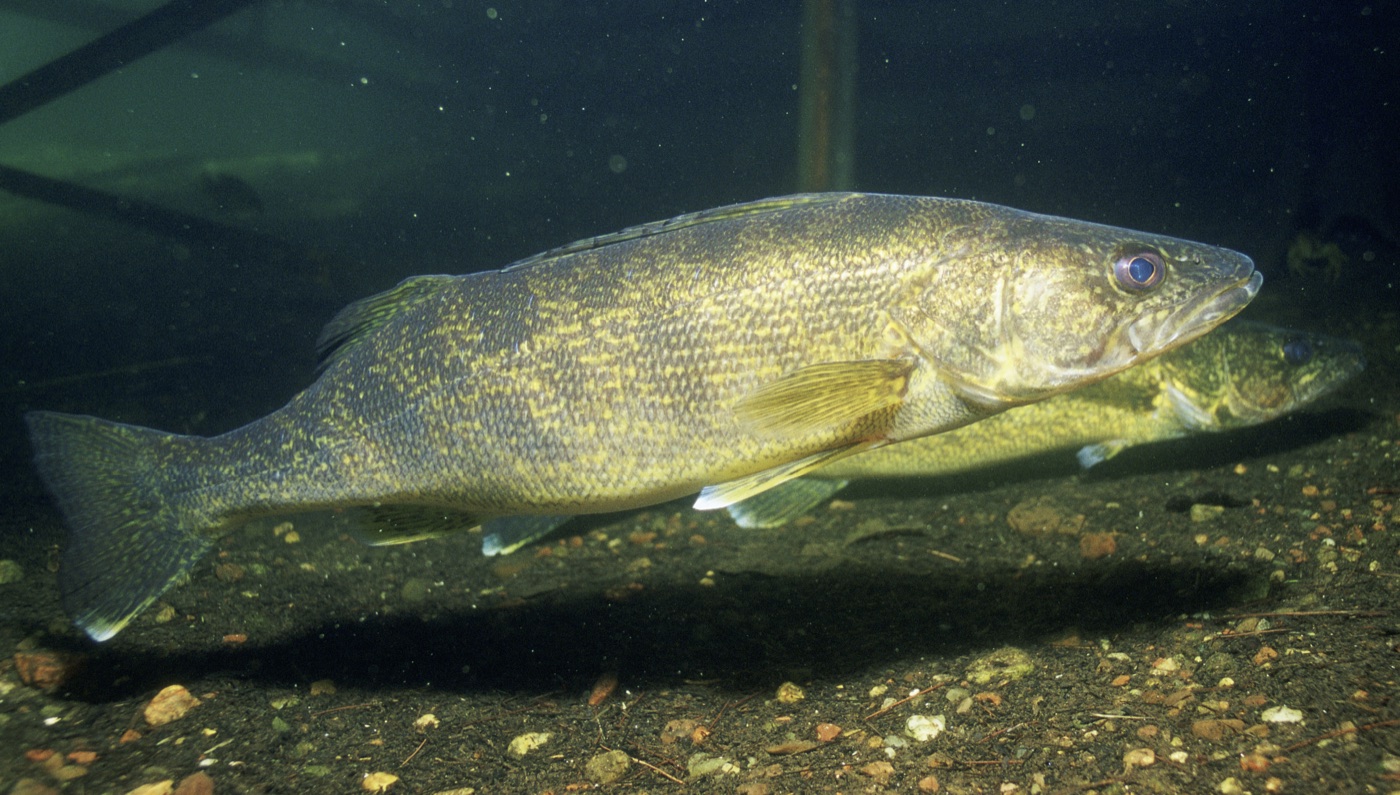
| 5 | Washburn coal dock | Chequamegon Bay, Lake Superior | Walleye, northern pike, smallmouth | Shore |
When the fish run. The DNR’s Milwaukee brochure charts the fall peaks:
| Species | Season on the chart | Peak |
|---|---|---|
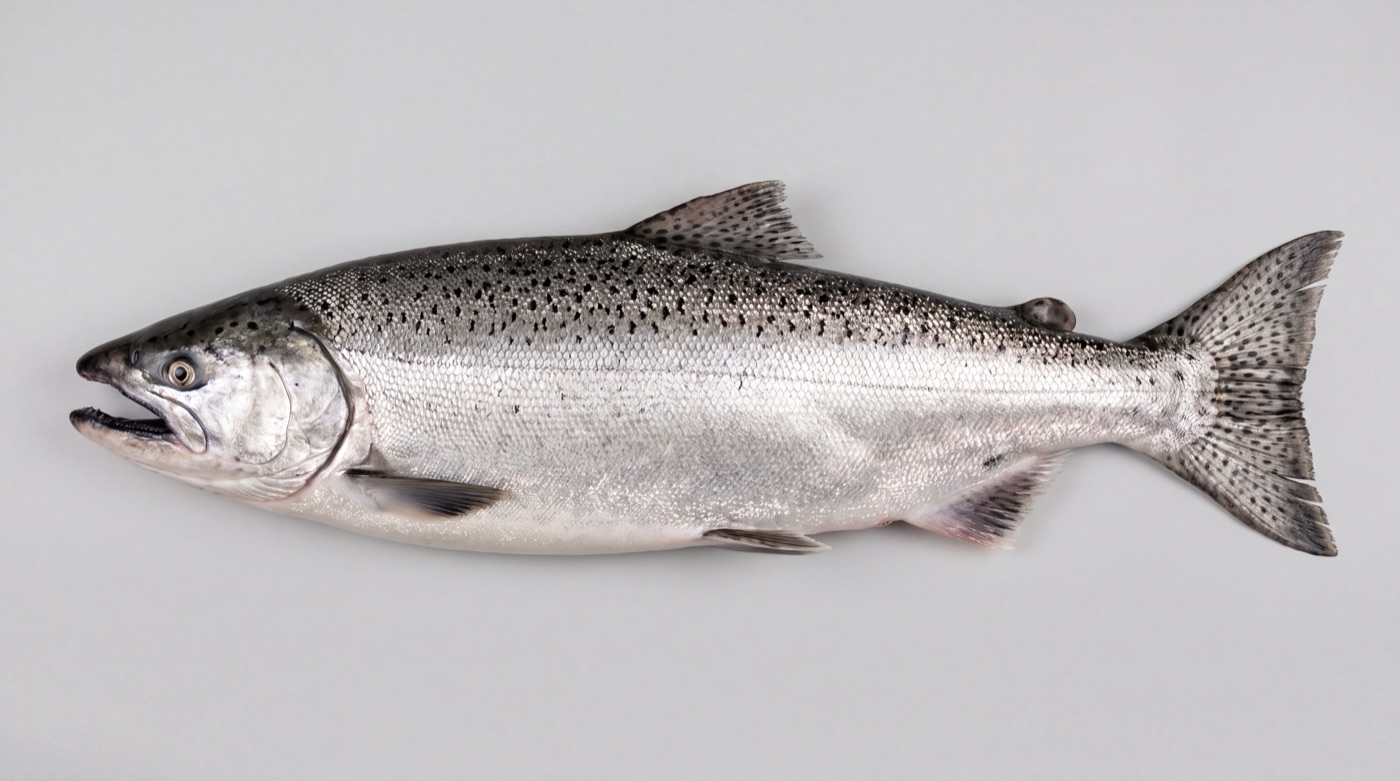
| Chinook salmon | September – October | September |
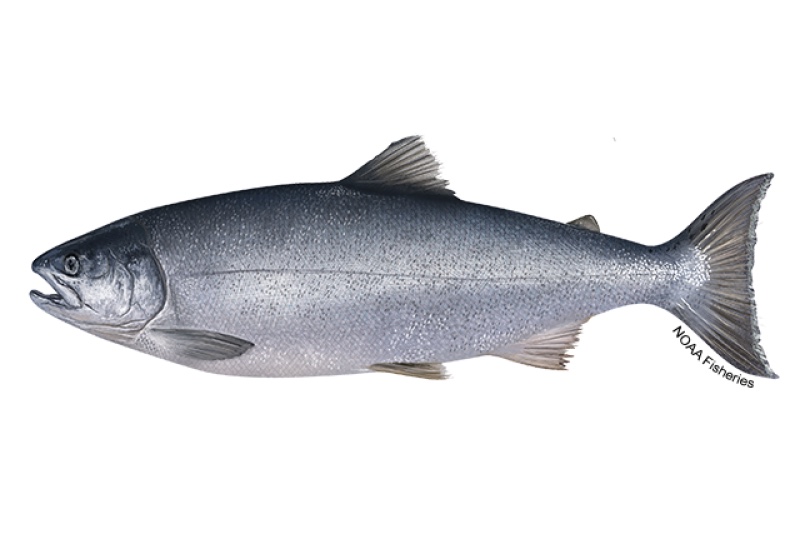
| Coho salmon | October – November | October |
| Steelhead | August to November | September |
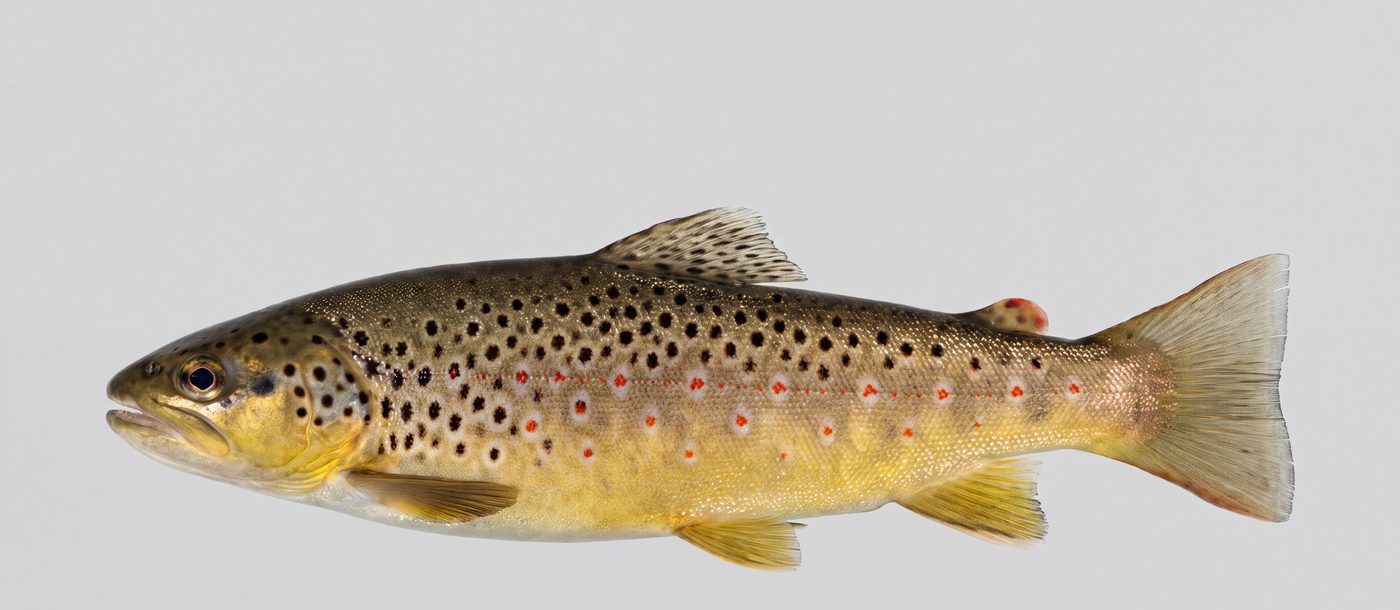
| Brown trout | September to December | December |
The brochure is dated August 2009 and still published by the agency; treat the peaks as a pattern, not a date. Its gear list holds up: an 8- to 11-foot medium-to-heavy rod, a medium spinning reel with a good drag, 8- to 10-pound monofilament, heavy-duty ball-bearing snap swivels for spoons off piers and breakwalls, and for bait, size 4 to 6 hooks with slip bobbers, split shot, three-way swivels and bell sinkers for spawn, minnows and waxworms.
Milwaukee — Lakeshore State Park
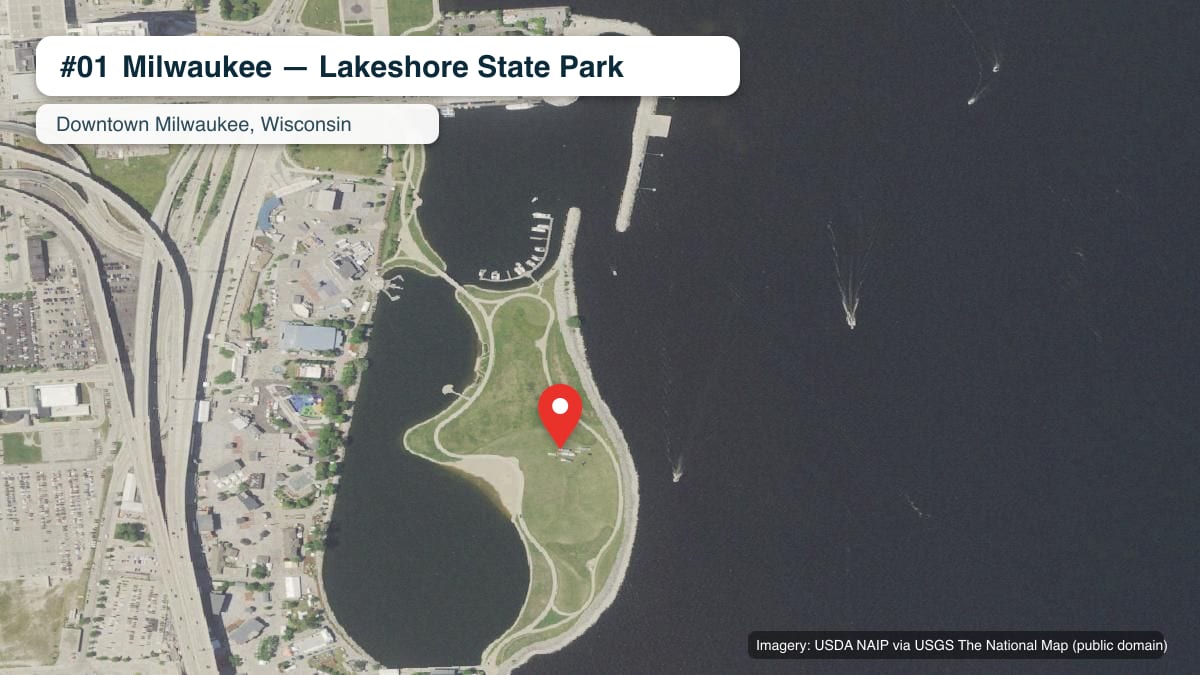
Why this exact spot. It is spot number one on the DNR’s list: 1.2 miles and about four minutes from downtown Milwaukee, with extensive shore fishing throughout the park. You reach it by taking I-794 east to the lakefront.
Target fish (DNR). Brown trout · salmon · largemouth bass.
Techniques.
- Off the rocks and breakwall: the DNR’s pier setup — long rod, spoons on heavy snap swivels, cast and retrieve through the fall runs.
- Bait: slip bobber over spawn, minnows or waxworms on a size 4 to 6 hook.
- Timing: brown trout are the long-season fish here, running through December by the DNR’s chart.
If the park is crowded, the same list puts McKinley Marina (pier and ramp, two miles), Veteran’s Park (shore, three and a half miles) and Jones Island (shore, under four miles) within about a dozen minutes. Our chinook salmon and brown trout pages cover the fish.
Racine — Root River at Lincoln Park
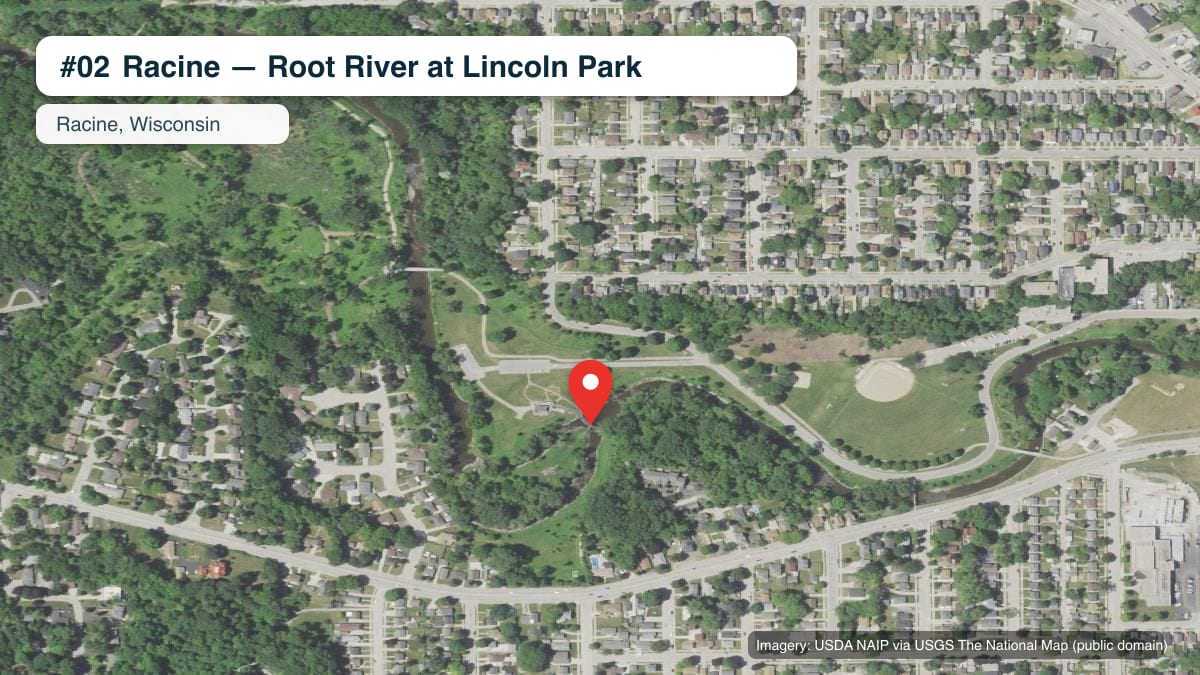
Why this exact spot. The DNR built its Root River Steelhead Facility here in 1992–93 to manage Lake Michigan’s trout and salmon, and explains why the fish come: each fall and spring, migrating chinook salmon, coho salmon, brown trout and steelhead enter the streams to spawn. Its brochure lists the Root River at Lincoln Park as spot 38, with extensive wadable access, 24 miles and about 48 minutes from downtown Milwaukee.
Target fish (DNR). Salmon · steelhead · brown trout.
Techniques.
- Wade: the DNR lists the river at Lincoln Park as having extensive wadable access.
- Bait or hardware: the DNR’s bait list for the Milwaukee-area runs is spawn, minnows and waxworms under a slip bobber; spoons cover more water.
- Watch the weir: at the facility the DNR’s ladder and viewing windows show the run in progress, which tells you whether fish are in the river.
The DNR’s rule matters most on tributaries: from September 15 to the first Saturday in May, there is no hook-and-line fishing on Lake Michigan tributaries from a half-hour after sunset to a half-hour before sunrise. Six more Root River access points — 6th Street, Washington Park, Island Park, Colonial Park, Quarry Lake Park and Horlick Dam — are on the same list.
Port Washington — breakwalls
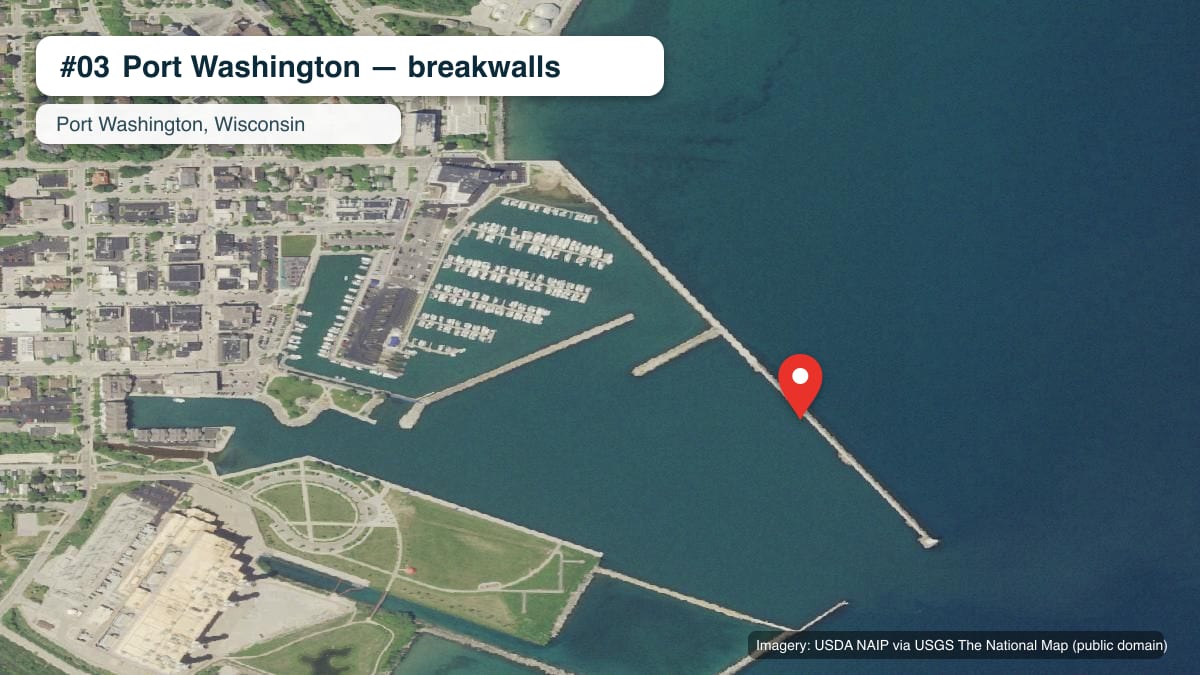
Why this exact spot. The DNR’s list gives Port Washington five separate entries, and the breakwalls (spot 22) are the open-water one: pier and shore access to both the harbour and Lake Michigan, 28 miles and 34 minutes north of Milwaukee, with the pier entrance on the north side of the harbour. The neighbouring entries are a fishing platform at the outflow of the Port Washington power plant and Sauk Creek, a steelhead and salmon stream.
Target fish (DNR). Brown trout · salmon · steelhead.
Techniques.
- Spoons off the wall: the DNR’s recommended setup is built for exactly this — a long, medium-to-heavy rod that reaches past the rocks and a drag that can handle a running salmon.
- Long-handled net: the DNR’s list calls for one rated for fish up to 20 pounds, because you cannot reach the water from a breakwall by hand.
- Fall, then winter: salmon in September and October, brown trout later.
The DNR’s gear note is also a safety note: weather conditions can change quickly on Lake Michigan. Stay off wet, wave-washed walls.
Bois Brule River — below US Highway 2
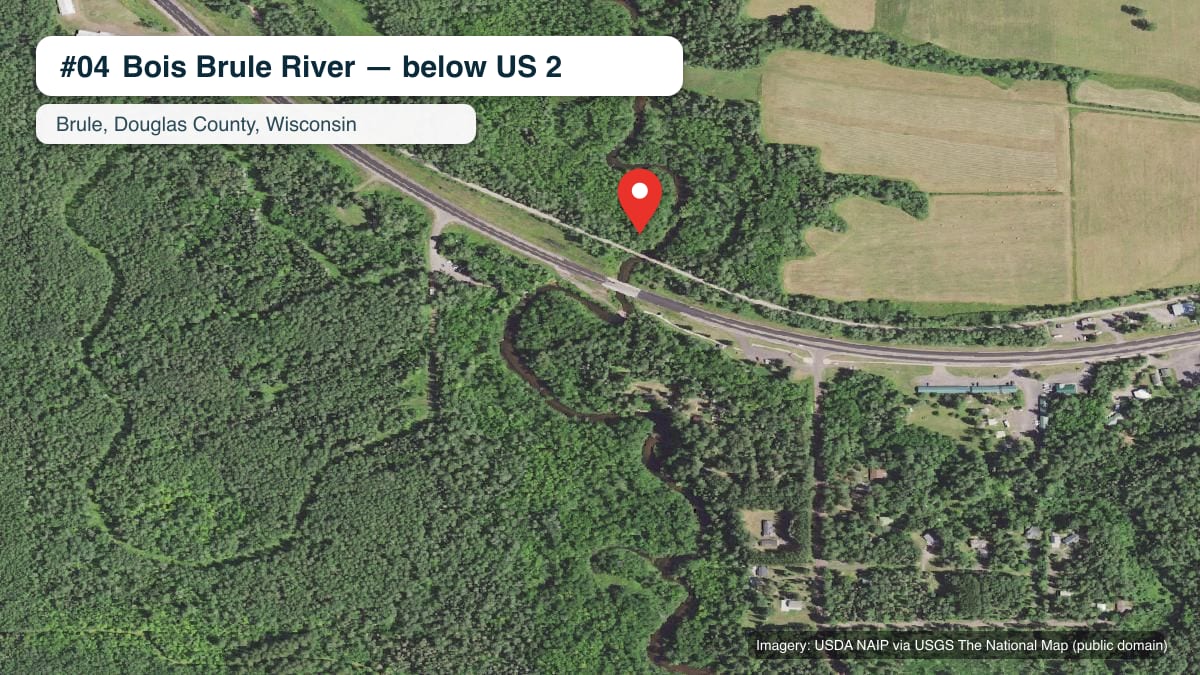
Why it is on the list. The DNR calls the Brule “one of Wisconsin’s best-known trout streams” and recreational fishing “arguably the most popular outdoor activity” on the river in spring and fall. It counts about 33,000 angler visits a year, about 27,000 of them aimed at lake-run steelhead, brown trout and coho on the lower river below Highway 2. The fishery is sustained by natural reproduction.
Why this exact spot. The DNR says the river north of US Highway 2 has many well-marked day-use access points running down to Lake Superior. The pin sits just below the Highway 2 bridge in Brule, where that lake-run water begins.
Target fish (DNR). Steelhead · lake-run brown trout · coho salmon · chinook salmon. Above County Highway B, resident brown and brook trout.
Runs and baits, from the DNR.
| Run | When | Peak | Baits |
|---|---|---|---|
| Spring steelhead | late March – May | April to early May | Yarn flies, spawn beads, large caddis imitations, spoons, spinners |
| Lake-run brown trout | early July – late October | mid-July to mid-September | Spoons, spinners, wobbling plugs, nightcrawlers |
| Chinook salmon | early July – mid-October | mid-August to late September | Flashy or colourful spinners, spoons, minnow-style plugs |
| Coho salmon | late August – late November | early to late September | Spoons, spawn, beads, flies |
| Fall steelhead | mid-August – late November | mid-September to late October | Yarn flies, spawn, beads |
Where they hold. Spring steelhead in deep runs and pools; fall steelhead in moderate current behind a rock, log or bank, dropping to deeper holes as the water cools; browns in slower, deep holes in low light; chinook and coho in slower water.
The DNR requires an inland trout stamp for trout and salmon on the river, sets a separate season for the lower river and bans fishing from a half-hour after sunset to a half-hour before sunrise there. Read its Brule regulations before you go — they are among the most specific in the state. Our steelhead and rainbow trout page covers the fish.
Washburn — coal dock, Chequamegon Bay
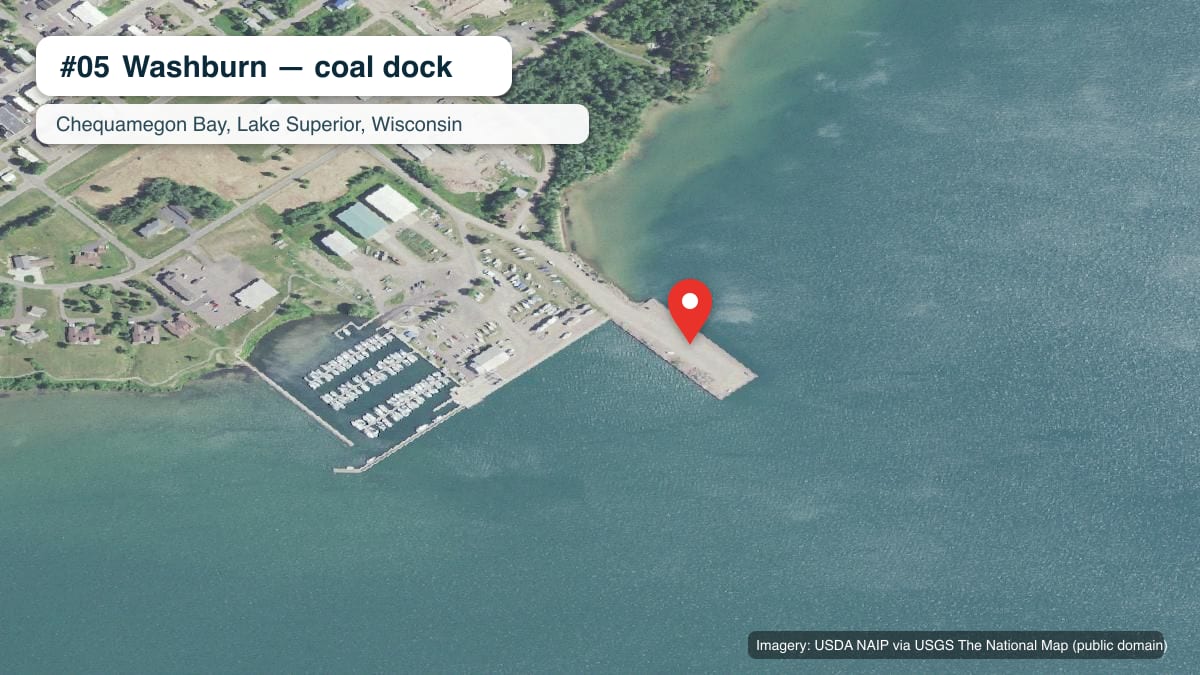
Why this exact spot. The DNR’s Lake Superior page calls nearshore areas such as Chequamegon Bay “an angler’s paradise,” and its month-by-month calendar names the place to stand: in May, shore casting for walleye and northern pike becomes popular along the Ashland side of the bay and off the coal dock in Washburn.
Target fish (DNR calendar). Walleye · northern pike · smallmouth bass · perch · trout and salmon.
The bay through the year, from the DNR.
- January: as the ice forms, splake and brown trout fishing is good along the main shore of the bay from Ashland to Houghton Point.
- March–April: trout and salmon off tributary mouths and in the bay through the ice; early April can be excellent for all species, ice permitting.
- May: shore casting for walleye and pike — the coal dock’s month.
- June–July: walleye, pike, smallmouth bass and perch productive in the bay.
- September: walleye and smallmouth still productive; trout and salmon trolling off the river mouths heats up as fish start to enter the rivers.
- October–November: excellent trout and salmon in the rivers and trolling in the bay; boat anglers jig or slip-bobber shiners for splake.
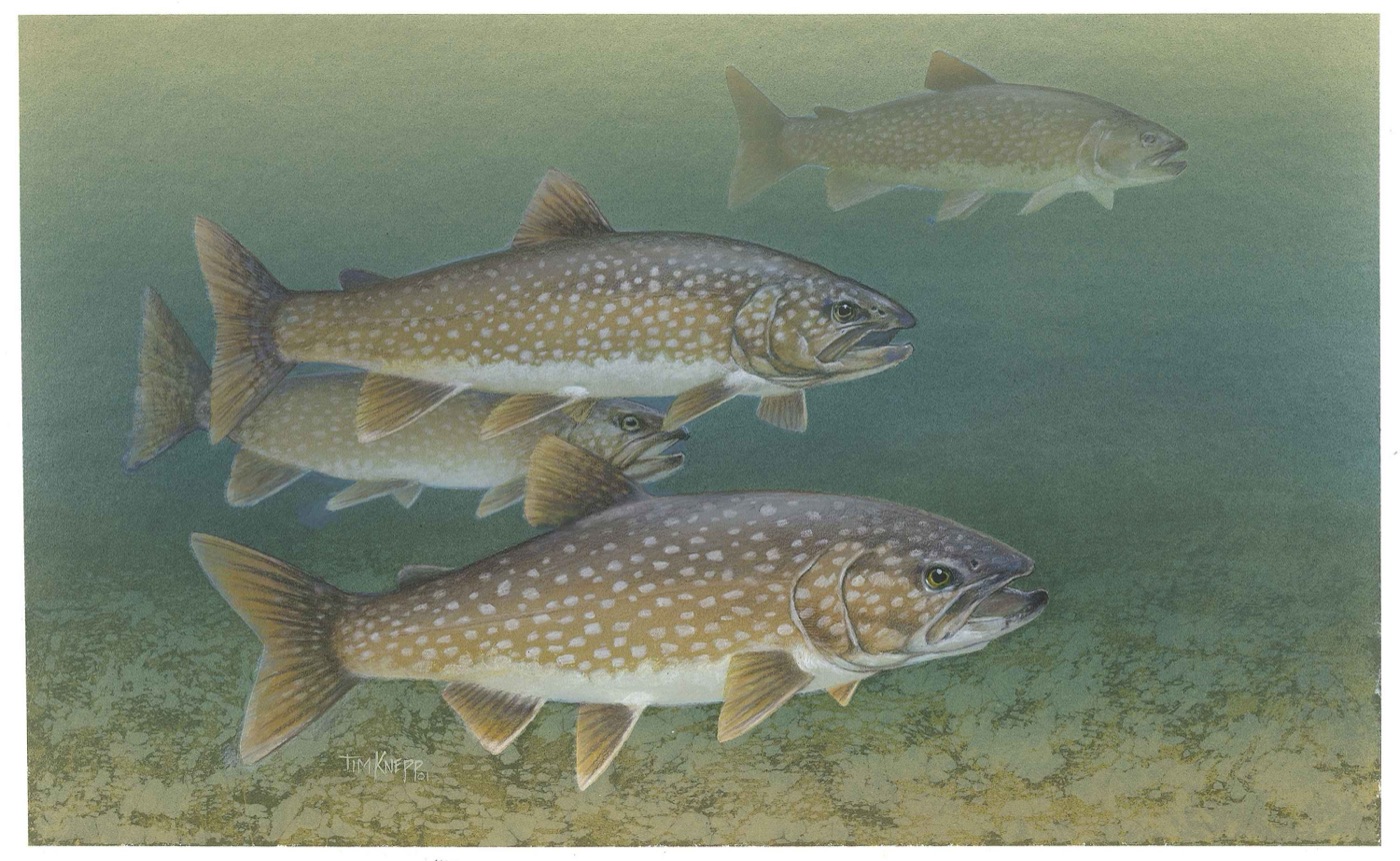
Out on the open lake, the DNR says lake trout are the most popular species anglers seek; the dock is the shore angler’s way into the bay. Our walleye fishing and ice fishing basics guides cover both halves of the bay’s year.
Before you go
Licence and stamp. Older than 15 needs a licence. Trout and salmon need a stamp: the Great Lakes trout and salmon stamp (or a two-day sports licence) on Lake Michigan and its tributaries, the inland trout stamp on the Brule. Our licences and regulations guide explains where Wisconsin publishes them.
Night rules on the rivers. Both tributaries on this page close to night fishing for part of the year. Check the DNR’s dates for the river you are on.
Weather on the big lakes. Piers, breakwalls and docks are exposed. The DNR’s own gear list ends with warm clothes because conditions change quickly — and our wind page explains why an onshore wind can turn the fishing on and the footing dangerous at the same time.
What it cannot do
- All five spots are on the Great Lakes coast because that is where the DNR's published guidance names specific public spots. Inland waters — Winnebago, the Chippewa Flowage, the Madison lakes — are first-class fisheries with no single DNR-named spot we could pin; they are not ranked below these.
- The Milwaukee run-timing chart is from a DNR brochure dated August 2009 that the agency still publishes. Runs shift with water temperature and flow every year; the Brule page says so explicitly.
- Seasons, night-fishing closures on the tributaries, bag and length limits and the special Brule regulations are the DNR's. They are mentioned only where they decide whether you can fish; read them in full before you go.
- Great Lakes weather changes fast. Piers and breakwalls are dangerous in waves, which the DNR's own gear list warns about.
Frequently asked questions
Where is the best fishing in Wisconsin?
For numbers of anglers, Lake Michigan: the Wisconsin DNR calls it the No. 1 most frequently visited water in the state, with millions of fish stocked every year, and publishes a list of 50 shore spots within 60 minutes of downtown Milwaukee. For a single river, the Bois Brule: the DNR calls it one of Wisconsin's best-known trout streams and counts about 33,000 angler visits a year, roughly 27,000 of them aimed at lake-run steelhead, brown trout and coho below US Highway 2.
When do salmon run in Wisconsin?
In fall, in a sequence the DNR charts in its Milwaukee shore-fishing brochure: chinook salmon peak in September, coho in October, steelhead in September with fish present from August through November, and brown trout run longest, from September into December, peaking in December. On the Bois Brule in the north, the DNR gives chinook from early July to mid-October with a peak from mid-August to late September, coho from late August to late November peaking in September, and fall steelhead from mid-August to late November, most heavily from mid-September to late October.
Can you fish Lake Michigan from shore in Milwaukee?
Yes — the DNR's brochure lists 50 places within an hour of downtown, most of them shore, pier or stream access. Lakeshore State Park, 1.2 miles and four minutes from downtown, offers extensive shore fishing for brown trout, salmon and largemouth bass. McKinley Marina, Veteran's Park, Jones Island, South Shore Park and the Milwaukee, Menomonee and Kinnickinnic river access points are on the same list, each with its dominant species and directions.
What do I need to fish for trout and salmon in Wisconsin?
A fishing licence if you are older than 15, plus a stamp. On Lake Michigan and its tributaries up to the first dam, the DNR requires a Great Lakes trout and salmon stamp, or a two-day sports fishing licence instead. On the Bois Brule and its tributaries, the DNR says fishing for trout and salmon requires an inland trout stamp. Note the DNR's tributary rule: from September 15 to the first Saturday in May there is no hook-and-line fishing at night on Lake Michigan tributaries.
What baits work for steelhead on the Brule?
The DNR names them by run. Spring steelhead, late March through May, are mostly taken on yarn flies, spawn beads, large caddisfly imitations and spoons and spinners, in deep runs and pools. Fall steelhead hold in moderate current behind or near a break — rocks, logs, banks — and move to deeper holes as the water cools; yarn flies, spawn and beads are the DNR's list again. Lake-run browns, mid-July to mid-September at their peak, take spoons, spinners, wobbling plugs and nightcrawlers, fished in slower deep holes in low light.
Where can you catch walleye on Lake Superior from shore?
Chequamegon Bay. The DNR's Lake Superior fishing calendar says that in May shore casting for walleye and northern pike becomes popular along the Ashland side of the bay and off the coal dock in Washburn. Walleye, northern pike, smallmouth bass and perch stay productive in the bay through June and July, walleye trolling works along the south shore and the bay in August, and walleye and smallmouth action is still productive there in September.
Sources
- Lake Michigan — Fishing Wisconsin — Wisconsin Department of Natural Resources. Accessed October 5, 2026.
- Fall shore fishing close to home — Milwaukee — Wisconsin Department of Natural Resources. Accessed October 5, 2026.
- Fall Shore Fishing, Milwaukee Area — 50 places to fish from shore within 60 minutes (FH-705) — Wisconsin Department of Natural Resources, Bureau of Fisheries Management. Accessed October 5, 2026.
- Root River Steelhead Facility — Wisconsin Department of Natural Resources. Accessed October 5, 2026.
- Fishing the Brule River — Wisconsin Department of Natural Resources. Accessed October 5, 2026.
- Brule River fishery facts — Wisconsin Department of Natural Resources. Accessed October 5, 2026.
- Lake Superior — Fishing Wisconsin — Wisconsin Department of Natural Resources. Accessed October 5, 2026.
- Fishing calendar for Lake Superior — Wisconsin Department of Natural Resources. Accessed October 5, 2026.
How we choose sources: sources policy.
More in this series
- Best Fishing Spots in Arkansas: Five Waters and the Exact Place to Fish on Each
- Best Fishing Spots in Iowa: Five Lakes, the Exact Spot on Each and What Is Biting Now
- Best Fishing Spots in Los Angeles: Five Public Waters, Verified with the Agency That Runs Each One
- Best Fishing Spots in Missouri: Five Ozark Waters and the Exact Place to Fish on Each
Open the spot, then pick the day.
Fishing Club AI maps public fishing spots and turns live weather, pressure and moon data into a bite forecast for each one — so you know which of these to drive to this morning.
Get the App