Fishing After Rain: What Runoff Actually Changes
Rain changes four measurable things in fishing water: clarity, flow, temperature and oxygen — and they move together, not one at a time. A gentle rain can improve fishing; a hard storm usually sets it back. Muddy water handicaps sight-feeders like bass and bluegill while scent-feeders keep hunting, and recovery time depends on the water: small streams reset in hours to days, large rivers in days.
Key takeaways
- Runoff is a system: turbidity, flow, temperature and oxygen all shift with one rain — never read a single variable alone.
- USGS measured a small urban stream rising about 150-fold within hours of a two-inch rain; large rivers take days to rise and fall.
- Over half a river's annual sediment can move in a single storm — and where current slows, that sediment settles out first.
- Muddy water splits species: sight-feeders lose foraging efficiency while fish that hunt by smell and touch keep feeding.
- Rain does not simply oxygenate water — post-storm decomposition and pond turnover can crash oxygen instead. The evidence runs both ways.
- Six inches of fast-moving flood water can knock over an adult. The stream you fished yesterday is not the stream running today.
Four changes arrive with the runoff
Rain never changes just one thing about the water, which is why single-variable advice about it fails. When runoff crosses the land it picks up, in the US Geological Survey’s inventory, sediment, nutrients, bacteria, pesticides, metals and petroleum by-products — and delivers all of it, untreated, into the streams and lakes you fish. What arrives with that load is a system of four shifts happening at once: clarity drops, flow rises, temperature moves, and oxygen goes one of two very different directions.
Reading them together is the skill. A summer shower on a shaded creek and a cloudburst on hot pavement are both “rain”, and they produce nearly opposite water. The sections below take the four dials one at a time — then put them back together, because that is how the fish experience them.
Clarity: what the mud actually does
The mud is not cosmetic — it rewrites who can hunt. USGS defines turbidity as the measure of a water’s relative clarity, and describes exactly what a storm does to it: particles wash from the surrounding land into the river, turning it muddy brown. The scale surprises most anglers — over half of all the sediment a river moves in an entire year can travel during a single storm period.
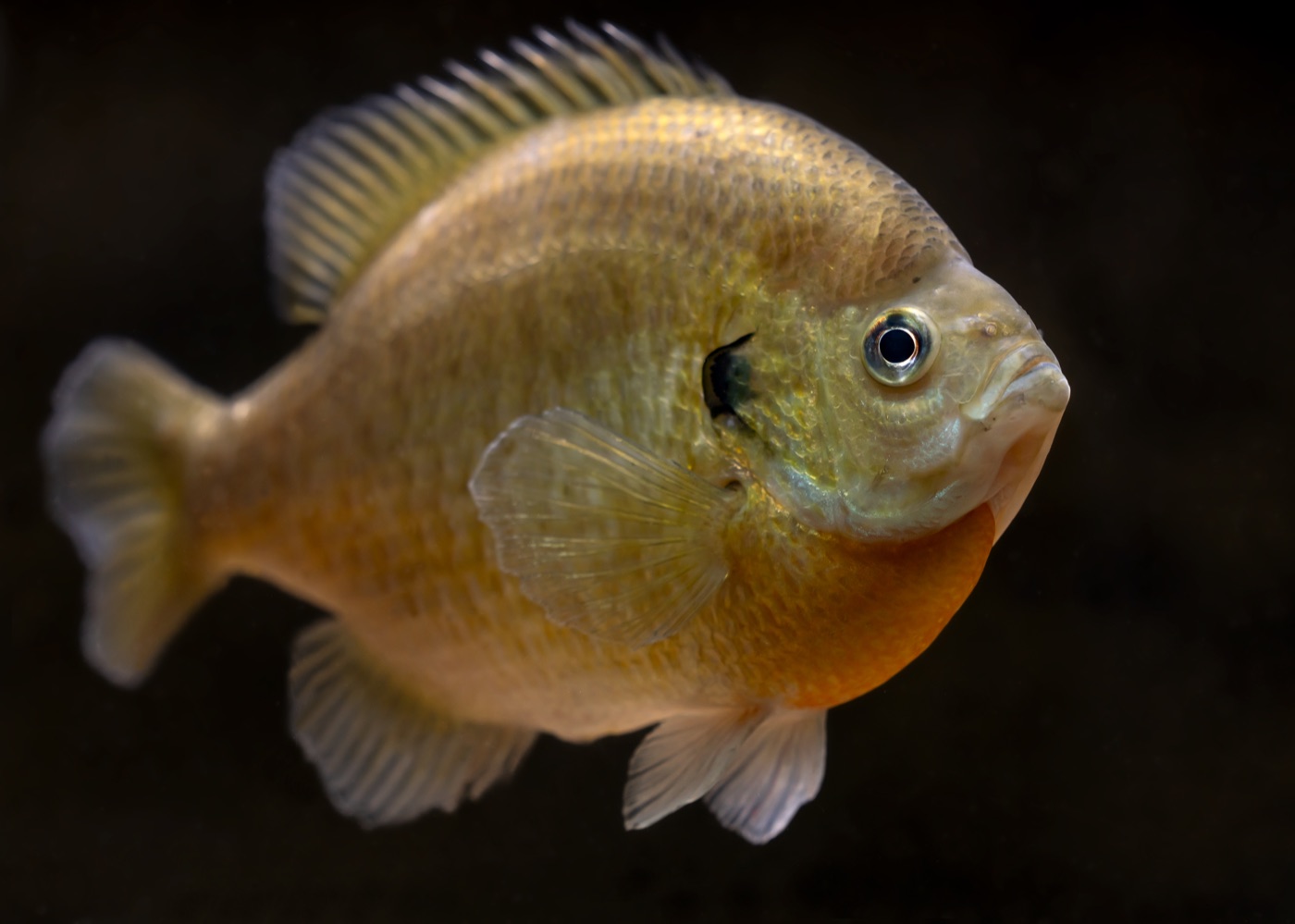
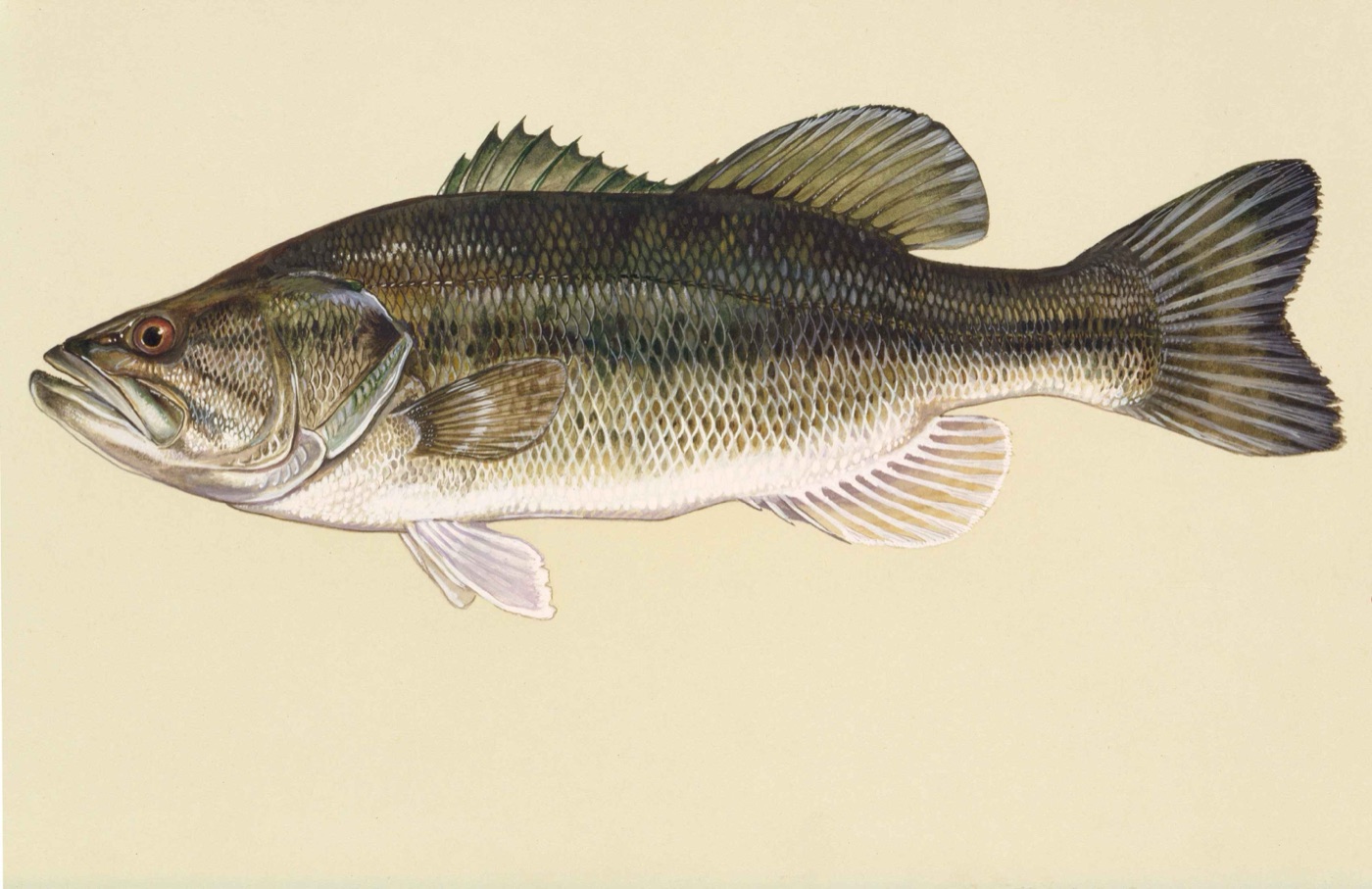
Suspended particles cut how far light penetrates, and that cost lands unevenly across species. Missouri’s Department of Conservation puts it plainly for the two fish most Americans chase: when water becomes too muddy, sight-feeders like largemouth bass and bluegill have a difficult time finding and capturing food. Peer-reviewed work completes the picture: turbidity reduces the foraging efficiency of visual predators, while animals that feed by chemical and tactile cues are largely unaffected — in muddy water, the advantage moves to them.
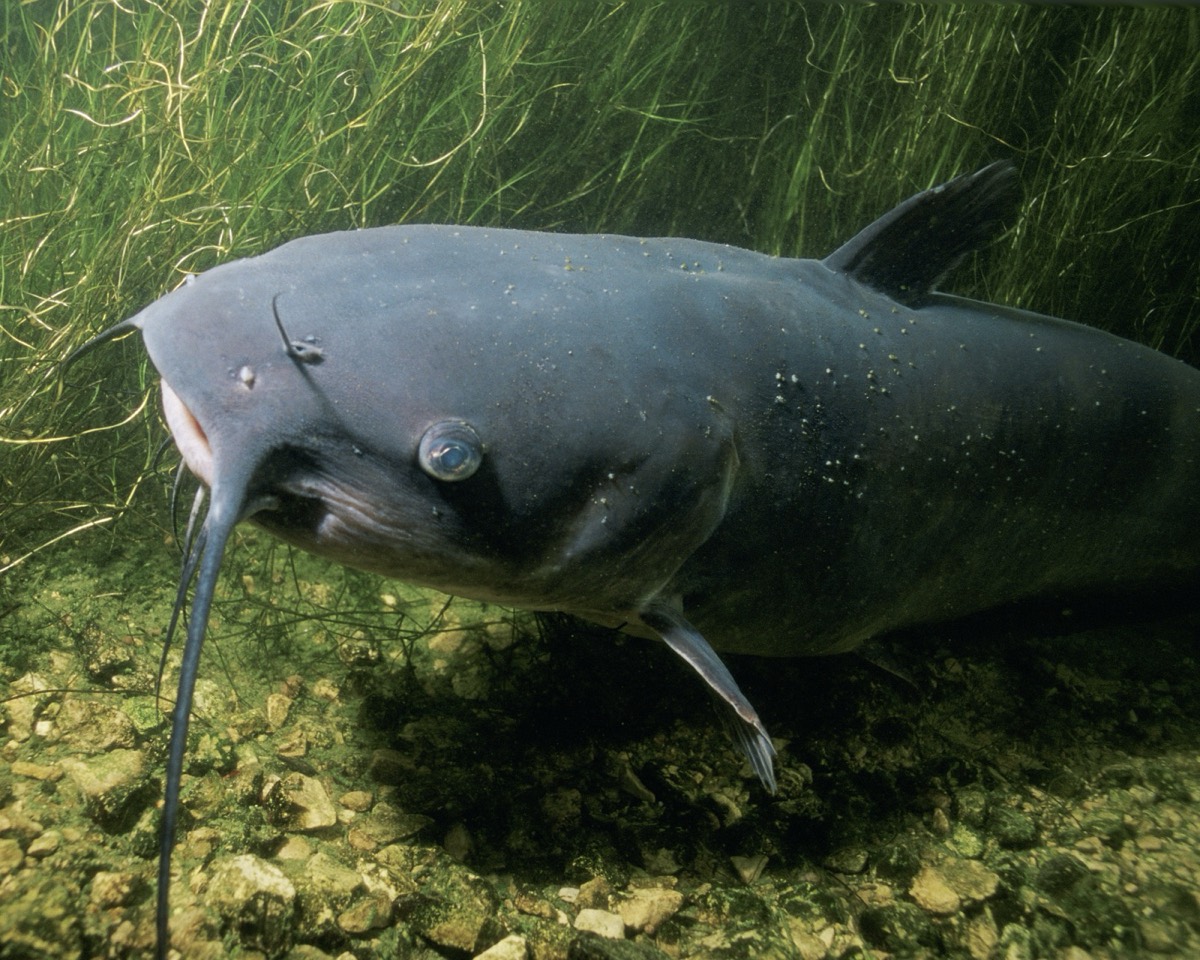
That single finding drives most good muddy-water tactics. A channel catfish hunting by smell and taste barely notices the stain that just blinded a bass. If you stay on sight-feeders anyway, the same logic says to shorten the distance: slower presentations, more vibration and water displacement, and the high-contrast end of the lure colour logic rather than subtle naturals.
Flow and temperature: the shape of the rise
How hard and how fast the water rises depends less on the rain than on the watershed catching it. USGS streamflow records make the range concrete: in a small watershed a storm can push 100 times the normal flow past you, with the whole rise and fall over in minutes to hours — one gauged urban creek went from about 50 cubic feet per second to over 6,000 in a few hours after two inches of rain, roughly a 150-fold rise. Large rivers run the same movie in slow motion, taking days to rise and days to fall, and a river can rise on you even when the rain fell far upstream.
Surface matters as much as size. Where rain lands on forest and soil, much of it soaks in and reaches the stream slowly; where it lands on rooftops and pavement, it runs straight in. That is why urban water is “flashy” — fast up, fast down — and it is also a temperature story. The Environmental Protection Agency notes that impervious surfaces can rapidly deliver large volumes of thermally altered runoff: warming streams in summer, cooling them in winter. A July thunderstorm draining a hot parking lot into a trout creek is a very different event from the same storm on a forested valley — same rain, opposite water. Our water temperature article covers what those swings do to fish on their own.
Oxygen: the honest two-sided story
“Rain freshens the water” is half true, and the other half kills fish. On the favorable side, USGS notes that rapidly moving water tends to carry more dissolved oxygen than stagnant water, and that cold water holds more oxygen than warm — so a cool rain that gets a sluggish creek moving can genuinely improve conditions.
The unfavorable side comes from what the rain carries. The same USGS oxygen primer notes that bacteria consume oxygen as organic matter decays — and a storm delivers that organic matter by the ton, washed off lawns, forests and streets into the water. Arkansas’s Game and Fish Commission documents the sharpest version, a pond-specific mechanism behind sudden summer fish kills: a cool rain on a stratified pond can chill the surface layer enough to sink it, flipping the oxygen-poor bottom layer up to where the fish hold.
So the honest rule is that rain moves oxygen in both directions, and which way it moves yours depends on the water: a flowing, well-mixed stream usually gains; a warm, still, organically rich pond after a violent storm can lose badly. If fish are gasping at the surface the day after, that is the second story — leave that water alone for a few days.
What this means on the water
Put the four dials back together and a practical playbook falls out — one a state agency largely writes for us. Texas Parks and Wildlife’s aquatic-science course tells students that fishing can be good before and during a gentle rain but may be poor during and after a big thunderstorm — and its first piece of stained-water advice is to find the break between muddy and clear water. That mudline is a real feeding edge: predators hold in the stain and ambush along the seam where visibility returns.
The rest follows from the mechanisms:
| What you see | What it means | What to do |
|---|---|---|
| Gentle rain, water still mostly clear | Flow and washed-in food up, clarity intact | Fish it — this is the good window |
| Chocolate water, still rising | Peak sediment load, sight-feeding shut down | Wait, or switch to scent-and-vibration fish |
| Mudline where inflow meets main water | A visibility seam predators patrol | Work the edge, stained side first |
| Slack pockets clearing first | Sediment settles where current slows | Start in coves, eddies and backwaters |
| Small stream, one day after | Flashy water resets in hours to days | Go — it likely already dropped |
| Big river after real flooding | Days-long rise and fall | Watch the gauge, give it days |
Two more habits complete the plan. First, read the water rather than the sky: inflows, seams and settled pockets tell you where the four dials sit right now. Second, remember the rain arrived with a front — the pressure-and-timing context lives in our barometric pressure and best time to fish articles, and no single one of these signals decides the day alone. That is the standing Fishing Club AI position: conditions are a system, and rain is simply the system changing fast.
Safety is part of the plan
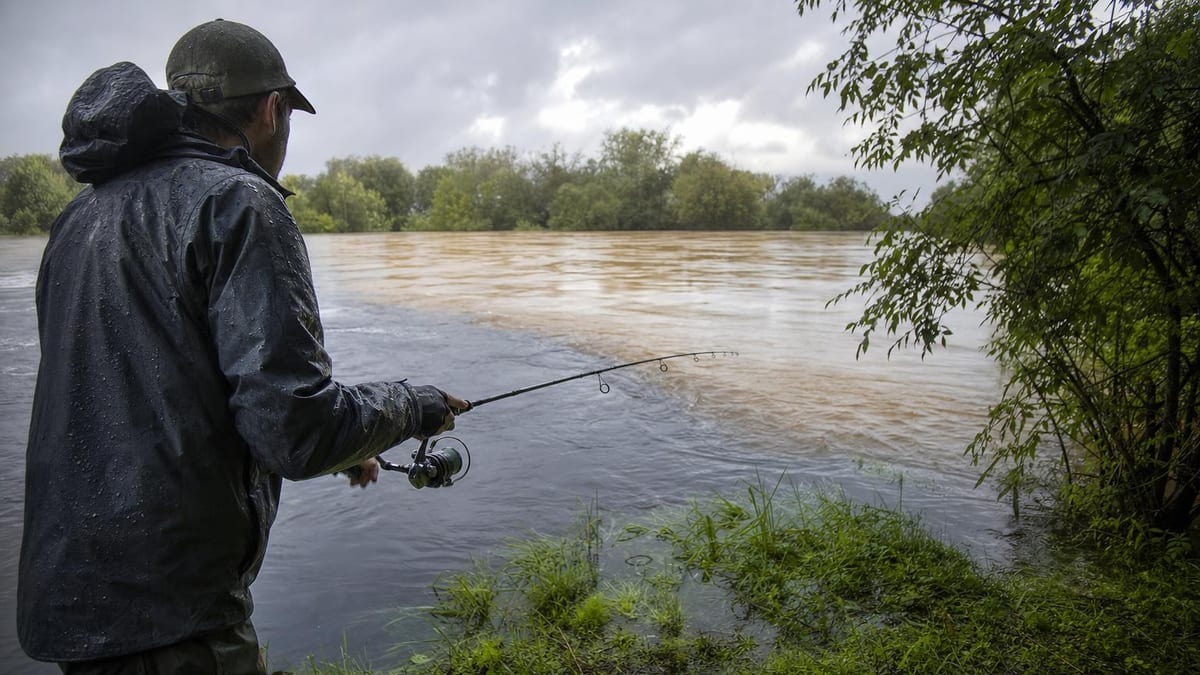
The water that improves your fishing can also take you off your feet, and the numbers deserve respect. The National Weather Service reports that flooding kills more people than any other thunderstorm-related hazard, that six inches of fast-moving flood water can knock over an adult, and that walking into or near flood water is among the leading causes of flood deaths. After heavy rain, banks are undercut, yesterday’s wading line may be gone, and debris is moving.
The agency’s rule is four words long: turn around, don’t drown. The mudline will still be there tomorrow — fish the edges from solid ground, skip the crossings, and let the river finish falling before you trust it again.
Frequently asked questions
Is fishing good after rain?
It depends on the rain, and a state fish and wildlife agency says so directly: Texas Parks and Wildlife's aquatic-science course teaches that fishing can be good before and during a gentle rain but may be poor during and after a big thunderstorm. The mechanisms explain why — a soft rain adds flow and washes food in without destroying clarity, while a hard storm dumps sediment, chills or warms the water and can drag oxygen down. Judge the rain, not the rumor.
Why does rain make the water muddy?
Runoff carries the land into the water. The US Geological Survey describes rainstorm particles washing from the surrounding land into rivers, turning them muddy brown — and the effect is front-loaded: over half of all the sediment a river moves in a year can travel during a single storm period. As stormwater crosses roads and soil it also picks up sediment, nutrients, bacteria and petroleum by-products, all delivered untreated to the water you fish.
Do fish still bite in muddy water?
Some do, and the split is documented. Missouri's Department of Conservation states that when water becomes too muddy, sight-feeders like largemouth bass and bluegill have a difficult time finding and capturing food. Peer-reviewed work adds the other half: turbidity reduces the foraging efficiency of visual predators while animals that hunt by chemical and tactile cues are largely unaffected — which is why stained water shifts the advantage toward fish like catfish and toward lures that displace water or carry scent.
How long after rain should I wait to fish?
Match the wait to the water. USGS streamflow records show small watersheds spiking and falling within minutes to hours — one urban creek rose from about 50 to over 6,000 cubic feet per second in a few hours and dropped nearly as fast — while large rivers may take days to rise and fall. Slack water clears first, because suspended sediment settles where current slows. Small stream: often fishable the next day. Big river after a real flood: think in days, and watch the gauge, not the calendar.
Is it safe to fish right after heavy rain?
Treat rising water as the hazard it is. The National Weather Service reports that more deaths occur from flooding than from any other thunderstorm-related hazard, that a mere six inches of fast-moving flood water can knock over an adult, and that walking into or near flood water is one of the leading causes of flood deaths. Banks are undercut, footing is gone, and debris moves fast. No fish is worth the crossing — wait for the water to drop.
Sources
- Turbidity and Water — US Geological Survey, Water Science School. Accessed August 10, 2026.
- Sediment and Suspended Sediment — US Geological Survey, Water Science School. Accessed August 10, 2026.
- Runoff: Surface and Overland Water Runoff — US Geological Survey, Water Science School. Accessed August 10, 2026.
- Streamflow and the Water Cycle — US Geological Survey, Water Science School. Accessed August 10, 2026.
- Dissolved Oxygen and Water — US Geological Survey, Water Science School. Accessed August 10, 2026.
- CADDIS Volume 2: Temperature — US Environmental Protection Agency. Accessed August 10, 2026.
- Clearing Muddy Ponds — Missouri Department of Conservation. Accessed August 10, 2026.
- Turbidity alters estuarine biodiversity and species composition — Lunt & Smee, PeerJ (via PubMed Central). Accessed August 10, 2026.
- Texas Aquatic Science, Chapter 13: Fishing — Texas Parks and Wildlife Department. Accessed August 10, 2026.
- Fish Kills a Natural Summer Phenomenon on Small Waters — Arkansas Game and Fish Commission. Accessed August 10, 2026.
- Turn Around Don't Drown — Flood Safety — NOAA National Weather Service. Accessed August 10, 2026.
How we choose sources: sources policy.
More in this series
One condition rarely acts alone. BiteScore reads them together.
Fishing Club AI combines live weather, marine conditions and moon data into a simple bite forecast for your exact spot.
Get the App