Bonefish
Albula vulpes
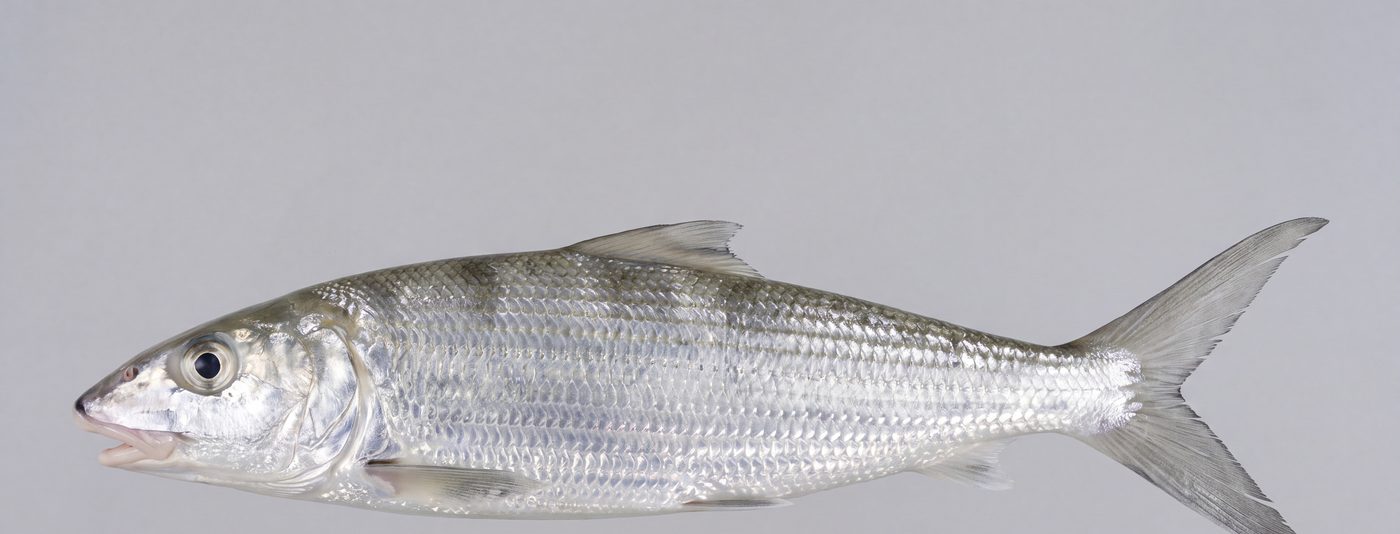
Bonefish is a silver flats-dwelling fish of tropical shallows, feeding head-down over sand and seagrass with a blunt snout and an underslung mouth built for rooting out buried prey.
MoreFull Species Details
- Species Name
- Albula vulpes
- Family
- Albulidae
- Order
- Albuliformes
- Also Known As
- Banana fish, Macabi, Peixe-banana
Bonefish (Albula vulpes) Fish Description
Bonefish is a silver flats-dwelling fish of tropical shallows, feeding head-down over sand and seagrass with a blunt snout and an underslung mouth built for rooting out buried prey.
The body is a bright chrome torpedo, deeply forked at the tail and often carrying faint dark streaks along the back. The head tapers to a blunt point with the mouth set beneath it, angled downward for feeding off the bottom. The teeth are not what you would expect from a fish that fights this hard: granular teeth form specialised dental plates covering the tongue and upper jaw, with similar grinders in the throat, and their job is to crush molluscs and crustaceans rather than to seize prey. In shallow water a feeding bonefish often gives itself away by tailing — tipping head-down so the tail breaks the surface.
Bonefish occupy tropical and warm temperate shallows worldwide, most plentiful in the western Atlantic around south Florida, the Bahamas and Bermuda and ranging through the Caribbean to Brazil. They move onto flats to feed as the tide rises and retreat to deeper water as it falls, which makes them one of the most tide-governed fish an angler can pursue. The species belongs to its own order, Albuliformes, and shares a rare trait with tarpon and eels: a leptocephalus larval stage. In Florida the fishery is catch-and-release only.
Interesting Facts About Bonefish
- They may live in excess of 19 years.
- They pass through a leptocephalus larval stage — a strategy shared only with tarpon and eels.
- For a flats fish, they spawn astonishingly deep: one study documented dives reaching 137.9 metres.
- Spawning involves a rapid 'spawning rush' ascent from that depth.
- Fish travel from home ranges up to 118 km away to reach spawning aggregations.
Show more facts
- Spawning runs October through April over four to seven day periods spanning the new and full moons.
- Larvae drift roughly 1,000 km during a 71-day pelagic stage before settling.
- They tolerate the oxygen-poor water they sometimes meet in coastal habitats.
- Their teeth are grinding plates on the tongue, upper jaw and throat, used to crush molluscs and crustaceans.
- They school, sometimes in groups of up to 100 fish.
- Twelve species have been identified in the genus, and the fish caught along Florida's coasts are very likely a different one.
- Guide-reported catches in Florida Bay fell 42% between 1980-1999 and 2000-2014.
Average Speed & Size
Bonefish are modest in size and famous out of all proportion to it. Florida and Bahamas fish often run 4 to 6 pounds, and Florida's wildlife agency describes typical specimens at 3 to 5 pounds with catches rarely exceeding 10. Maximum size is disputed between sources: the Florida Museum gives about 31 inches and 13 or 14 pounds while noting African and Hawaiian fish may exceed 20, and Florida's agency gives 18 pounds. Bonefish and Tarpon Trust reports the record for the species as a 16-pound fish from Bimini in 1971. What makes the species remarkable is the first run — a hooked bonefish in a foot of water empties a reel at a speed that has to be seen. No source we could verify has measured that speed, so we do not put a number on it.
Where to Find Them
Bonefish feed in extraordinarily shallow water — the Florida Museum records them feeding in less than 12 inches, and Florida's agency says often less than a foot. Look over lush seagrass flats and occasionally clean white sand, along with intertidal flats, mangrove areas and river mouths. The daily pattern is tidal and reliable: telemetry work in the Bahamas showed movement onto shallow water on the rising tide and retreat into deeper water as it falls. Spawning is the opposite extreme, taking place at depths reaching 137.9 metres after fish stage in lagoons behind reefs. Where juveniles live remains genuinely unknown despite extensive sampling.
Bonefish Fishing Tips
Bonefishing is hunting rather than fishing. The fish are visible, close, and acutely aware of you, so the whole exercise turns on spotting them before they spot you and putting a bait or fly in front of them without announcing your presence.
Equipment
Light tackle and long, accurate casts are the requirement. Fly anglers use an eight-weight outfit with a long leader as standard; spinning anglers use light line and small baits. Because the fish are in inches of water, the priority throughout is a quiet presentation rather than casting distance or strength.
Chumming
Chumming is used in some fisheries to hold fish on a flat, but it works against the reason most people fish for the species. The classic approach is to wade or pole quietly and cast to individual fish or small schools you have located by their tails or their wakes.
Bait
Small crustaceans match the natural diet, and shrimp are the standard bait. Crab and shrimp fly patterns are the fly-fishing equivalent, presented ahead of a moving fish so it swims onto the offering.
Patience
Move slowly and watch more than you cast. Fish the rising tide when bonefish push onto the flats, and treat handling as part of the technique: Bonefish and Tarpon Trust advises that a fish out of the water for more than ten seconds is six times less likely to survive, and recommends keeping it over the water with clean wet hands, or using a dehooking device instead of handling it at all.
Conditions that change the bite
- What Barometric Pressure Is Best for Fishing? No research supports a single best barometric pressure for fishing. What pressure really does, how big a weather swing is, and what to watch instead.
- Best Time of Day to Fish: What Evidence Shows Dawn and dusk are measurably better — and the edge is smaller than the folklore says. The 13-year dataset, the light mechanism, and what matters more.
- Dissolved Oxygen: The Condition Anglers Can't See Fish live or die by oxygen you can't see. How temperature, depth, dawn and turnover move it, which species need more, and how to fish around the invisible map.
Guides for fishing this species
- Catch and Release: Doing It So the Fish Survives Wet hands, under a minute of air, cut deep hooks, revive facing the current. NOAA and state agency best practices for releases that actually survive.
- Fishing Line Types: Braid vs Mono vs Fluorocarbon Monofilament, fluorocarbon and braided line compared — stretch, visibility, sink rate and durability, what agencies actually say, and which to spool when.
Related Species
Know when they'll bite.
BiteScore forecasts when bonefish will feed at your spot — from live weather, pressure, and moon data.
Get the App