Red Snapper
Lutjanus campechanus
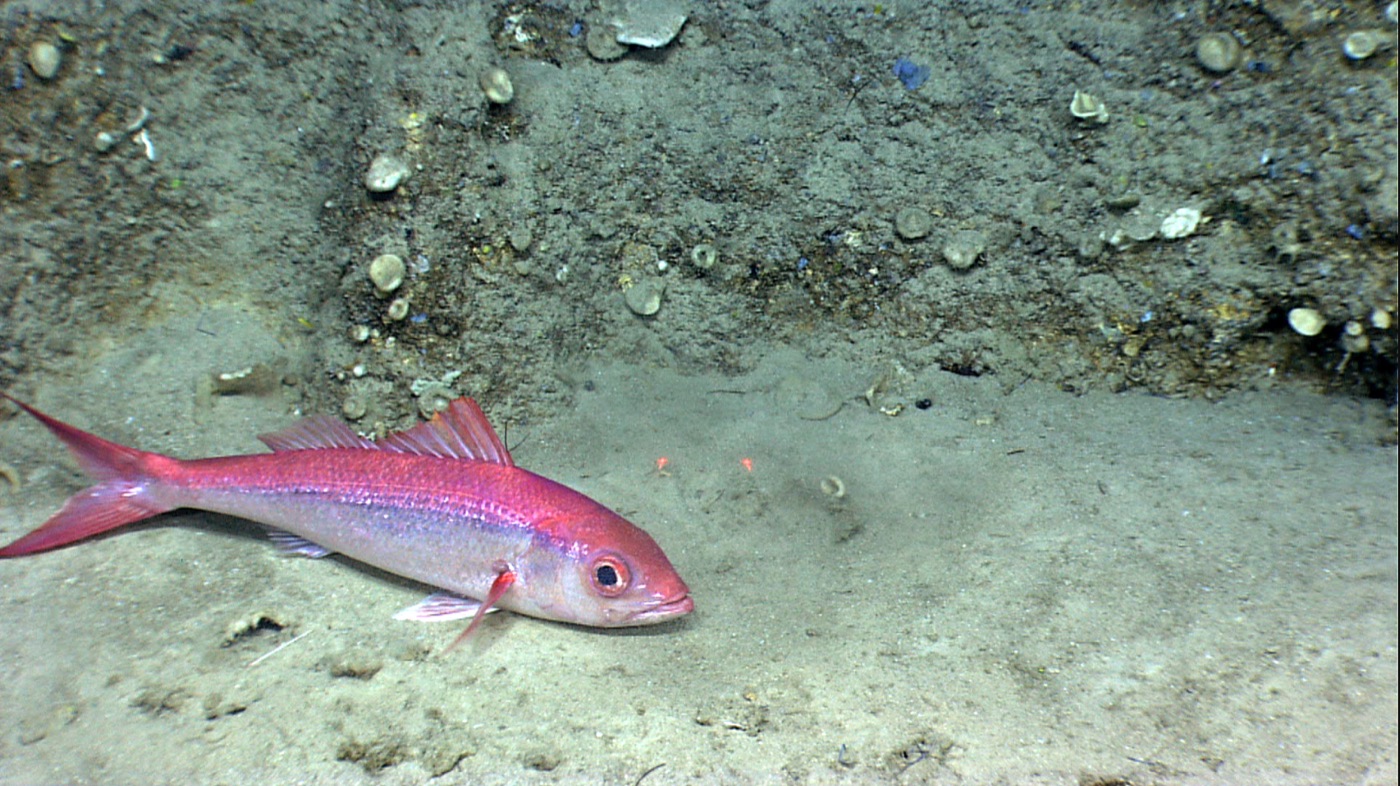
Red snapper is a deep-bodied reef fish of the snapper family, prized for its brick-red coloration and firm, white, highly valued flesh.
MoreFull Species Details
- Species Name
- Lutjanus campechanus
- Family
- Lutjanidae
- Order
- Perciformes
- Also Known As
- Northern red snapper, Sow snapper, Genuine red snapper, American red snapper
Red Snapper (Lutjanus campechanus) Fish Description
Red snapper is a deep-bodied reef fish of the snapper family, prized for its brick-red coloration and firm, white, highly valued flesh.
The body is deep and moderately compressed, brick-red to pinkish above fading to a paler belly, with red eyes that distinguish adults of the species. The dorsal fin is continuous and the anal fin pointed, while young fish carry a dark spot on the upper flank that usually fades with age. Sharp canine teeth line the jaws, suited to seizing fish and crustaceans near the bottom. Coloration is most vivid in fish taken from deep, clear water. The uniform red hue and red eye separate the true red snapper from the many lookalike species sold under its name.
Red snapper is native to the Gulf of Mexico and the southeastern Atlantic coast of the United States. The species lives near the bottom over reefs, rocky ledges, and wrecks, usually in water from 30 to more than 200 feet deep. Red snapper grow slowly and gather in large aggregations around structure. Anglers pursue the species for its strong, bulldogging fight in deep water and, above all, for its exceptional table quality, which has made red snapper one of the most economically important and tightly regulated reef fish in US waters.
Interesting Facts About Red Snapper
- The world record red snapper weighed 50 pounds 4 ounces, caught off Louisiana in 1996.
- Red snapper can live more than 50 years in the wild.
- Adults have distinctive red eyes, a key field mark of the true species.
- The species grows slowly, reaching maturity around 2 to 3 years of age.
- A large female can release millions of eggs over a long spawning season.
Show more facts
- Young red snapper carry a dark side spot that fades with age.
- Red snapper gather in large groups around reefs, ledges, and wrecks.
- Many other species are sold under the red snapper name in markets.
- The federal Gulf red snapper season is tightly restricted to protect the stock.
- Red snapper feed on fish, shrimp, crabs, and squid near the bottom.
- Rapid ascent from depth can cause barotrauma, requiring descending devices for release.
- The species supports a major recreational and commercial fishery in the Gulf.
Average Speed & Size
Red snapper is a strong, structure-oriented swimmer that typically reaches 16 to 28 inches and 2 to 10 pounds. Trophy fish exceed 30 inches and 20 pounds, with the record near 50 pounds. The species holds close to reefs and wrecks, moving in short bursts to feed rather than roaming open water. Once hooked, a red snapper dives hard for structure in a powerful, dogged run, and anglers must turn it quickly before it reaches the rocks or wreckage where it can break off.
Where to Find Them
Red snapper is found near the bottom over reefs, rocky ledges, and wrecks in the Gulf of Mexico and the southeastern Atlantic. The species holds tight to hard structure in water from about 30 to over 200 feet deep, gathering in large aggregations. Red snapper favor warm offshore waters and stay near the cover and forage that structure provides. Larger, older fish often occupy the deepest reefs. Red snapper are absent from shallow inshore flats and cold northern waters, requiring the warm, deep, structured habitat of the continental shelf.
Red Snapper Fishing Tips
Red snapper fishing is a deep-water bottom pursuit that rewards precise positioning over structure. Success comes from anchoring or drifting over reefs and wrecks and dropping bait to the fish holding near the bottom.
Equipment
Use a stout 6- to 7-foot conventional rod paired with a powerful reel spooled with 40- to 80-pound braid and a heavy fluorocarbon leader. The strong tackle is needed to lift heavy fish from deep structure and to turn them before they reach the reef. A sturdy rod and high-capacity reel also handle the heavy sinkers required to reach the bottom in current.
Chumming
Chumming is highly effective for red snapper, drawing the school up off the structure and into a feeding mood. A steady stream of cut bait or a chum block dispersed over a reef pulls fish toward the boat and shortens the drop. Once the school rises and competes for bait, hookups come quickly on descending baits.
Bait
Live and cut baitfish such as pinfish, sardines, and squid are the top choices, fished on a bottom rig. Effective lures include heavy jigs and vertical speed jigs worked near the structure.
Patience
Red snapper hold tight to structure and require accurate positioning, so anglers reset the drift or anchor until baits reach the fish. A quick, firm hook set and steady lift keep hooked snapper out of the reef.
Conditions that change the bite
- What Barometric Pressure Is Best for Fishing? No research supports a single best barometric pressure for fishing. What pressure really does, how big a weather swing is, and what to watch instead.
- Best Time of Day to Fish: What Evidence Shows Dawn and dusk are measurably better — and the edge is smaller than the folklore says. The 13-year dataset, the light mechanism, and what matters more.
- Dissolved Oxygen: The Condition Anglers Can't See Fish live or die by oxygen you can't see. How temperature, depth, dawn and turnover move it, which species need more, and how to fish around the invisible map.
Guides for fishing this species
- Catch and Release: Doing It So the Fish Survives Wet hands, under a minute of air, cut deep hooks, revive facing the current. NOAA and state agency best practices for releases that actually survive.
- Fishing Hook Sizes Explained: From #32 to 19/0 How hook sizing really works — numbers down, aughts up — plus hook anatomy, matching size to bait and species, and why agencies push circle and barbless hooks.
Related Species
Know when they'll bite.
BiteScore forecasts when red snapper will feed at your spot — from live weather, pressure, and moon data.
Get the App