Mahi-Mahi
Coryphaena hippurus
Mahi-mahi is a fast-growing offshore gamefish famous for brilliant blue-green and gold coloration and one of the quickest growth rates of any fish.
MoreFull Species Details
- Species Name
- Coryphaena hippurus
- Family
- Coryphaenidae
- Order
- Carangiformes
- Also Known As
- Dolphinfish, Dorado, Dolphin, Mahi
Mahi-Mahi (Coryphaena hippurus) Fish Description
Mahi-mahi is a fast-growing offshore gamefish famous for brilliant blue-green and gold coloration and one of the quickest growth rates of any fish.
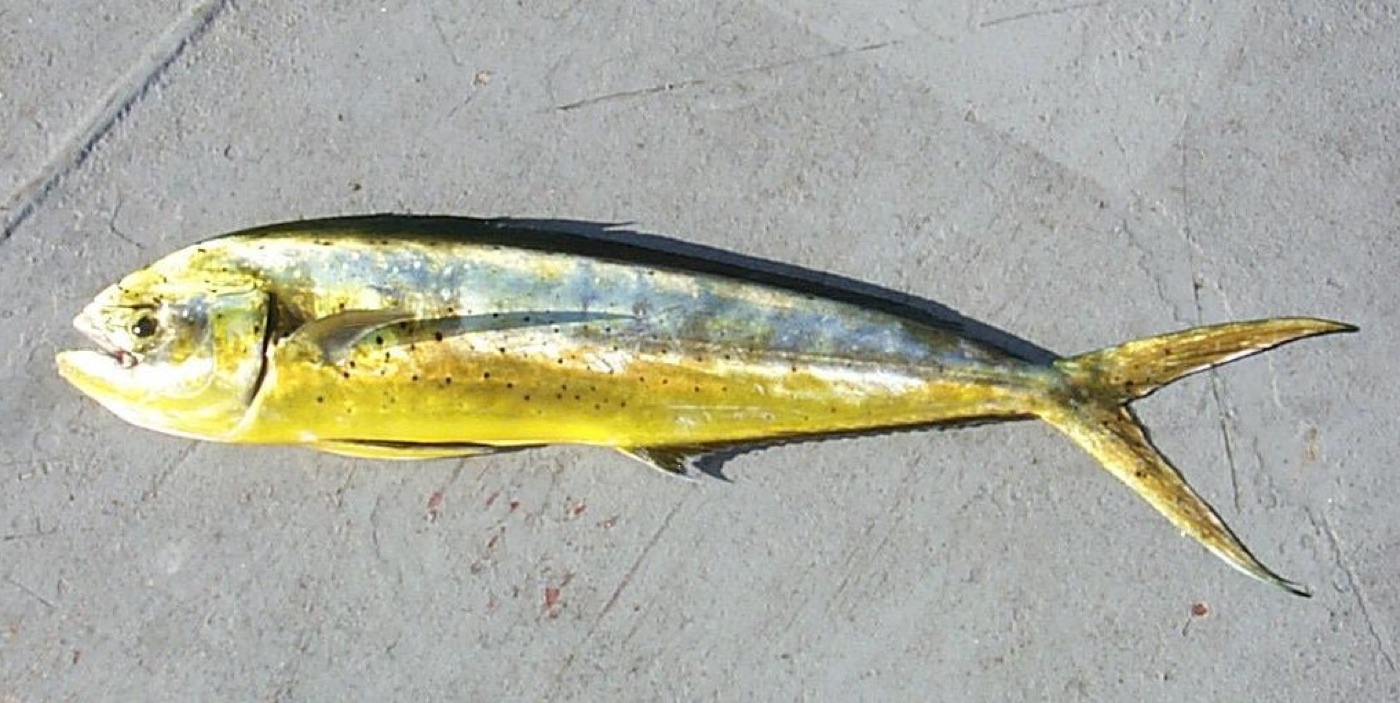
The body is long, slender, and compressed, blazing with iridescent blue, green, and gold that shifts and fades within moments of the fish leaving the water. A single long dorsal fin runs from just behind the head to the tail. Mature males, called bulls, develop a tall, blunt, square forehead, while females keep a gently rounded head. The tail is deeply forked, built for speed. The dazzling color is the species' signature, though it dulls quickly after death, leaving only a memory of the living fish's glow.
Mahi-mahi is found worldwide in warm offshore waters, ranging across tropical and subtropical seas including the Atlantic, Pacific, and Indian oceans. The species lives near the surface in open water, often gathering beneath floating weed lines, debris, and drifting objects that concentrate baitfish. Mahi-mahi grow with extraordinary speed and rarely live more than a few years. Anglers prize the species for its acrobatic, high-speed fight, its habit of feeding in fast-moving schools, and its firm, mild fillets, making it one of the most sought-after offshore fish worldwide.
Interesting Facts About Mahi-Mahi
- The world record mahi-mahi weighed 87 pounds, caught off Papagayo, Costa Rica, in 1976.
- Mahi-mahi are among the fastest-growing fish, gaining more than an inch per week when young.
- The species rarely lives longer than 4 to 5 years.
- Mahi-mahi can swim in bursts approaching 50 to 60 miles per hour.
- Mature males develop a tall, square forehead and are called bulls.
Show more facts
- The species spawns often, allowing females to release eggs multiple times a year.
- Mahi-mahi gather beneath floating weed lines and debris that hold bait.
- Their brilliant blue-green and gold color fades within minutes of death.
- The species is called dorado in Spanish and dolphinfish in English.
- Mahi-mahi feed heavily on flying fish, squid, and small baitfish.
- A large female can release up to a million eggs in a single spawning event.
- The rapid growth and short life make mahi-mahi a resilient, sustainable fishery.
Average Speed & Size
Mahi-mahi is an exceptionally fast, surface-oriented swimmer that typically reaches 20 to 40 inches and 8 to 25 pounds. Trophy bulls exceed 55 inches and 40 pounds, with the record near 87 pounds. The species sprints across the surface in high-speed bursts and leaps repeatedly when hooked, combining raw speed with acrobatic jumps. Mahi-mahi feed on the move in fast schools, chasing flying fish and bait, and their blistering runs make them one of the most exciting light-tackle offshore targets.
Where to Find Them
Mahi-mahi is found in warm offshore waters worldwide, usually near the surface in the open ocean. The species concentrates around floating structure: weed lines, drifting debris, buoys, and current edges that gather baitfish. Mahi-mahi favor water above 70 degrees Fahrenheit and follow warm currents such as the Gulf Stream. Anglers locate them by trolling along weed lines and searching for birds and floating objects. Mahi-mahi are absent from cold and inshore waters, ranging the warm, blue open ocean where their prey drifts near the surface.
Mahi-Mahi Fishing Tips
Mahi-mahi fishing is fast-paced and productive, often yielding multiple fish once a school is found. Success comes from locating floating structure offshore and keeping a hooked fish in the water to hold the school nearby.
Equipment
Use a 6-foot-6 to 7-foot medium to medium-heavy trolling or spinning rod paired with a reel spooled with 20- to 40-pound line. This balance handles the mahi's speed and leaps while keeping the fight sporting. When a school appears, lighter spinning tackle and pitched baits let anglers cast to individual fish holding near the boat.
Chumming
Chumming with live or cut baitfish is highly effective once a school is located beside the boat. Keeping a hooked mahi in the water and steadily tossing bait holds the excited school in casting range. A live-bait chum line sustains the feeding frenzy and lets anglers hook several fish in quick succession.
Bait
Live and cut ballyhoo, squid, and small baitfish are the top natural baits, often rigged for trolling. Effective lures include skirted trolling lures, feathers, and casting jigs pitched to schooling fish.
Patience
Mahi-mahi are aggressive but move fast, so covering water by trolling until a weed line or school is found is the key task. Once fish are located, quick, repeated casts to the holding school produce steady action.
Conditions that change the bite
- What Barometric Pressure Is Best for Fishing? No research supports a single best barometric pressure for fishing. What pressure really does, how big a weather swing is, and what to watch instead.
- Best Time of Day to Fish: What Evidence Shows Dawn and dusk are measurably better — and the edge is smaller than the folklore says. The 13-year dataset, the light mechanism, and what matters more.
- Dissolved Oxygen: The Condition Anglers Can't See Fish live or die by oxygen you can't see. How temperature, depth, dawn and turnover move it, which species need more, and how to fish around the invisible map.
Guides for fishing this species
- Types of Fish: How Species Are Grouped 36,500 species sort four ways: by water, by migration, by family, and by law. A plain map of the types of fish — with every group linked to real profiles.
Related Species
Know when they'll bite.
BiteScore forecasts when mahi-mahi will feed at your spot — from live weather, pressure, and moon data.
Get the App