The AI Fishing Assistant
The assistant answers fishing questions — rigs, knots, bait choice, how to work a lure, what to try in the conditions you are in — and it can see your current location and weather, so answers refer to your actual conditions rather than generic advice. It is a language model, which means it can be confidently wrong, and it is not a source for regulations.
What it reads
- Your question, as typed
- Your approximate location, when you have granted permission
- Current conditions at that location, including weather and the BiteScore factors
What makes it different from a search box
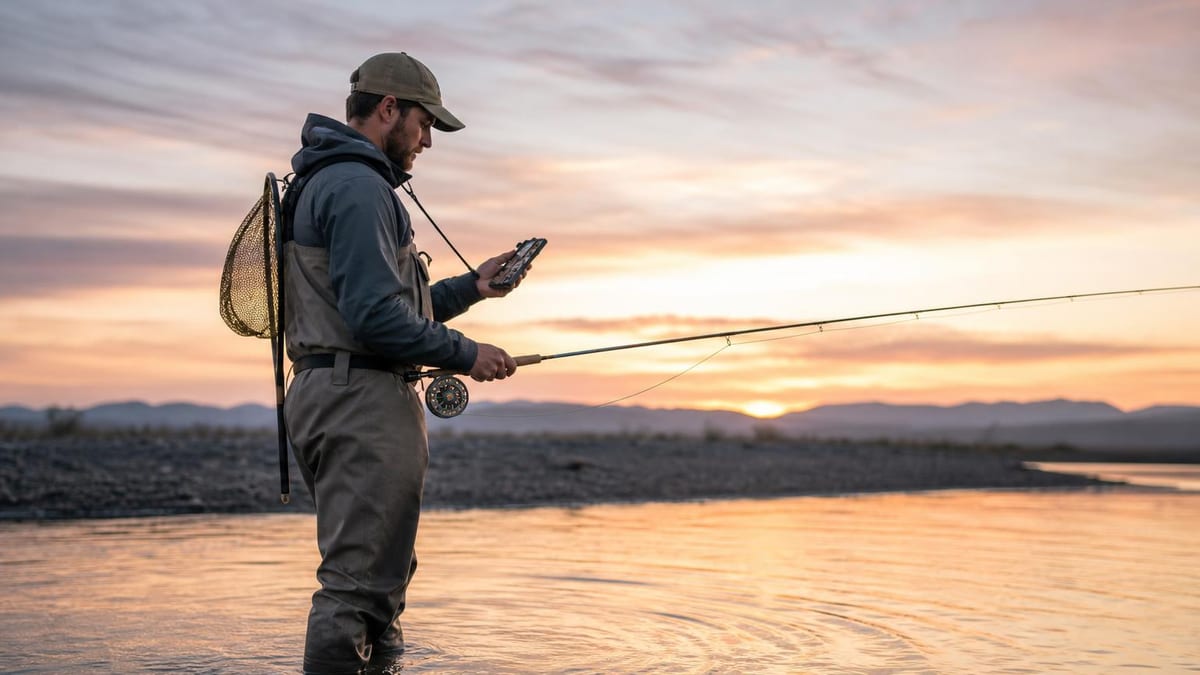
The assistant already knows the conditions you are standing in, which changes the kind of question you can usefully ask. “What should I try?” is a meaningless question typed into a search engine and a reasonable one when the thing answering it can see that you are on a lake, in a rising wind, under heavy cloud, at four in the afternoon.
That context comes from the same data behind BiteScore — weather, pressure trend, wind, and the state of the water where you are. You do not have to describe your situation before asking about it.
It also means the answer can change through the day, in the same way the conditions do. Asking the same question at dawn and at noon should not always produce the same reply.
What it is good at
Technique questions are where it earns its place. How to rig something, which knot suits a job, how to work a lure through a weed edge, what to change when fish are following but not committing — these are questions with real answers that are tedious to search for and easy to explain.
Decision-making is the second strength. What separates an app that genuinely runs a model from one that simply carries the label is set out in what is the best AI fishing app. Talking through whether to move spots, go deeper or change presentation is genuinely useful, and having the current conditions in the conversation makes it more so.
Learning is a third. Asking why something works, rather than just what to do, is the kind of open-ended question a conversational tool handles far better than a search result page.
Where it should not be trusted
Anything with legal or safety consequences needs an official source, not a language model. This is the important limitation and it is worth being blunt about, because the failure mode is not obvious.
Language models generate fluent, confident text whether or not the underlying claim is true. There is no tonal difference between an answer that is right and one that is invented, which means you cannot use your usual instinct — hesitancy, hedging, vagueness — to spot the wrong ones.
Regulations are the clearest example. Licence requirements, seasons, size limits, bag limits and protected species vary by state and by individual water, and they are amended regularly. A model may give you a plausible, specific, entirely outdated answer. Your state or country’s fish and wildlife agency publishes the current rules, and that is the only source worth acting on.
Weather and water safety belong in the same category. Use official marine forecasts and warnings, and check them before you go out rather than asking an app about them from the boat.
How we treat it editorially
Nothing the assistant says is published on this website. Our articles are written from verified sources, checked against those sources, and cited so you can follow them yourself — a different process with a different standard, set out in our editorial policy.
That separation is deliberate. A conversational assistant is a good tool for a question on the bank and a poor basis for a permanent reference page, so we do not use it as one.
If you want the sourced version of an answer the assistant gives you, the guides and conditions sections are where it lives.
What it does not do
- It can be confidently wrong. Language models produce fluent answers regardless of whether they are correct, and fluency is not evidence.
- It is not a source for regulations. Licences, seasons, size and bag limits change and vary by water — always check your state or country's fish and wildlife agency.
- It is not a safety authority. For weather on the water, tides, or anything where being wrong is dangerous, use official forecasts and warnings.
- It does not know your specific water. It has no record of what was stocked, what the level is doing, or what has been catching this week on your lake.
- Your question and any photo are sent to a third-party AI provider for processing. That provider is named in our privacy policy.
Full terms, including the safety and navigation disclaimer, are in our terms of use.
Frequently asked questions
What can I ask the fishing assistant?
Practical fishing questions: which knot suits a situation, how to rig a soft plastic, what depth to start at, how to work a lure in coloured water, what the conditions today suggest trying. It is most useful for technique and decision-making, and least useful for anything that requires current local facts.
Does the assistant know where I am?
If you have granted location permission, yes — answers can refer to your current position and the conditions there. Location is used to serve each request rather than to build a profile, which our privacy policy sets out in full. Without permission the assistant still works, but the answers become general rather than local.
Can I trust what the assistant tells me?
Treat it as a knowledgeable friend rather than a reference work. It is genuinely useful for technique and for thinking through a decision, but language models state incorrect things in exactly the same confident tone as correct ones. For anything with legal or safety consequences, verify with an official source.
Can I ask it about fishing licences and regulations?
You can ask, but do not rely on the answer. Regulations differ by state, by water and by season, and they are amended regularly, so a language model is the wrong tool for the job. Your state or country's fish and wildlife agency publishes the current rules and is the only authority worth acting on.
Is there a limit on how many questions I can ask?
Free users get a set number of assistant questions, after which the feature is part of the Pro subscription. The current limits and pricing are shown in the app before you subscribe.