How Accurate Are Fishing Forecast Apps?
No published measurement exists, ours included. What can be said is where the uncertainty comes from: the weather forecast underneath is about 80% right at seven days, environmental effects on catch are consistently small next to who is fishing and what they use, and the fish-side mechanism is individually variable enough that telemetry studies cannot predict it either. Any forecast quoting an accuracy figure should be asked what it was scored against.
Key takeaways
- In a 13-year creel study, guide status and bait type outweighed every environmental variable measured.
- Environmental effects in that study were all classed as very small, with Cohen's d below 0.2.
- Large changes in barometric pressure and precipitation were not highly weighted in any of its analyses.
- A seven-day weather forecast is right about 80% of the time; a ten-day forecast about half.
- Standard verification methods exist — a bite forecast could be scored with a Brier skill score tomorrow. None has been.
Three places the uncertainty comes from
The honest answer to how accurate these forecasts are is that nobody has measured it. But that does not leave us with nothing to say, because the sources of error can each be examined separately.
There are three. The weather forecast underneath has known and published error. The relationship between conditions and catch has been measured repeatedly and is small. And the fish-side mechanism — what makes one fish take a bait when another does not — has resisted prediction even under direct observation.
Stack those and you get a picture of what a bite score can be at its best. It is not nothing, and it is a long way from a prediction.
The forecast underneath the forecast
Every bite score inherits the error of the weather data it consumes, and that error is documented.
NOAA states the figures plainly for a general audience: a five-day forecast is accurate about 90% of the time, a seven-day forecast about 80%, and a ten-day or longer forecast is right about half the time. The reason given is simply that the atmosphere is changing all the time, so estimates get less reliable the further ahead you look.
Nothing downstream can improve on that. If a bite score for next Saturday depends on Saturday’s wind and pressure, and the wind and pressure forecast is 80% reliable, the score is working from a foundation that is already uncertain — before any judgement about how much wind matters is applied on top.
This is the practical case for checking a forecast again close to the day. It is not that the model changed its mind. It is that the weather forecast underneath became a shorter-range one.
Who is fishing matters more than the weather
This is the finding that most constrains what a weather-driven forecast can achieve, and it comes from an unusually good dataset.
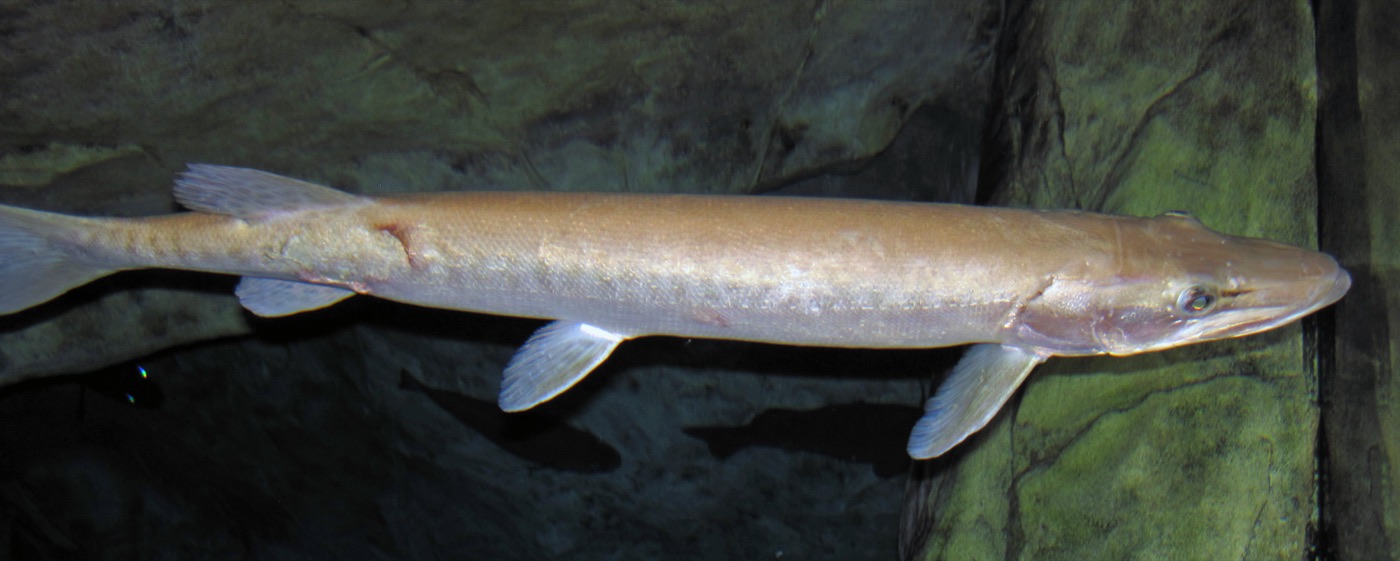
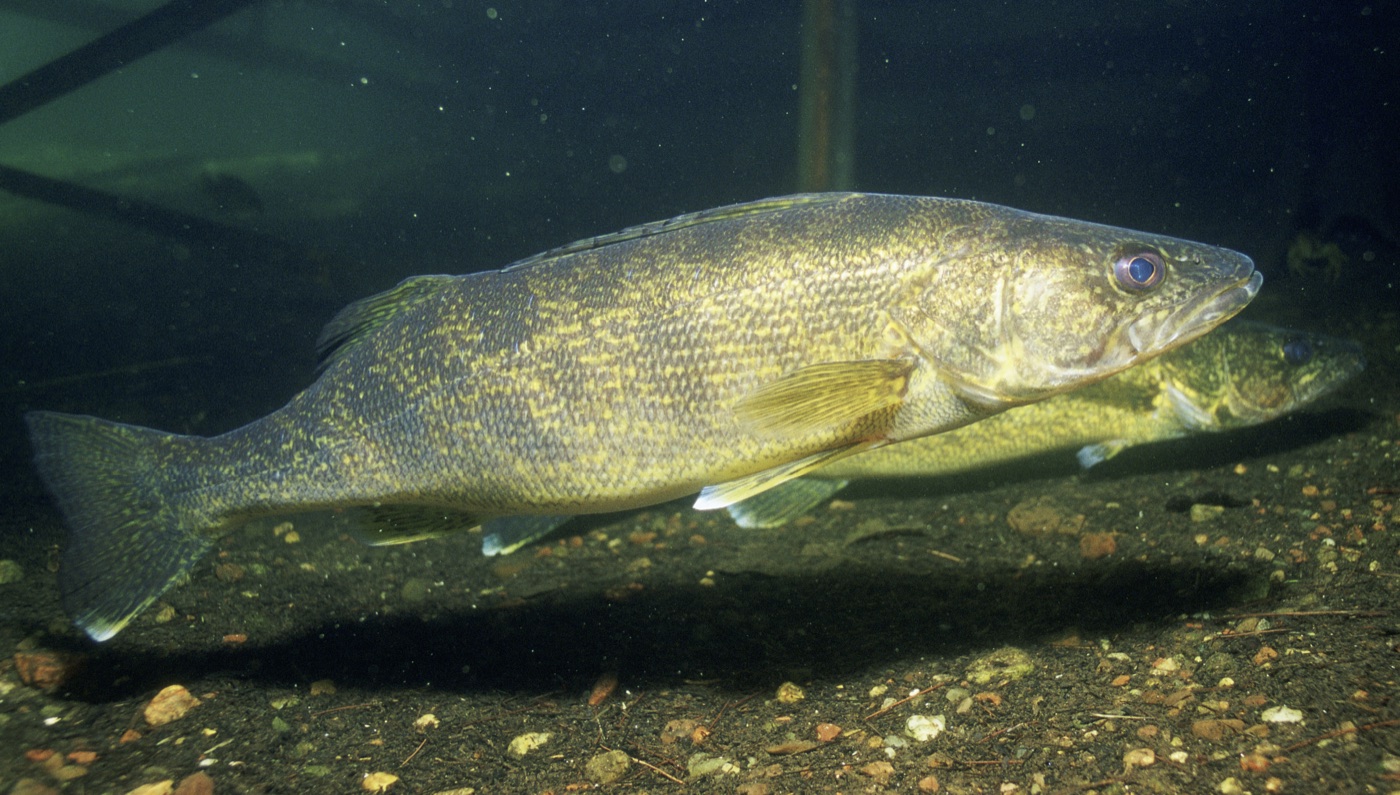
A study on Escanaba Lake in Wisconsin used a complete-census creel covering 13 years, 2,005 walleye trips and 2,771 muskellunge trips. Its conclusion was that trip-specific angler variables tended to be the most highly weighted factors influencing trip success and catch rates for both species — and that guide status and bait type had the highest effect size relative to all other parameters examined.
Environmental variables were not absent. Solar radiation, time of day, lunar position and phase, and air temperature all registered for walleye. But every environmental effect was classed as very small, with Cohen’s d below 0.2.
One detail deserves separating out, because it contradicts the single most repeated claim in fishing content. The authors report that large changes in barometric pressure and precipitation were not highly weighted in any of the analyses. Pressure is a headline input in most bite forecasts, ours included, and on this evidence it is carrying less than its reputation suggests — which is also the conclusion of our barometric pressure article.
Follow the logic through. If whether you hired a guide and what bait you tied on outweigh every weather variable measured, then a forecast built purely on weather is working with the smaller half of the problem by construction.
Why more data would not fix it
Part of the limit is mechanistic rather than statistical, and that distinction matters because it cannot be solved by collecting more.
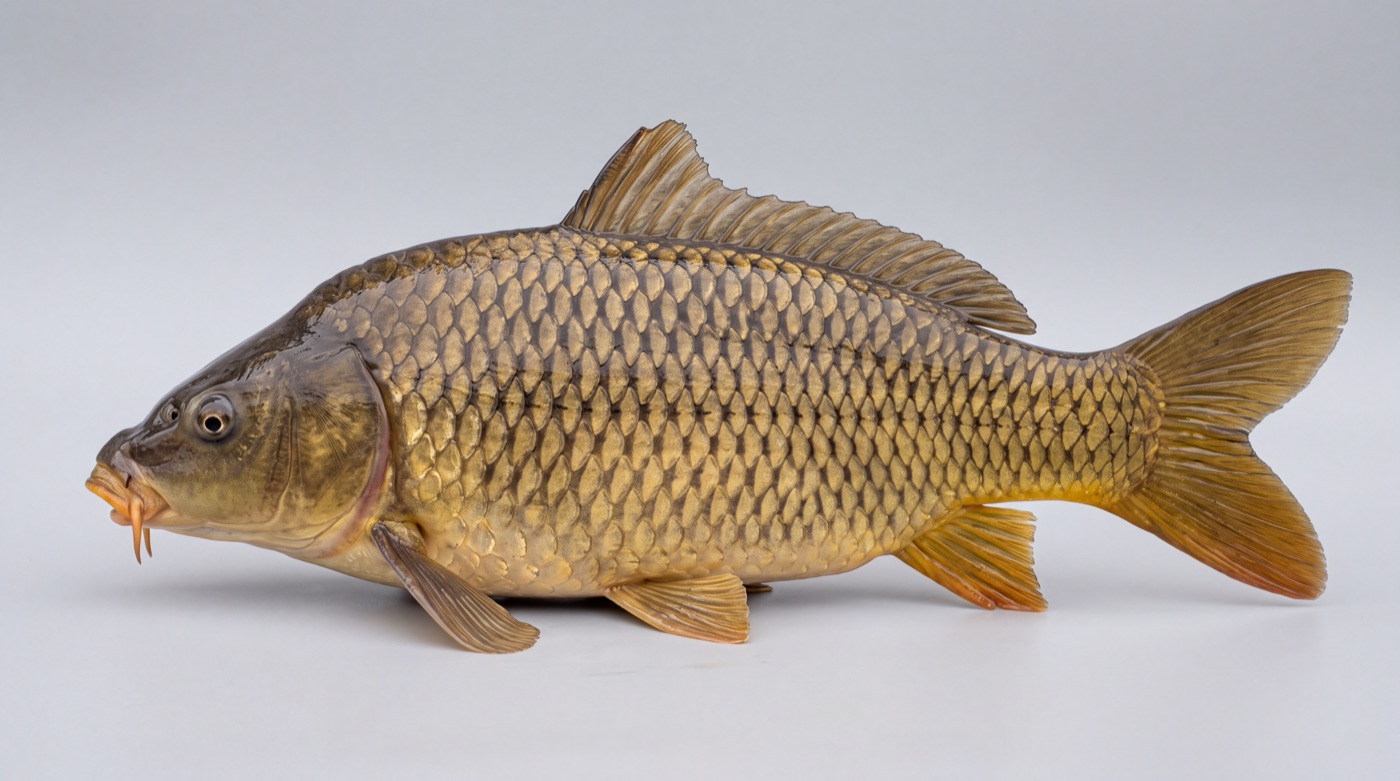
A whole-lake study of carp and tench combined acoustic telemetry with controlled experimental angling — meaning the researchers knew where the tagged fish were and when a bait was available to them. The finding was that encountering the bait is a necessary but insufficient condition for determining capture probability. Fish met the bait and then differed in whether they took it.
More striking is the null result attached: there was no support for any behavioural variable being a predictor of speed to capture or capture probability in either species. The researchers had continuous tracking data on individual fish and still could not say which would be caught.
If capture turns partly on individual variation that direct observation cannot predict, no amount of weather data collected at the surface will resolve it. This is a ceiling on precision, not a gap in the dataset.
What a real accuracy claim would require
Verification is a solved problem in meteorology, and the same methods would work here — which is precisely why the absence of any published score is worth noticing.
NOAA already scores its own precipitation probability forecasts with a Brier score, alongside threat scores, mean absolute error and anomaly correlations. The Brier score measures the mean squared probability error, running from 0 to 1 with 0 perfect. The Brier skill score then measures the improvement of a probabilistic forecast relative to a reference — usually climatology or persistence — which takes the base rate into account.
That last part is the one that would bite. A skill score compares your forecast against simply knowing the long-run average. NOAA’s own explanation of skill scoring puts it bluntly: a score of zero means the forecast did no better than would be expected by chance.
So here is the test, stated concretely enough that anyone could run it on us:
- Log the forecast as a probability before the trip, not after.
- Log the binary outcome — fish caught or not — with effort recorded separately, so the forecast is not credited for predicting when people chose to fish.
- Compute a Brier score against those outcomes, then a Brier skill score against a climatological baseline for that species, month and water.
If the skill score is zero or below, the forecast is adding nothing beyond knowing what time of year it is.
One complication is worth flagging rather than hiding: catch rate is an imperfect measure of what is actually there. Fisheries science treats catch per unit effort as proportional to density only under assumptions that break when fishing concentrates on high-density areas or when gear improves — and a study of harvest data in a terrestrial species found the relationship between catch per unit effort and abundance varied with the population trajectory, with R² ranging from 0.29 to 0.73. So even a well-run test would need care about what it treats as truth.
We have not run this test on BiteScore. We are describing it in public because a forecast that cannot say how it would be proven wrong is not making a claim at all — it is making an impression.
What it cannot do
- No fishing forecast we know of, including our own, has published a verification score against recorded outcomes.
- A forecast cannot be more reliable than the weather forecast it consumes, and that reliability falls with lead time.
- It cannot account for the largest measured factors — the angler's skill, whether they used a guide, and their bait choice.
- It cannot see the individual fish behaviour that decides capture. Telemetry studies with the fish tagged still could not predict which would be caught.
- Catch logs are a noisy validation target in their own right, so even a proper test would need care about what it counts as truth.
Frequently asked questions
How accurate are fishing forecast apps?
Nobody has published a figure, and that includes us. We searched for peer-reviewed evaluations of consumer bite forecasts and found none. What has been measured is the underlying relationship between conditions and catch, and those effects are consistently small — which puts a low ceiling on how accurate any weather-driven forecast can be.
What matters more than the weather?
The angler. A 13-year study of 2,005 walleye trips and 2,771 muskellunge trips on one Wisconsin lake found that trip-specific angler variables tended to be the most highly weighted factors influencing trip success and catch rates, and that guide status and bait type had the highest effect size of all parameters examined. Every environmental variable came in at a very small effect size.
Doesn't barometric pressure matter?
Less than the folklore suggests. The same study reports that large changes in barometric pressure and precipitation were not highly weighted in any of its analyses. Some weather effects were detected — solar radiation, time of day, lunar position and air temperature among them — so this is a small-effect result rather than a null one. But pressure specifically did not carry the weight commonly attributed to it.
Why can't a forecast just get better with more data?
Because part of the problem is not statistical but mechanistic. A whole-lake telemetry study of carp and tench, combining acoustic tracking with controlled experimental angling, found that encountering the bait is necessary but insufficient to determine capture, and found no support for any behavioural variable predicting capture probability. Fish that met the bait still varied in whether they took it, for reasons no sensor observed.
How would you actually test a bite forecast?
With the same tools meteorologists use on rain forecasts. Log the forecast as a probability, log whether a fish was caught, compute a Brier score, then compare it against a climatological baseline using a Brier skill score. If that skill score is zero or below, the forecast adds nothing over simply knowing the season. The method is standard and public. It has not been applied to our forecast, and we are not aware of it being applied to any.
Related reading
Sources
- Angler and environmental influences on walleye and muskellunge angler catch in Escanaba Lake, Wisconsin — Shaw, Renik & Sass, PLOS One 16(9):e0257882. Accessed August 6, 2026.
- Encountering a bait is necessary but insufficient to explain individual variability in vulnerability to angling — Monk & Arlinghaus, PLOS One 12(3):e0173989. Accessed August 6, 2026.
- How Reliable Are Weather Forecasts? — NOAA National Environmental Satellite, Data, and Information Service. Accessed August 6, 2026.
- Verification Statistics — NOAA Weather Prediction Center. Accessed August 6, 2026.
- Skill Score Explanation — NOAA Climate Prediction Center. Accessed August 6, 2026.
- Forecast Verification: Issues, Methods and FAQ — WWRP/WGNE Joint Working Group on Forecast Verification Research, WMO. Accessed August 6, 2026.
- Effort and Catch Per Unit Effort — Food and Agriculture Organization of the United Nations. Accessed August 6, 2026.
- Evaluating the reliability of catch per unit effort as an index of abundance — Allen, Roberts & Bauder, PLOS One 15(5):e0233444. Accessed August 6, 2026.
How we choose sources: sources policy.
More in this series
See the conditions for your own spot.
Fishing Club AI turns live weather, pressure and moon data into an hourly forecast — and shows you which factors moved the number.
Get the App