How Does AI Predict When Fish Will Bite?
Most fishing apps do not use AI in the machine-learning sense. They apply a fixed set of rules to weather data — pressure, wind, temperature, moon — and produce a score. A trained model is a different thing: it learns from recorded outcomes and can report a measured accuracy. Published effects of conditions on catch are real but modest, and the honest summary is that a forecast shifts your odds rather than telling you whether fish will bite.
Key takeaways
- A rule-based score and a trained machine-learning model are different technologies, and both get marketed as 'AI'.
- The largest study we found — 341,959 muskellunge catch records — measured a maximum lunar effect of about 5%.
- Catch records are confounded by angler effort: more fish are reported on days more people went fishing.
- In fisheries science, machine learning accuracy ranges from excellent to no better than chance, depending entirely on the data available.
- We found no peer-reviewed evaluation of consumer bite-forecast accuracy — including of our own.
Two different things get called AI
Most fishing apps that advertise AI are running a rule-based score rather than a learned model, and the distinction matters more than the marketing suggests.
A rule-based score works the way you would expect if you sat down and wrote it yourself. Rising pressure adds points. A stiff wind adds a few. A cold snap takes some away. Someone decided each of those weights, and the result is a number you can take apart: every factor that moved it can be listed. Our own BiteScore is built this way, and we say so on its page.
A trained model is a genuinely different animal. It is shown a large set of recorded outcomes — what the conditions were, and what actually happened — and it works out for itself which patterns held. The crucial consequence is that a trained model can be measured: you hold back some data, ask the model to predict it, and count how often it was right.
That gives you a clean test for any product claiming AI. Ask what it was measured against. A trained model has an answer. A rule-based score does not have one, because there was never a training set to hold back — and that is not damning, but it does mean an accuracy percentage would be invented.
What the evidence says conditions actually do
Environmental conditions do measurably affect catch rates, and the effects are consistently smaller than fishing content implies.
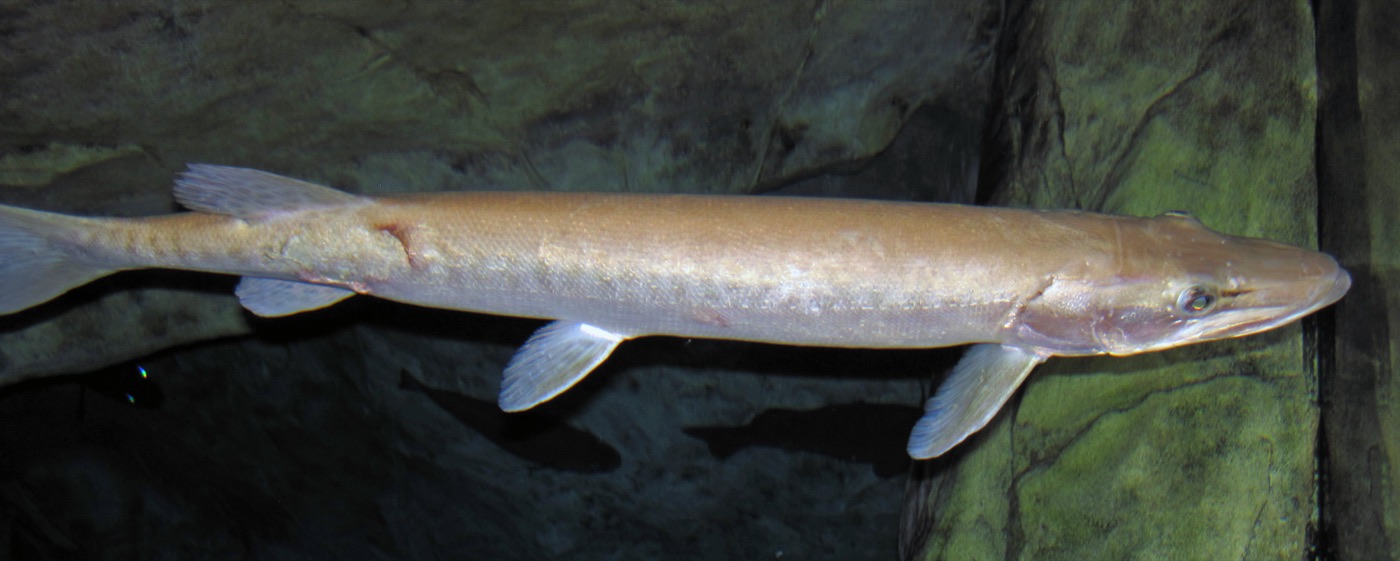
The largest study we could find analysed 341,959 angler-reported muskellunge catches from 1970 to 2013. It found catch was statistically related to the 29-day lunar cycle — and put the maximum overall effect at about 5%. In the authors’ framing, someone fishing only on the peak lunar day would average around 5% more fish than someone fishing random days. Catch never approached zero during the worst lunar periods.
Context changed the size of it. The effect rose to roughly 28% for night fishing, and to about 26% at one particular water body. That variation is itself informative: this is not one universal rule but something that depends on species, water and time of day.
Temperature has firmer physiological grounding. Most fish are ectotherms, and a review of temperature effects on feeding describes how it governs metabolic rate, energy balance, the ability and the desire to obtain food, digestion and nutrient absorption. But the same review is explicit that these effects are complex and species-specific, varying with the timing, intensity, duration and rate of the temperature change. There is no single curve that applies to every fish.
Oxygen matters for reasons that are well documented without being about bite timing. The US Geological Survey notes that cold water holds more dissolved oxygen than warm water, and that levels below 2 milligrams per litre are considered hypoxic. The Environmental Protection Agency adds a detail anglers can use: dissolved oxygen tends to be lowest just before dawn, and fish kills characteristically occur between about two in the morning and sunrise.
The trap hiding inside catch data
Catch records measure two things at once — when fish fed, and when people went fishing — and separating them is harder than it sounds.
The muskellunge study is admirably direct about this. Angler effort itself concentrated around the full and new moons at one of the lakes studied, which meant the authors could not conclude that the lunar pattern came from fish behaviour alone. More fish were reported caught partly because more anglers were out.
Follow that through and it has an uncomfortable implication for any forecast trained on catch reports. A model learning from that data learns when people fish as much as when fish feed. It then recommends those same times, more anglers go out, more catches get reported, and the pattern confirms itself. The prediction is partly manufacturing its own evidence.
There is no clever way around this using catch reports alone. It takes a study design that measures effort separately — which is precisely why telemetry work, tracking fish directly rather than counting what anglers caught, is more trustworthy on this question.
What happens when the science tries it properly
Machine learning does real work in fisheries science, and the published accuracy figures range from excellent to worthless depending on how much data there is.
At the strong end, one study trained random forest and gradient boosting models on roughly 10,000 labelled fishing trips and classified whether a vessel had fished in state or federal waters at about 97% accuracy. That is a genuine result — but notice what the task was. It classified records of things that had already happened, using a narrow, well-defined question with abundant labelled examples. It did not predict fish behaviour.
The other end is more instructive. A bycatch-estimation study using ensemble random forests reported test performance ranging from 0.97 for Laysan albatross down to 0.48 for leatherback turtles — and 0.48 is no better than a coin toss. Same method, same team, same ocean. The difference was data: for rare species there simply were not enough records to identify environmental correlates at all.
There is a further warning worth carrying. Work on ecological inference from machine learning found that including variables which correlate with the outcome but have no causal relationship to it can actively interfere with drawing conclusions — and that increasing the sample size does not fix the problem. More data does not automatically make a bite predictor valid.
The measurement nobody has published
We could not find a single peer-reviewed evaluation of consumer bite-forecast accuracy, and we think that absence deserves stating plainly rather than being glossed over.
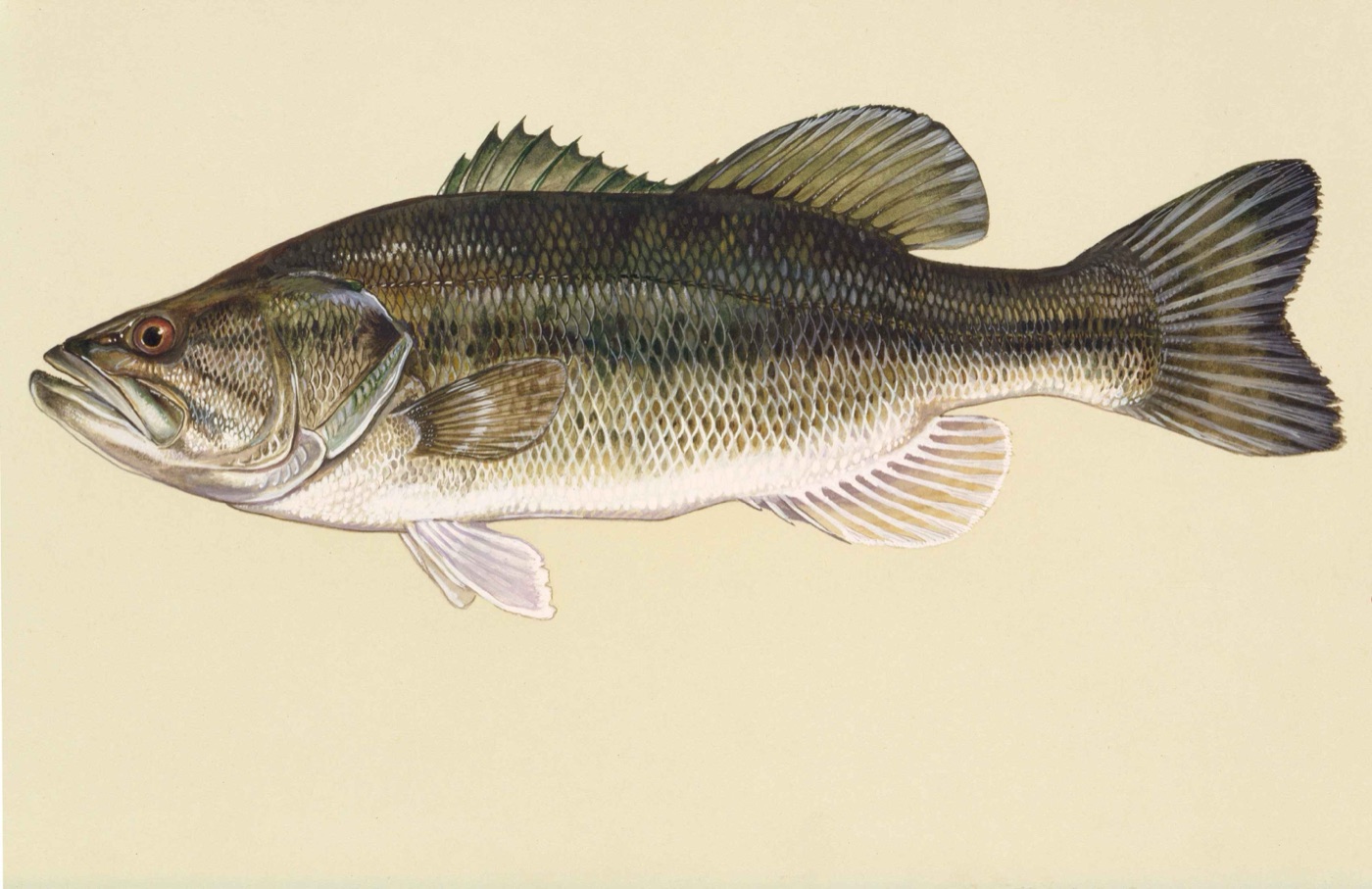
The nearest thing is research testing the underlying idea. The telemetry study of largemouth bass mentioned above tracked 22 adult fish through a whole year with a lake-wide acoustic array. Lunar variables did affect swimming activity and depth — but not consistently across seasons, and the authors concluded that solunar tables consulted by anglers “may have little predictive value for identifying peak fishing time.” They also noted the seasonal effect dwarfed the lunar one: daily movement distances were around five times greater in spring and summer than in winter.
So the position an honest reader should hold is this. Some inputs these forecasts use have solid physiological grounding, particularly temperature and oxygen. One widely marketed input — the moon — has been tested directly and came out weak. And the forecasts themselves, as products, have not been independently measured by anyone we can cite.
That applies to ours. We would rather tell you that than quote a number we made up.
What it cannot do
- No forecast can tell you whether fish are present in the water you are fishing. Conditions models score the environment, not the population.
- A score built from rules has no accuracy figure, because there is nothing it was measured against. Ours included — and any product quoting a percentage should be asked what it was tested on.
- Forecasts cannot separate fish behaviour from angler behaviour. Catch data records when people fished, not only when fish fed.
- Effect sizes in the published literature are small. A few percent is worth having when choosing between days, and is not worth planning a trip around.
- Local knowledge of a specific water beats a conditions model, and where the two disagree the model is usually the one that is wrong.
Frequently asked questions
Does AI actually work for fishing?
It depends entirely on what the software is doing. Machine learning does demonstrably useful work in fisheries science — one study classified whether vessels fished in state or federal waters at about 97% accuracy from roughly 10,000 labelled trips. But that is classifying past records, not predicting fish behaviour. For predicting when fish will bite, the published effects of environmental conditions are modest, and we found no peer-reviewed test of consumer forecast accuracy.
How accurate are fishing bite forecasts?
Nobody has published a measurement, as far as we can find. That absence is the honest answer. What has been measured is the underlying idea: a study of 341,959 muskellunge catches found the lunar cycle related to catch, with a maximum effect of about 5% overall — rising to around 28% for night fishing. Real, but a long way from telling you whether fish will bite.
Do solunar tables predict the best fishing times?
The peer-reviewed evidence is unflattering. A telemetry study tracking largemouth bass across a full year found lunar variables did affect activity and depth, but not consistently across seasons, and concluded that solunar tables 'may have little predictive value for identifying peak fishing time.' The same work found seasonal movement differences roughly five times larger than lunar ones.
What is the difference between a rule-based score and machine learning?
A rule-based score applies weights a person chose: rising pressure adds points, a cold snap subtracts them. It is fully inspectable and has no training data, so it cannot report an accuracy. A trained model learns patterns from recorded outcomes and can be measured against held-out data — but it is only as good as that data, and it may not reveal why it decided anything.
Why can't an app just learn from everyone's catch reports?
Because those reports measure two things at once. In the muskellunge study, angler effort itself clustered around the full and new moons at one lake, so the authors could not conclude the lunar pattern came from fish behaviour alone. A model trained on that data would learn when people fish as much as when fish feed, and would then recommend exactly those times — a prediction that partly fulfils itself.
Related reading
Sources
- Lunar cycle and muskellunge angling catch (341,959 records, 1970-2013) — PubMed Central (PMC4037224). Accessed August 6, 2026.
- Effects of lunar cycles on the activity patterns and depth use of a temperate sport fish, the largemouth bass — Hanson et al., Fisheries Management and Ecology 15:357-364. Accessed August 6, 2026.
- Effects of temperature on feeding and digestive processes in fish — Volkoff & Ronnestad, Temperature 7(4):307-320. Accessed August 6, 2026.
- Dissolved Oxygen and Water — US Geological Survey, Water Science School. Accessed August 6, 2026.
- Dissolved Oxygen (CADDIS) — US Environmental Protection Agency. Accessed August 6, 2026.
- Fishery catch records support machine learning-based prediction of illegal fishing off the US West Coast — Watson et al., PeerJ 11:e16215. Accessed August 6, 2026.
- A machine learning approach for protected species bycatch estimation — Long et al., Frontiers in Marine Science 11:1331292. Accessed August 6, 2026.
- Study becomes insight: Ecological learning from machine learning — Yu et al., Methods in Ecology and Evolution 12:2117-2128. Accessed August 6, 2026.
How we choose sources: sources policy.
More in this series
See the conditions for your own spot.
Fishing Club AI turns live weather, pressure and moon data into an hourly forecast — and shows you which factors moved the number.
Get the App