What Is Solunar Fishing, and Does It Work?
Solunar fishing is the idea that the moon's position sets daily peak feeding times. Published research does find lunar effects on catch rates in some species, but the effect is modest and inconsistent. One large muskellunge study found roughly a 5% advantage for daytime fishing on peak lunar days. It is a small edge, not a schedule.
Key takeaways
- Solunar theory predicts daily feeding windows from moon position; commercial tables are based on it.
- A study of 341,959 muskellunge catches found more fish caught around the full and new moon.
- The predicted maximum effect was about 5% for daytime fishing, rising to about 28% at night around the full moon.
- Effects were stronger for large fish, in midsummer and at high latitudes — and absent in some other species.
- Anglers also fish harder on moon days they believe are good, which the study's authors say cannot be discounted.
What solunar theory claims
Solunar theory holds that fish and game feed most actively during specific daily windows determined by the moon’s position, with additional peaks around the new and full moon. The idea dates to the 1920s and 30s, and the tables sold and published since then divide each day into “major” and “minor” periods calculated from moonrise, moonset and the moon’s transit overhead.
The theory is intuitive. The moon demonstrably moves the oceans, so the notion that it also moves fish feels reasonable. The question worth asking is not whether the moon affects anything, but how large the effect on fishing actually is, and whether it holds up when someone counts.
What the research actually found
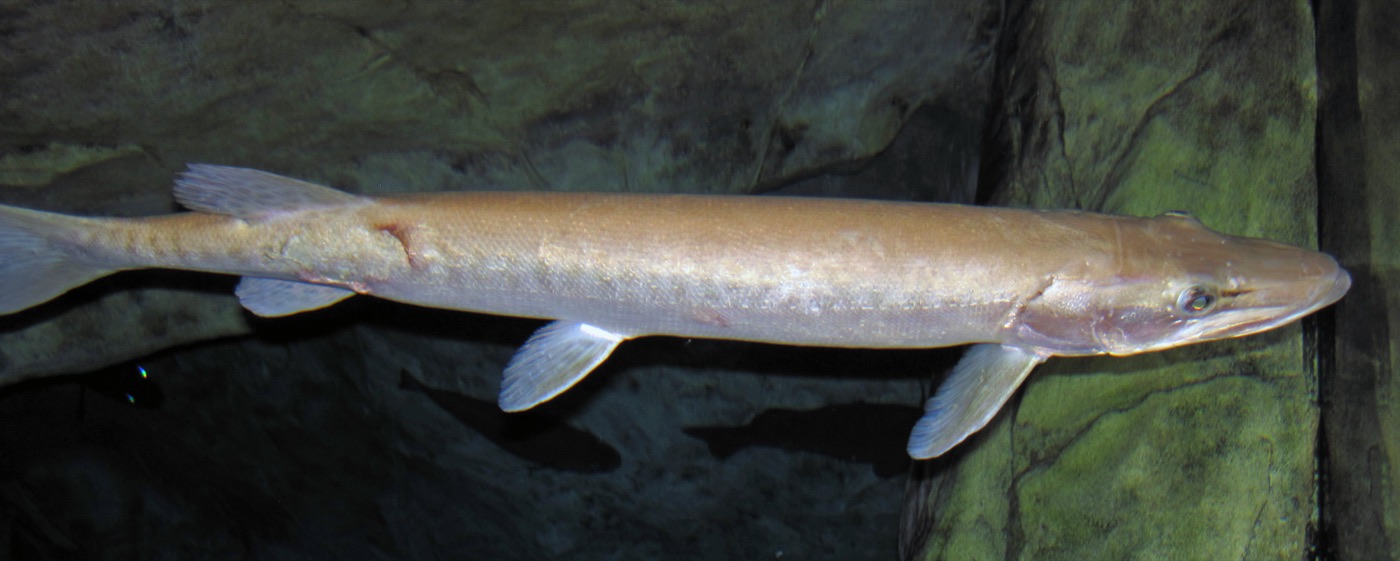
The largest study we found does report a genuine lunar effect on catch rates, but a much smaller one than solunar marketing implies. Someone did count. A study of muskellunge angling analysed 341,959 catch records collected between 1970 and 2013, and it found a real pattern: “more muskellunge were caught around the full and new moon than at other times.”
The size of that effect is the important part. For daytime fishing, the predicted maximum relative effect was about 5%. The authors translated this into practical terms: anglers fishing only on peak lunar days would catch a muskellunge roughly two to five hours sooner than anglers fishing random days. For a fish this famously difficult, that is a meaningful edge — and it is also nothing like the difference a solunar table implies.
Night fishing showed a bigger effect. Around the full moon, the maximum relative effect at night reached about 28%, which points toward moonlight itself, rather than gravity alone, as part of the mechanism.
The effect was also uneven. It was stronger for large muskellunge over 102 cm than for smaller fish, stronger in midsummer than in June or October, and stronger at high latitudes above 48°N than further south.
Why the evidence is weaker than the tables suggest
Lunar effects do not appear in every species that has been studied. Research on striped marlin sport fishing found no significant difference during the full moon compared with other lunar phases. A pattern that shows up strongly in a northern freshwater predator and not at all in a tropical billfish is not a universal law of feeding.
There is also a confound the muskellunge authors raise themselves: anglers behave differently on moon days. As the study notes, anglers “concentrate their angling effort during what they perceive to be favorable moon phases.” More effort on those days can produce more catches without the fish changing behaviour at all. The authors argue biological factors still explain part of the pattern, but they state plainly that this effect “cannot be discounted.”
Finally, the tables themselves outrun the evidence. Published research supports a modest, species-dependent, phase-level pattern across a lunar month. Commercial tables promise precise daily windows measured in minutes. That precision is not something the studies we found establish.
The one lunar effect that is not in question
The moon’s effect on tides is measured, predictable and large. NOAA explains that at full and new moons “the gravitational pull of the sun is ‘added’ to the gravitational pull of the moon on Earth,” producing spring tides where “high tides are a little higher and low tides are a little lower than average,” and correspondingly strong tidal currents.
For coastal anglers, this is where the moon genuinely earns attention. A new or full moon means stronger tidal current, and current is one of the better-documented drivers of coastal feeding — see our guide to how tides affect fishing. Some of what solunar tables appear to predict on the coast may simply be tide.
Inland, that mechanism is absent. Lakes have no meaningful tide, which makes the muskellunge finding more interesting rather than less: whatever produced it was not tidal current.
How to use the moon sensibly
Use it as a tiebreaker, not a plan. If your schedule offers two otherwise equal days, the one nearer a new or full moon is a defensible choice. If it forces you to fish in worse weather or the wrong water temperature to hit a “major period,” the trade is a bad one.
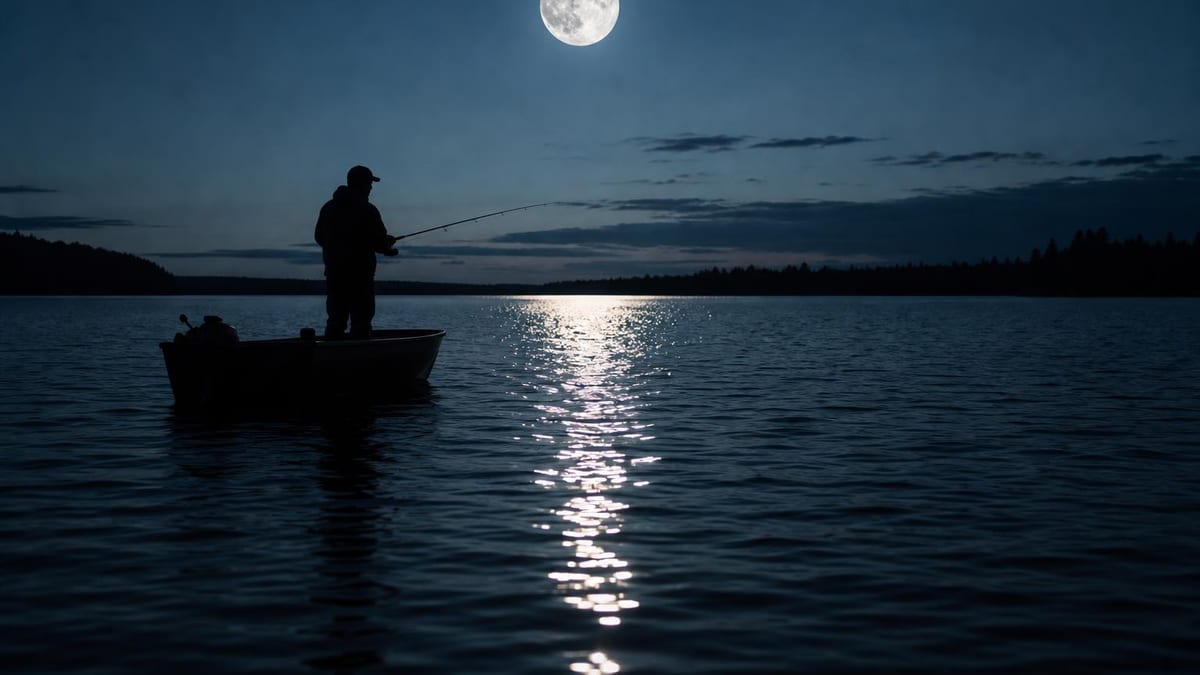
Pay more attention at night. The clearest signal in the research was a night-time full-moon effect, which suggests that if you fish after dark, moon phase and moonlight are worth planning around.
On the coast, read the moon as a tide forecast. Knowing that a spring tide is coming tells you the current will run harder, which is actionable in a way that a “major feeding period” is not.
Keep your own records. A season of notes on your water will tell you more about local moon patterns than any published table, and unlike a table, it accounts for the specific fish you are chasing.
Limitations and context
The strongest evidence here comes from one species in one region, and the authors themselves flag angler behaviour as an unresolved confound. Extending a muskellunge finding to bass, trout or inshore species is an assumption, not a conclusion, and at least one other species shows no effect at all.
We also found no accessible research validating the specific daily “major” and “minor” windows that solunar tables publish. That does not prove they are wrong; it means the claim is unverified, and we would rather label it that way than repeat it as fact.
Frequently asked questions
Do solunar tables actually work?
The underlying idea has some support, but far less than the tables imply. Research has found real lunar effects on catch rates in certain species, notably muskellunge, while other studies — for example on striped marlin — found no significant difference between the full moon and other phases. Treat a table as a weak tiebreaker, not a forecast.
How much difference does the moon actually make?
In the largest study we found, the predicted maximum effect was about 5% for daytime fishing around the peak lunar phases, which the authors translated as catching a muskellunge roughly 2 to 5 hours sooner than on a random day. Night fishing around the full moon showed a larger effect, up to about 28%.
Is the full moon or new moon better?
The muskellunge study found more fish caught around both the full and the new moon than at other times, with the full moon showing the stronger advantage specifically at night. That night-time pattern points to moonlight as part of the mechanism rather than gravity alone.
Should I plan a trip around solunar times?
Not at the expense of the things that matter more. Water temperature, wind and, on the coast, tidal current have larger and better-documented effects. If two days look otherwise equal, a peak lunar day is a reasonable tiebreaker.
Sources
- Muskie Lunacy: Does the Lunar Cycle Influence Angler Catch of Muskellunge (Esox masquinongy)? — PMC (open access). Accessed August 2, 2026.
- Muskie lunacy: does the lunar cycle influence angler catch of muskellunge? — U.S. Geological Survey (publication record). Accessed August 2, 2026.
- Lunar phase and catch success of the striped marlin (Tetrapturus audax) in sport fishing at Los Cabos, Baja California Sur, Mexico — PubMed. Accessed August 2, 2026.
- What is a spring tide? — NOAA National Ocean Service. Accessed August 2, 2026.
How we choose sources: sources policy.
More in this series
One condition rarely acts alone. BiteScore reads them together.
Fishing Club AI combines live weather, marine conditions and moon data into a simple bite forecast for your exact spot.
Get the App