White Bass
Morone chrysops
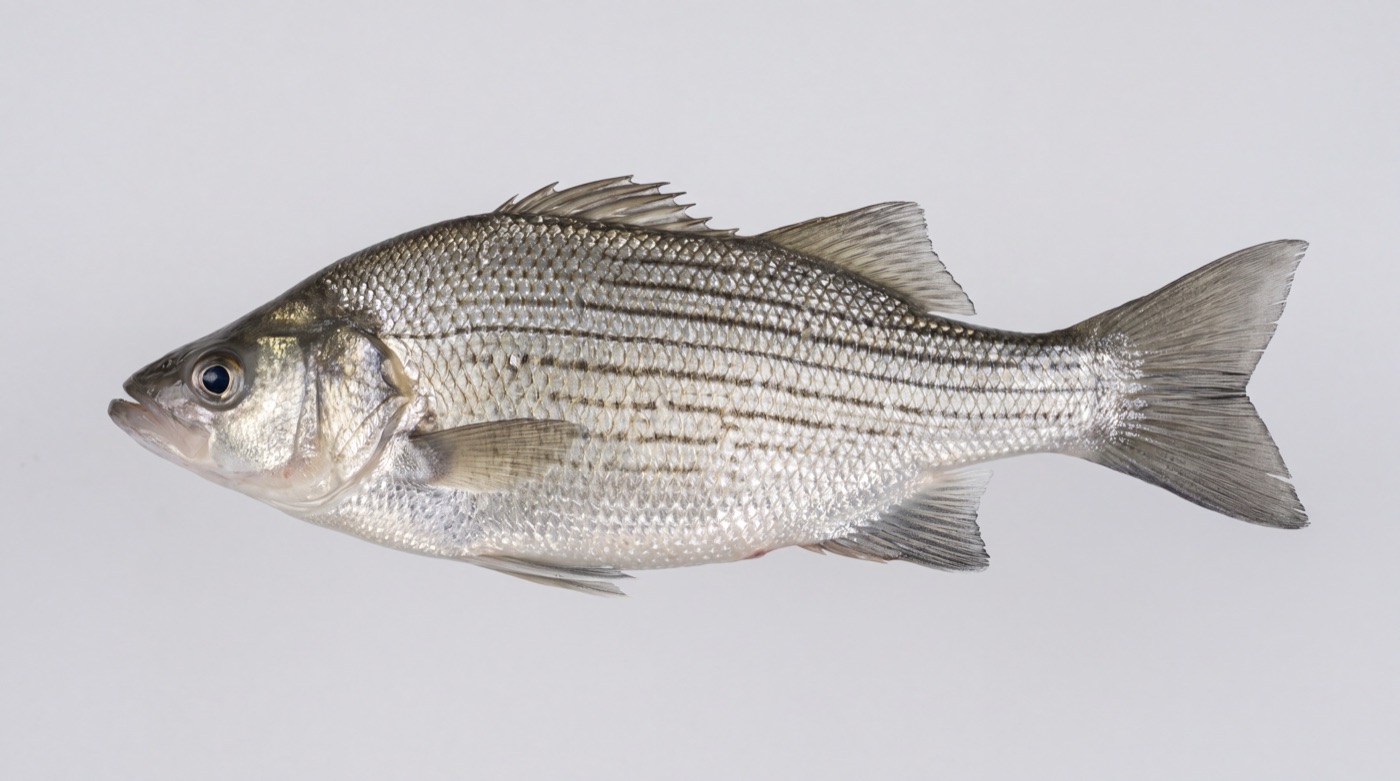
White bass is a fast-growing, hard-schooling open-water predator of the temperate bass family, silver-sided with broken dark stripes and a single tooth patch on the tongue that separates it from its larger relatives.
MoreFull Species Details
- Species Name
- Morone chrysops
- Family
- Moronidae
- Order
- Perciformes
- Also Known As
- Sand bass, Silver bass, Streaker, Barfish
White Bass (Morone chrysops) Fish Description
White bass is a fast-growing, hard-schooling open-water predator of the temperate bass family, silver-sided with broken dark stripes and a single tooth patch on the tongue that separates it from its larger relatives.
The body is deep and strongly compressed, bright silver with several incomplete dark horizontal stripes running along the flank. Those broken stripes cause endless confusion with striped bass and hybrids, and the reliable check is inside the mouth rather than outside it. Texas Parks and Wildlife describes white bass as having one tooth patch near the midline towards the back of the tongue, striped bass as having two distinct patches, and yellow bass as having none at all. Missouri's agency describes the white bass patch as usually single and heart-shaped. It is a two-second check that settles an identification the stripes never will.
White bass live in reservoirs, large lakes and the deeper pools of rivers, and they are open-water fish in a way most freshwater species are not. North Carolina's wildlife commission notes they chase baitfish in the open water of lakes and large rivers and as a result are rarely associated with cover. They are also short-lived and fast-growing, which makes them abundant and forgiving of heavy fishing pressure. Their reputation rests on two events: the spring run up tributaries, when the whole population concentrates into a few miles of creek, and the summer and autumn surface feeding frenzies anglers call jumps.
Interesting Facts About White Bass
- One tooth patch on the tongue identifies a white bass; striped bass and hybrids have two, and yellow bass have none.
- Missouri describes that patch as usually single and heart-shaped.
- They grow eight or nine inches in their first year.
- Fish more than four years old are rare.
- Schools stage at the mouths of feeding streams as surface water reaches about 50 °F.
Show more facts
- They push upstream to spawn once the water warms to the mid-50s, over sand or gravel in flowing water.
- Reproductive activity is triggered by water temperatures of 50 to 55 °F.
- Male schools migrate upstream as much as a month ahead of the females.
- The run peaks in a window of only one to three weeks.
- A single female can produce up to a million eggs.
- They drive baitfish to the surface in feeding frenzies anglers call 'jumps'.
- Because they hunt open water, they are rarely associated with cover.
Average Speed & Size
White bass are small, fast-growing and abundant. Missouri gives a total length of 9 to 15 inches at a quarter to one and a quarter pounds, with a maximum around five, and notes the species seldom exceeds three pounds. Oklahoma describes most fish averaging between half a pound and a pound and a half, rarely exceeding three and a half. The Texas state record stands at 5.56 pounds and 20.75 inches from the Colorado River in 1977. Growth is rapid — eight or nine inches in the first year — but few fish live past four, so the population turns over quickly. For their size they fight hard and in numbers, which is the appeal: a school found is rarely one fish.
Where to Find Them
Timing matters more than location with this species, because white bass move as a population rather than as individuals. Through most of the year they are in open main-lake water chasing shad, around points, riprap and wind-blown coves, and Missouri describes adults preferring open water over sandy shoals by day and shallows at night. In late winter and early spring they stage at the mouths of tributaries as surface temperature approaches 50 °F, then run upstream to spawn on sand and gravel in flowing water once it reaches the mid-50s, holding up at the first barrier they cannot pass. Males arrive as much as a month before females, and the peak lasts only one to three weeks. Through summer and autumn, look for surface activity on the main lake.
White Bass Fishing Tips
White bass fishing is about finding the school, not fooling the fish. Once you are among them they are aggressive and unfussy, so the whole exercise is locating a moving, concentrated population — which is exactly why the spring run is such an event.
Equipment
Light to medium spinning tackle with 8- to 12-pound line covers everything. The fish are not large and not leader-shy, so the priority is casting a small lure a long way and working it fast enough to trigger a chase. A rod with some tip speed helps when fish are surfacing and the window is short.
Chumming
Chumming is not the tool for this species. White bass are found by watching rather than baiting — diving birds and busting bait on the surface locate a school faster than anything you can put in the water, and in spring the fish concentrate themselves without help.
Bait
Small shad-imitating lures are the standard: compact spoons, jigs and small crankbaits retrieved quickly. Live minnows work well in the tributaries during the run, fished in the current beside the main flow.
Patience
Fish the edges of the spawn rather than its peak. Arkansas's game and fish commission notes the fish do not bite much while actively spawning but feed heavily just before and just afterward. During summer jumps, cast into surfacing fish immediately and expect the school to move — following it is more productive than waiting for it to come back.
Conditions that change the bite
- What Barometric Pressure Is Best for Fishing? No research supports a single best barometric pressure for fishing. What pressure really does, how big a weather swing is, and what to watch instead.
- Best Time of Day to Fish: What Evidence Shows Dawn and dusk are measurably better — and the edge is smaller than the folklore says. The 13-year dataset, the light mechanism, and what matters more.
- Dissolved Oxygen: The Condition Anglers Can't See Fish live or die by oxygen you can't see. How temperature, depth, dawn and turnover move it, which species need more, and how to fish around the invisible map.
Guides for fishing this species
- Types of Fish: How Species Are Grouped 36,500 species sort four ways: by water, by migration, by family, and by law. A plain map of the types of fish — with every group linked to real profiles.
Related Species
Know when they'll bite.
BiteScore forecasts when white bass will feed at your spot — from live weather, pressure, and moon data.
Get the App