Tautog
Tautoga onitis
Tautog is a stout, slow-growing wrasse of Atlantic rock and wreck, armed with heavy shell-crushing teeth — a fish so faithful to its home structure that it returns there nightly to sleep.
MoreFull Species Details
- Species Name
- Tautoga onitis
- Family
- Labridae
- Order
- Perciformes
- Also Known As
- Blackfish
Tautog (Tautoga onitis) Fish Description
Tautog is a stout, slow-growing wrasse of Atlantic rock and wreck, armed with heavy shell-crushing teeth — a fish so faithful to its home structure that it returns there nightly to sleep.
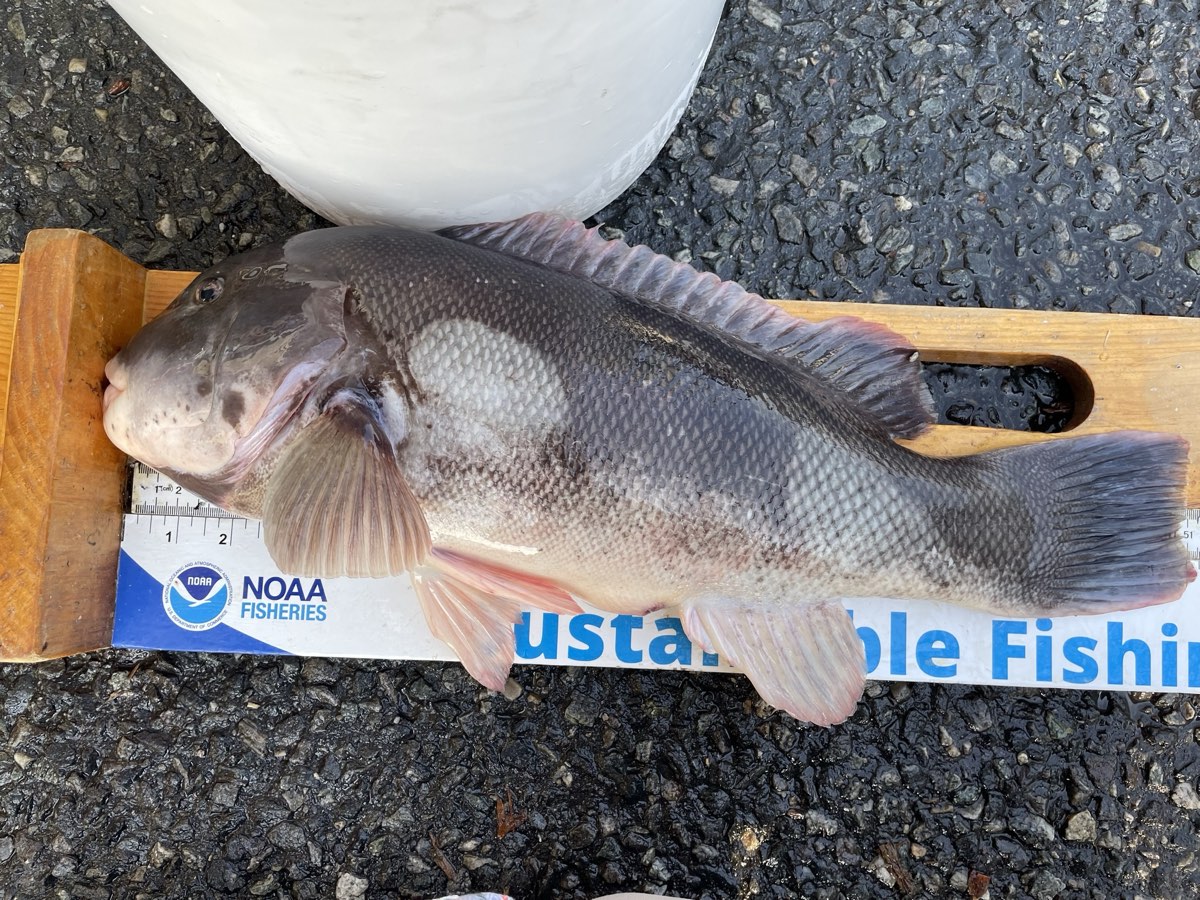
The tautog is built like its habitat: stout and blunt, with an arched head, thick rubbery lips, a broad tail, and a mottled dark body — blackfish is the working name in northern bays. Behind the lips sit the tools: large teeth for cracking and crushing shells, per the interstate commission, with the Chesapeake Bay Program describing powerful teeth that crush its prey's shells whole. The diet is what the teeth promise — oysters, blue mussels, clams, crabs and barnacles. Sex shows on the chin: females and small males wear black chins, while some large males go white-chinned, a trait anglers prize.
This is one of the most sedentary fish on the coast, and science documents it. The commission notes adults stay close to a preferred home site and return to the same general location at night — where, remarkably, they become dormant and may actually sleep. Chesapeake researchers add that dormant tautog lie motionless on their sides in holes, so still that divers have caught them by hand. They grow slowly and live more than 30 years, aggregating around structure from estuaries to offshore reefs between Nova Scotia and Georgia, most abundantly from Cape Cod to Chesapeake Bay. Management splits the coast into four regions with genuinely different stock health — worth knowing before a trip, because rules differ sharply.
Interesting Facts About Tautog
- Large teeth crack and crush shells — the diet is oysters, mussels, clams, crabs and barnacles.
- Adults keep a home site and return to the same general location every night.
- At night they go dormant and may actually sleep, lying motionless on their sides.
- Sleeping tautog are so still that sport divers have caught them by hand.
- They grow slowly and can live for more than 30 years.
Show more facts
- Females and small males have black chins; some large males have white chins.
- The body is stout, with an arched head and a broad tail.
- They aggregate around structure from estuaries and inlets out to offshore reefs.
- The range runs Nova Scotia to Georgia, centred between Cape Cod and Chesapeake Bay.
- Management divides the coast into four regions under a 2017 interstate amendment.
- Two regions are healthy; the New Jersey-New York Bight region has overfishing occurring.
- The Delaware-Maryland-Virginia region is both overfished and experiencing overfishing.
Average Speed & Size
A typical Chesapeake tautog runs about 12 inches, per the Bay Program, and the verified Maryland state record — 25 inches, 9 pounds — frames the realistic ceiling for most anglers; we do not quote a world record, as none survived source verification. Slow growth is the point to respect: a 9-pound fish is decades old. On the rod, tautog are short-range powerhouses — the fight is a series of violent dives back toward the exact hole the fish calls home, won or lost in the first two metres.
Where to Find Them
Structure is the species, and precision matters more than for almost any other coastal fish. The commission puts tautog around structured habitat from estuaries and inlets to offshore reefs; Chesapeake sources list wrecks, reefs, rocks and pilings. Because adults hold a home site and even sleep there, the fish are exactly where they were yesterday — a wreck that produced keeps producing, and ten metres off the mark produces nothing. Cooler months fish best across much of the range. Check your state's current rules before going: with four management regions in very different health, seasons and limits change at the state line.
Tautog Fishing Tips
Tautog fishing is vertical, precise and tactile: a crab bait dropped onto the structure itself, a bite that telegraphs as taps, and a hook set that must beat the fish back to its hole.
Equipment
A stout, sensitive bottom rod with 30- to 50-pound braid and abrasion-resistant leader — everything about the fishery is rock and shell. Sinkers are consumables here; rig to lose them rather than the fish. Anchoring accurately over the structure is half the sport.
Chumming
Crushed shellfish — crab or clam — dropped over the mark plays to a nose built for shellfish, where regulations allow. Mostly, though, position is the attractant: on the structure, not near it.
Bait
Crabs are the standard — green crabs and legal local species fished whole or halved — with clams a close second. Fish the bait tight to the bottom against the structure, and re-bait often; shell-crushers strip hooks with ease.
Patience
Wait through the tapping. A tautog tests a crab before committing, and striking on the first rattle misses the fish; the moment the rod loads, lift hard and keep lifting — the first two metres decide it. Respect the regional rules, and release the old white-chinned males that took thirty years to grow.
Conditions that change the bite
- What Barometric Pressure Is Best for Fishing? No research supports a single best barometric pressure for fishing. What pressure really does, how big a weather swing is, and what to watch instead.
- Best Time of Day to Fish: What Evidence Shows Dawn and dusk are measurably better — and the edge is smaller than the folklore says. The 13-year dataset, the light mechanism, and what matters more.
- Dissolved Oxygen: The Condition Anglers Can't See Fish live or die by oxygen you can't see. How temperature, depth, dawn and turnover move it, which species need more, and how to fish around the invisible map.
Guides for fishing this species
- The High-Low Rig: Two Hooks, One Bottom Rig The high-low (double dropper loop) rig explained — how to build it, why two baits beat one on the bottom, and the hook-limit rules that vary by state.
Related Species
Know when they'll bite.
BiteScore forecasts when tautog will feed at your spot — from live weather, pressure, and moon data.
Get the App