Speckled Trout
Cynoscion nebulosus
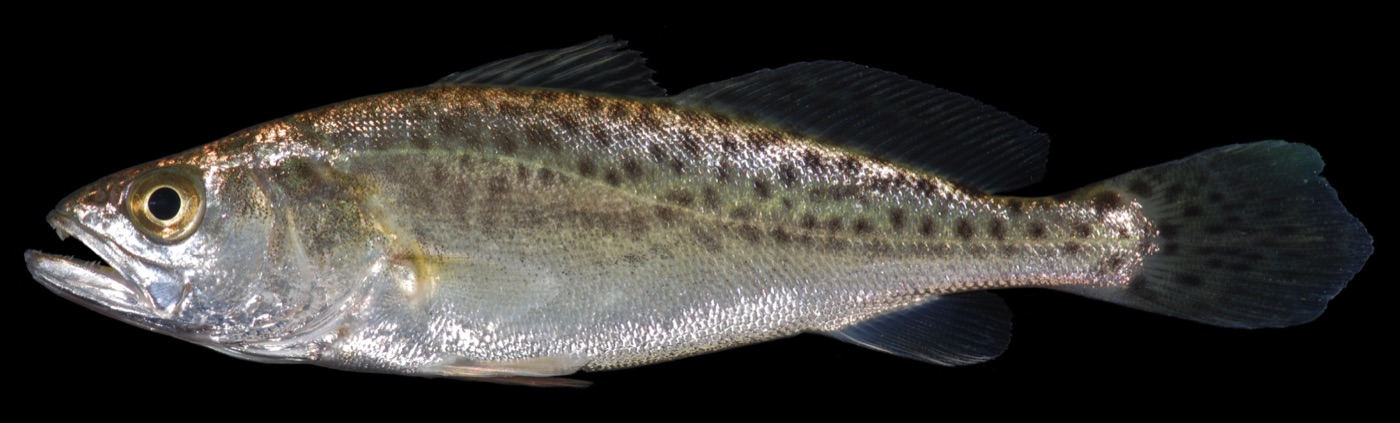
Speckled trout is a coastal member of the drum family, not a true trout, recognized by silvery sides scattered with distinct round black spots.
MoreFull Species Details
- Species Name
- Cynoscion nebulosus
- Family
- Sciaenidae
- Order
- Acanthuriformes
- Also Known As
- Spotted seatrout, Speck, Spotted weakfish, Trout
Speckled Trout (Cynoscion nebulosus) Fish Description
Speckled trout is a coastal member of the drum family, not a true trout, recognized by silvery sides scattered with distinct round black spots.
The body is elongated and streamlined, dark gray to silvery-blue on the back fading to a silver belly, marked by irregular black spots across the upper body, dorsal fin, and tail. Two prominent canine teeth at the tip of the upper jaw distinguish the species and give rise to one of its old names. The soft, thin-skinned mouth tears easily, which is why anglers call the related weakfish by that name. Coloration and spotting vary with habitat and light. The body is built for quick ambush strikes in shallow, grassy water rather than long pursuit.
Speckled trout is native to the western Atlantic and Gulf of Mexico, from the Chesapeake Bay to Texas and northern Mexico. Unlike migratory coastal species, speckled trout tend to stay within the same estuary system for life, forming distinct local populations. The species thrives over grass flats, in bays, and around marsh drains. Anglers pursue speckled trout for their abundance in inshore waters, their aggressive strikes on lures and live bait, and their mild, delicate fillets, making them one of the most sought-after inshore fish on the Gulf coast.
Interesting Facts About Speckled Trout
- The world record speckled trout weighed 17 pounds 7 ounces, caught in Florida in 1995.
- Speckled trout are members of the drum family, not true trout.
- Most speckled trout live 5 to 6 years, though some reach 9 or 10.
- The species usually spends its entire life within a single estuary system.
- Speckled trout spawn in bays and lagoons through spring and summer.
Show more facts
- Two large canine teeth at the front of the jaw help seize prey.
- The species drums using muscles vibrated against the swim bladder.
- Large speckled trout over 5 pounds are almost always females, called gator trout.
- Speckled trout feed most actively at dawn, dusk, and on moving tide.
- The thin, tender mouth of the species tears easily, requiring a gentle hook set.
- Speckled trout gather over seagrass beds that shelter shrimp and baitfish.
- Cold winter snaps can kill large numbers of speckled trout in shallow bays.
Average Speed & Size
Speckled trout is a quick, ambush-oriented swimmer that typically reaches 12 to 20 inches and 1 to 3 pounds. Gator trout exceed 25 inches and 5 pounds, with the largest approaching 17 pounds. The species holds over grass and structure, darting out in short, fast bursts to seize shrimp and small baitfish. Between strikes it hovers near cover rather than roaming, relying on sudden acceleration rather than sustained speed to feed in the shallows.
Where to Find Them
Speckled trout is found in shallow coastal bays, estuaries, and grass flats along the Atlantic and Gulf coasts. The species holds over seagrass beds, around oyster bars, and near marsh drains and channel edges where bait gathers. Speckled trout favor water from the low 60s to the low 80s Fahrenheit and feed hardest on moving tide at dawn and dusk. In cold weather they retreat to deeper holes and channels. Speckled trout are absent from cold northern seas and deep offshore waters, staying within warm, shallow inshore systems year-round.
Speckled Trout Fishing Tips
Speckled trout fishing is popular and beginner-friendly, with fish holding predictably over grass flats. Success comes from working the flats on moving tide and setting the hook gently on the trout's tender mouth.
Equipment
Use a 7-foot medium-light spinning rod with a fast tip, paired with a reel spooled with 10- to 20-pound braid and a 15- to 20-pound leader. The light, sensitive setup suits the trout's soft strike and tender mouth. A moderate tip cushions the hook set so the thin-skinned mouth does not tear, a common cause of lost fish.
Chumming
Chumming is seldom used for speckled trout, which are located instead by covering grass flats and working structure. Drifting across a flat and casting to potholes and edges locates active fish. A popping cork that mimics feeding sounds draws trout toward a suspended bait, serving much the same role as chum.
Bait
Live shrimp and small baitfish are the top natural baits, often fished under a popping cork. Effective lures include soft-plastic jigs, suspending twitchbaits, and topwater plugs worked over grass.
Patience
Speckled trout strike softly and pull free easily, so a gentle, unhurried hook set and steady pressure keep them buttoned. Work a productive flat thoroughly, as fish often hold in loose schools.
Conditions that change the bite
- What Barometric Pressure Is Best for Fishing? No research supports a single best barometric pressure for fishing. What pressure really does, how big a weather swing is, and what to watch instead.
- Best Time of Day to Fish: What Evidence Shows Dawn and dusk are measurably better — and the edge is smaller than the folklore says. The 13-year dataset, the light mechanism, and what matters more.
- Dissolved Oxygen: The Condition Anglers Can't See Fish live or die by oxygen you can't see. How temperature, depth, dawn and turnover move it, which species need more, and how to fish around the invisible map.
Guides for fishing this species
- Best Conditions for Surf Fishing: Reading Tide, Wind and Swell Together How to read surf fishing conditions as a system — tide, wind and swell together — using official NOAA and NWS data, plus safety guidance for the beach.
Related Species
Know when they'll bite.
BiteScore forecasts when speckled trout will feed at your spot — from live weather, pressure, and moon data.
Get the App